Artwork
The Death of the Virgin
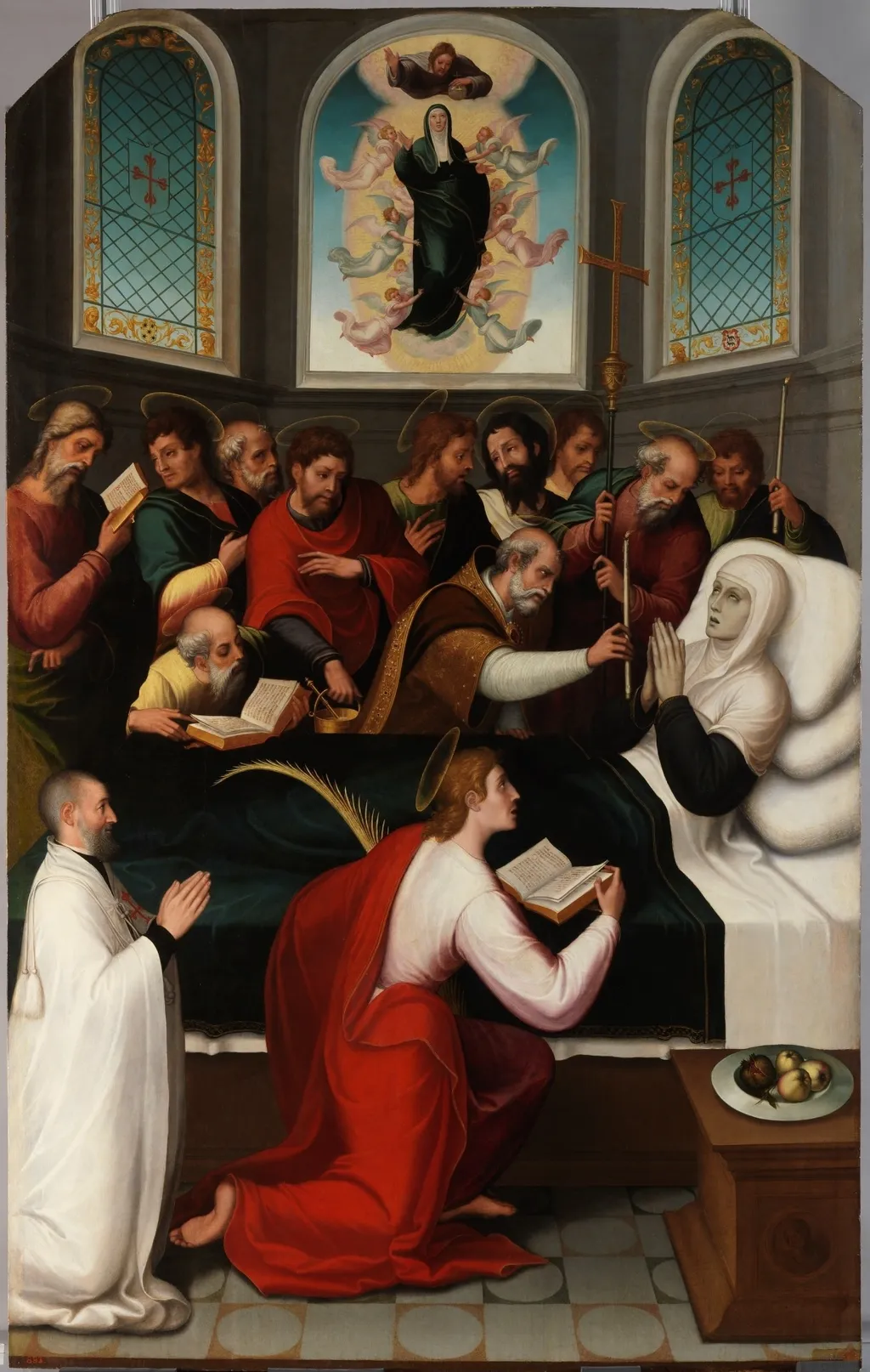
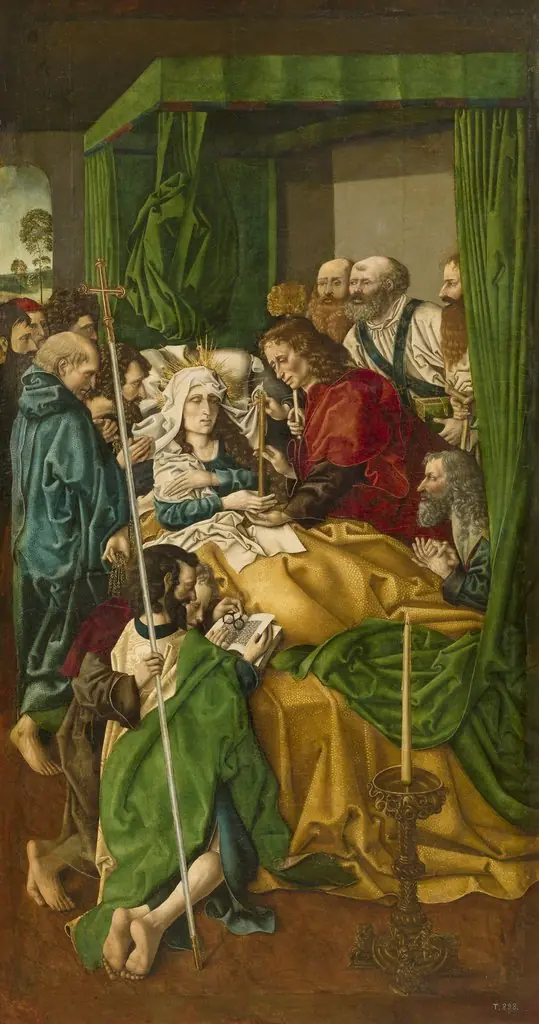
The Death of the Virgin is an oil painting by the Mannerist artist Juan Correa de Vivar. It dates from 1546 and is held in the collection of the Museo del Prado.
About this work
Subject & Meaning
Symbolic elements include a coat of arms, a book, and a candle, alluding to the Order of Calatrava and the sacred ritual of the dying saint.
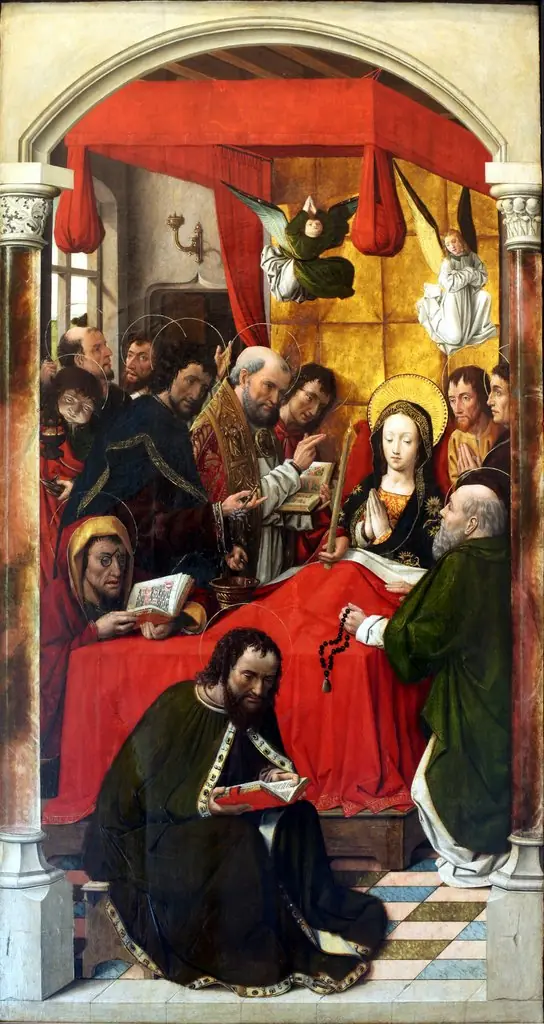
The painting portrays the Virgin Mary at the moment of her death, surrounded by mourners and clerics. Symbolic elements include a coat of arms, a book, and a candle, alluding to the Order of Calatrava and the sacred ritual of the dying saint. The composition emphasizes the theological significance of the Assumption through the Virgin's transition from earthly life to heavenly glory, reflecting Counter-Reformation concerns about martyrdom and divine intercession.
Technique & Style
Juan Correa de Vivar painted The Death of the Virgin in 1546 using oil paint on a wooden panel. The work measures 254 cm in height and 147 cm in width and depicts the Virgin's corpse surrounded by symbolic elements including a coat of arms, the Order of Calatrava insignia, a book, and a candle. Executed in a naturalistic style typical of Spanish Renaissance religious art the painting was created for the Convento de la Trinidad in Ávila before entering the collection of the Museo del Prado where it remains on display.
History & Provenance
The work was painted by Juan Correa de Vivar in 1546, as recorded in the artist’s dated inscription.
By the mid-nineteenth century the panel had entered the collection of the Museo de la Trinidad in Madrid, where it was inventoried by 1856–1857. After the dissolution of the Museo de la Trinidad, the painting was transferred to the Museo del Prado, Madrid, where it remains today under inventory number P00962.
Legacy
The Death of the Virgin by Juan Correa de Vivar, painted in 1546, influenced later religious art through its dramatic composition and use of symbolism, particularly the depiction of a candle and book that reference the Order of Calatrava and a coat of arms. This iconography informed subsequent depictions of the Virgin's death in Counter-Reformation contexts. The work is held in the Museo del Prado and has been studied for its stylistic impact on 16th-century Spanish religious painting.
The painting's legacy is tied to its innovative blending of narrative detail with devotional focus, shaping how later artists approached the subject of the Virgin's passing. Its presence in the Museo del Prado collection underscores its enduring significance in art historical discourse.
Overview
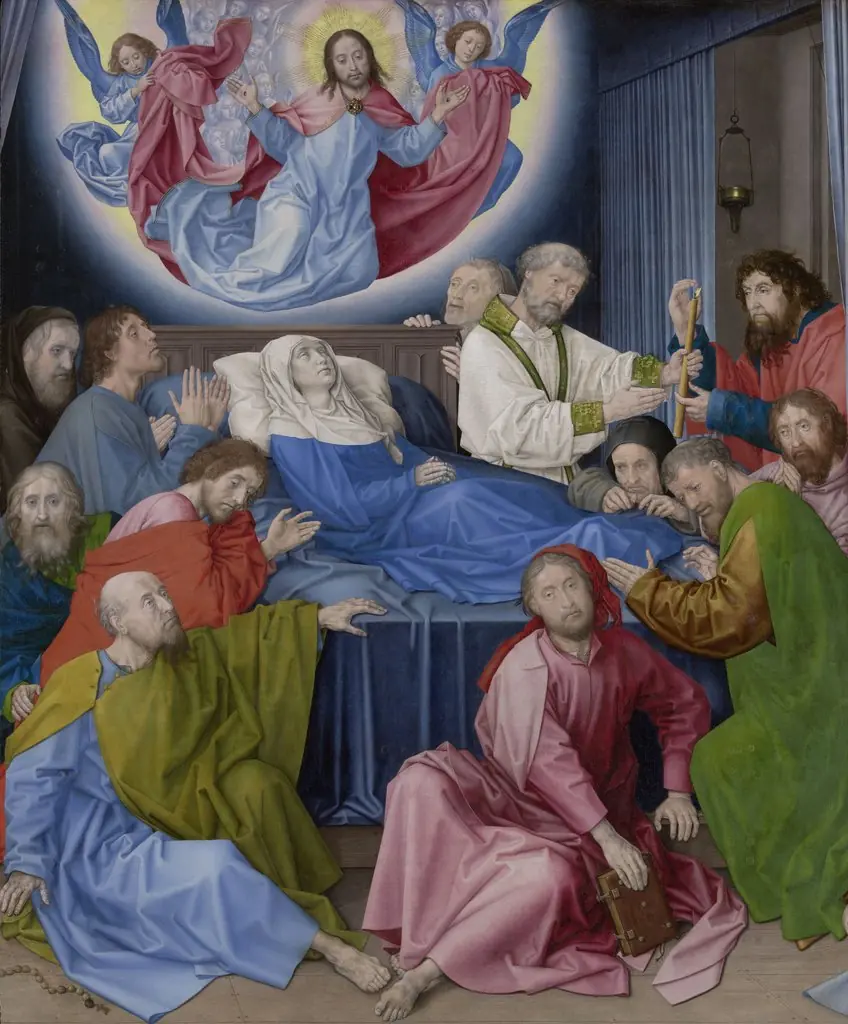
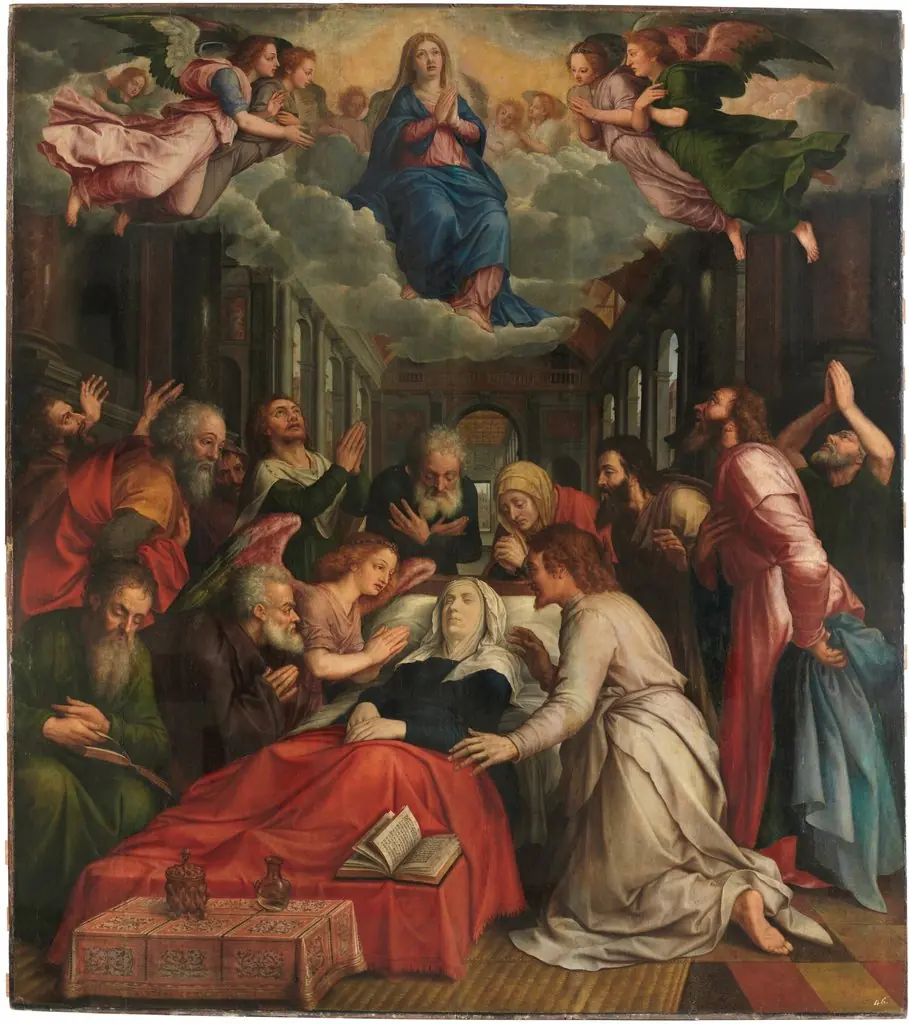
Painted in 1546 by Juan Correa de Vivar, The Death of the Virgin depicts the Dormition of the Virgin Mary, a pivotal moment in Christian iconography where the apostles gather around the dying Virgin. The composition centers on the Virgin, dressed in white, lying on a bed as she prepares to pass from earthly life. Surrounding her are the apostles, distinguished by their varied robes and gestures; some hold books symbolizing their role as witnesses and teachers, while others stand with folded hands in prayerful reverence.
Above the earthly scene, a robed figure, representing Christ or God the Father, descends from a bright sky surrounded by angels, signifying the divine reception of the Virgin's soul. The background features two stained-glass windows with glowing crosses, adding a spiritual luminosity to the interior space. Executed in oil paint, the work reflects the Spanish Renaissance style of the mid-16th century, blending devotional intensity with clear narrative structure.
This painting exemplifies Correa de Vivar's contribution to religious art in Spain during a period of significant Counter-Reformation influence, emphasizing the sanctity of the Virgin and the communal witness of the apostles.
Context
The work reflects the Counter‑Reformation emphasis on pious devotion and the veneration of holy death. By depicting a nun’s passing within a framework of religious order and celestial intercession, the painting aligns with contemporary Spanish art that sought to reinforce Catholic doctrine through emotionally resonant, didactic imagery.
Own this work as a print
Artist & collection