Artwork
Death of the Virgin
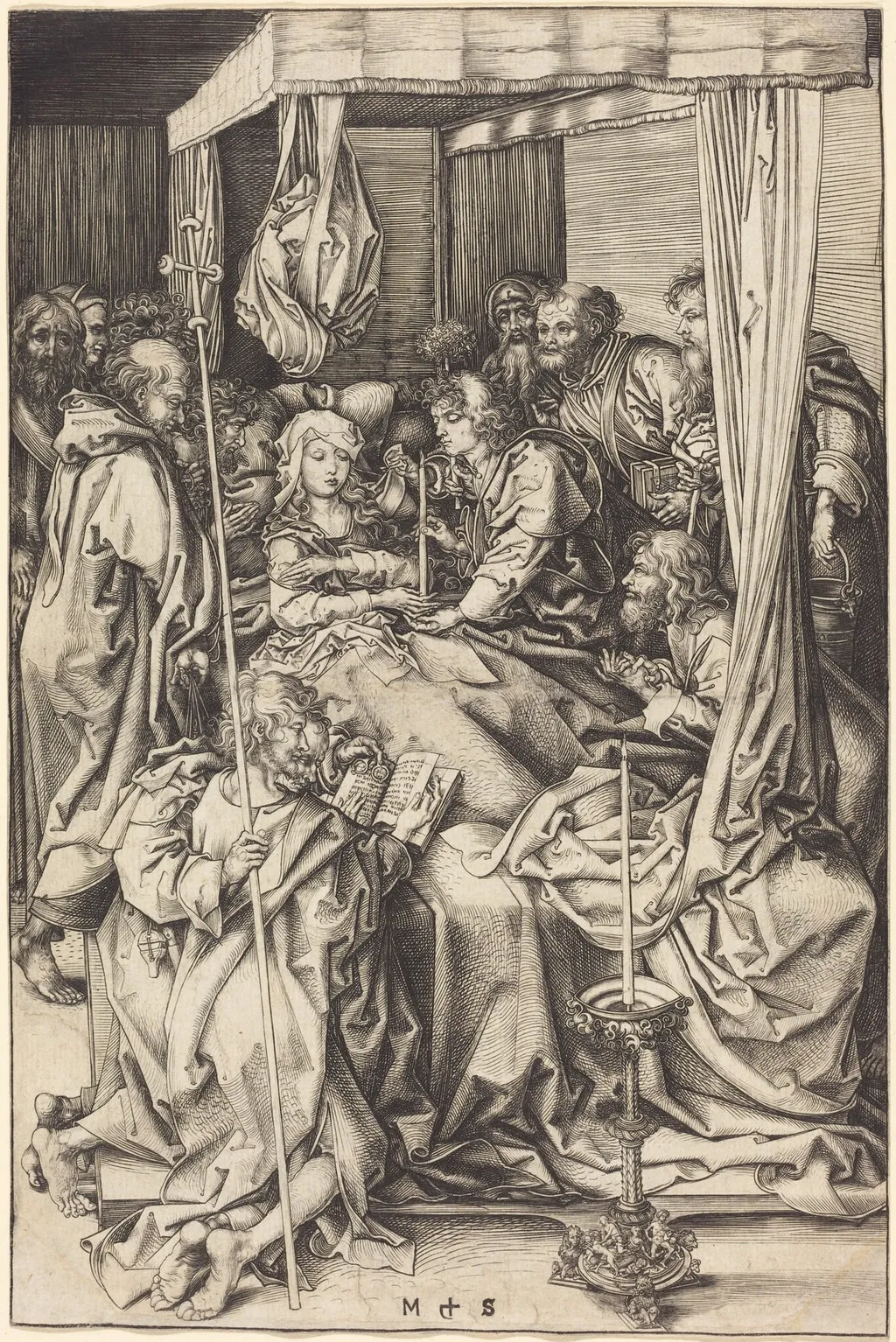
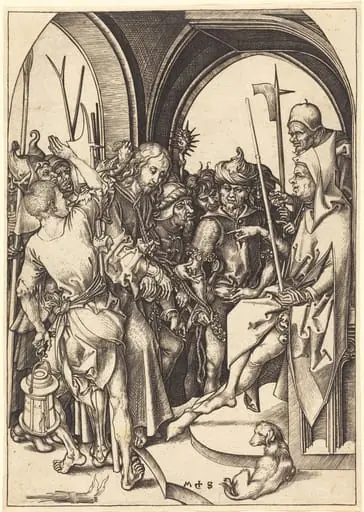
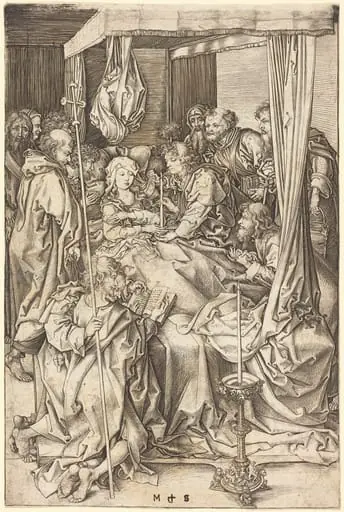
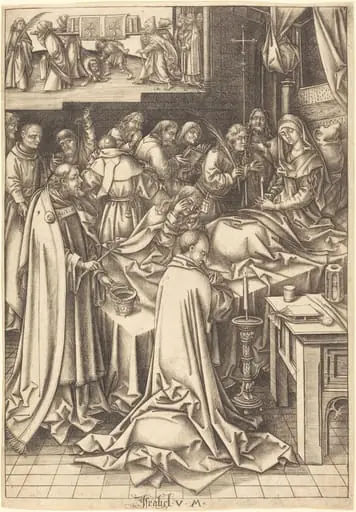
Death of the Virgin is an ink print by the Renaissance artist Martin Schongauer. It dates from 1472 and is held in the collection of the National Gallery of Art.
- Inscription
- Inscribed:lower center, in plate: M + S [artist's monogram]; on verso at bottom left, by later hand, in graphite: Lu.N.N.[?] / B.33; on verso at bottom left, by later hand, in graphite: B-54 [upside down];on verso at bottom center, by later hand, in graphite: 376
- Markings
- Marked:none
About this work
Overview
This engraving on laid paper, created around 1472, is a notable work by Martin Schongauer, a prominent Alsatian artist known for his prints.
Subject & Meaning
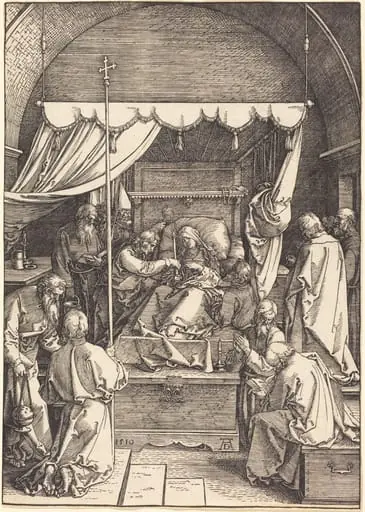
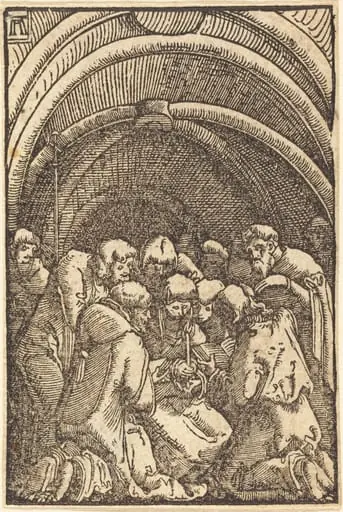
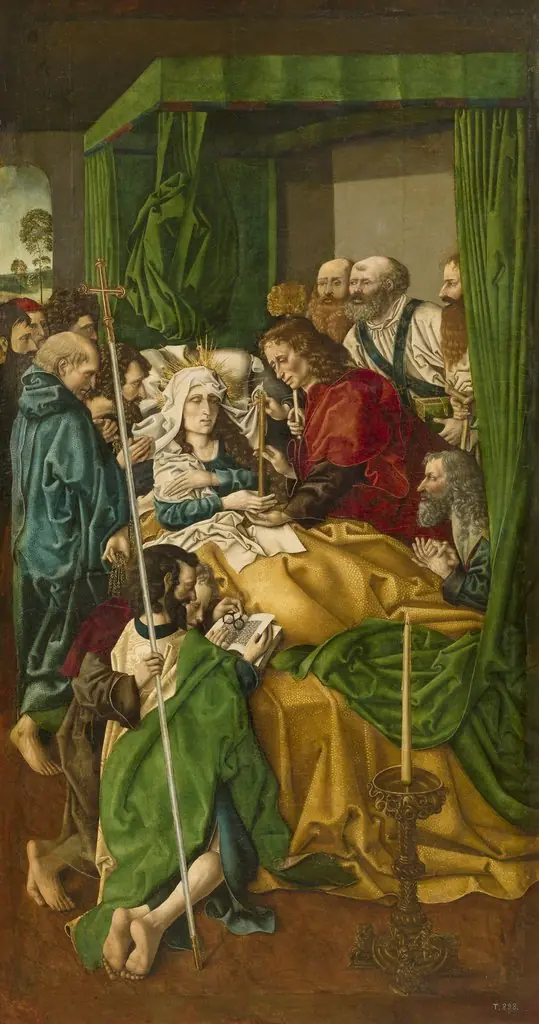
The print depicts the death of the Virgin Mary, a common theme in Christian art, showing a crowded scene with figures gathered around a dying woman, some holding books or staffs, while others pray or show concern.
Technique & Style
Schongauer's use of sharp, detailed lines and overlapping hatching creates a three-dimensional effect, conveying texture and shading through tiny marks, demonstrating his skill as an engraver.
History & Provenance
Martin Schongauer, active in Colmar from around 1450 to 1491, was a significant figure in 15th-century printmaking north of the Alps, with 116 surviving prints attributed to him, all bearing his monogram.
Own this work as a print
Artist & collection
Artist
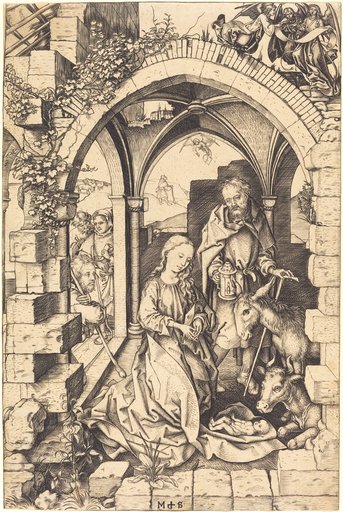
Martin Schongauer (c. 1450–1453, Colmar – 2 February 1491, Breisach), also known as Martin Schön ("Martin beautiful") or Hübsch Martin ("pretty Martin") by his contemporaries, was an Alsatian engraver and painter. He…