Artwork
Maica Domnului este pictată în picioare, în partea dreaptă a imaginii, având o atitudine evlavioasă, iar sfântul arhanghel Gavriil, tot în picioare, pictat la aceeași înălțime cu Maica Domnului, în stânga compoziției. Duhul Sfânt, sub forma unui porumbel, se pogoară din slava cerului deasupra Fecioarei Maria. Fondul e decorat cu flori și frunze simple, esențializate. Cromatica icoanei se compune din tonuri de portocaliu, verde, albastru, maro, alb și foiță aurie. Rama icoanei e simplă, băițuită și e formată din îmbinarea a patru baghete de lemn.
Maica Domnului este pictată în picioare, în partea dreaptă a imaginii, având o atitudine evlavioasă, iar sfântul arhanghel Gavriil, tot în picioare, pictat la aceeași înălțime cu Maica Domnului, în stânga compoziției. Duhul Sfânt, sub forma unui porumbel, se pogoară din slava cerului deasupra Fecioarei Maria. Fondul e decorat cu flori și frunze simple, esențializate. Cromatica icoanei se compune din tonuri de portocaliu, verde, albastru, maro, alb și foiță aurie. Rama icoanei e simplă, băițuită și e formată din îmbinarea a patru baghete de lemn. is a drawing by Unknown. It dates from 1850 and is held in the collection of the Ethnographical Museum of Transylvania.
About this work
Overview
The Virgin Mary stands on the right side of the panel, her posture reflecting deep piety, while the Archangel Gabriel stands at an equal height on the left.
Created circa 1850 by an unknown Romanian artist, this icon depicts the Annunciation with a distinct compositional arrangement. The Virgin Mary stands on the right side of the panel, her posture reflecting deep piety, while the Archangel Gabriel stands at an equal height on the left. The Holy Spirit, manifested as a dove, descends from the heavens directly above the Virgin.
The background is decorated with simplified, essentialized floral and foliate motifs rather than a detailed landscape. The color palette utilizes orange, green, blue, brown, and white tones, accented by gold leaf to denote divinity. The work is housed in a simple, stained wooden frame constructed from four joined strips.
This piece exemplifies mid-19th-century Romanian Orthodox iconography, adhering to traditional theological symbolism while employing a specific local aesthetic characterized by its flat, decorative background and balanced, frontal figures. The work serves as a devotional object, emphasizing the spiritual encounter between the divine messenger and the Theotokos through its static, hierarchical composition.
Subject & Meaning
The scene illustrates the Annunciation, with Gabriel delivering the divine message to Mary while the Holy Spirit signifies the forthcoming incarnation. Mary's devout posture emphasizes her acceptance, and the dove’s descent underscores the sanctity of the moment.
Technique & Style
Rendered in traditional iconographic style, the work employs a simplified decorative backdrop of stylized flowers and leaves. The palette combines orange, green, blue, brown, white and gold leaf, creating a luminous yet restrained visual effect characteristic of Eastern Christian iconography.
History & Provenance
The piece is executed on a wooden panel, typical of liturgical objects, and is encased in a plain, beveled frame. Its construction from four wooden strips reflects customary methods for portable devotional images, though specific provenance details are not recorded.
Context
Icons of this type served as cult objects within Orthodox worship, facilitating personal prayer and communal veneration. The balanced placement of figures and the use of gold leaf align the work with established theological and artistic conventions of the period.
Artist & collection
Museum
Ethnographical Museum of Transylvania
Continue through works from the same source collection.








 Tema icoanei face parte din ciclul Pascal și înfățișează Pogorârea la Iad a Domnului. În plan central apare reprezentat biruitor Iisus Hristos, ținând în mâna stângă un steag cu cruce, iar cu dreapta îl prinde pe Adam. În dreapta lui Hristos e pictat sfântul Ioan Botezătorul, arătând cu mâna dreaptă spre Mântuitorul. Compoziția e încadrată în partea superioară cu un brâu ornat cu motivul torsadei. Cromatica icoanei se compune din tonuri de roșu vermillon, alb, verde, albastru, maro și gri. Rama icoanei e profilată, băițuită și e formată din îmbinarea a patru baghete de lemn. Sticla este spartă, iar din suport lipsește colțul din stânga-sus și colțul din dreapta-jos.
 Icoană cu tema. Fecioara și pruncul Isus, ținut în mâna dreaptă; sus un chenar cu flori. Cromatică: fond albastru; culori: negru; alb; verde; galben.
 Göttin, Daniel - Malerei, o.T. 10
 Icoae jo
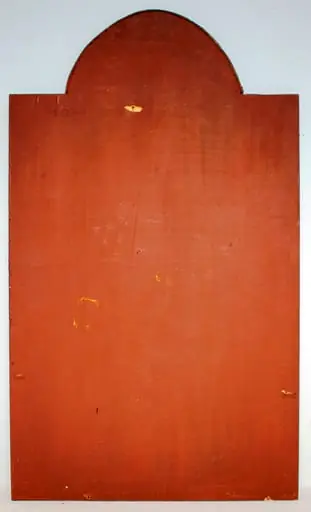 Piesa este o icoană împărătească ce a fost amplasată în biserică, în cadrul iconostasului sau în interiorul unuei troițe. Sunt redați, conform canoanelor bizantine, sfinții împărați Constatin și Elena, în picioare, sub brațele crucii Răstignirii descoperită de împărăteasa Elena la Ierusalim. Cei doi împărați sunt îmbrăcați în veșminte împărătești, cu coroane pe cap. Împăratul tânăr, cu părul castaniu, ondulat, înveșmântat cu mantie roșie decorată cu motive fitomorfe stilizate, tunică bleu cu galon lat, decorat cu motive fitomorfe. În mâna dreaptă ține un sceptru. Împărăteasa poartă mantie verde și tunica roșie, pe sub coroană o eșarfă albă.În mâna stângă ține cuiele Răstignirii. Pe capătul crucii se află inscripția INRI, iar peste brațele orizontale o eșarfă albă pe care este scris textul "Prin acest semn vei învinge", care i s-a revelat împăratului Constantin. Fond bleu închis, cu o linie de chenar albă, subțire, la fel cu inscripția scrisă în partea de sus. Paleta cromatică este variată, dar nu foarte armonioasă, culorile reci. Pictura este realizată de un pictor contemporan cu școală, autorul picturii unor biserici și icoane. Rama este profilată, lată, alcătuită din patru stinghii îmbinate oblic la colțuri, bătută în cuie metalice,culoare brun roșcat. În partea de sus este adăugată o porțiune semicirculară, cu margine din placaj îngust, montat transversal. Pe fondul bleu închis al acesteia este pictat un heruvim cu aripile întinse, chip sobru, cu păr blond, ochi negri, gura roșie. În partea de jos a piesei, două cuie mari de fier cu care era fixată. Face parte din același iconostas sau troiță cu nr. 50546.
 "Isu
"Isu Icoana este deosebită, prin tematica iconografică abordată: Încoronarea Maicii Domnului. În centrul icoanei este Maica Domnului Împărăteasă, pe tron arhieresc, cu Pruncul iisus Hristos în brațe. Maica Domnului este îmbrăcată în veșmânt albastru bleumarin, iar Pruncul Iisus Hristos este înveșmântat cu alb-albastru. Pruncul Iisus ține în mână globul pământesc. În dreapta Maicii Domnului este Sfântul Mare Ierarh Nicolae făcător de minuni, îmbrăcat în veșminte arhirești, cu mantie roșie vermillon, mithră, cârjă mitropolitană. În stânga Maicii Domnului este Sfântul Mare Prooroc Ioan Botezătorul și Înaintemergătorul Domnului Iisus Hristos. Sfântul Ioan Botezătorul are și culoarea verde în combinația cromatică a veșmântului. Verdele este culoarea Sfântului Ioan. În registrul superior, sunt Sfinții Arhangheli Mihail și Gavriil, așezând coroana de Împărăteasă a Cerurilor pe capul Maicii Domnului. Aripile Sfinților Îngeri sunt galbene. Se remarcă mandorle de nouri albi-gri, în registrul superior. În registrul inferior, este un postament cărămiziu. Cromatica este armonioasă: roșu vermillon, orange, cărămiziu, galben chihlimbar, albastru ceruleum, cobalt, bleu-ciel, alb, negru, verde de China. Inscripția din româno-chirilică se traduce: IC XC MP Iisus Hristos Maica Domnului Sfântul Nicolae Sf Ioan Botezătorul Pocăiți-vă. Icoana este de Valea Sebeșului.
 Untitled
 Isus Hristos și Ioan Botezătorul copii. Vegherea lui Isus în mormânt
 Göttin, Daniel - Malerei, o.T. 9
 Icoasemn
- Fecioara Maria, dispusă în partea dreaptă a compoziției, este pictată în genunchi, într-o atitudine plină de evlavie. Arhanghelul Gavriil este pictat în picioare, în partea stângă, ținând o floare în mâna stângă, iar cu dreapta binecuvinteză și arată spre slava cerului, de unde Duhul Sfânt, în chip de porumbel, trimite raze spre Maica Domnului. Între cei doi sfinți este pictată o masă pe care stă cartea sfântă închisă, în spatele căreia e un crin. În spatele Maicii Domnului este schițată o clădire. Icoana este pictată integral doar în zona fețelor, a mâinilor, precum și Duhul Sfânt, sub formă de porumbel. În rest, s-au folosit doar laviuri colorate pe un fond de hârtie argintată. Cromatica icoanei se compune din tonuri de roșu, ocru galben, verde, maro. Rama icoanei e profilată, bicromă (latura interioară roșie, iar cea exterioară maronie) și e formată din îmbinarea a patru baghete de lemn.