Artwork
Don Quixote's Speech of Arms and Letters
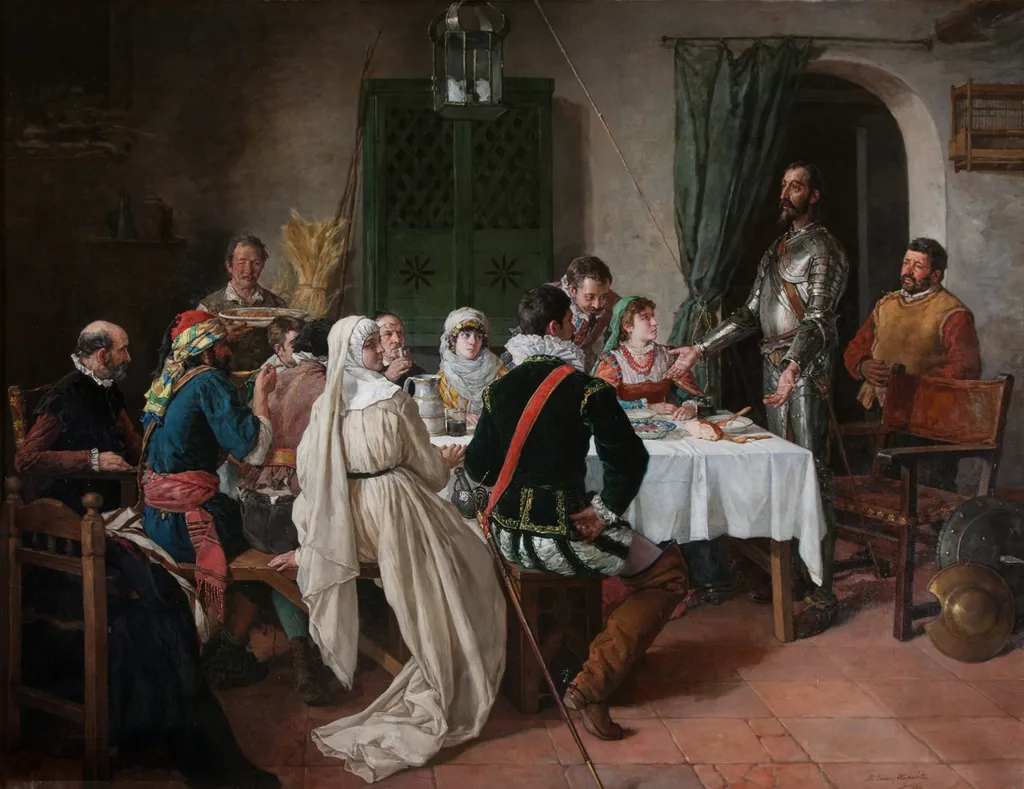
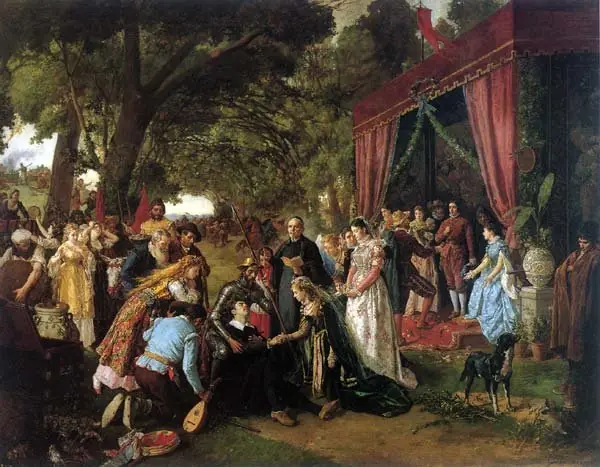
Don Quixote's Speech of Arms and Letters is an oil painting by the Post-Impressionist artist Manuel García Hispaleto. It dates from 1892 and is held in the collection of the Museo del Prado.
About this work
Subject & Meaning
Manuel García Hispaleto rendered the scene in oil on canvas in 1884, and the work is held at the Museo del Prado.
The painting visualizes a celebrated episode from Miguel de Cervantes's "Don Quixote," in which the knight delivers his famous "Discourse on Arms and Letters," weighing the merits of a warrior's life against those of a scholar. Manuel García Hispaleto rendered the scene in oil on canvas in 1884, and the work is held at the Museo del Prado.
Iconographically, the composition is anchored by martial attributes: body armor and a combat helmet appear among the depicted elements, signaling the "arms" side of the knight's meditation. These accoutrements frame the literary exchange as a meditation on honor, learning, and the chivalric ideal, themes central to Cervantes's novel and to Spanish cultural memory of the late nineteenth century.
Technique & Style
Manuel García Hispaleto’s Don Quixote’s Speech of Arms and Letters (1884) is executed in oil paint on canvas, a medium and support consistent with large-scale academic history paintings of the period. The work measures 152 by 197 centimeters, allowing for a detailed, multi-figural composition.
The handling reflects a polished, academic technique, with smooth brushwork and careful attention to anatomical precision and drapery folds. The palette is rich yet controlled, emphasizing naturalistic coloration and subtle tonal gradations. Stylistically, the painting adheres to 19th-century Spanish academic conventions, blending narrative clarity with meticulous rendering of textures, such as the metallic sheen of body armor and combat helmets depicted in the scene.
History & Provenance
Manuel García Hispaleto created the oil painting Don Quixote's Speech of Arms and Letters in 1884. Executed on canvas, the work measures 152 cm in height and 197 cm in width. The piece depicts elements of military equipment, specifically body armor and a combat helmet. It currently resides in the collection of the Museo del Prado.
Manuel García Hispaleto's 1884 oil painting, Don Quixote's Speech of Arms and Letters, is held in the collection of the Museo del Prado in Madrid. The work is executed on canvas and measures 152 cm in height by 197 cm in width. While the painting is confirmed as part of the museum's holdings, the provided sources do not list a specific inventory or accession number for the piece.
No exhibition history is recorded in the available documentation. The work depicts body armor and a combat helmet, reflecting the artist's engagement with themes from Cervantes' novel during the late 19th century.
Context
Manuel García Hispaleto painted Don Quixote's Speech of Arms and Letters in 1884, creating an oil on canvas work measuring 152 cm in height and 197 cm in width. The painting portrays a figure clad in body armor and a combat helmet, reflecting themes of chivalry and martial imagery. It is housed in the collection of the Museo del Prado in Madrid, where it remains on display.
The work occupies a significant position within 19th-century Spanish academic art, illustrating the enduring cultural resonance of Cervantes' narrative through a formal, historical lens.
Scholarship on the painting emphasizes its technical execution and symbolic use of armor as a metaphor for ideological struggle, situating it within broader discussions of Spanish visual culture in the late 1800s. Its presence in a major national museum underscores its recognized importance in the country's artistic heritage.
Overview
Don Quixote's Speech of Arms and Letters is a painting created by Manuel García Hispaleto in 1892 using oil paint.
Own this work as a print
Artist & collection
Artist
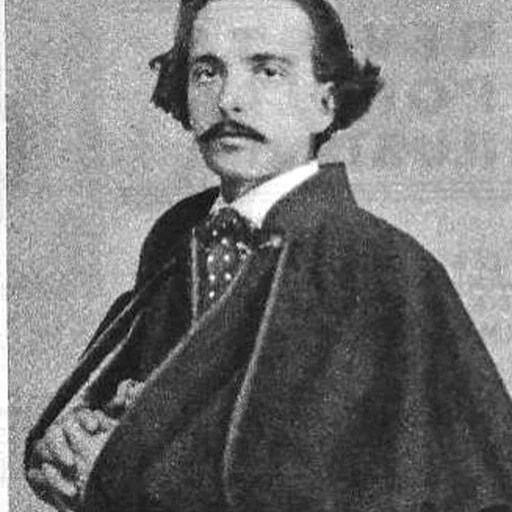
Manuel García Hispaleto, originally Manuel García y Martínez (22 November 1836, Seville - 26 December 1898, Madrid) was a Spanish painter; known for portraits and costumbrista scenes.

 Interior of a Spanish 'Posada'
 La despedida
 The Milk Soup at Kappel
 Ilona Zrínyi before the Investigating Judge
 Cellini and the Robbers
 Felipe III de Francia moribundo bendiciendo a sus hijos
 Un fanfarrón
 Return from bondage
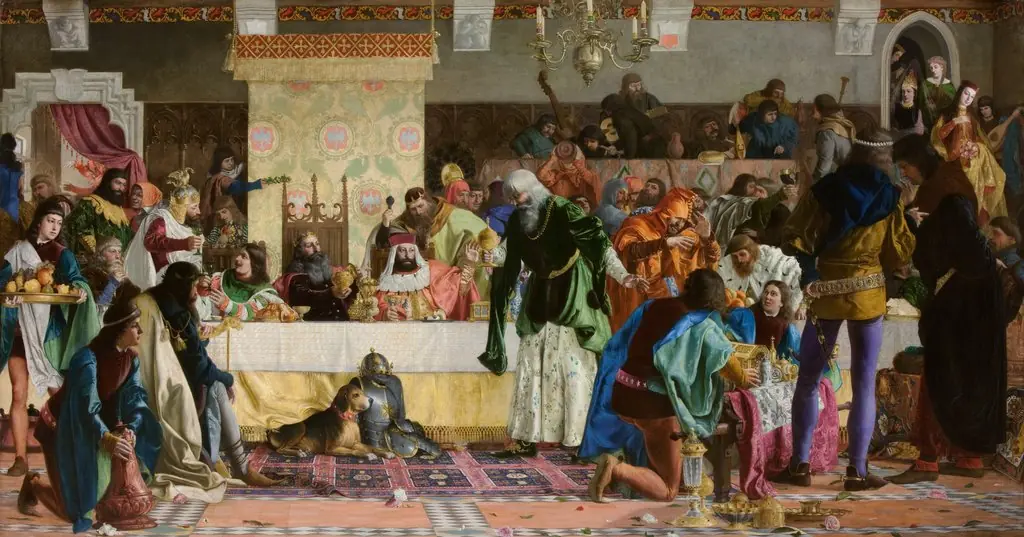 Feast at Wierzynek's
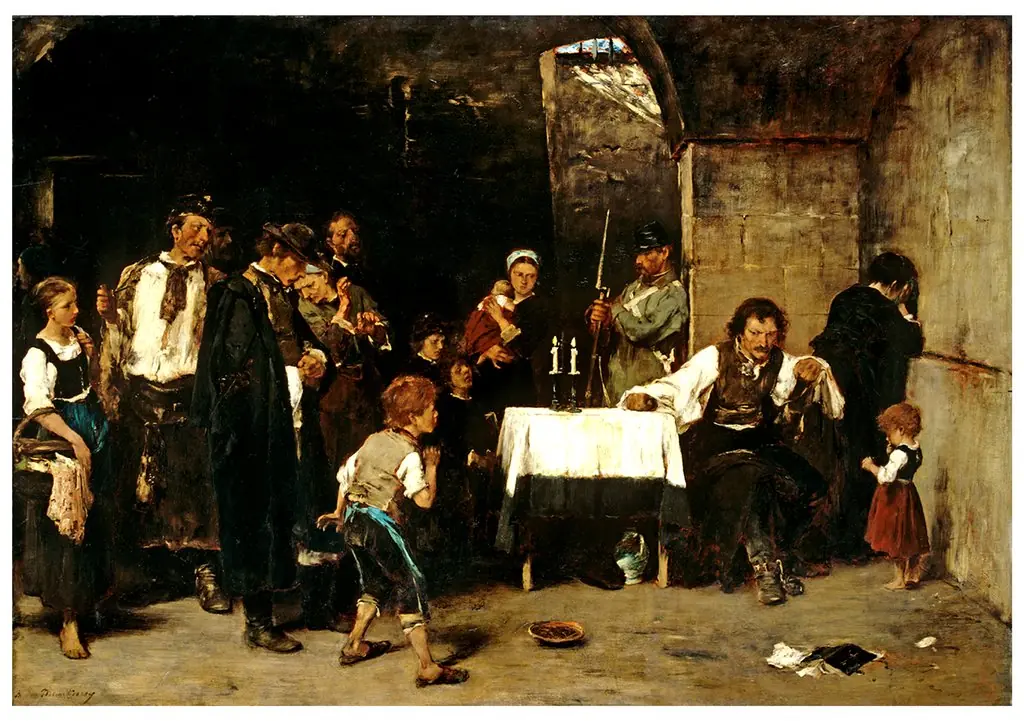 Condemned cell II
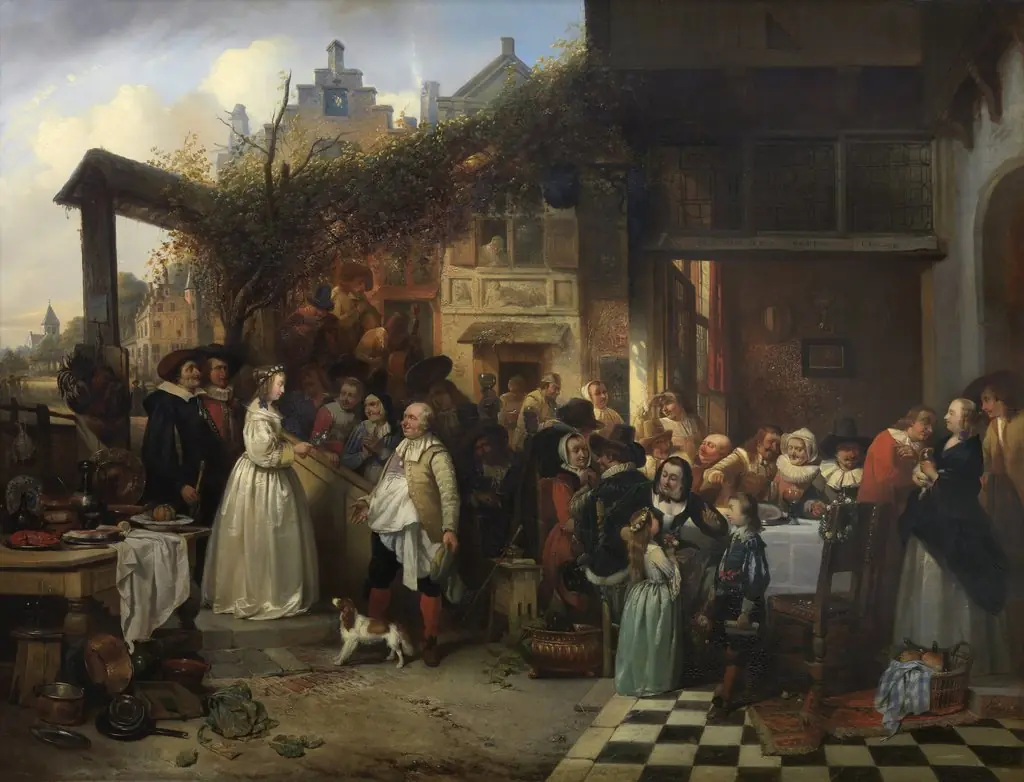 Wedding in Flanders in the Seventeenth Century
- Don Quixote at the Inn