Artwork
Heilige Familie mit Johannesknaben
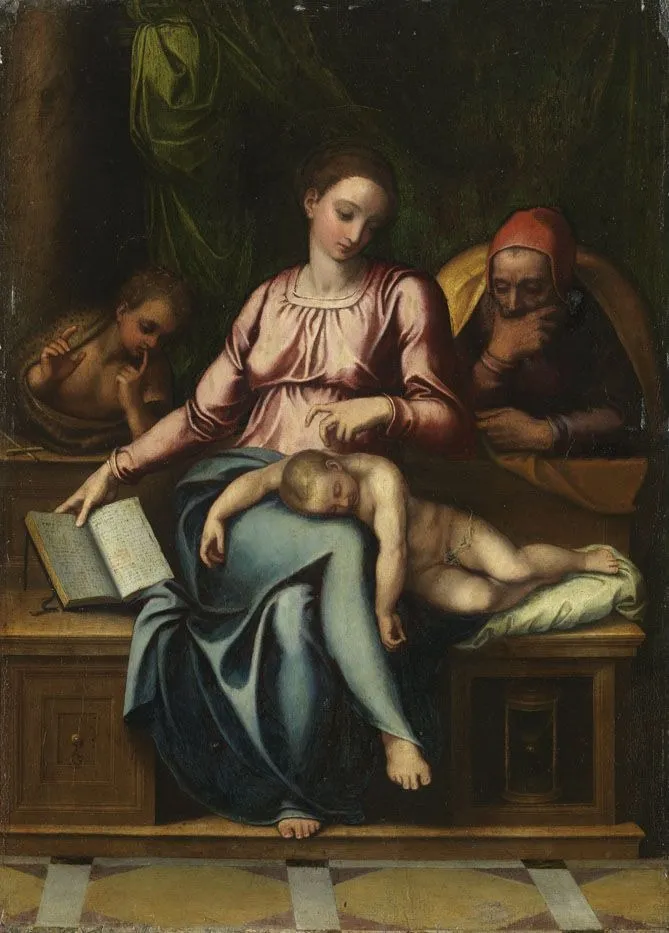
Heilige Familie mit Johannesknaben is an unspecified painting by the Mannerist artist Marcello Venusti. It dates from 1547 and is held in the collection of the Bavarian State Painting Collections.
About this work
Subject & Meaning
This arrangement reflects Counter-Reformation themes of familial devotion and divine preparation.
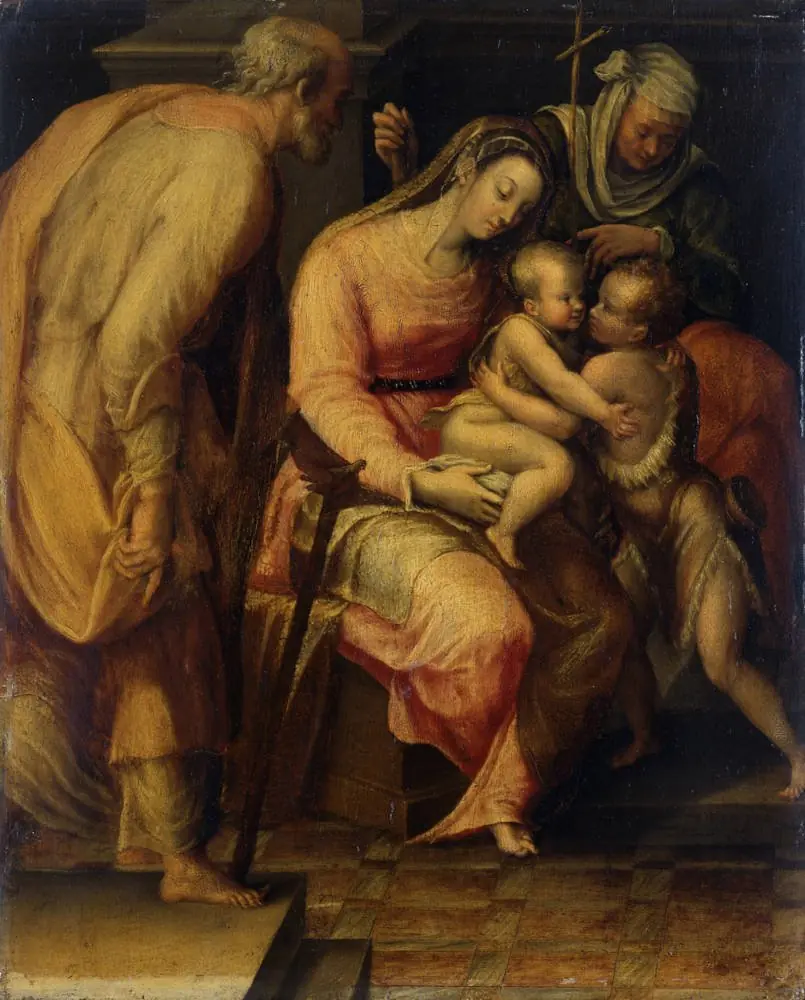
The painting shows Mary, the infant Christ, Joseph, and the young John the Baptist together in a domestic grouping that emphasizes their shared humanity and spiritual connection. The composition highlights the Holy Family as central figures while the presence of John the Baptist introduces a prophetic element, foreshadowing Christ's future role. This arrangement reflects Counter-Reformation themes of familial devotion and divine preparation.
History & Provenance
The painting 'Heilige Familie mit Johannesknaben' was created in 1547 by the Italian artist Marcello Venusti. Classified as a religious work, it depicts the Holy Family, specifically featuring Mary, the Christ Child, and Joseph. The piece currently resides in the collection of the Bavarian State Painting Collections, where it is housed at the Alte Pinakothek in Munich.
While the specific original commissioner and the detailed ownership chain prior to its arrival at the Bavarian State Painting Collections are not detailed in the available records, the work's inception is firmly established in the mid-16th century.
The painting is housed in the Alte Pinakothek, part of the Bavarian State Painting Collections. It measures 59.8 cm in height and 43.4 cm in width, and was created in 1547. The work has been exhibited as part of the museum's religious art displays, though specific exhibition dates are not detailed in the sources.
Overview
Created in 1547, this oil painting by Marcello Venusti portrays a domestic scene of the Holy Family with the infant John the Baptist. The work belongs to the collection of the Alte Pinakothek in Munich and exemplifies the Italian Mannerist approach that Venusti practiced while active in mid‑16th‑century Rome.
Technique & Style
Venusti employs a pronounced chiaroscuro scheme, allowing deep shadows to model the figures against a dim interior. Highlights on the woman’s dress and a book placed on the bench provide focal points, while the contrast of light and dark accentuates the textures of fabric and flesh. The handling reflects the refined, elegant mannerism characteristic of his Roman workshop.
Context
The painting emerges from a period when Italian artists were adapting the dramatic lighting of Caravaggio’s predecessors while retaining the graceful elongation of Mannerist figures. Venusti’s choice to place the holy figures in a modest interior aligns with contemporary efforts to render sacred narratives accessible to private devotion.
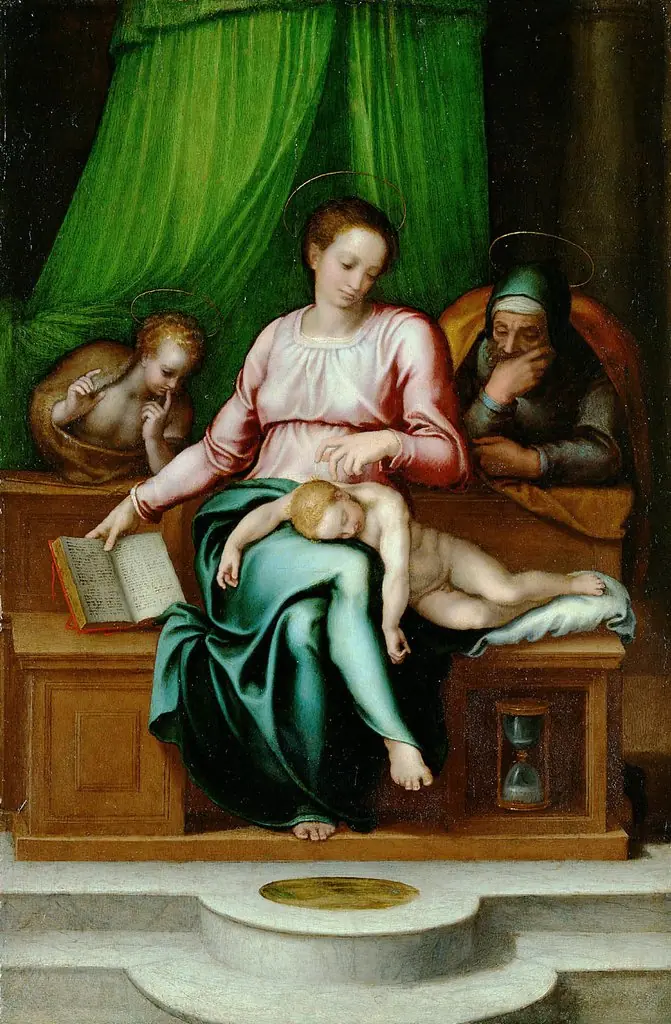
Artist & collection
Artist
Marcello Venusti (1512 – 15 October 1579) was an Italian Mannerist painter active in Rome in the mid-16th century.

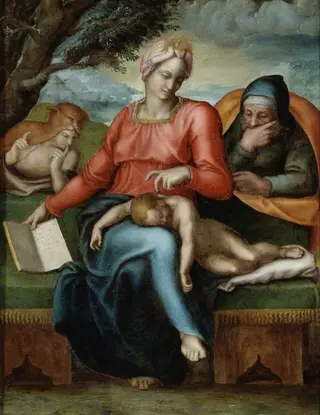 The Holy Family with the young St John
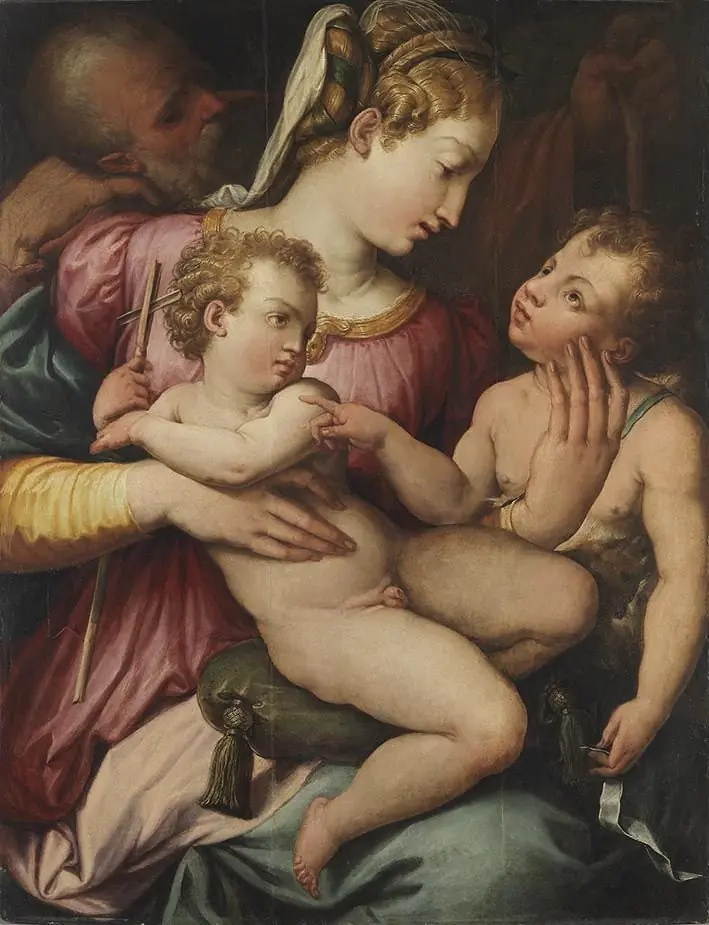 Holy family with little John the Baptist
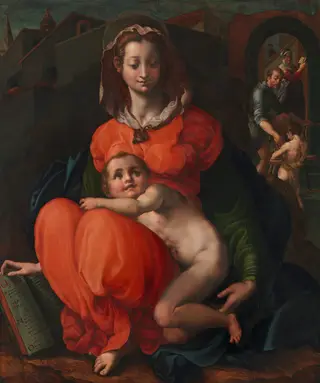 Maria mit dem Kinde (Werkstatt)
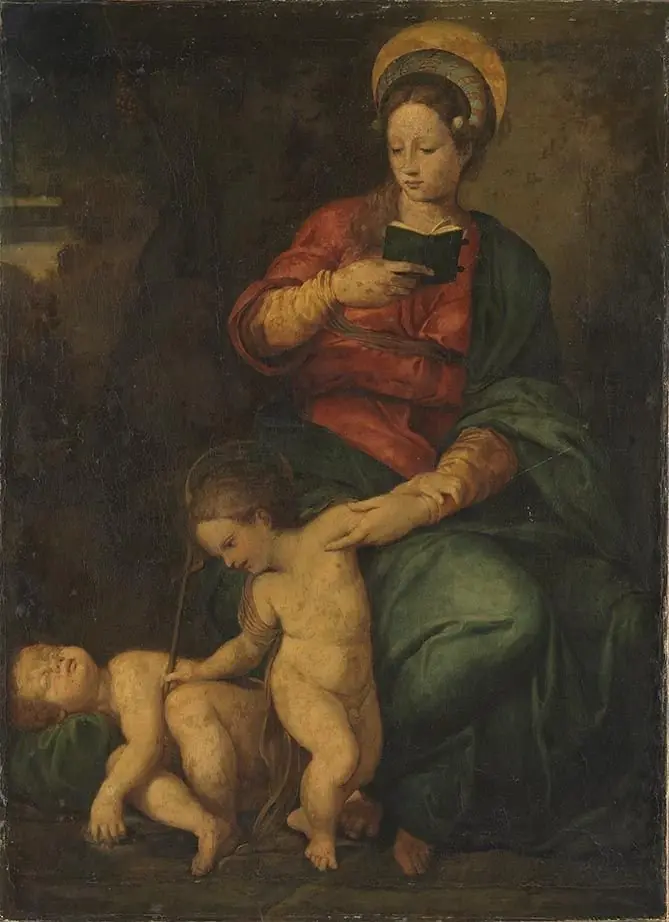 Mary with Child and John the Baptist
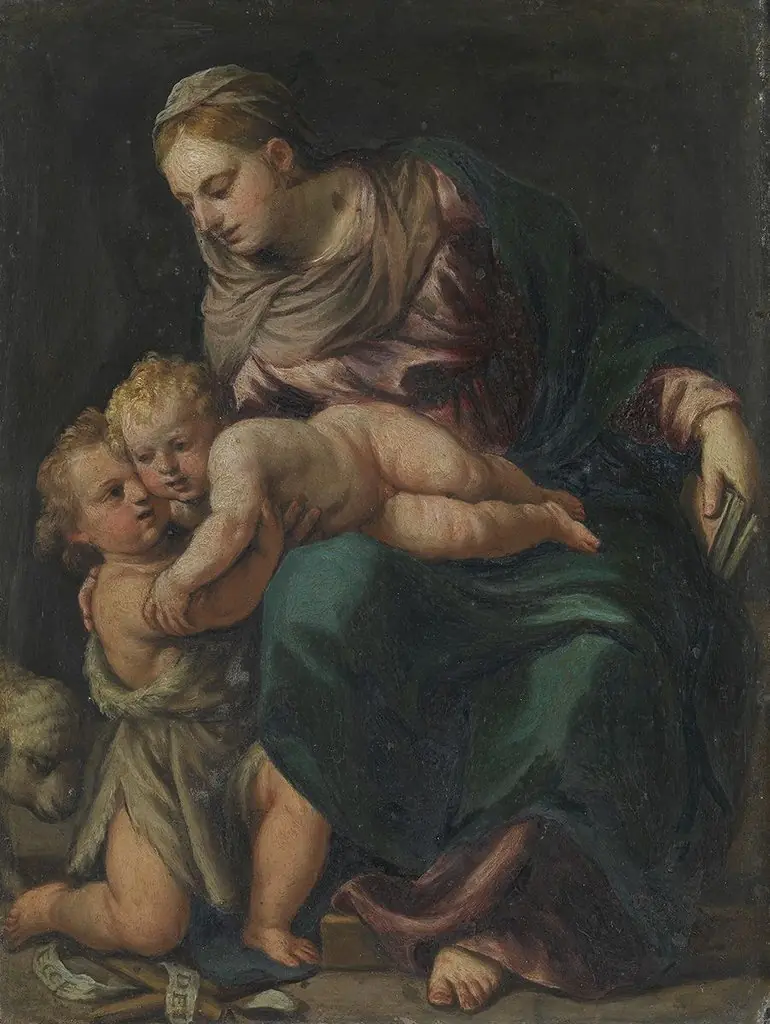 Maria mit dem Kinde und dem Johannesknaben
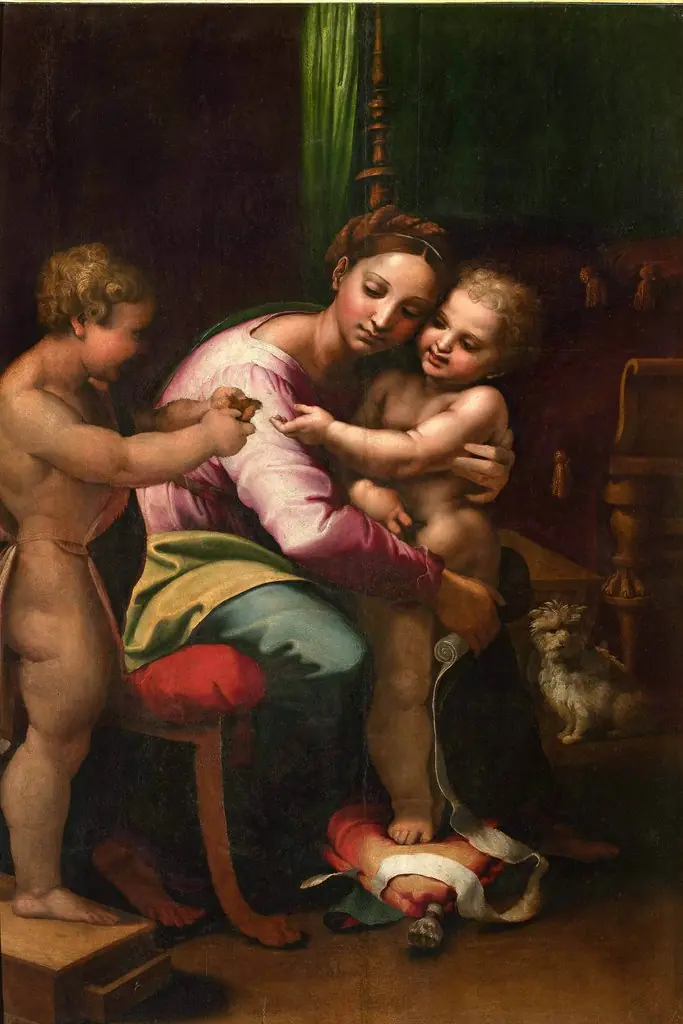 Madonna and Child with The Infant Saint John the Baptist
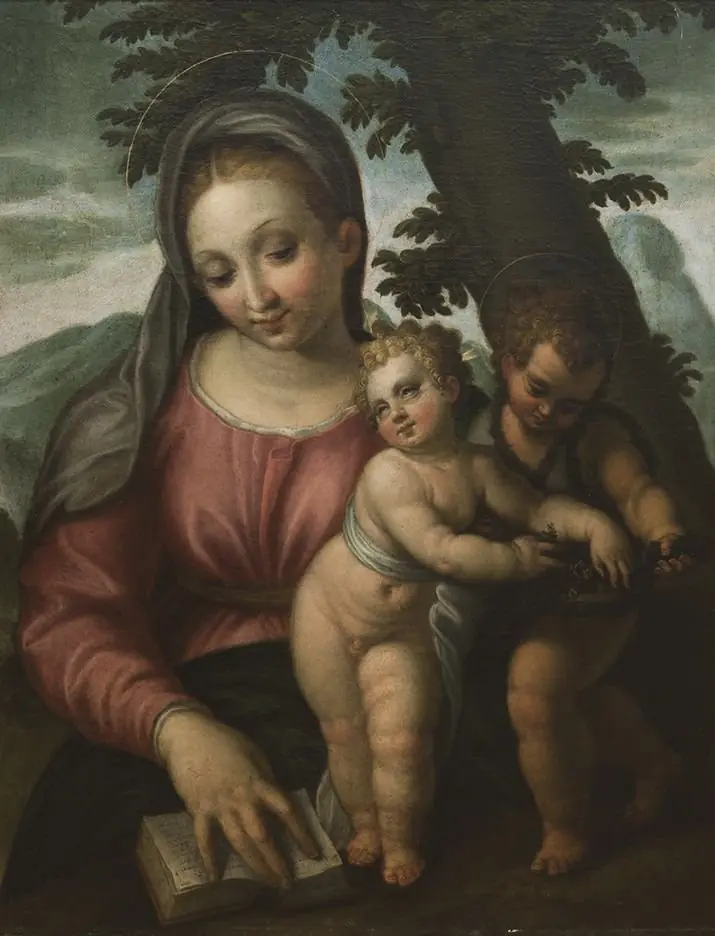 Maria mit Jesuskind und Johannes
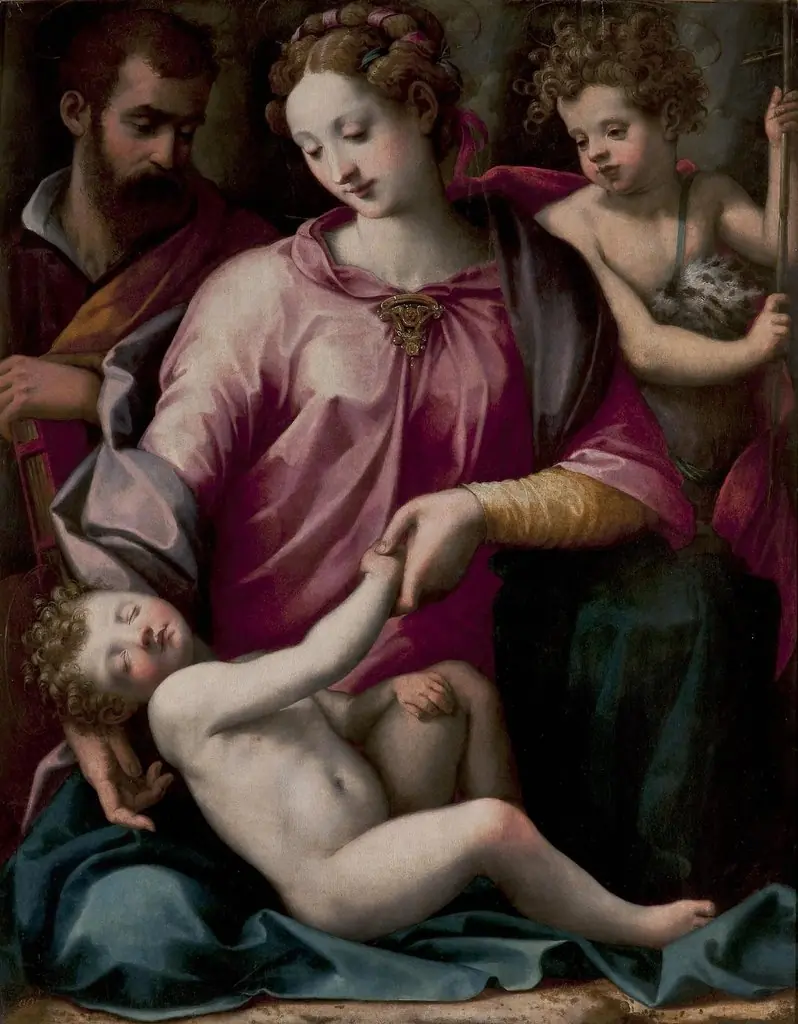 Holy Family with St John the Baptist
 The Holy Family
 The Virgin and Child with Saints Elizabeth and John the Baptist
 The Holy Family