Artwork
Holy Family with St John the Baptist
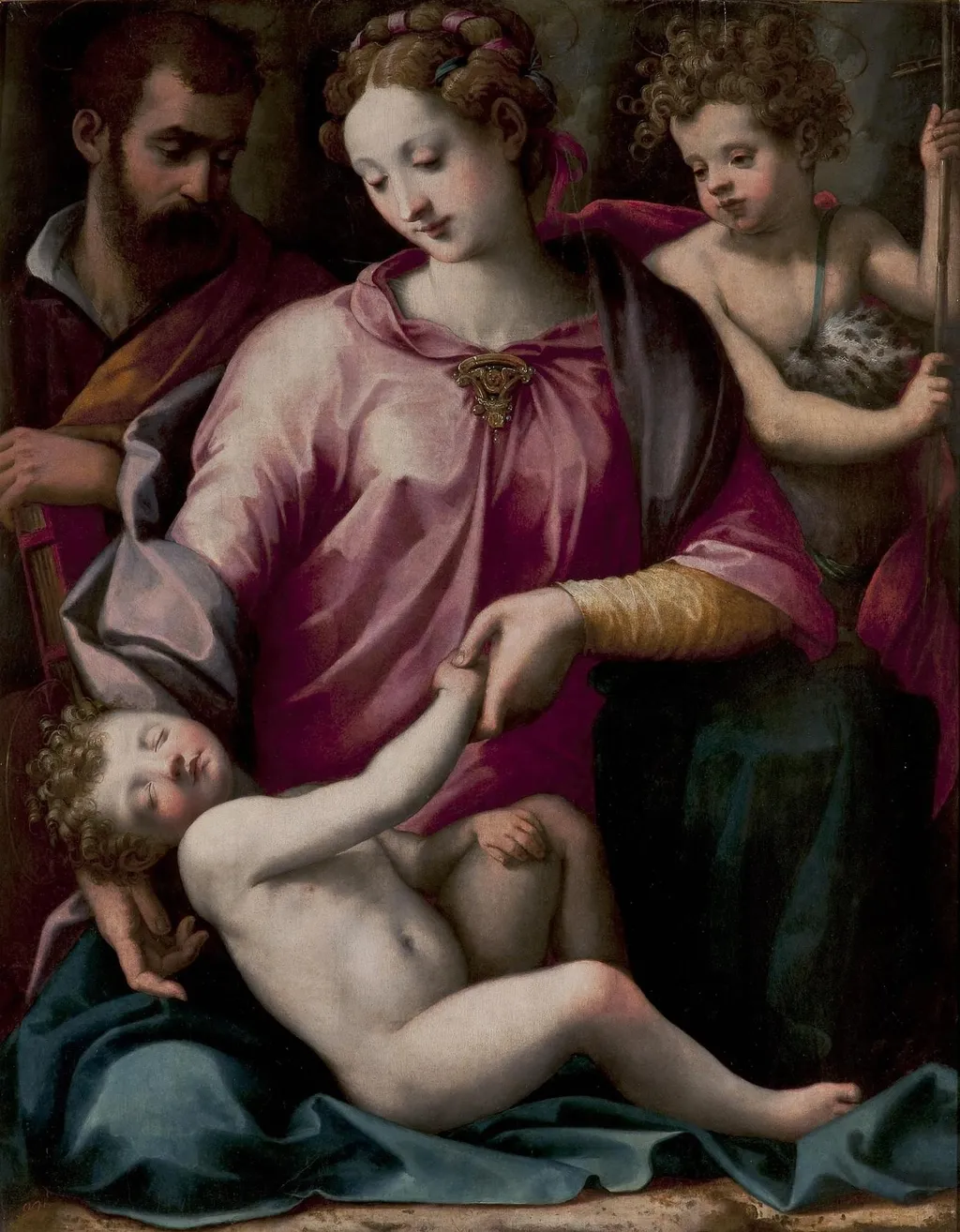
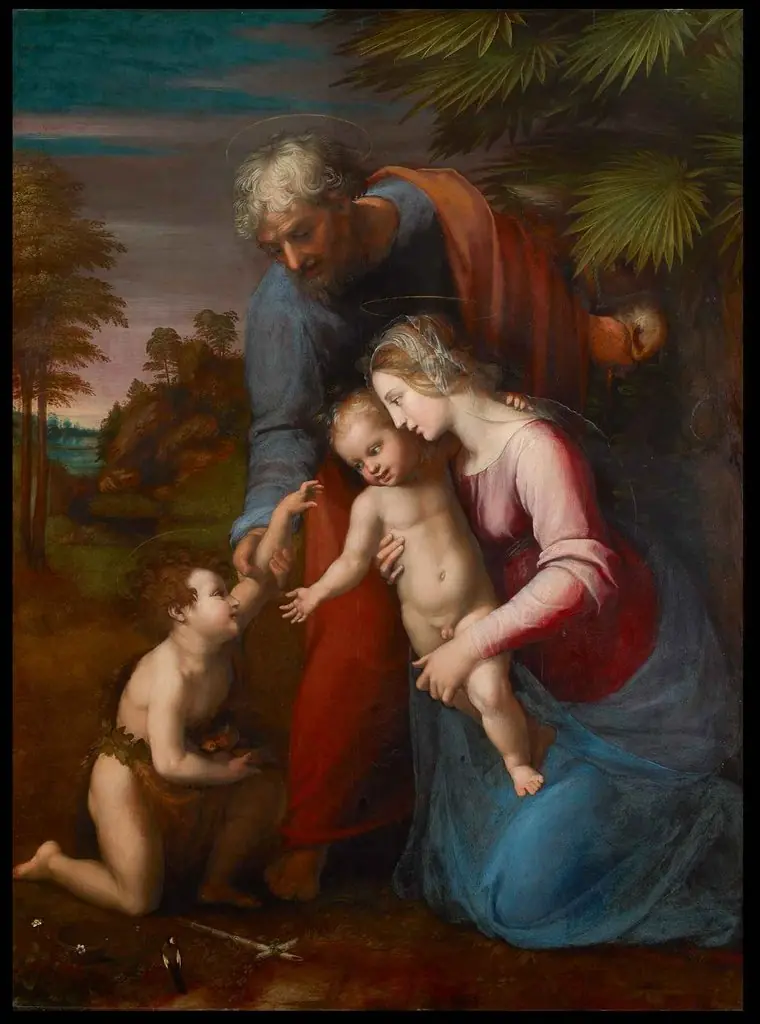
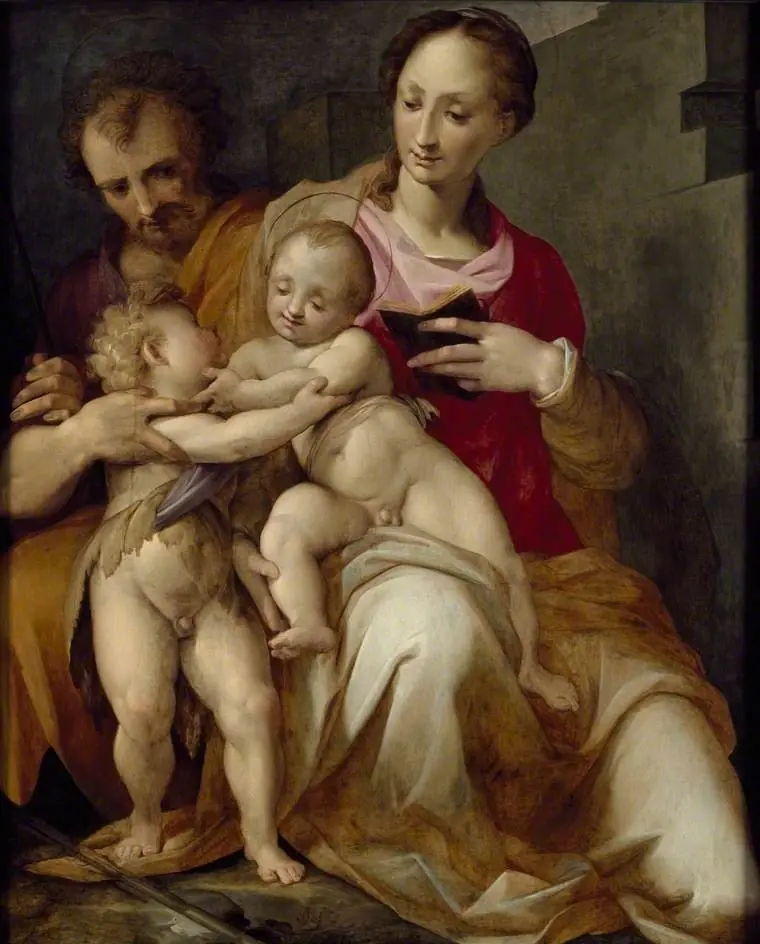
Holy Family with St John the Baptist is an oil painting by the Mannerist artist Michele Tosini. It dates from 1550 and is held in the collection of the Hermitage Museum.
About this work
Overview
Holy Family with St John the Baptist is an oil painting on poplar panel by the Florentine artist Michele Tosini, dated to 1550.
Holy Family with St John the Baptist is an oil painting on poplar panel by the Florentine artist Michele Tosini, dated to 1550. Measuring 122 by 96.5 cm, the work is held in the collection of the State Hermitage Museum in St. Petersburg, where it is accessioned as work number 29781. The painting exemplifies the devotional images of the Madonna and Child that Tosini and his workshop produced for wealthy Florentine patrons during the mid-sixteenth century, representing a significant example of Mannerist religious painting in Florence.
Subject & Meaning
The painting depicts a sacra conversazione of the Holy Family accompanied by the young Saint John the Baptist. At the center sits the Virgin Mary, clad in rose-pink drapery with a golden brooch at her chest and a yellow sleeve on her right arm, her gaze directed downward toward the reclining infant Christ. The nude Christ child lies upon blue fabric, his head tilted back with eyes closed, his right arm reaching upward to touch his mother's finger. To the left stands the bearded Joseph, his head bowed, his right hand resting upon a book or object. To the right stands the young Saint John the Baptist, identifiable by his gray fur garment and the slender staff with a cross-like form that he holds, attributes that signal his role as precursor and herald of Christ. The pyramidal grouping of the four figures, the intimate gesture between mother and child, and the contemplative demeanor of Joseph all direct the viewer toward meditation on the Incarnation and the future sacrifice of Christ. The blue cloth pooling beneath the infant and the dark green drapery at the right edge provide chromatic and symbolic depth, while the undefined dark background isolates the sacred figures for devotional focus.
Technique & Style
Tosini executed the painting in oil on poplar panel, a support typical of Florentine panel painting in the sixteenth century. The technique displays the smooth, polished brushwork and subtle modeling of forms characteristic of his refined Madonna and Child compositions. Light falls from the upper left, illuminating the faces and central figures while allowing the background to recede into darkness, a dramatic lighting scheme that creates soft transitions between light and shadow. The palette is dominated by deep rose, mauve, blue, and golden yellow, with pale flesh tones emerging from shadow. This coloristic richness, combined with the pyramidal composition and the figures pressed against the picture plane, aligns with the Mannerist style that Tosini cultivated in the decades following the death of his mentor Ridolfo Ghirlandaio in 1561. The surface condition shows the polished finish that Tosini favored in his most successful devotional works.
History & Provenance
The painting was created in Italy in 1550, during the period when Tosini and his workshop were actively producing devotional paintings for private patrons in Florence. The work entered the collection of the State Hermitage Museum in St. Petersburg at an unspecified date. It is currently held there under accession number 29781. The painting has been reproduced and made available through the museum's digital collection, and photographic reproductions have circulated through Wikimedia Commons since at least 2017.
Context
Michele Tosini (1503-1577), also known as Michele di Ridolfo del Ghirlandaio, occupied a significant position in mid-Cinquecento Florence as the inheritor of the large and productive Ghirlandaio workshop following the death of Ridolfo Ghirlandaio in 1561. Working between approximately 1540 and the early 1560s, Tosini and his assistants produced numerous paintings featuring the Madonna and Child with Saint John the Baptist for the private devotion of wealthy Florentine patrons. Scholarly attention to Tosini's work has been shaped by the dissertation and subsequent publications of Heidi Hornick, who established the contours of his oeuvre and the reception of Mannerism in Florence. The Hermitage painting belongs to this productive phase of Tosini's career, when he repeatedly refined and altered successful compositional formulas to meet devotional demand. The work shares with other paintings from Tosini's workshop the characteristic elongated figures, pyramidal composition, and the Virgin in pink dress that scholars have identified as hallmarks of his manner.
Legacy
The painting occupies a place within the broader tradition of Florentine devotional images that Tosini and his workshop disseminated throughout the mid-sixteenth century. While individual works by Tosini have not achieved the same canonical status as those by Andrea del Sarto or other leading Florentine painters, the Hermitage panel represents the refined, commercially successful devotional production that sustained the Ghirlandaio workshop tradition into the later Renaissance. The work's afterlife in the modern era has been shaped by its inclusion in the Hermitage's digital collection and its circulation as a public domain image through platforms including Wikimedia Commons, where it has served as a representative example of Tosini's religious painting. The painting has also been reproduced as commercial art prints, extending its reach beyond scholarly and museum audiences.
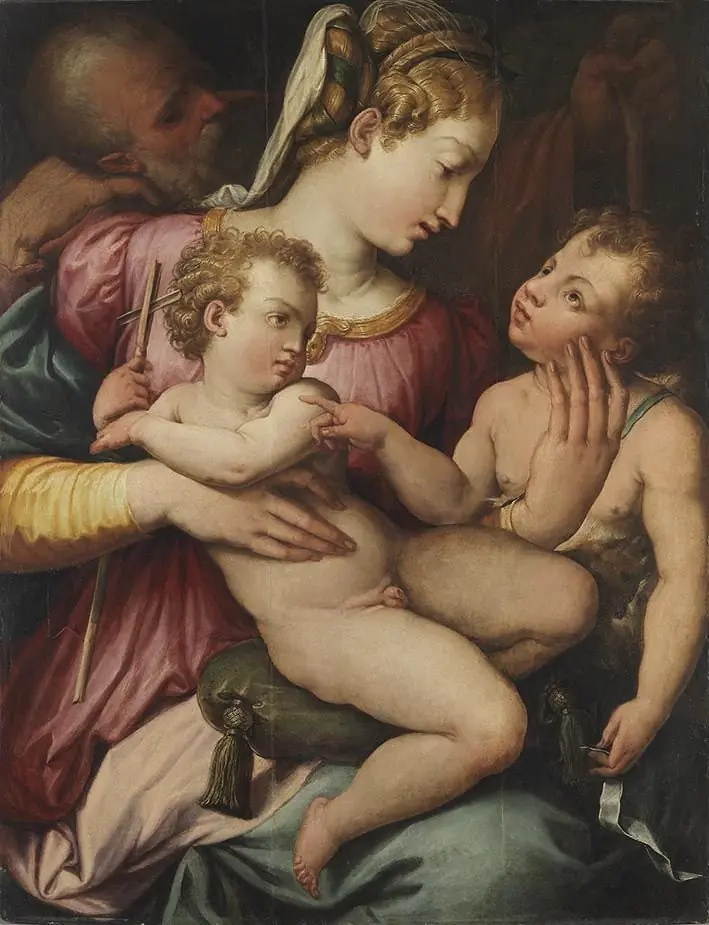
Own this work as a print
Artist & collection
Artist
Michele Tosini, also called Michele di Ridolfo, (1503–1577) was an Italian painter of the Renaissance and Mannerist period, who worked in Florence.

- Holy family with little John the Baptist
 The Holy Family with Saint John the Baptist
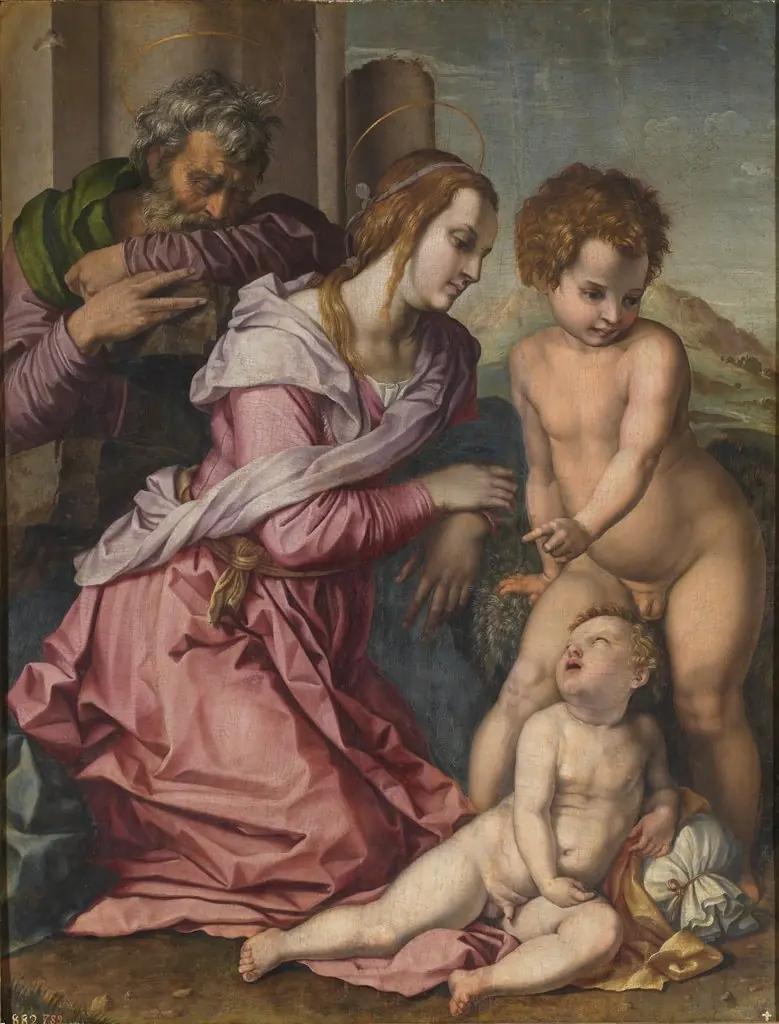 The Holy Family with the Infant Saint John the Baptist
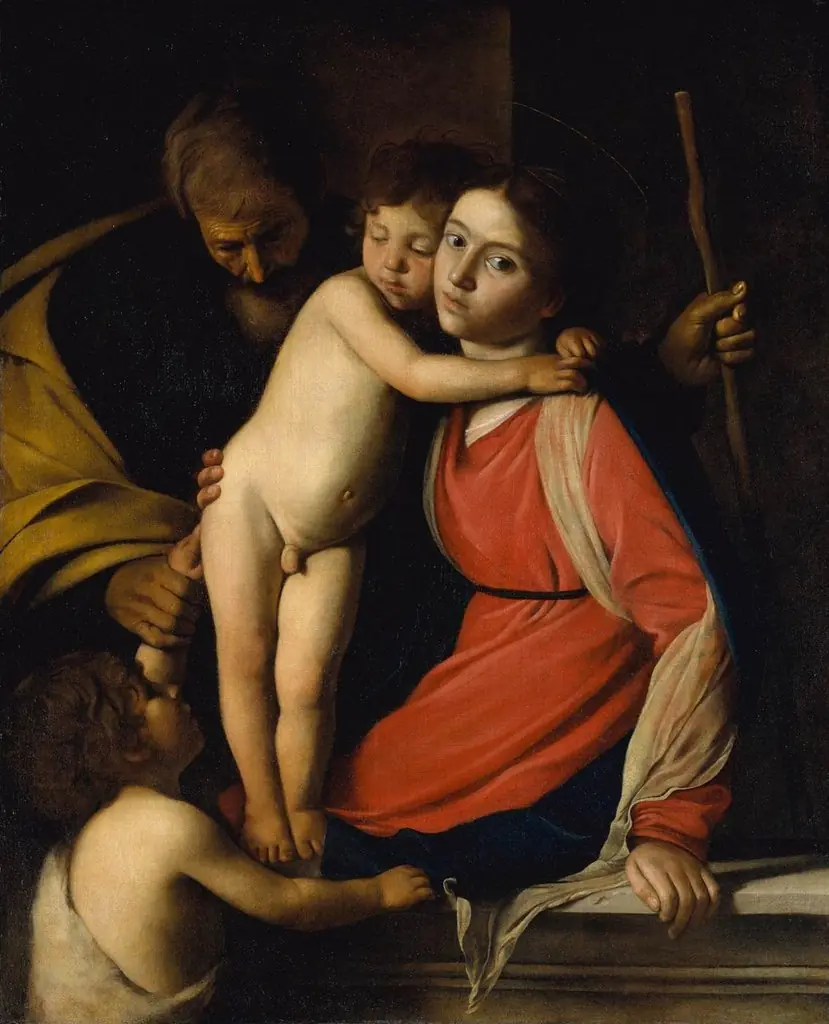 The Holy Family with Saint John the Baptist
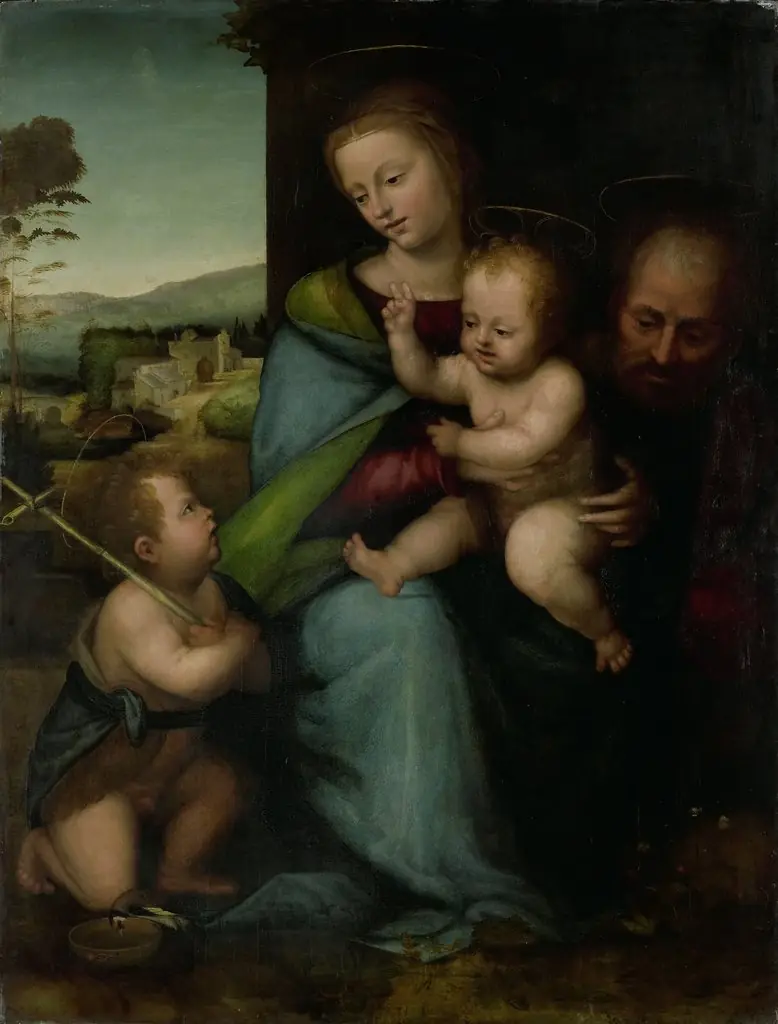 The Holy Family with the Infant John the Baptist
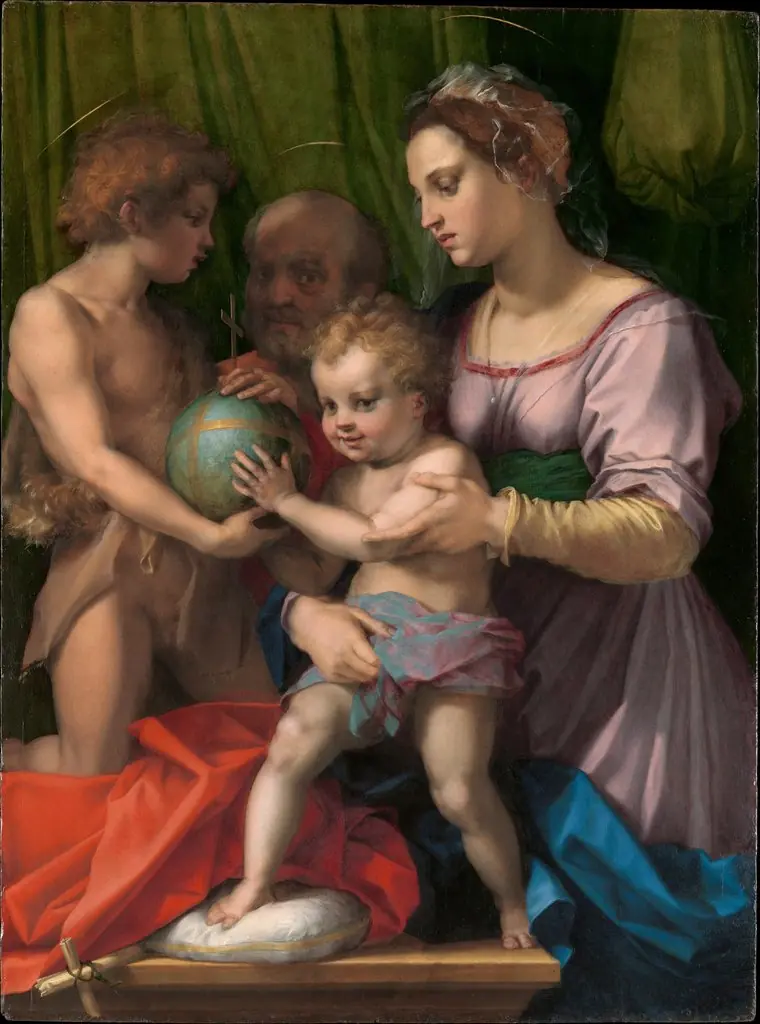 The Holy Family with the Young Saint John the Baptist
 Holy Family with St. John the Baptist as child
 The Holy Family with St John the Baptist
 The Holy Family with Saint John
 The Holy Family with Child Saint John