Artwork
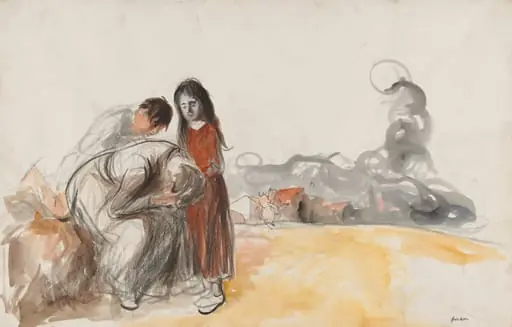
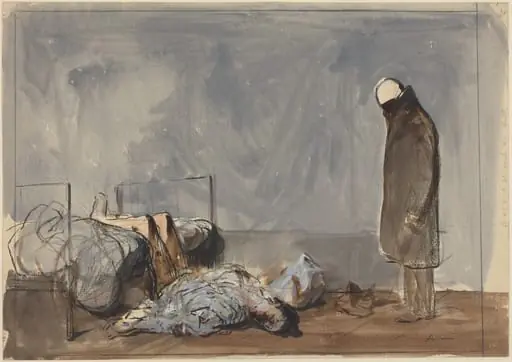
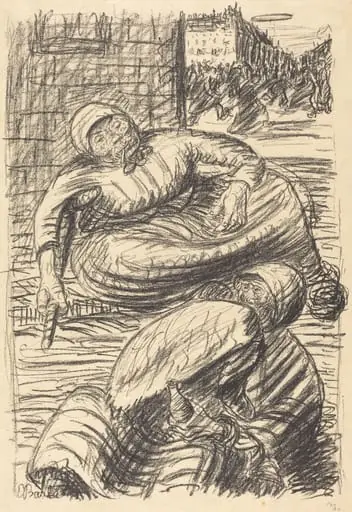
Desen reprezentând „Familiile greviștilor din 1933”, realizat de Maria Arbore, în tuș și acuarelã
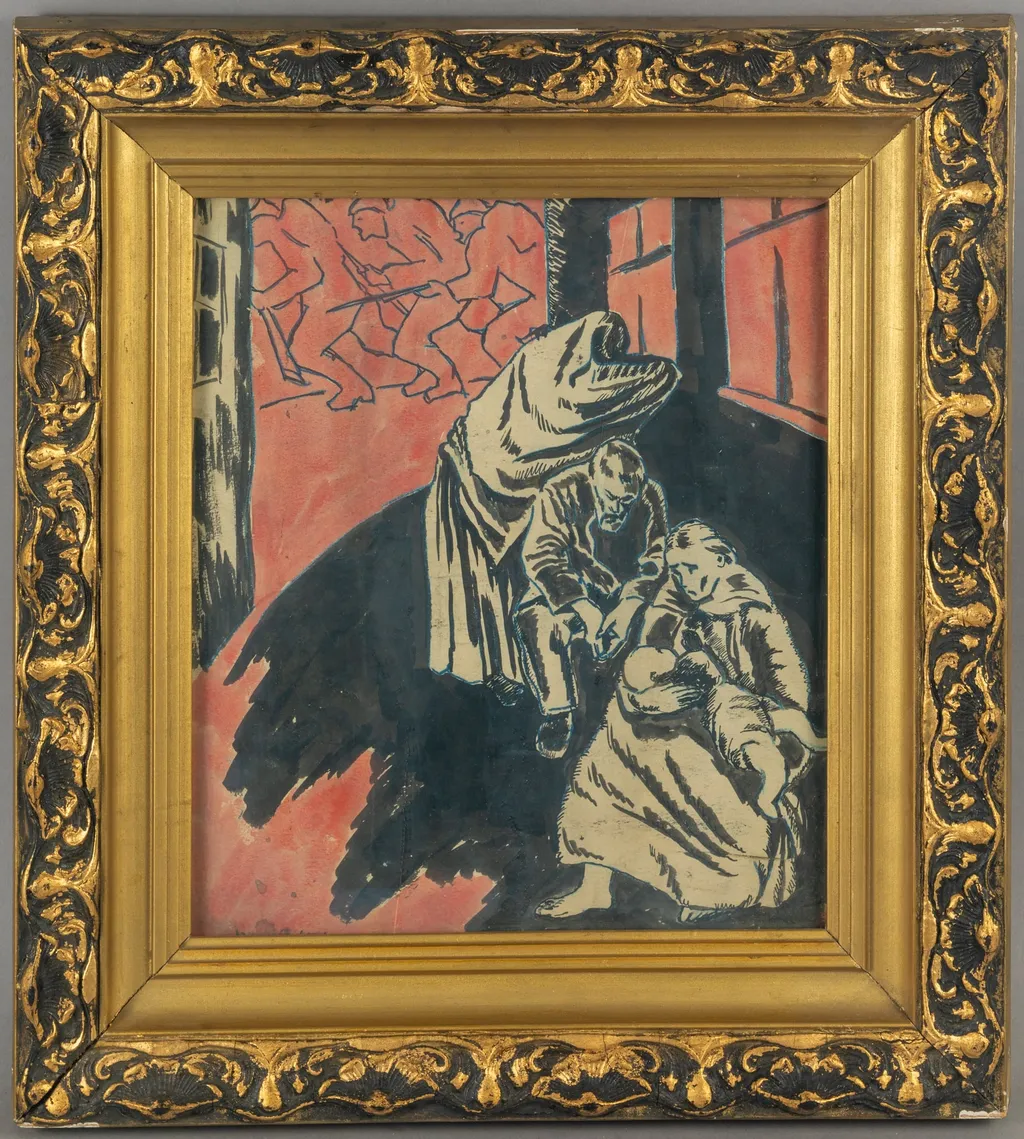
Desen reprezentând „Familiile greviștilor din 1933”, realizat de Maria Arbore, în tuș și acuarelã is a drawing by Maria Arbore. It is held in the collection of the National Museum of Romanian History.
About this work
Overview
Maria Arbore’s drawing, titled “Familiile greviștilor din 1933,” is executed in ink and watercolor. The work portrays a group of modestly dressed individuals gathered together, their expressions and posture suggesting hardship. Muted tonalities dominate the composition, reinforcing a sober atmosphere. The piece is part of the collection of the Museum of Ethnography.
Subject & Meaning
The scene focuses on families associated with the 1933 greviști, a period marked by economic and social strain. By presenting the figures in simple attire and a restrained setting, Arbore emphasizes the collective vulnerability and resilience of ordinary people confronting adversity.
Technique & Style
Arbore combines fine ink line work with delicate watercolor washes, allowing subtle gradations of tone. The restrained palette of grays and earth tones limits visual distraction, while the loose, almost sketch‑like handling of the medium conveys immediacy and emotional weight without elaborate detail.
History & Provenance
Created in 1933, the drawing has remained within Romanian institutional holdings, eventually entering the Museum of Ethnography’s archives. Its acquisition reflects the museum’s commitment to documenting social conditions through visual art during the interwar period.
Context
The work belongs to a broader tradition of Romanian ethnographic illustration that recorded rural life and social upheavals. Produced during a time of widespread economic difficulty, the piece aligns with contemporary efforts to document the lived experience of marginalized communities through straightforward, documentary aesthetics.
Artist & collection
Artist
Maria Arbore carried a sketchbook like a second house key, always in her pocket, always open to whatever the street showed her.