Artwork
John Quarles, Poet
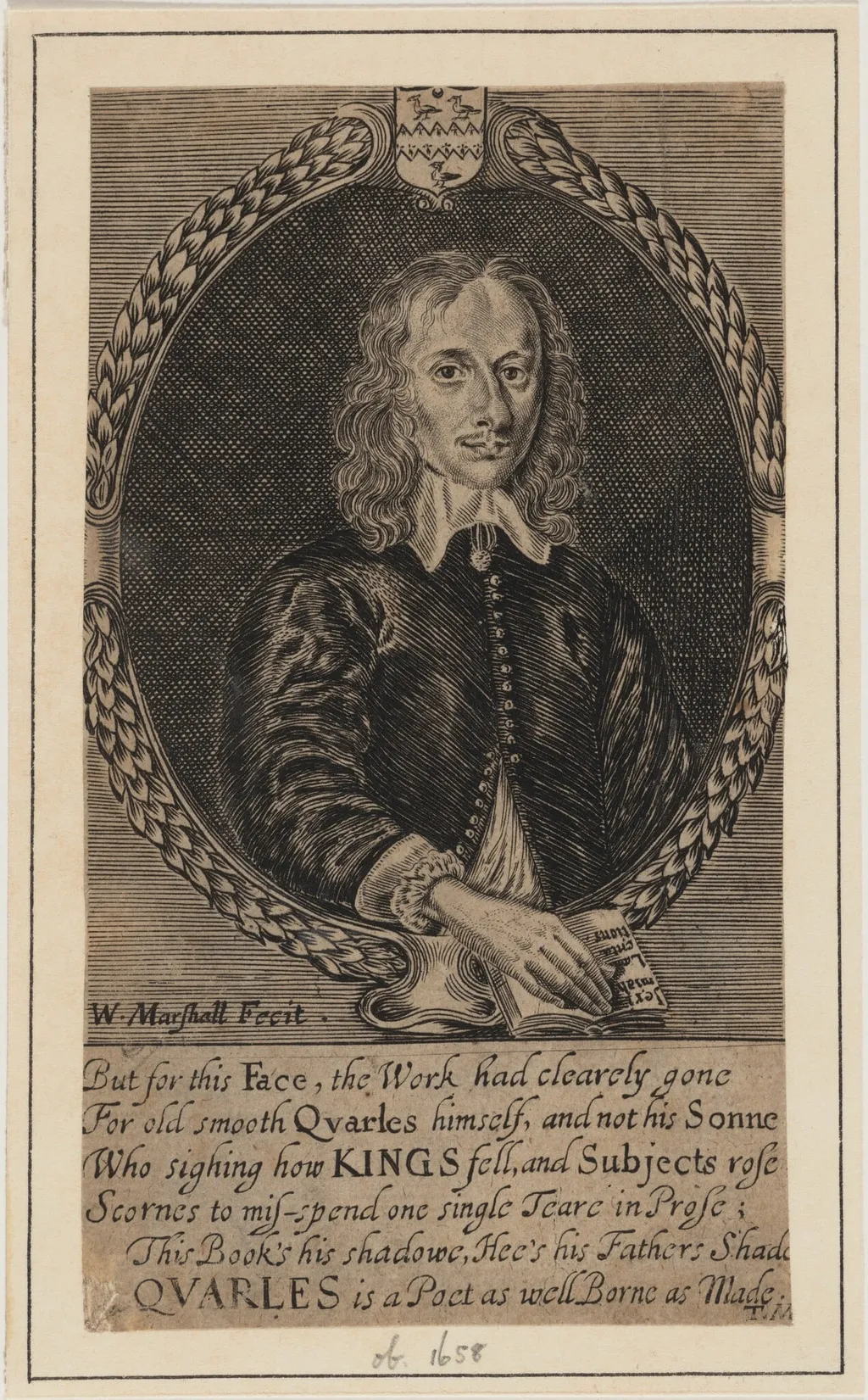
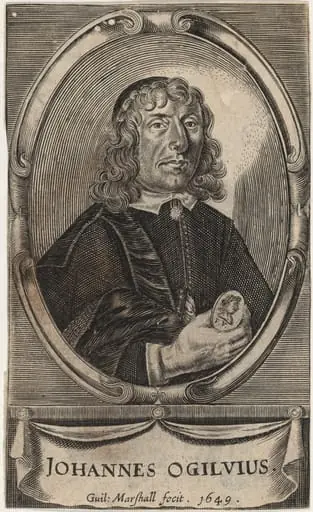
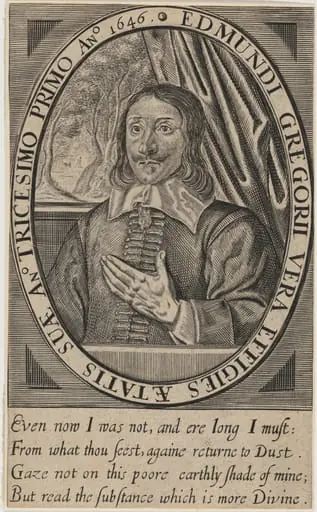
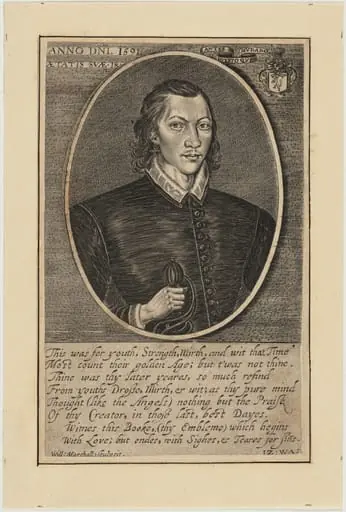
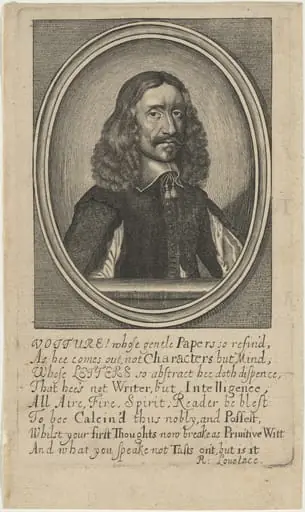
John Quarles, Poet is an ink print by the Baroque artist William Marshall. It dates from 1649 and is held in the collection of the National Gallery of Art.
About this work
Overview
Executed in fine line work on paper, the print was likely produced as a frontispiece for a published collection of his writings.
This 1649 engraving by William Marshall depicts John Quarles, an English poet and writer, in a formal portrait. Executed in fine line work on paper, the print was likely produced as a frontispiece for a published collection of his writings. The composition emphasizes intellectual dignity through restrained composition and precise detail, typical of mid-seventeenth-century English portraiture in print.
Subject & Meaning
John Quarles is portrayed as a man of letters, identified by the book he holds in his left hand, its presence signaling literary engagement. His right hand rests gently atop it, suggesting contemplation or ownership. The refined clothing, dark jacket, high white collar, and curled hair, conveys social standing and cultural cultivation, aligning his image with the ideals of the learned gentleman in post-Civil War England.
Technique & Style
Marshall employed fine, controlled engraving lines to render texture and form, capturing the softness of hair, the sheen of fabric, and the crispness of the collar. The dark, unbroken background isolates the figure, focusing attention on his face and hands. A decorative border frames the image, a common feature in printed portraits of the period, enhancing its status as a preserved likeness rather than a casual sketch.
History & Provenance
Created in 1649, the engraving was likely commissioned to accompany Quarles’s published works, a practice common among poets seeking to establish literary credibility. Marshall, known for his book illustrations and portrait engravings, was active in London during the Interregnum. The print survives in several institutional collections, indicating its early circulation and enduring association with Quarles’s literary legacy.
Context
In the political and cultural turbulence of 1649, following the execution of Charles I, portraits of literary figures served as subtle assertions of continuity in civil society. Quarles, a Royalist sympathizer, was part of a network of writers preserving cultural identity amid upheaval. This engraving reflects a broader trend of using print to immortalize authors when public monuments and patronage were unstable.
Legacy
Though Quarles’s poetry faded from mainstream attention after the Restoration, this engraving remains one of the few visual records of his likeness. It continues to appear in scholarly editions of his work and in archives documenting the history of English print culture. As a specimen of Marshall’s craftsmanship and a marker of literary identity, it offers insight into how writers were visually constructed in early modern England.
Own this work as a print
Artist & collection