Artwork
Sir Thomas More, Epigrammata
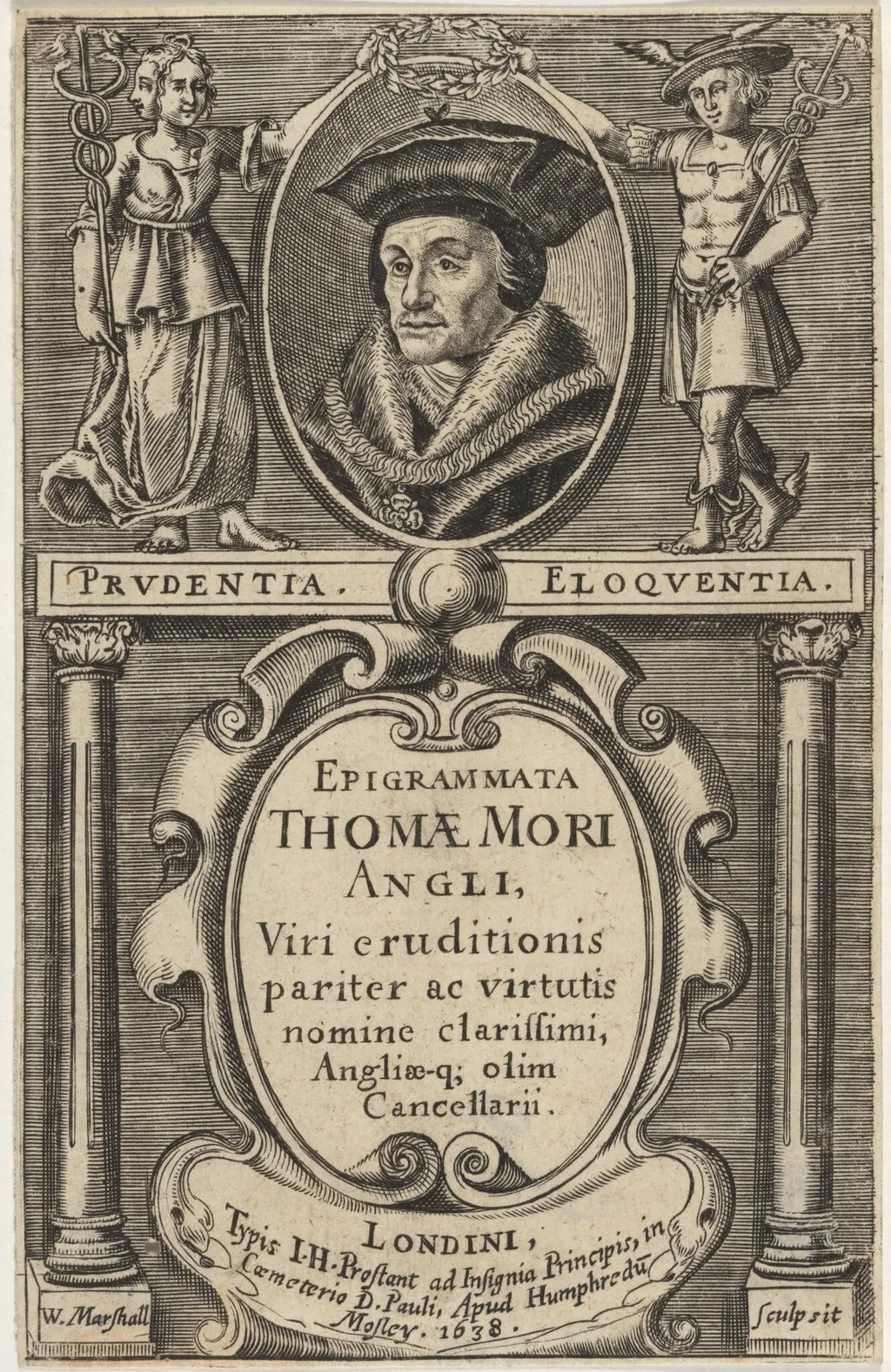
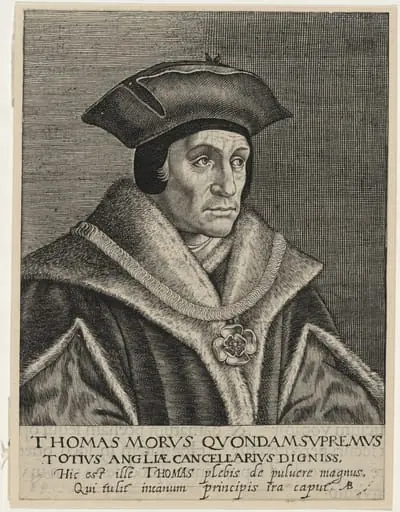
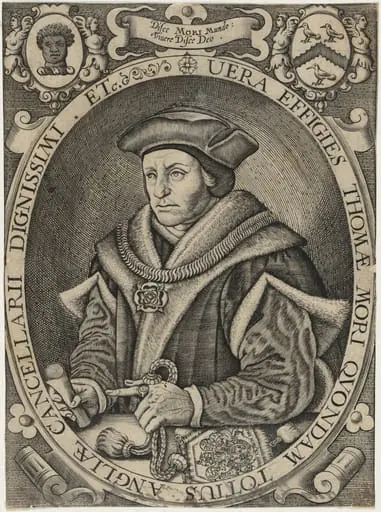
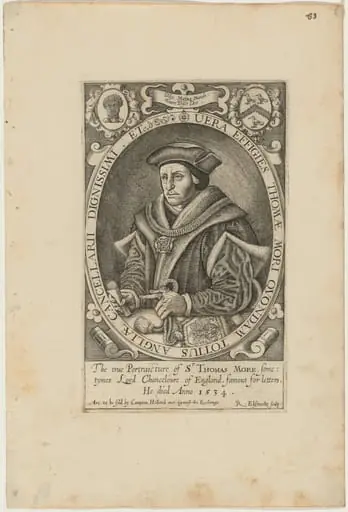
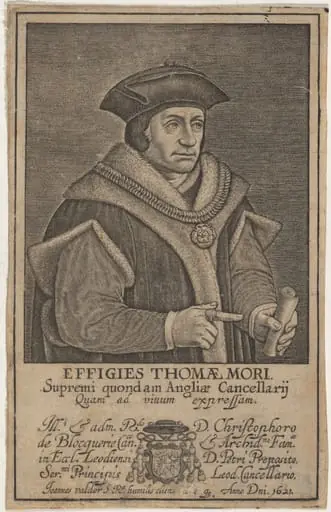
Sir Thomas More, Epigrammata is an ink print by the Baroque artist William Marshall. It dates from 1638 and is held in the collection of the National Gallery of Art.
About this work
Next, check out the technique: engraving to see how artists like this carved detailed images into metal.
This engraving shows a serious man in a dark hat and fur collar, framed by two standing figures. One figure holds a scroll, the other a spear. The background has fancy scrollwork and Latin words like PRUDENTIA and ELOQUENTIA at the top.
The man’s portrait sits in a book cover design, printed in 1638. The text praises him as a learned and virtuous Englishman. The artist used fine lines to create shadows and textures.
Next, check out the technique: engraving to see how artists like this carved detailed images into metal.
Overview
William Marshall’s 1638 engraving presents Sir Thomas More as a solemn figure wearing a dark hat and a fur‑trimmed collar. He is framed by two standing attendants, one clutching a scroll, the other a spear, against a backdrop of elaborate scrollwork that includes the Latin virtues PRUDENTIA and ELOQUENTIA. The composition functions as a printed tribute, highlighting More’s reputation as a learned and virtuous Englishman.
Subject & Meaning
The central portrait of Sir Thomas More conveys dignity and intellectual gravitas, reinforced by the surrounding symbols. The scroll suggests scholarship, while the spear alludes to martial virtue, together underscoring the Renaissance ideal of a well‑rounded statesman. The Latin inscriptions, translating to “prudence” and “eloquence,” further articulate the qualities for which More was celebrated.
Technique & Style
Executed as an engraving, the image was incised into a metal plate, allowing Marshall to render fine linear detail. Delicate hatching creates subtle shadows and texture on the fur collar and facial features, while the ornamental borders demonstrate the period’s penchant for intricate decorative motifs. The precision of the line work exemplifies the high level of craftsmanship typical of early‑17th‑century printmaking.
History & Provenance
Printed in 1638, the engraving was likely intended for distribution as a commemorative portrait of Sir Thomas More, who had been executed in 1535. The work reflects contemporary English reverence for More’s moral and intellectual legacy, and it survives as a documented example of Marshall’s output within the broader context of portrait prints that circulated among scholars and collectors.
Own this work as a print
Artist & collection