Artwork
Madame Nicolas Louis Faret
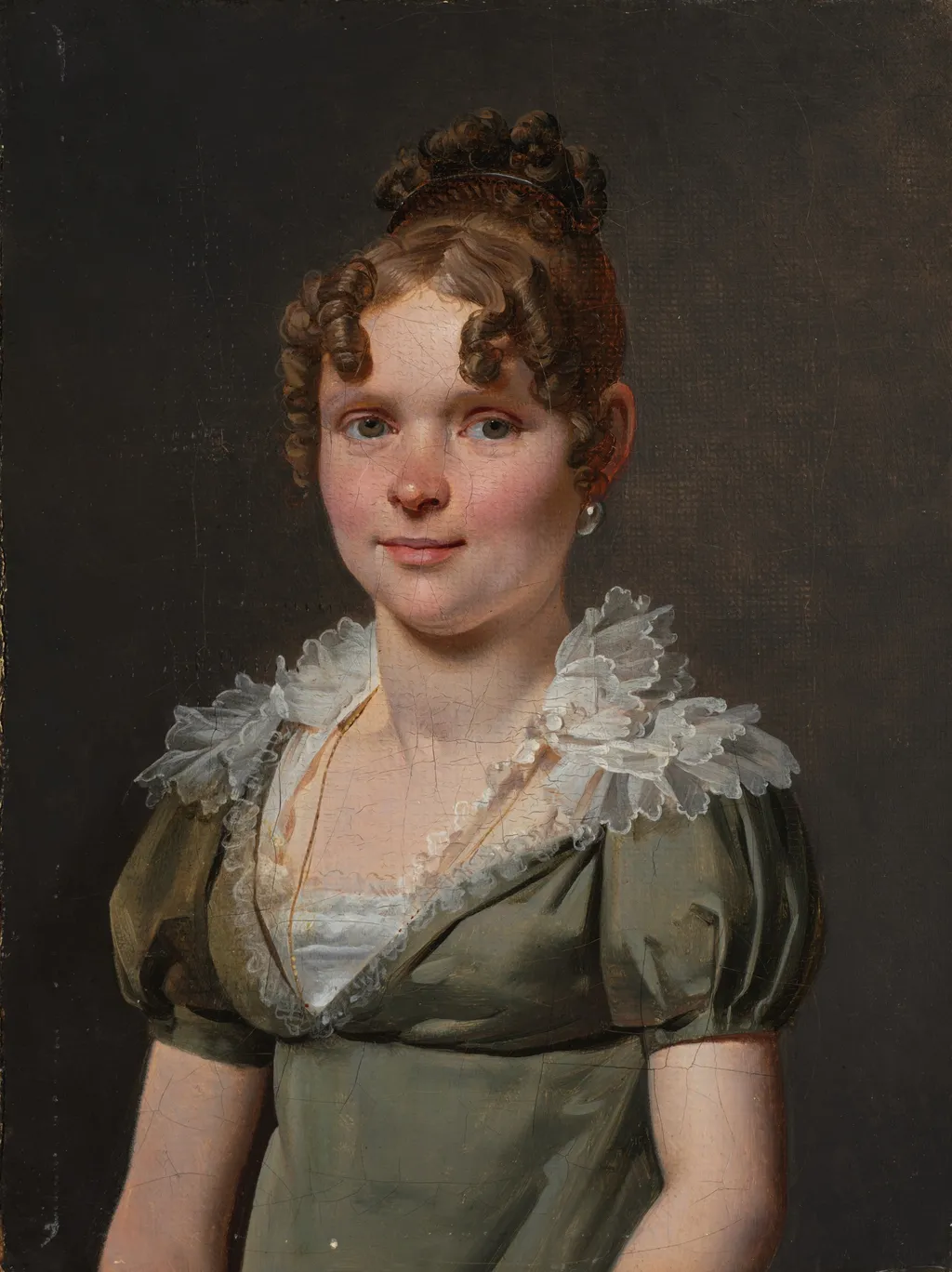
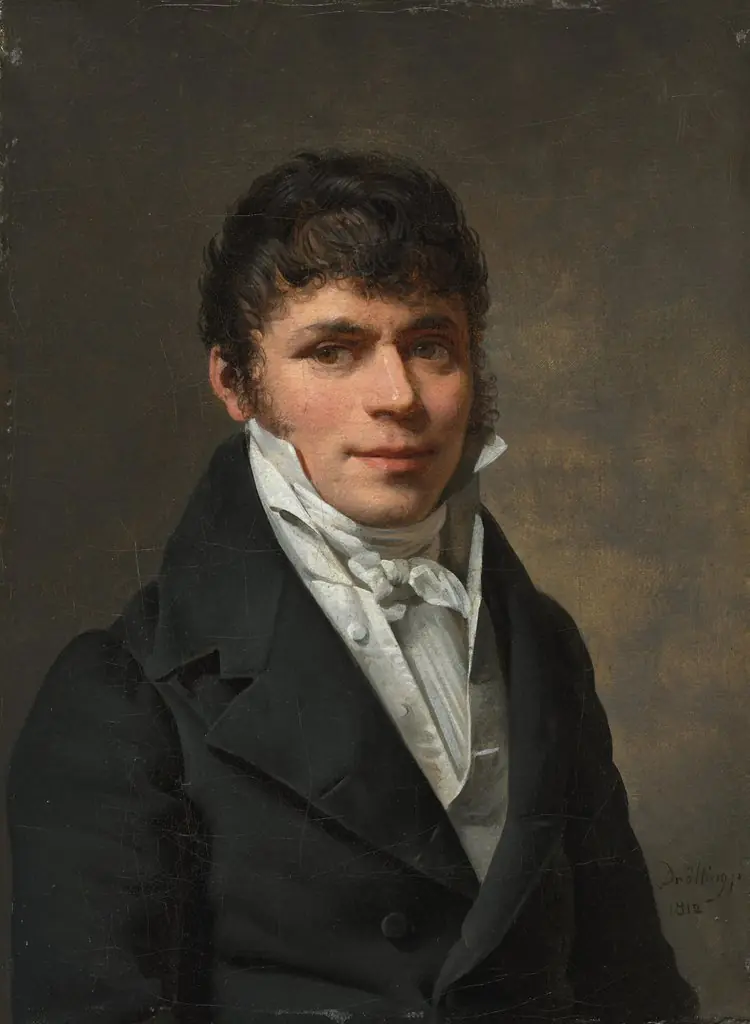
Madame Nicolas Louis Faret is an oil painting by the Biedermeier artist Martin Drolling. It dates from 1812 and is held in the collection of the Cleveland Museum of Art.
About this work
Technique & Style
Martin Drolling employed oil paint on a canvas support, a technique typical of early 19th-century French portraiture.
The painting Madame Nicolas Louis Faret, executed in 1812, is an oil on canvas work measuring 22.4 cm in height by 16.5 cm in width. Martin Drolling employed oil paint on a canvas support, a technique typical of early 19th-century French portraiture. The surface exhibits fine brushwork and subtle modeling, reflecting the academic style of the period. The work is housed in the Cleveland Museum of Art, where it remains part of their collection.
History & Provenance
Martin Drolling painted Madame Nicolas Louis Faret in 1812 while working in France. The work entered the collection of the Cleveland Museum of Art, where it remains on view. The painting measures 22.4 cm by 16.5 cm and is executed in oil on canvas.
Legacy
Madame Nicolas Louis Faret, painted by Martin Drolling in 1812, has been recognized for its technical mastery and historical significance. The work entered the Cleveland Museum of Art collection and continues to be referenced in studies of early 19th-century French portraiture, underscoring its enduring scholarly and curatorial interest.
Overview
Created in 1812 by French painter Martin Drolling, this oil portrait depicts a woman identified as Madame Nicolas Louis Faret. The canvas presents a solitary figure against a muted background, allowing the sitter’s attire and expression to dominate the composition. The work is part of the Cleveland Museum of Art’s collection.
Subject & Meaning
The sitter is shown in a green, high‑necked dress with puffed lace sleeves, her hair arranged in an elevated style with curls framing her face. Her calm, composed expression and the intimate scale of the painting suggest a focus on personal dignity and the private sphere of early‑19th‑century domestic life.
Context
The painting aligns with the Biedermeier aesthetic that favored modest, interior scenes and a restrained elegance. Drolling, known for his detailed interiors, applied the same sensibility to portraiture, reflecting contemporary tastes for refined yet unpretentious representation.
Own this work as a print
Artist & collection
Artist
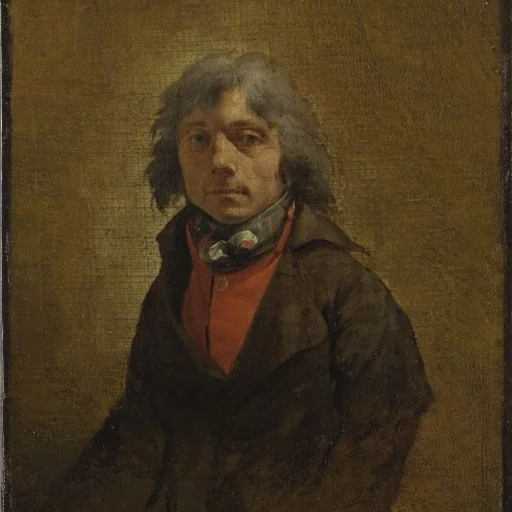
Martin Drolling, or Drolling the Elder (Oberhergheim, 19 September 1752 – Paris, 16 April 1817), was a French painter.

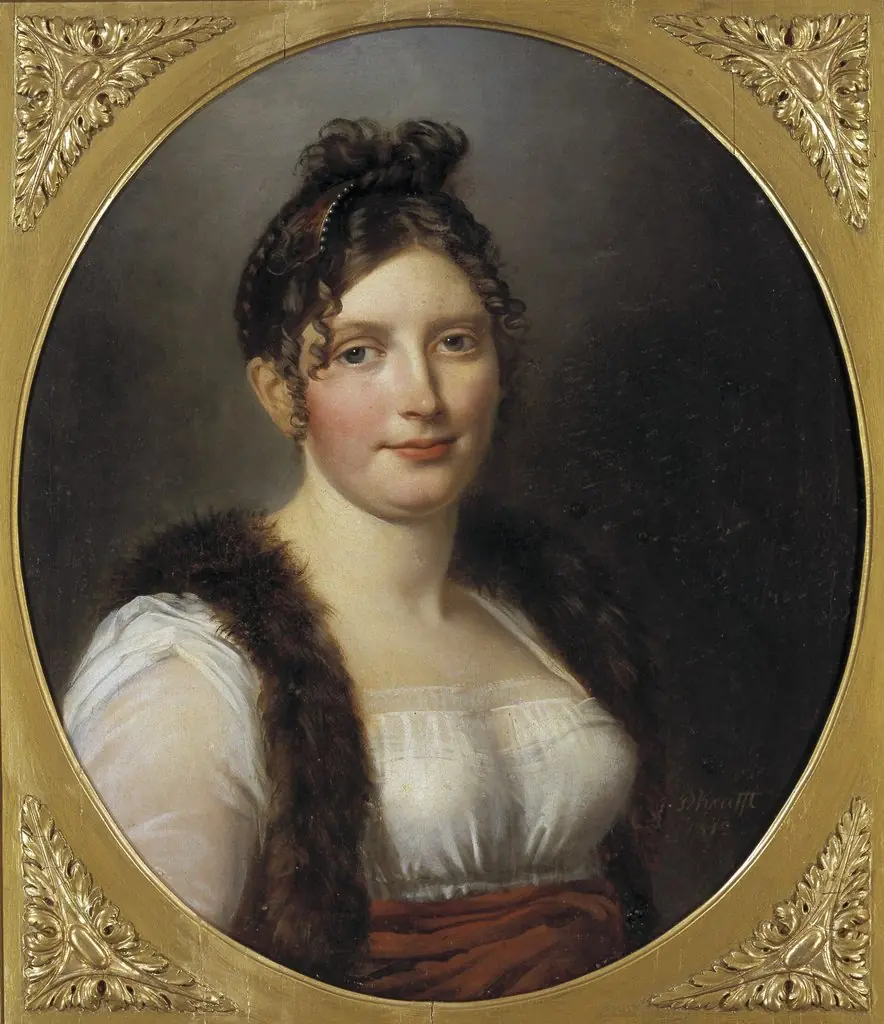 Catharina Charlotta Bågh (1777-1816), gift med friherre Pehr Erik Skjöldebrand
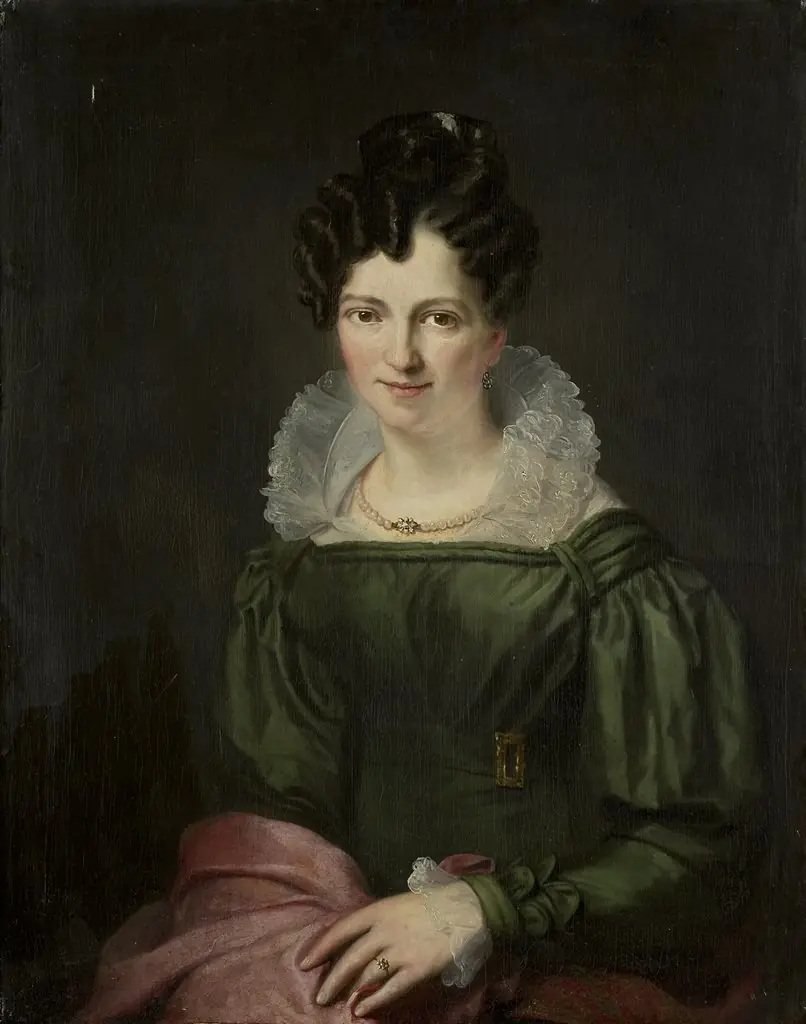 Portrait of Maria Christina Nijssen, Wife of Anthonie van der Hout
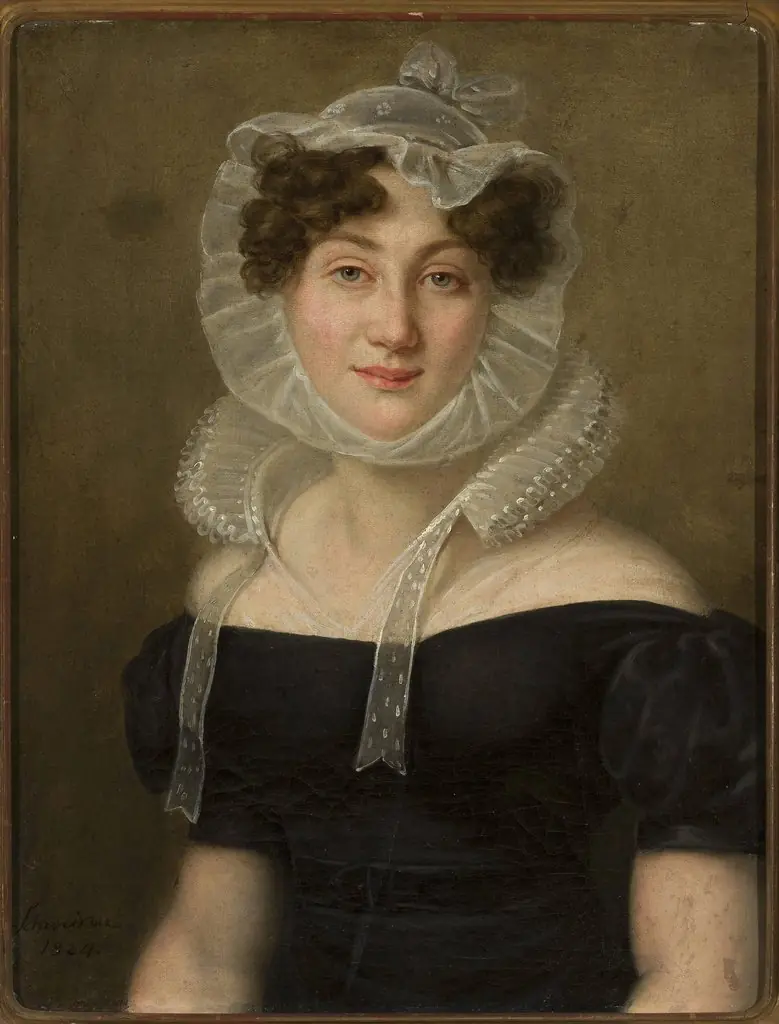 Portrait of a lady in a cap
 Portrait of Hortense de Beauharnais
 Portrait of Hortense de Beauharnais, Queen of Holland
 Portrait of Princess Anna Nikolayevna Golitsyna (?)
 Mathilde Theresia von Irgens-Bergh, née Holsten, the Wife of Mathias Friis von Irgens-Bergh
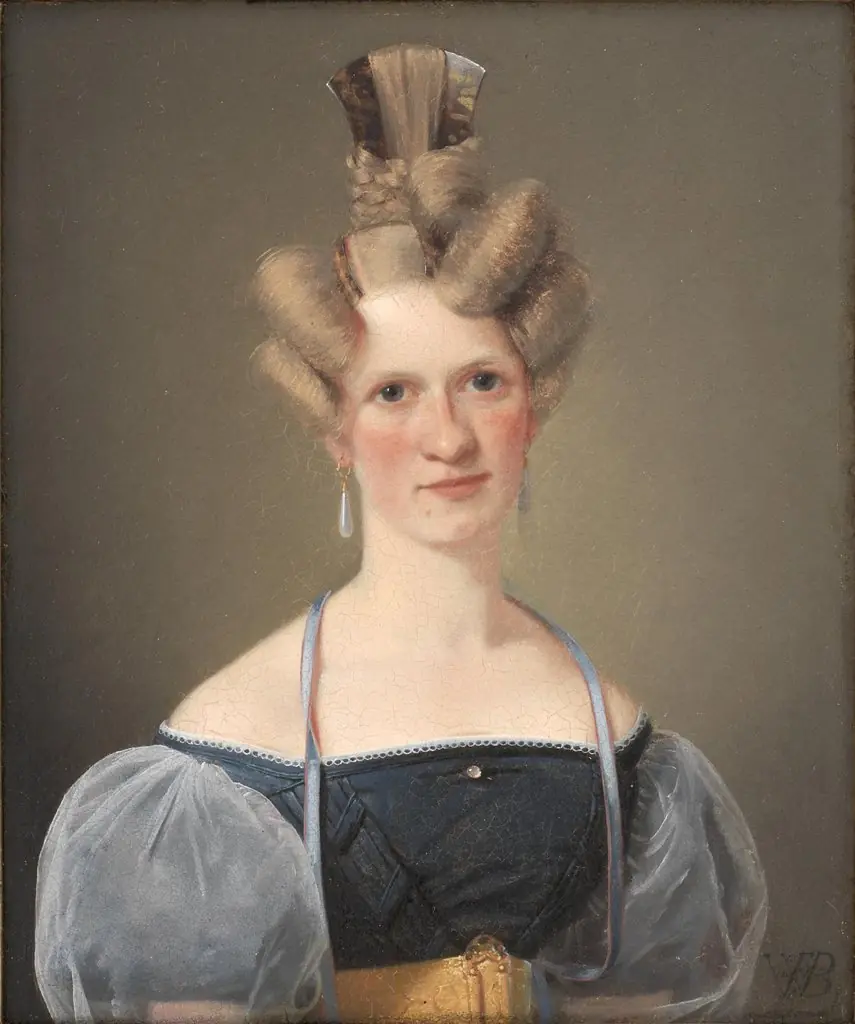 Marie Raffenberg, the Artist's Betrothed
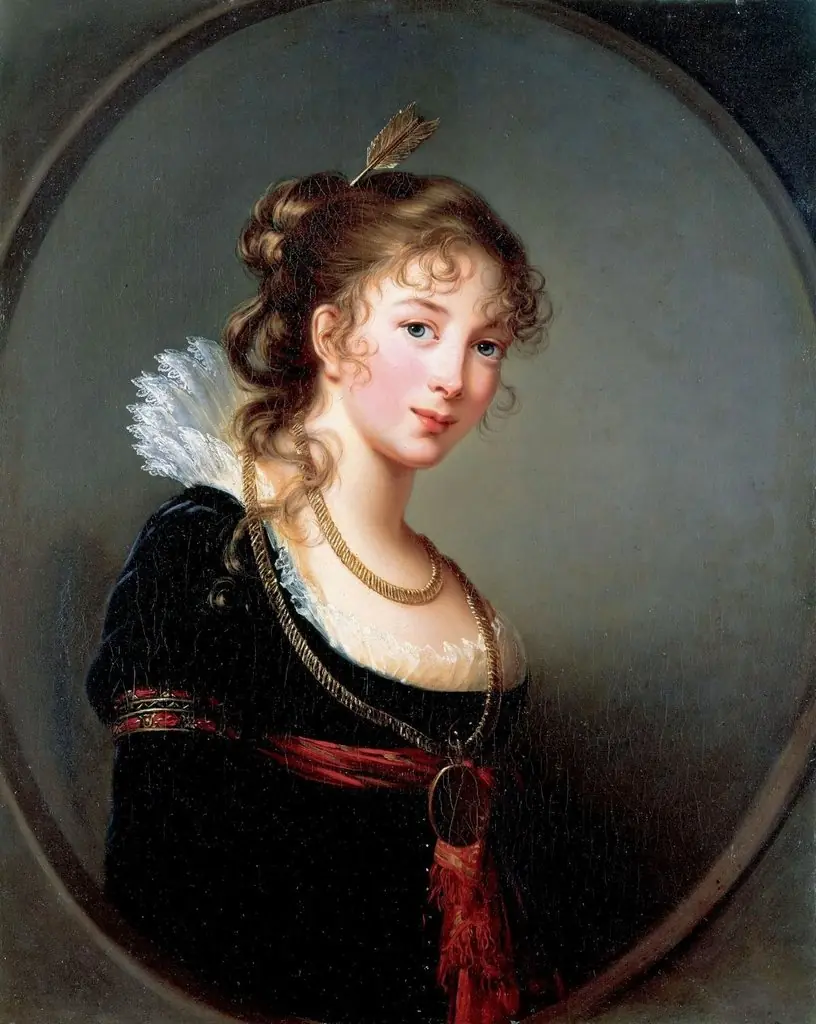 Porträt der Luise von Preußen (1770-1836), Ehefrau von Anton Radziwiłł (1775-1833)