Artwork
The Griffin
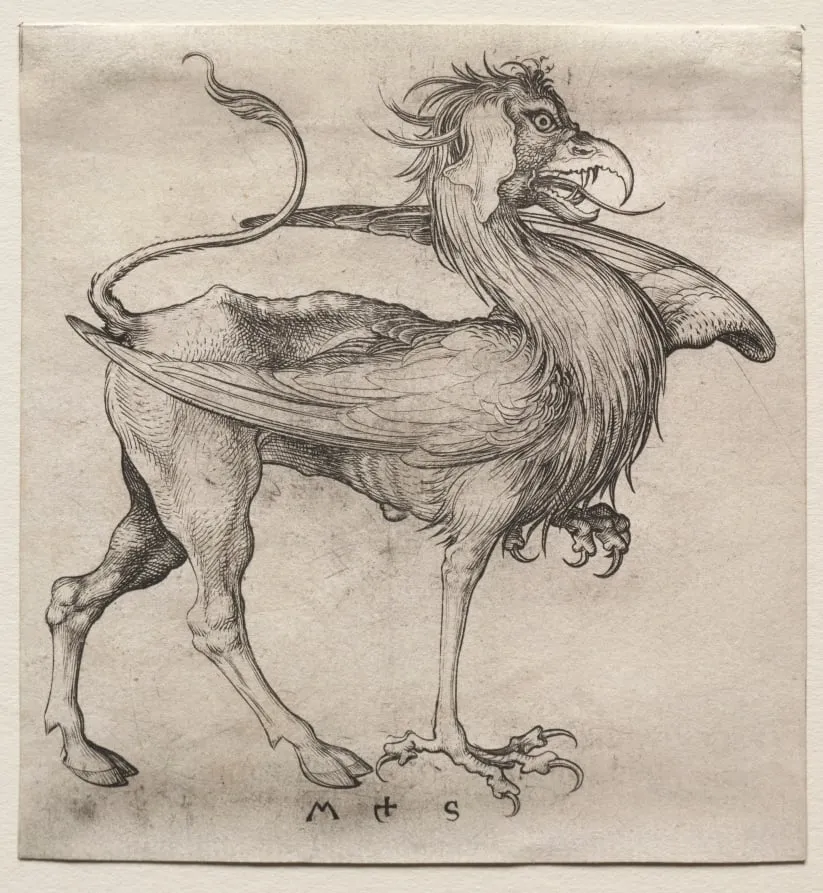
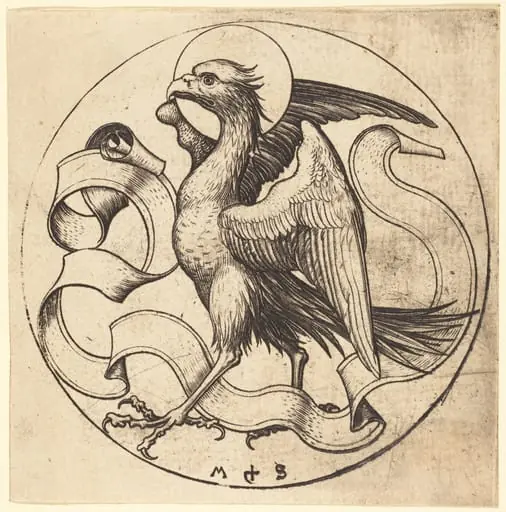
The Griffin is a print by the Renaissance artist Martin Schongauer. It dates from 1485 and is held in the collection of the Cleveland Museum of Art.
- Accession no.
- 1926.466
- Credit line
- Dudley P. Allen Fund
About this work
Overview
Unlike the conventional lion-eagle hybrid, Schongauer’s version combines the head and wings of an eagle with the body and hooved legs of an ox.
This print by Martin Schongauer depicts a griffin, a mythical creature from medieval bestiaries, rendered in engraved copper. Unlike the conventional lion-eagle hybrid, Schongauer’s version combines the head and wings of an eagle with the body and hooved legs of an ox. The image was produced through intaglio printing, allowing multiple impressions, and reflects a rare deviation from established iconography in late 15th-century Northern Europe.
Subject & Meaning
Traditionally, the griffin symbolized the dual nature of Christ, eagle for divinity, lion for earthly strength. Schongauer’s substitution of the ox for the lion introduces a new layer of symbolism, possibly referencing sacrifice or humility, as the ox was associated with service and labor in Christian iconography. The creature’s stillness, perched on a rock, suggests watchfulness rather than aggression, softening its fearsome reputation.
Technique & Style
Schongauer employed the burin to carve fine, precise lines into a copper plate, creating intricate textures in the feathers and fur. His use of controlled, flowing strokes captures the contrast between the griffin’s smooth wing membranes and coarse body hair. The naturalistic rendering, devoid of excessive ornamentation, demonstrates a keen observation of anatomy and a mastery of linear engraving techniques common in Rhineland printmaking.
History & Provenance
Created around 1470–1480, this print is among Schongauer’s early works, produced during his active years in Colmar. Though few original impressions survive, its existence in multiple museum collections indicates early circulation among collectors and religious institutions. The unusual composition suggests it may have been commissioned for a specific devotional or scholarly context, though no definitive provenance has been established.
Context
In the late 15th century, printed images of mythical creatures were widely circulated through bestiaries and devotional texts. Schongauer’s griffin diverges from standard models, possibly reflecting regional interpretations or personal innovation. The ox’s inclusion may relate to contemporary theological debates or local agricultural symbolism, situating the image within a broader cultural dialogue between natural observation and religious allegory.
Legacy
Schongauer’s unconventional griffin influenced later Northern Renaissance artists who experimented with hybrid forms and naturalistic detail. While not widely replicated, its departure from tradition marked a shift toward individualized mythological interpretation in printmaking. The work remains a key example of how engravers reimagined inherited symbols through technical precision and subtle iconographic innovation.
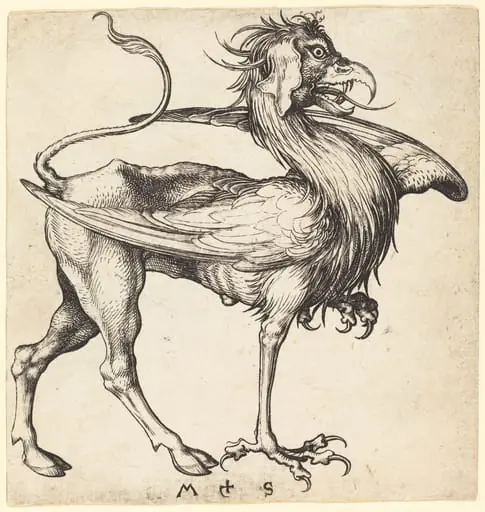
Artist & collection
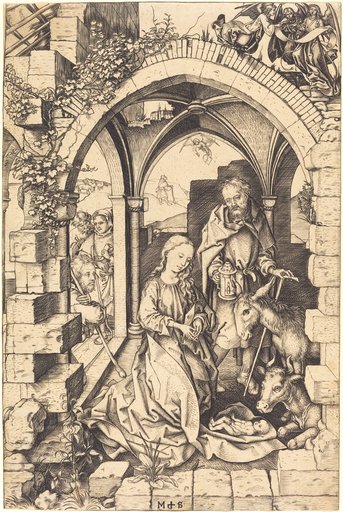
Artist
Martin Schongauer (c. 1450–1453, Colmar – 2 February 1491, Breisach), also known as Martin Schön ("Martin beautiful") or Hübsch Martin ("pretty Martin") by his contemporaries, was an Alsatian engraver and painter. He…