Artwork
The Holy Family
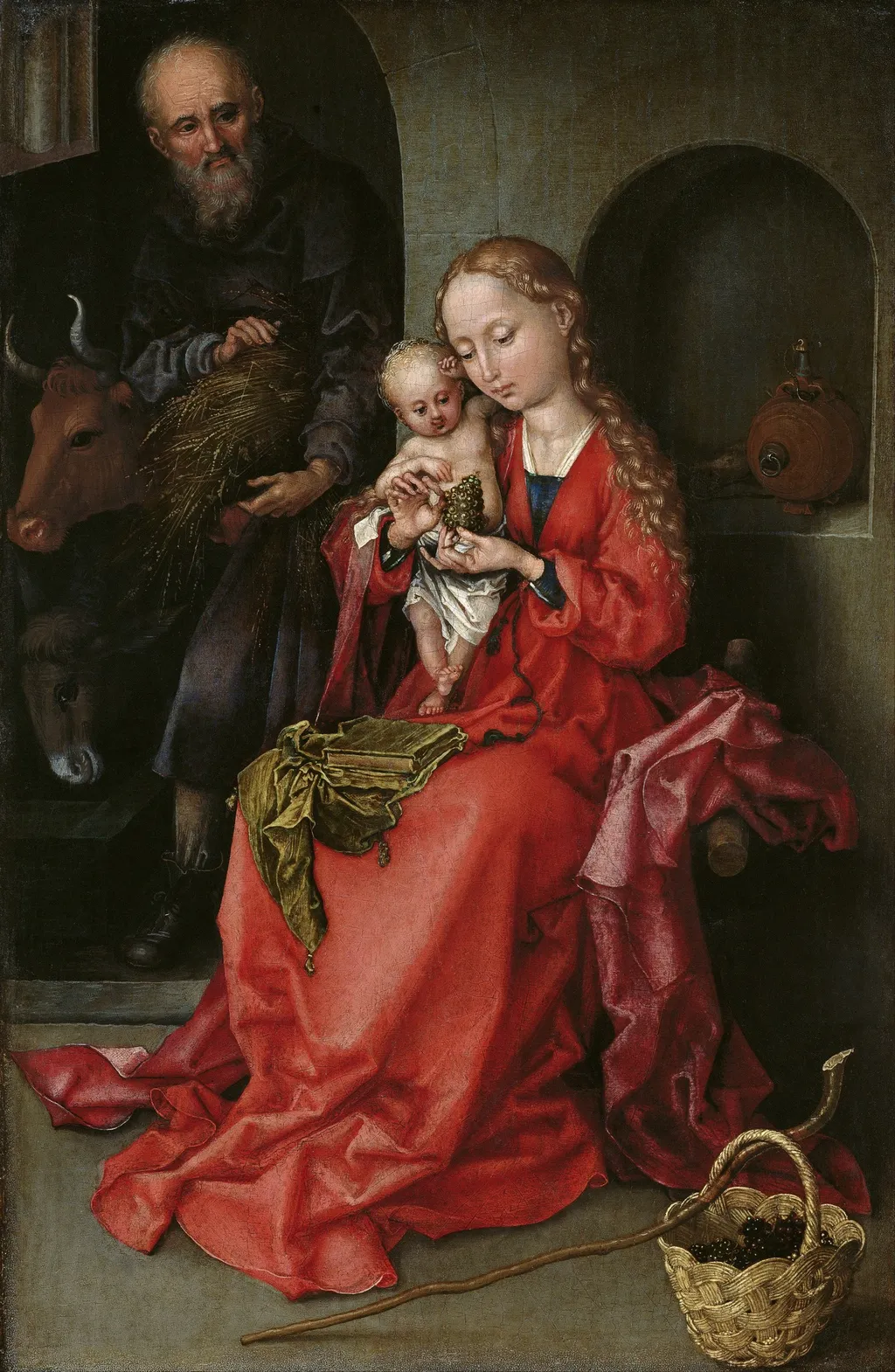
The Holy Family is an oil painting by the Northern Renaissance artist Martin Schongauer. It is held in the collection of the Kunsthistorisches Museum.
About this work
Technique & Style
The work is executed in oil paint on a wooden panel, a technique typical of early Netherlandish religious painting.
The work is executed in oil paint on a wooden panel, a technique typical of early Netherlandish religious painting. Schongauer renders delicate modeling of figures and soft chiaroscuro to emphasize the intimate domestic setting of the Holy Family, with careful attention to texture in the garments and the tender interaction among Mary, Joseph, and the infant Christ. The composition is balanced and orderly, reflecting the formal conventions of late 15th‑century devotional art, while the surface handling shows a smooth, almost enamel‑like finish that enhances the luminous quality of the colors.
History & Provenance
The Holy Family is dated to 1485 based on the artist’s documented activity in that period. The painting entered the holdings of the Kunsthistorisches Museum, where it remains today. Its medium is oil on panel, and it depicts the Virgin Mary, the Christ Child, and Saint Joseph.
The work is catalogued as a religious genre painting by Martin Schongauer, a German artist active in the late fifteenth century.
The Holy Family is housed in the Kunsthistorisches Museum, where it has been catalogued under the accession number KH 1263. The work was created in 1485 and entered the museum’s collection shortly after its creation, remaining on permanent display in the museum’s Old Masters gallery.
The painting has been featured in several exhibitions at the Kunsthistorisches Museum, including the 1953 retrospective on Martin Schongauer and the 1975 exhibition "German Renaissance Masterpieces," which highlighted the museum’s holdings of early Netherlandish and German works.
Context
Martin Schongauer's 1485 oil painting The Holy Family, housed in the Kunsthistorisches Museum, is recognized for its refined composition and emotive rendering of the Virgin, Child, and Saint Joseph, exemplifying late 15th-century Netherlandish influences within the German Renaissance. Scholars highlight its role in shaping devotional imagery, noting how Schongauer's treatment of familial intimacy influenced subsequent depictions of sacred subjects, while the work's provenance at the Kunsthistorisches Museum underscores its enduring significance in collections of Northern European art.
Overview
Martin Schongauer’s oil on panel, dated 1493, presents a domestic scene of the Holy Family. The work is part of the collection of the Kunsthistorisches Museum in Vienna and exemplifies the artist’s engagement with religious subject matter through a modest interior setting.
Subject & Meaning
The composition features a woman in a vivid red garment cradling a barefoot infant who reaches for a cluster of grapes, while an older bearded man stands nearby holding a bundle of sticks. A cow’s head peeks from the shadowed background and a golden basket with a staff rests on the floor, adding layers of symbolic reference to nourishment and pastoral life.
Own this work as a print
Artist & collection
Artist
Martin Schongauer (c. 1450–1453, Colmar – 2 February 1491, Breisach), also known as Martin Schön ("Martin beautiful") or Hübsch Martin ("pretty Martin") by his contemporaries, was an Alsatian engraver and painter. He…

- Rest on the flight into Egypt
 The Madonna and Child Enthroned
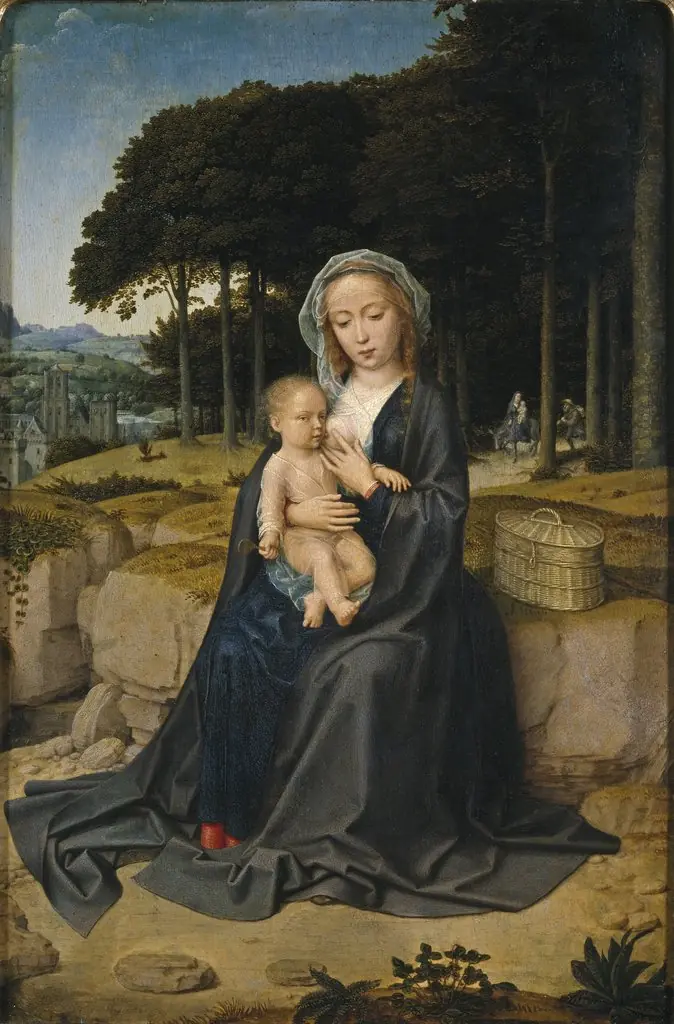 Rest on the Flight into Egypt
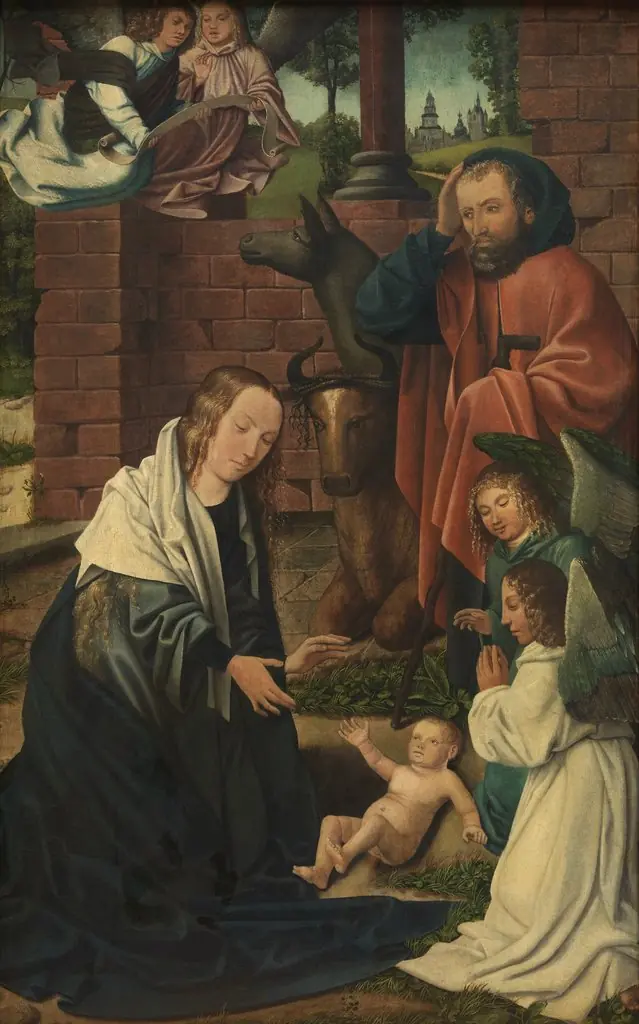 The Nativity
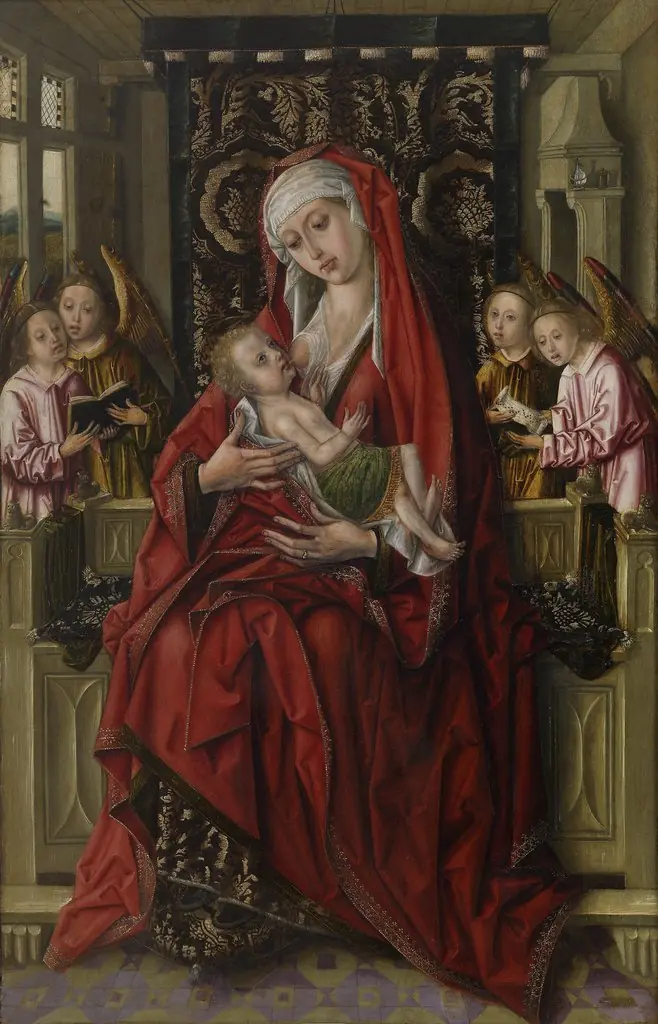 The Virgin Nursing the Child
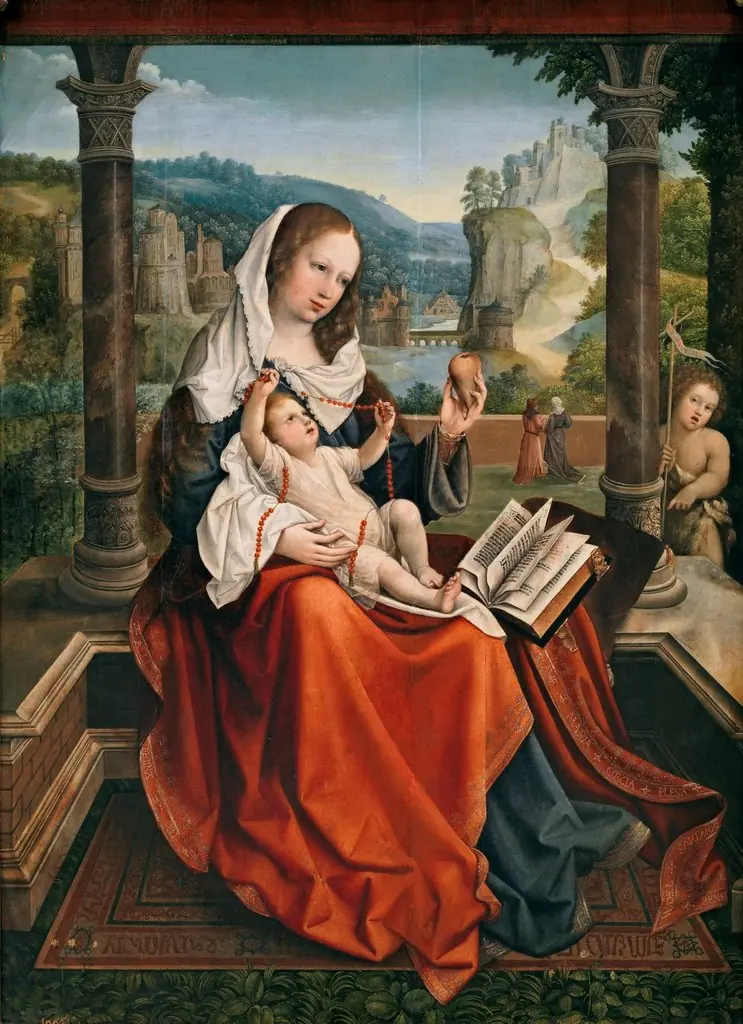 The Virgin and Child with the Infant Saint John the Baptist
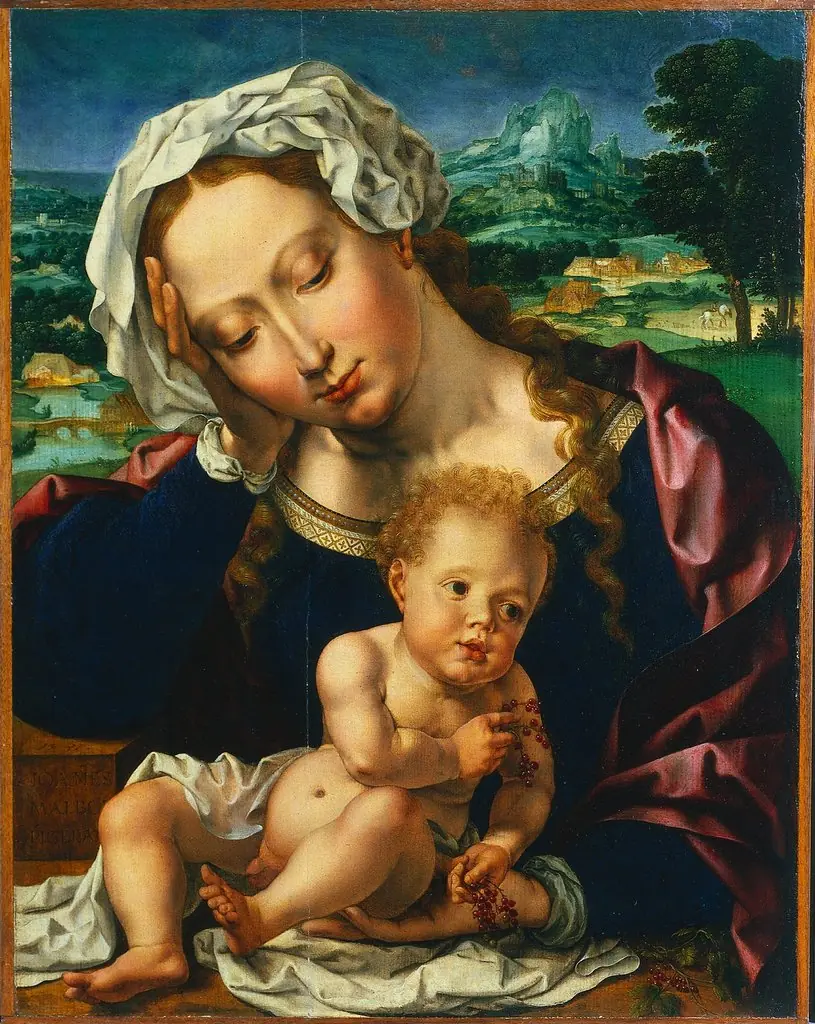 Virgin and Child in a Landscape
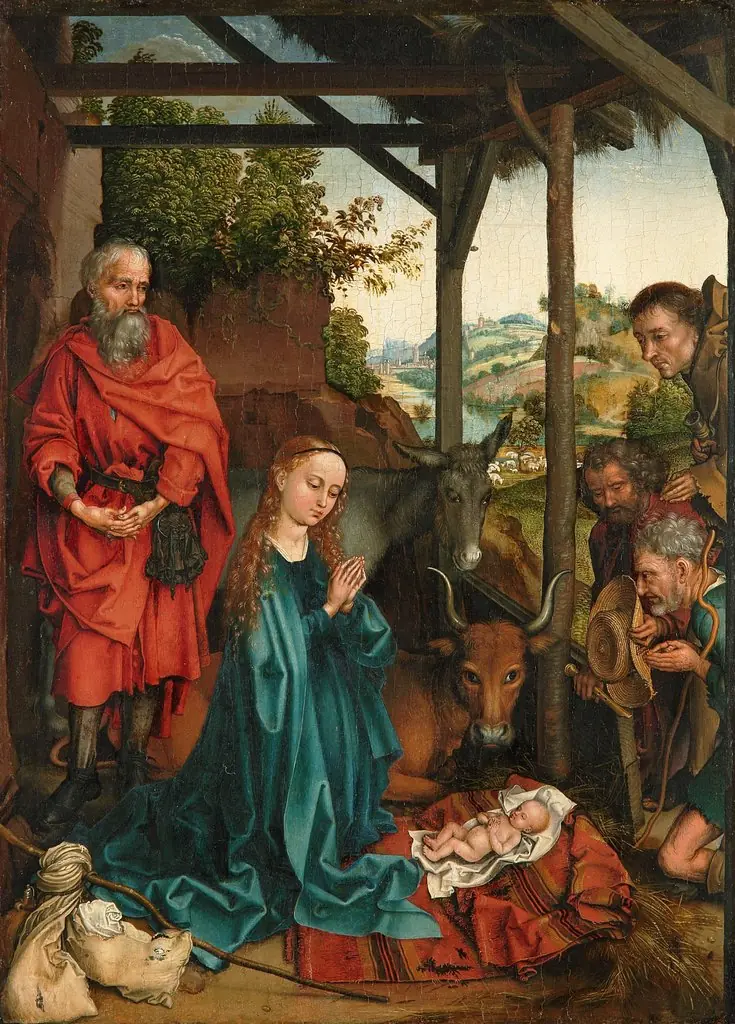 Adoration of the Shepherds
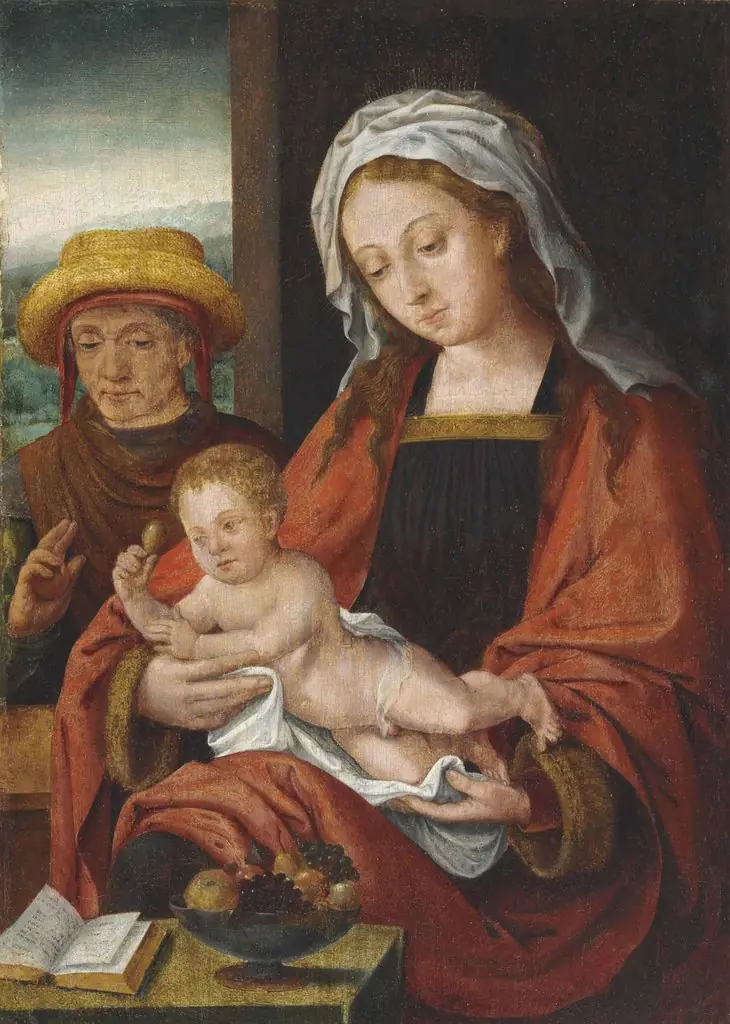 The Holy Family
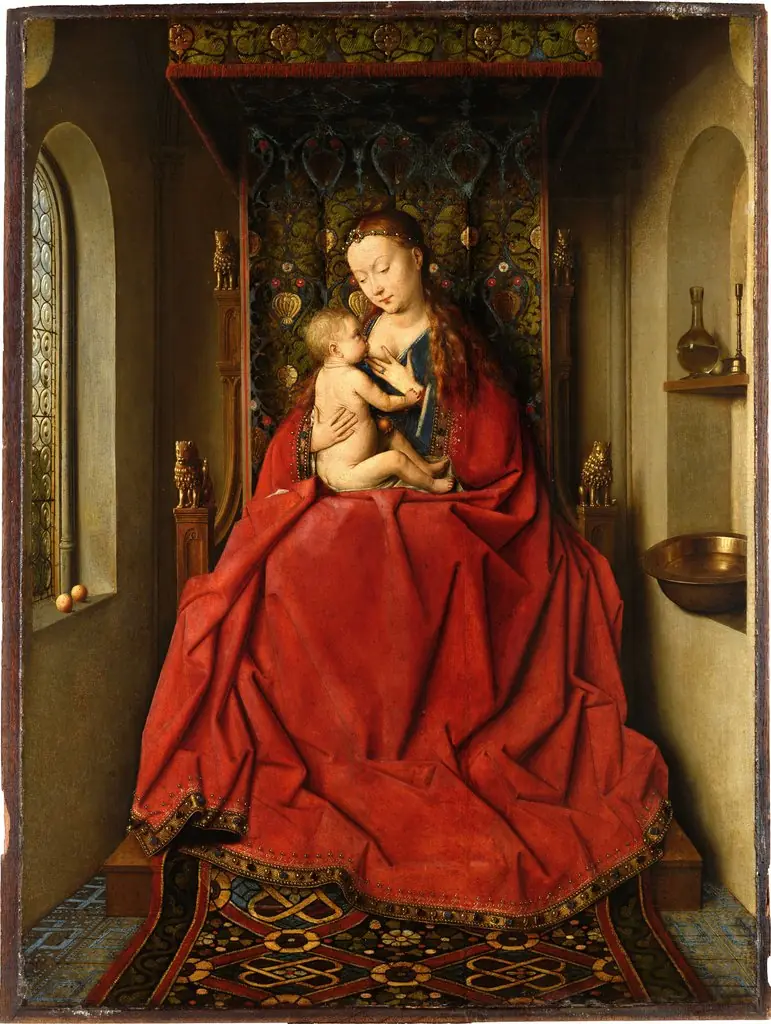 Lucca Madonna
 Madonna
 A Virgem Maria e o Menino Jesus com um Anjo