Artist
Martin Schongauer
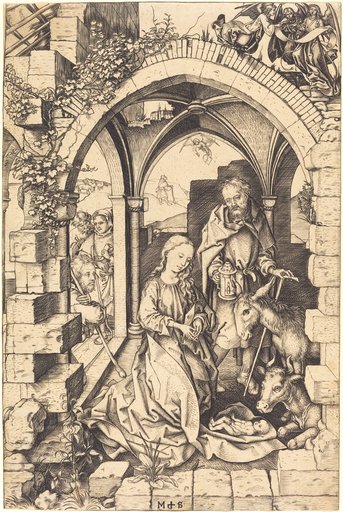
Germany
Martin Schongauer is a Germany Northern Renaissance artist. 154 works are cataloged here, principally at National Gallery of Art.
Overview
Martin Schongauer (c. 1450-1491) was a German engraver and painter from Colmar in Alsace, celebrated as the most important printmaker north of the Alps before Albrecht Dürer. Known to contemporaries as "Martin Schön" or "Hübsch Martin" ("pretty Martin") for the refinement of his work, he occupies a pivotal position in late Gothic art. He was the first German painter to achieve significance as an engraver, and his 116 surviving engravings, all bearing his distinctive monogram, circulated throughout Europe and influenced artists from Michelangelo to Dürer himself. Though fewer paintings survive, his painted works, including the Madonna of the Rose Bower, demonstrate a masterful synthesis of German Gothic and Early Netherlandish naturalism.
Biography & dates
Schongauer was born in Colmar, Alsace, around 1450 (sources vary between c. 1445/1450 and c. 1453), the son of Caspar Schongauer, a goldsmith from Augsburg who had settled in Colmar by 1440 and became a master of the goldsmith's guild in 1445. Martin had at least four brothers; Paul, Georg, and Caspar followed their father's trade, while Ludwig became a painter. The family resided in the Haus zur Geige. Unusually for an artist of his era, Schongauer matriculated at the University of Leipzig in 1465, though he appears to have left after only a few semesters. He likely received initial training in his father's workshop, where he would have learned engraving techniques applied to metal vessels. By 1469/70 he had embarked on his Wanderjahre, traveling through Burgundy and the Netherlands. Some scholars suggest a possible period in Nuremberg at the workshop of Hans Pleydenwurff, though this remains uncertain. He returned to Colmar around 1470, where he established a prosperous workshop and acquired multiple properties, including the house "Au Cygne" in 1477. He remained unmarried throughout his life. In 1488 he moved to Breisach am Rhein to undertake a major commission for frescoes in the cathedral, where he was recorded as a citizen in June 1489. He died in Breisach on 2 February 1491, perhaps before reaching forty, leaving his largest work, the Last Judgment fresco, incomplete.
Style & movement
Schongauer's style represents a refined late Gothic synthesis that draws upon both German traditions and Early Netherlandish painting, particularly the work of Rogier van der Weyden, Dieric Bouts, and the broader Flemish school. His style shows no trace of Italian influence, instead developing a very clear and organized Gothic manner that evolved from broad narrative detail toward greater severity and monumentality. In engraving, he brought the technique to unprecedented technical perfection, exploiting the full potential of the burin on copper plates. His compositions demonstrate exceptional clarity in organization and execution, with delicate linear precision and harmonious balance. The integration of Netherlandish naturalism with International Gothic idealism and expressionism characterizes his painted works. Recent scholarship has questioned earlier assumptions about direct contact with specific Netherlandish works; for instance, the hypothesis that he copied Rogier van der Weyden's Beaune Altarpiece on site has been rejected, with the drawing now believed to have been executed from a secondary source. Similarly, earlier suggestions of travel to Spain and Portugal are now entirely dismissed.
Major works
The bulk of Schongauer's surviving production consists of 116 engravings, all monogrammed but undated, which scholarship has arranged in a broadly agreed sequence based on technical and stylistic development. These prints achieved extraordinary European circulation, reaching Germany, Italy, England, and Spain. His only dated painting, the Madonna of the Rose Bower (Maria im Rosenhag), was completed in 1473 for the Dominican church in Colmar, where it remains, though it was moved to the nearby Dominican church in 1973. Originally a monumental work of approximately 2.50 by 1.65 meters, it has been reduced to 2.00 by 1.15 meters. Other significant paintings include the Holy Family (c. 1475-1480) in the Kunsthistorisches Museum, Vienna; a smaller Holy Family (c. 1475/1480) in the Alte Pinakothek, Munich; the Adoration of the Shepherds (c. 1480) in the Gemäldegalerie, Berlin; and the Virgin and Child in a Window (c. 1485-1490) at the J. Paul Getty Museum, Los Angeles. The Orlier Altarpiece and the Dominican Altarpiece, both now in the Musée d'Unterlinden, Colmar, are regarded as workshop productions with varying degrees of his personal involvement. His final undertaking, the Last Judgment frescoes (c. 1489-1491) on the inner west wall of Breisach Cathedral, remained unfinished at his death and have suffered significant deterioration, yet they represent the largest mural painting north of the Alps from this period.
Influences & students
Schongauer's formative influences included his father's goldsmith training, which provided technical foundations for his engraving, and the local Colmar painter Caspar Isenmann, who was influenced by Rogier van der Weyden and may have studied in the Netherlands. The traditional attribution of his engraving training to Master E. S. has been questioned by modern scholars, partly because Schongauer's prints developed technical advances gradually rather than displaying immediate mastery. His Netherlandish connections may also have been reinforced through his brother Georg's marriage to Apollonia Gerhaert, daughter of the Netherlandish sculptor Nicolaus Gerhaert, who maintained a workshop in Strasbourg. Among his documented pupils, Hans Burgkmair the Elder stands foremost; the Augsburg painter and woodcut designer studied with Schongauer from 1488 to 1490. The monogrammist AG also worked in Schongauer's circle. The painted portrait of Schongauer with his coat of arms, now in Munich and attributed to Hans Burgkmair the Elder, appears to be a posthumous copy of a lost original possibly by Thoman Burgkmair, Hans's father, who may have encountered Schongauer in Augsburg. Albrecht Dürer, though never formally his pupil, was profoundly influenced by Schongauer's work; Dürer traveled to Colmar in 1492 during his Wanderjahre specifically to meet Schongauer, only to discover that the master had died. Dürer collected Schongauer's drawings and prints, and his own Flight into Egypt from the Life of the Virgin series pays direct homage by incorporating the same exotic trees found in Schongauer's composition.
Legacy
Schongauer's posthumous reputation rests primarily on his revolutionary contribution to printmaking. He was likely the first engraver to sign his works systematically, establishing a model of artistic authorship in print. More importantly, he appears to have been the first to produce printed graphics in large quantities and to pursue their commercial distribution actively, effectively creating a market for fine art prints. His influence extended across Europe: Giorgio Vasari recorded that Michelangelo copied his engraving of The Temptation of Saint Anthony, and his works were assimilated by artists as diverse as Gerard David and Israhel van Meckenem, the latter of whom produced close copies of 58 engravings, exactly half of Schongauer's surviving output. In the decades following his death, Dürer emerged as the acknowledged successor to the tradition Schongauer had dominated for twenty years. Modern commemoration includes a bust in the Ruhmeshalle in Munich, the Martin-Schongauer-Gymnasium in Breisach, and numerous streets named in his honor across Germany. Auguste Bartholdi, creator of the Statue of Liberty, designed the Monument à Martin Schongauer in 1863, now preserved at the Musée d'Unterlinden in Colmar.
Works by Martin Schongauer
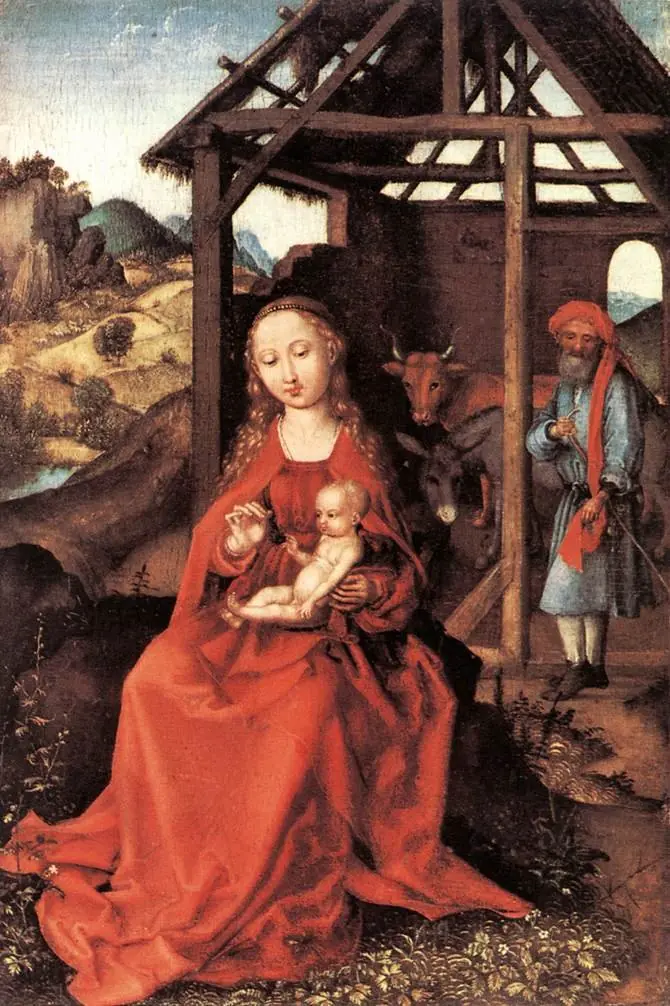 The Holy Family
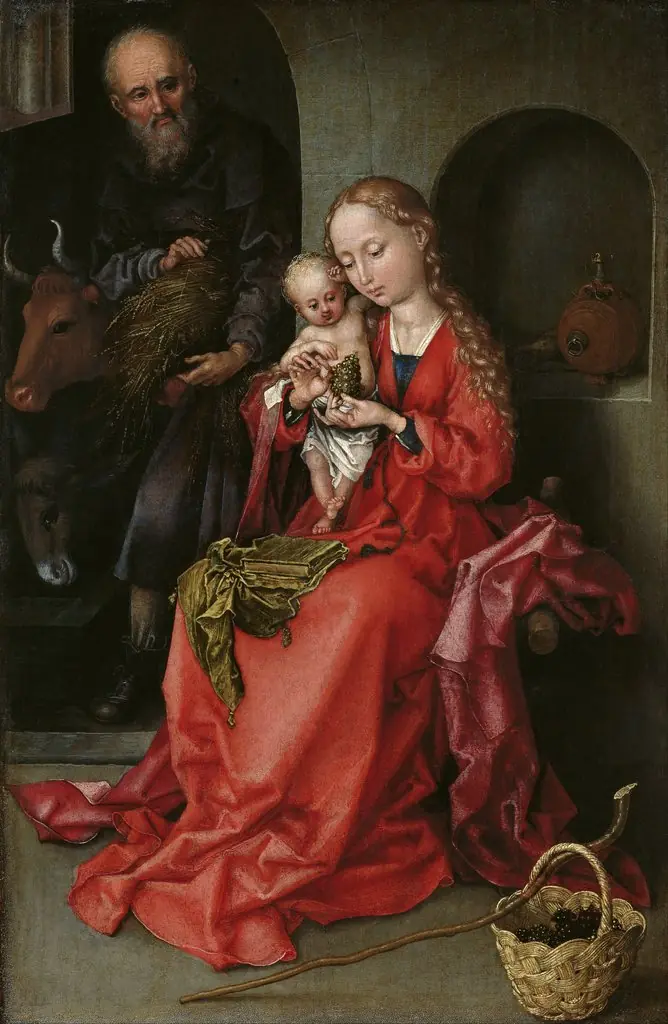 The Holy Family
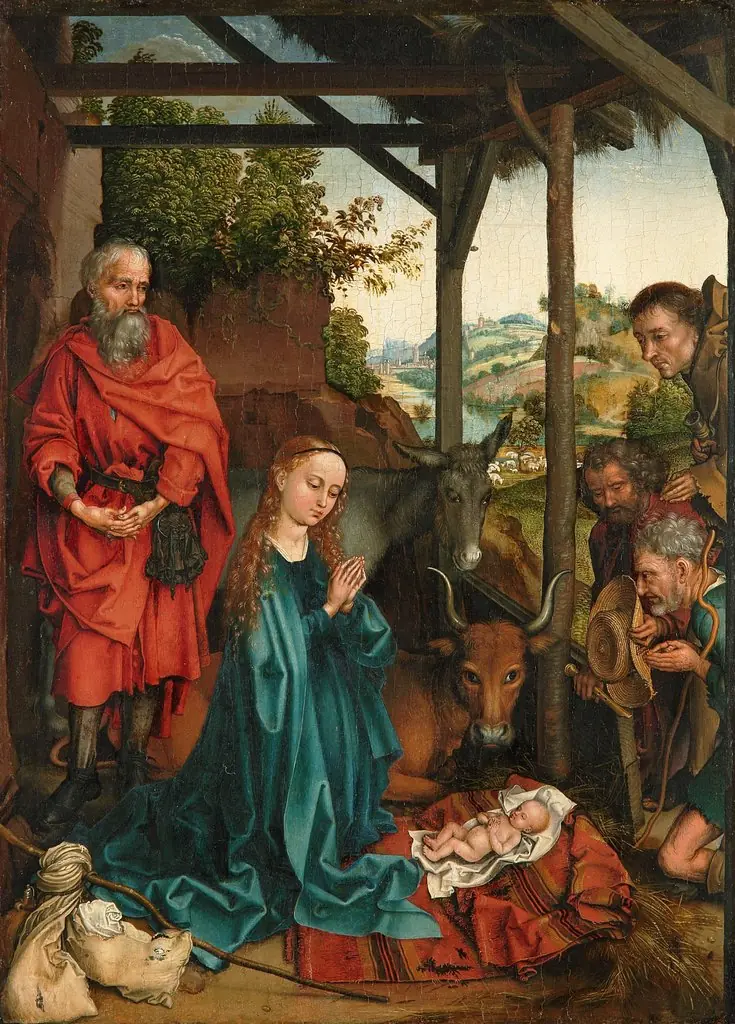 Adoration of the Shepherds
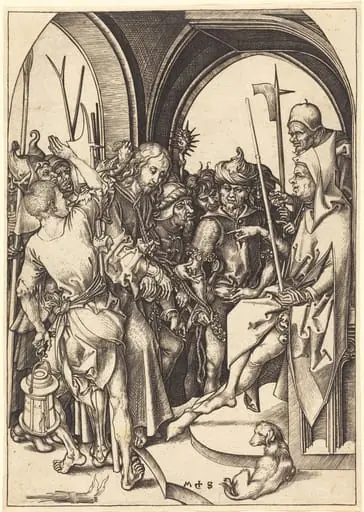 Christ before Annas
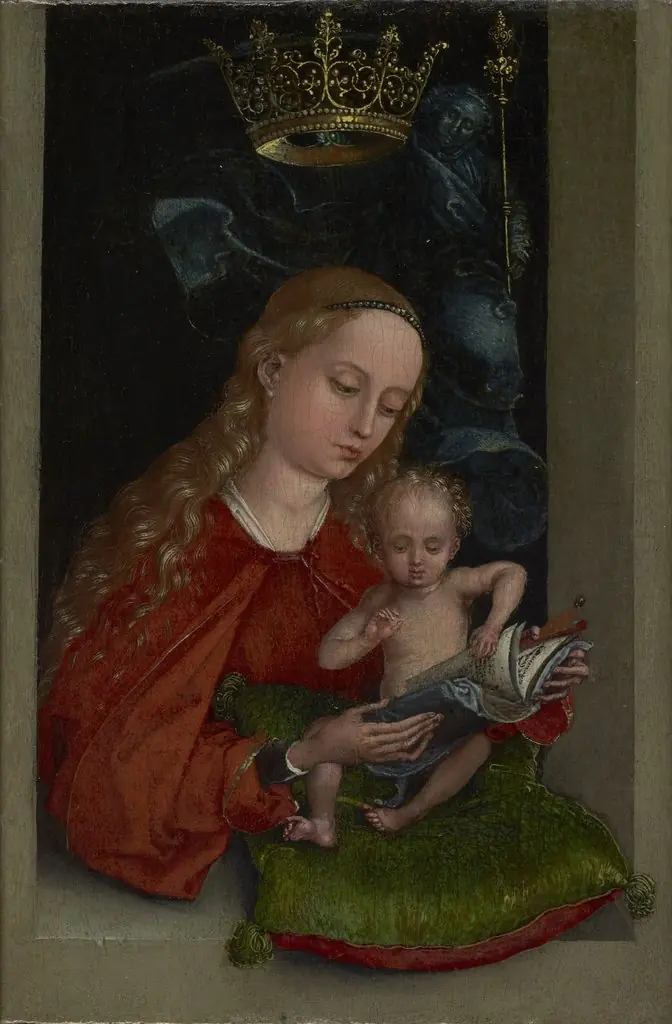 Madonna and Child in a Window
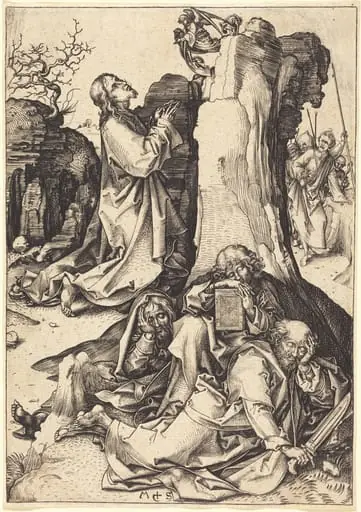 The Agony in the Garden
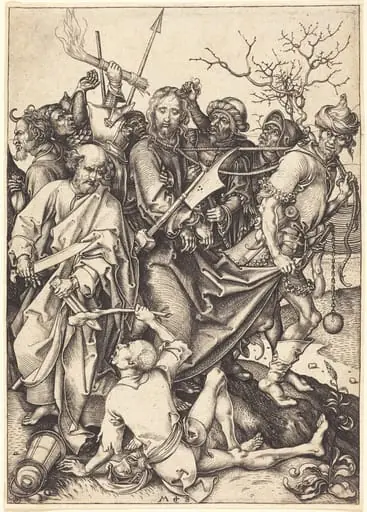 The Betrayal and Capture of Christ
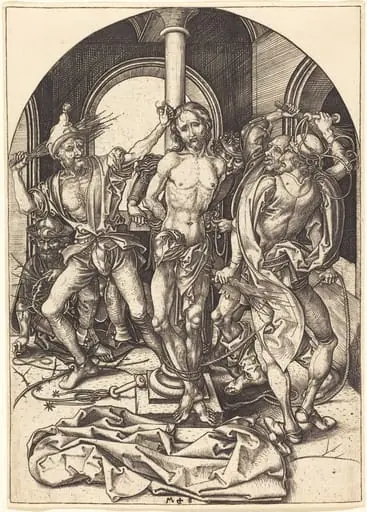 The Flagellation
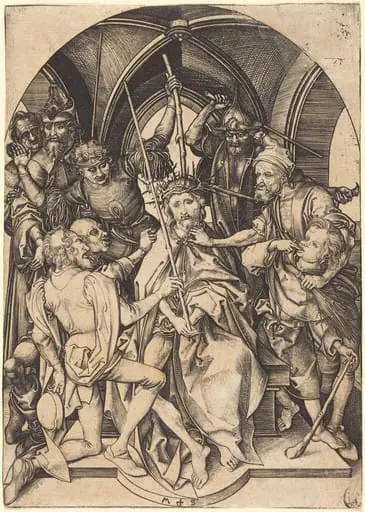 Christ Crowned with Thorns
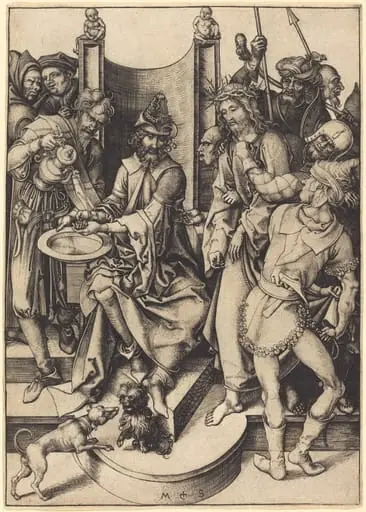 Christ before Pilate
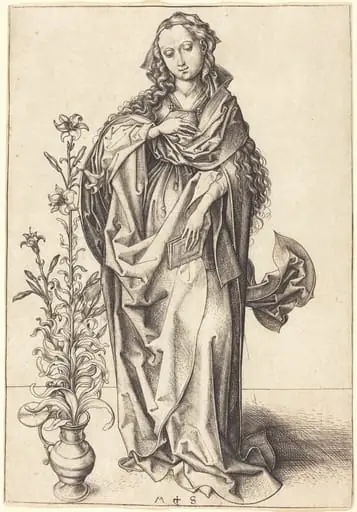 The Madonna
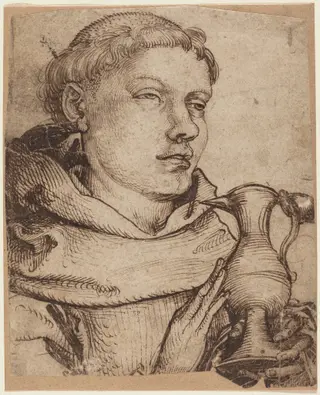 Bust of a Monk Assisting at Communion
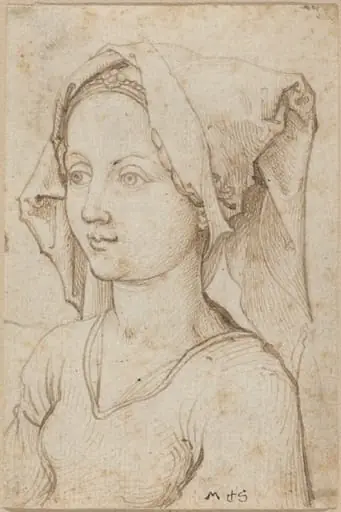 Young Woman Wearing a Scarf
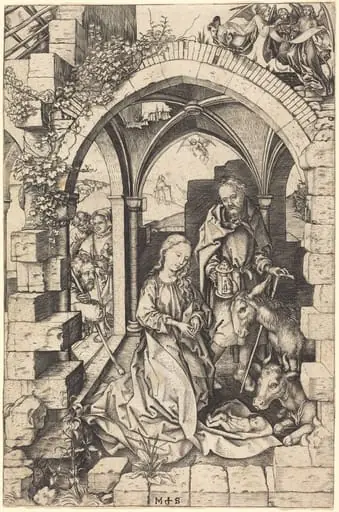 The Nativity
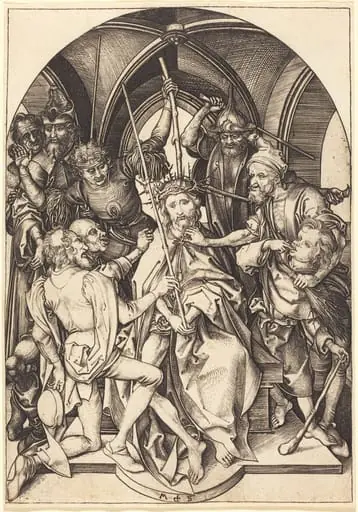 Christ Crowned with Thorns
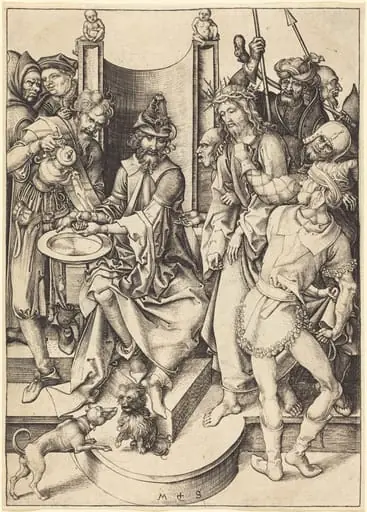 Christ before Pilate
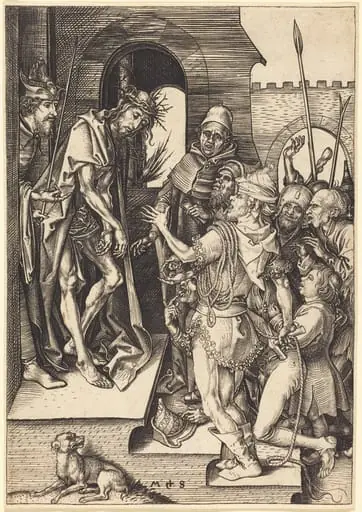 Ecce Homo
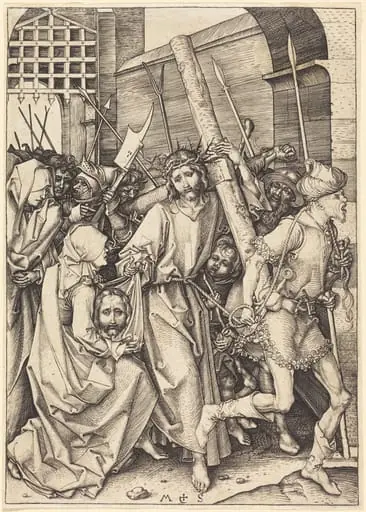 The Bearing of the Cross with Saint Veronica
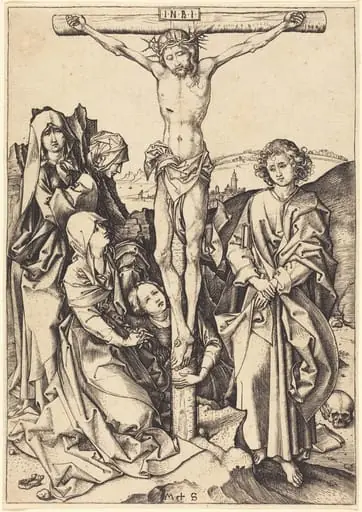 The Crucifixion
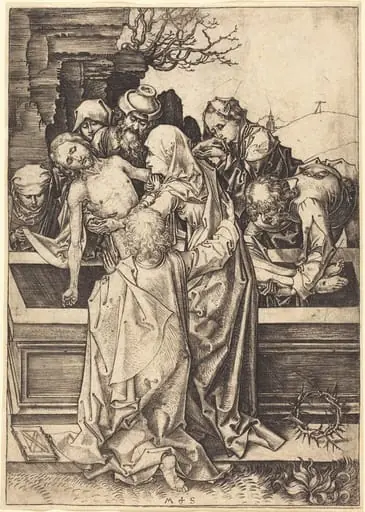 The Entombment
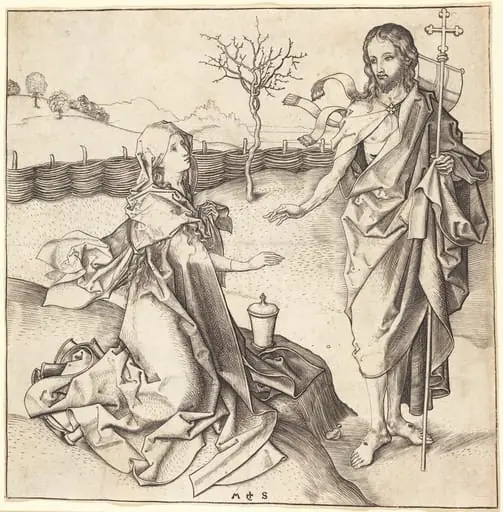 Christ Appearing to Mary Magdalene
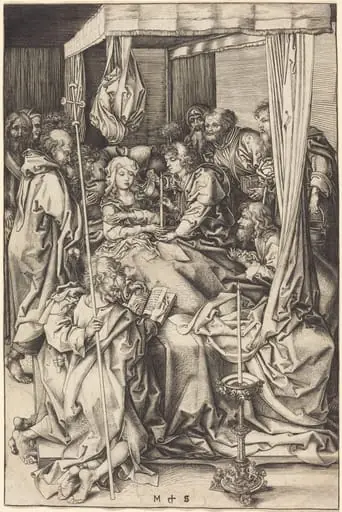 Death of the Virgin
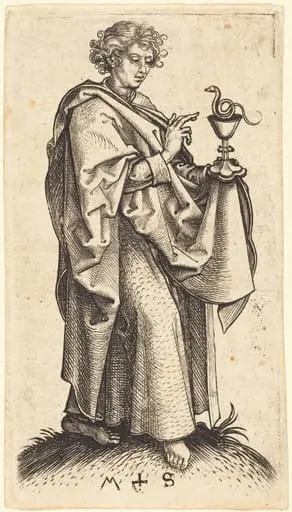 Saint John the Evangelist
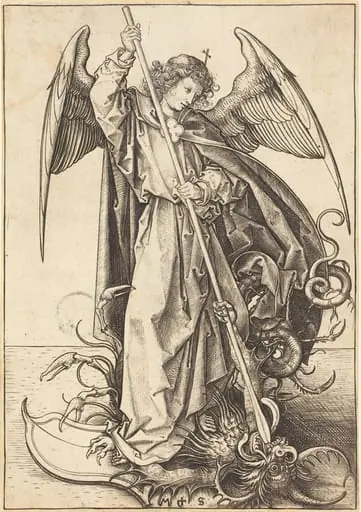 Saint Michael Slaying the Dragon
154 works in the catalog · 24 shown
Collections represented


Artists in a similar vein