Artwork
The Death of Cleopatra
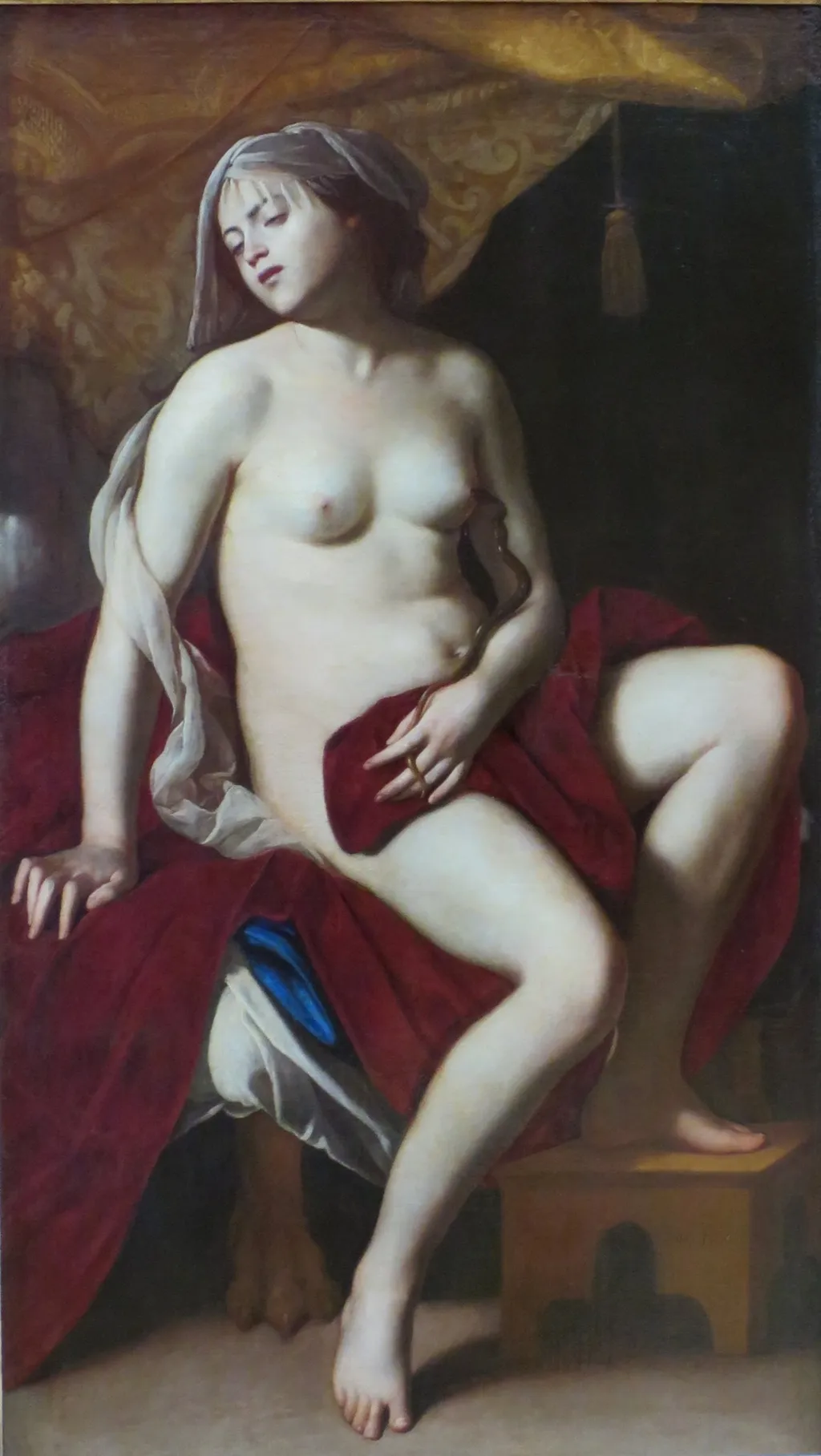
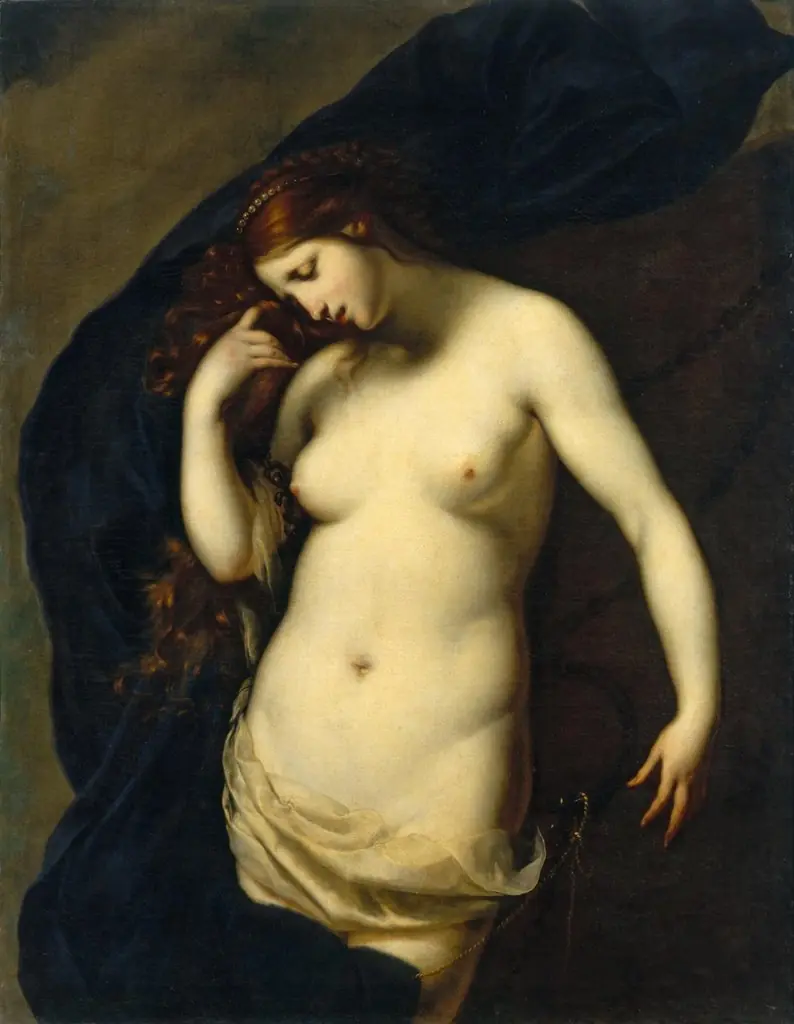
The Death of Cleopatra is an oil painting by the High Baroque Italian artist Massimo Stanzione. It dates from 1630 and is held in the collection of the Hermitage Museum.
About this work
Subject & Meaning
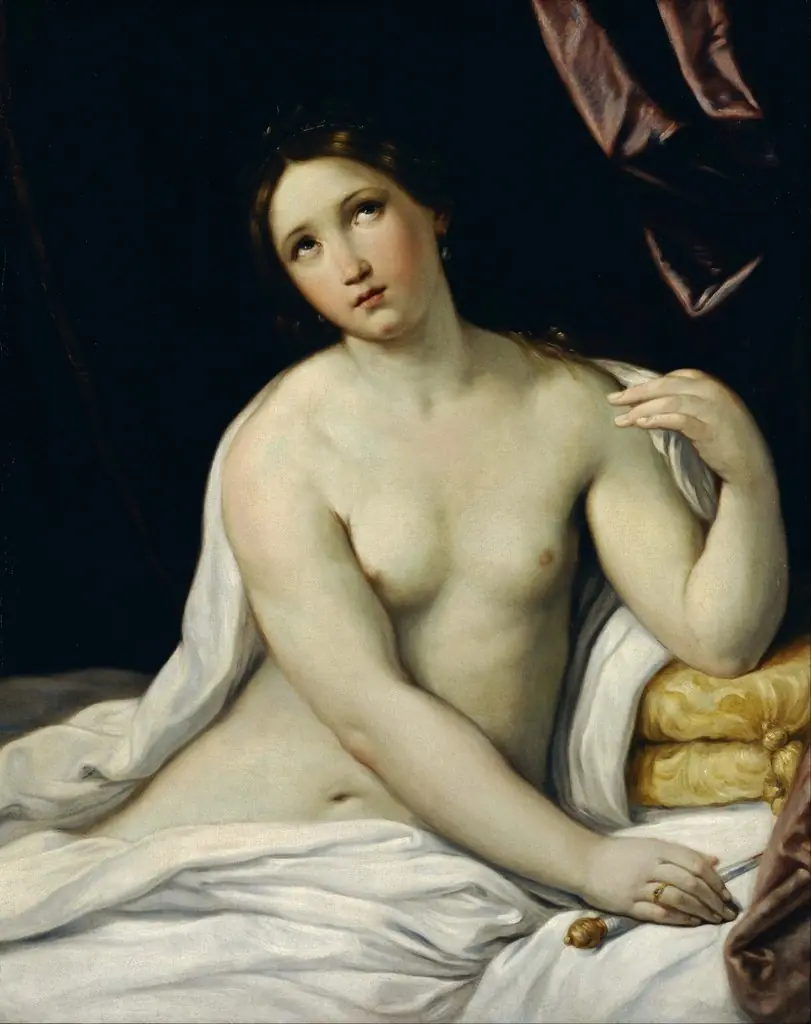
The composition centers on Cleopatra seated in a state of nudity, emphasizing the vulnerability of her body through the exposure of her breasts and navel.
Massimo Stanzione's 1630 history painting, The Death of Cleopatra, depicts the final moments of the Egyptian queen as she succumbs to a snakebite. The composition centers on Cleopatra seated in a state of nudity, emphasizing the vulnerability of her body through the exposure of her breasts and navel. The primary iconographic element is the aspic viper, which has delivered the fatal bite, symbolizing the method of her suicide.
Surrounding details include a headscarf, a footstool, and heavy drapery that frame the scene on a bed. As a work of the Italian Baroque movement, the painting utilizes these visual elements to dramatize the historical narrative of her death, focusing on the physical reality of the moment and the queen's regal yet tragic demise.
Technique & Style
The Death of Cleopatra by Massimo Stanzione employs oil paint on canvas, characteristic of Italian Baroque practice in the 1630s. The composition depicts Cleopatra seated on a bed, nude except for a draped headscarf, with the asp viper at her breast, a moment frozen in theatrical stillness. Stanzione’s handling balances chiaroscuro with delicate modeling, emphasizing the luminous flesh of the figure against dark drapery and the serpent’s coiled form.
The palette relies on earthy ochres and deep shadows, punctuated by the pale tones of Cleopatra’s skin and the viper’s scales. Formal qualities include a tightly controlled composition, with the horizontal bed framing the vertical figure and serpent, creating a rhythmic tension between repose and impending death.
History & Provenance
The Death of Cleopatra is an oil-on-canvas history painting created by Massimo Stanzione in 1630. Executed in Italy during the Italian Baroque period, the work depicts the final moments of Cleopatra, featuring her seated figure with an aspic viper. The painting measures 162 cm in height and 99.5 cm in width.
While the specific commissioning patron and original ownership chain are not detailed in the provided records, the work's provenance leads to its current location within the Hermitage Museum. It is housed in hall 237 of the institution, where it remains part of the permanent collection. The artwork was completed at the beginning of 1630 and represents a significant example of Stanzione's treatment of historical and mythological subjects involving nudity and dramatic death scenes.
Massimo Stanzione's 1630 oil painting, The Death of Cleopatra, is held in the collection of the Hermitage Museum. Within the institution, the work is displayed in Hall 237. While the provided records confirm the artwork's current location and specific gallery placement, they do not contain details regarding a formal inventory or accession number, nor do they list any past or present exhibition history for the piece.
Overview
Massimo Stanzione's The Death of Cleopatra, an oil painting from approximately 1630, exemplifies Italian High Baroque art. It depicts the final moments of the Egyptian queen, a popular subject in the period. Stanzione, active in Naples, was recognized for his mythological and religious compositions, often characterized by a blend of rich color and a refined naturalism. The work is housed in the State Hermitage Museum.
Context
Massimo Stanzione was a prominent figure in the Neapolitan art scene during the early to mid-17th century, a period marked by the flourishing of the High Baroque in Italy. While widely acclaimed for his large-scale altarpieces and biblical narratives, he also explored mythological themes such as this depiction of Cleopatra. His work contributed significantly to the development of a distinct Neapolitan style, blending classical influences with a heightened emotionality.
Artist & collection
Artist
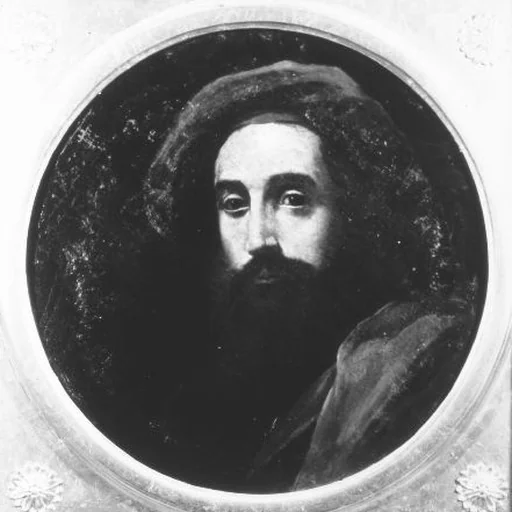
Massimo Stanzione (also called Stanzioni; Frattamaggiore 1585 – Naples 1656) was an Italian Baroque painter, mainly active in Naples, where he and his rival Jusepe de Ribera dominated the painting scene for several decades.