Artwork
Lucretia
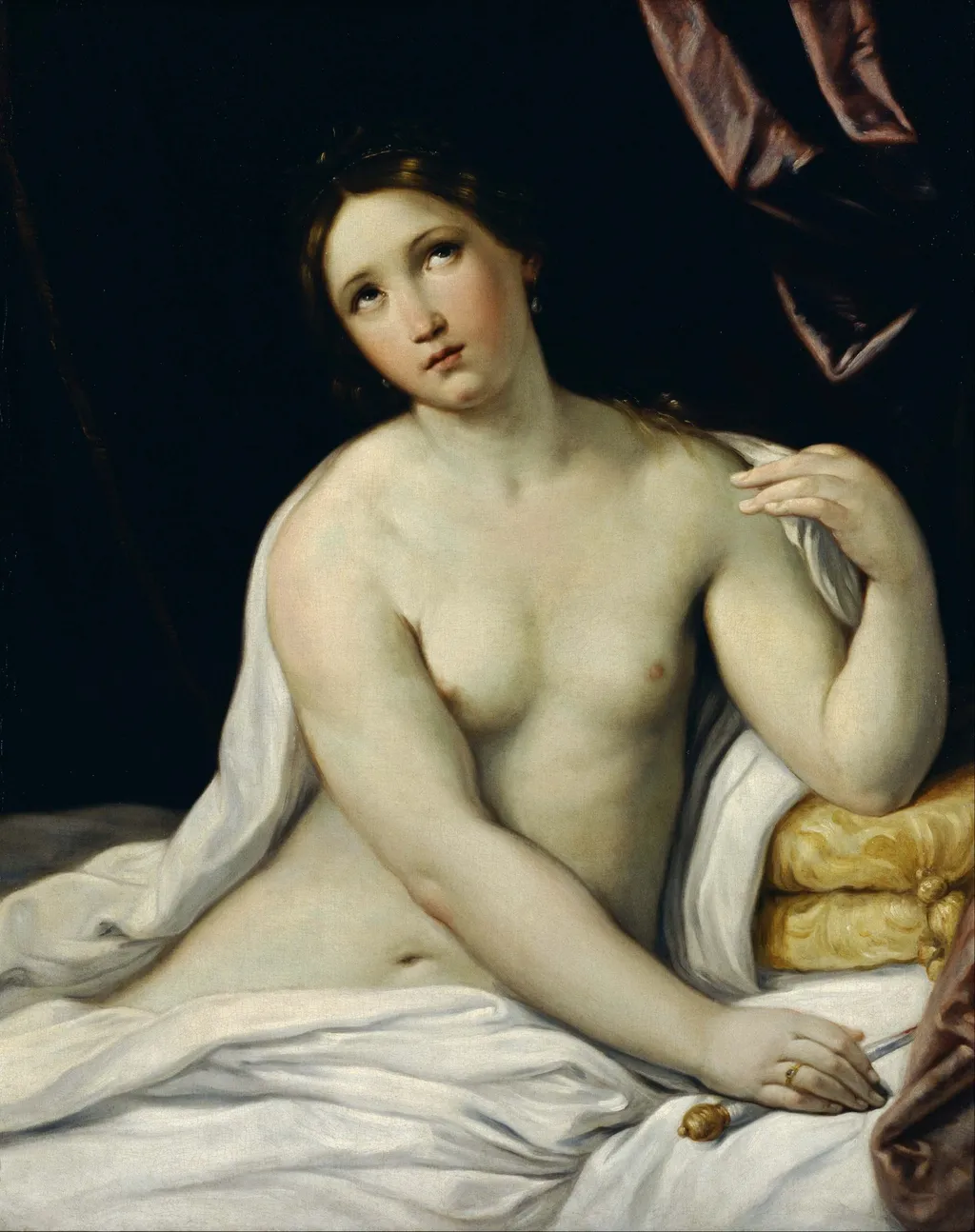
Lucretia is an oil painting by the Early Baroque Italian artist Guido Reni. It dates from 1636 and is held in the collection of the National Museum of Western Art.
About this work
Overview
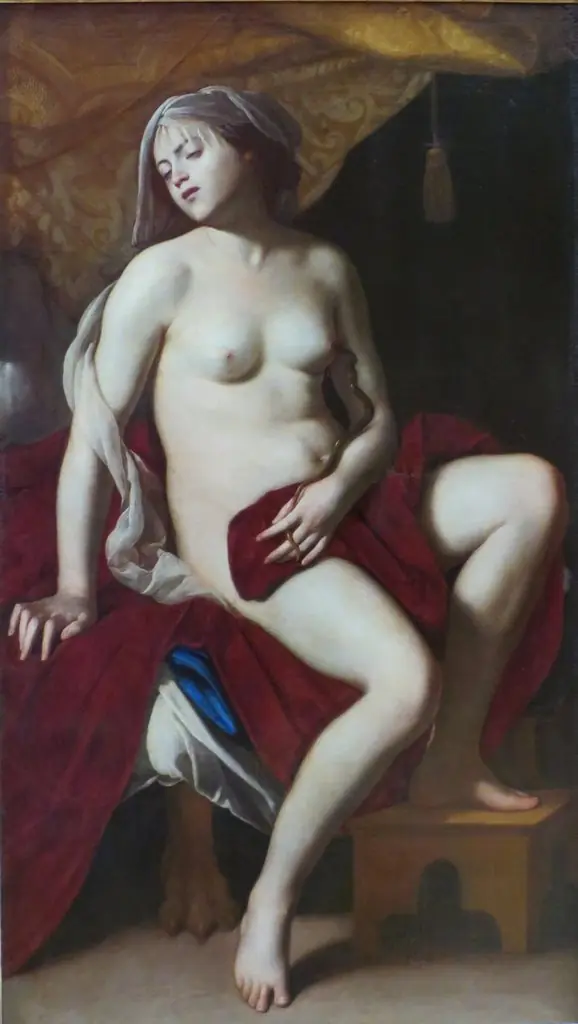
The composition centers on the figure of Lucretia, who is partially draped in a white sheet that covers her lower body while her upper torso remains exposed.
Guido Reni's 'Lucretia' (1636) is a late Baroque history painting depicting the Roman heroine at the moment of her suicide. The composition centers on the figure of Lucretia, who is partially draped in a white sheet that covers her lower body while her upper torso remains exposed. She sits on a bed against a dark, undefined background, a setting that isolates her and heightens the emotional intensity of the scene.
Her right arm rests on the bedding, while her left hand firmly grips a dagger, poised to end her life following her rape by Sextus Tarquinius. Reni renders her face in profile, with eyes cast downward in an expression of tragic resolve rather than overt agony. Executed in oil paint, the work exemplifies Reni's mature style, characterized by idealized forms, smooth modeling, and a restrained, classical palette that emphasizes moral gravity over theatrical drama.
Created in 1636, this painting reflects the artist's continued engagement with stoic female virtue, a recurring theme in his career that resonated with Counter-Reformation ideals of piety and sacrifice. The work stands as a significant example of Italian Baroque history painting, demonstrating Reni's ability to convey profound psychological states through simplified, dignified composition.
Subject & Meaning
The composition shows Lucretia seated on a bed, her body draped only by a white sheet that covers her lower half. In her left hand she clutches a dagger, the instrument of her self‑inflicted death, while her gaze is cast downward, suggesting remorse and resolve.
Technique & Style
Reni employs chiaroscuro, contrasting illuminated areas of the figure and the gold‑toned headboard with a deep, shadowy background. This handling of light emphasizes the flesh and the gleam of the dagger, creating a dramatic focal point within the intimate setting.
History & Provenance
Completed in 1636, the painting has remained in the public domain, eventually entering the holdings of the National Museum of Western Art, where it is displayed among other works of the Baroque period.
Own this work as a print
Artist & collection
Artist
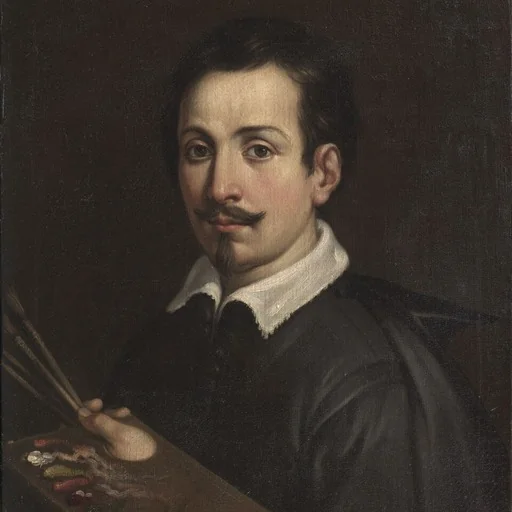
Guido Reni was an Italian Baroque painter, although his works showed a classical manner, similar to Simon Vouet, Nicolas Poussin, and Philippe de Champaigne.