Artwork
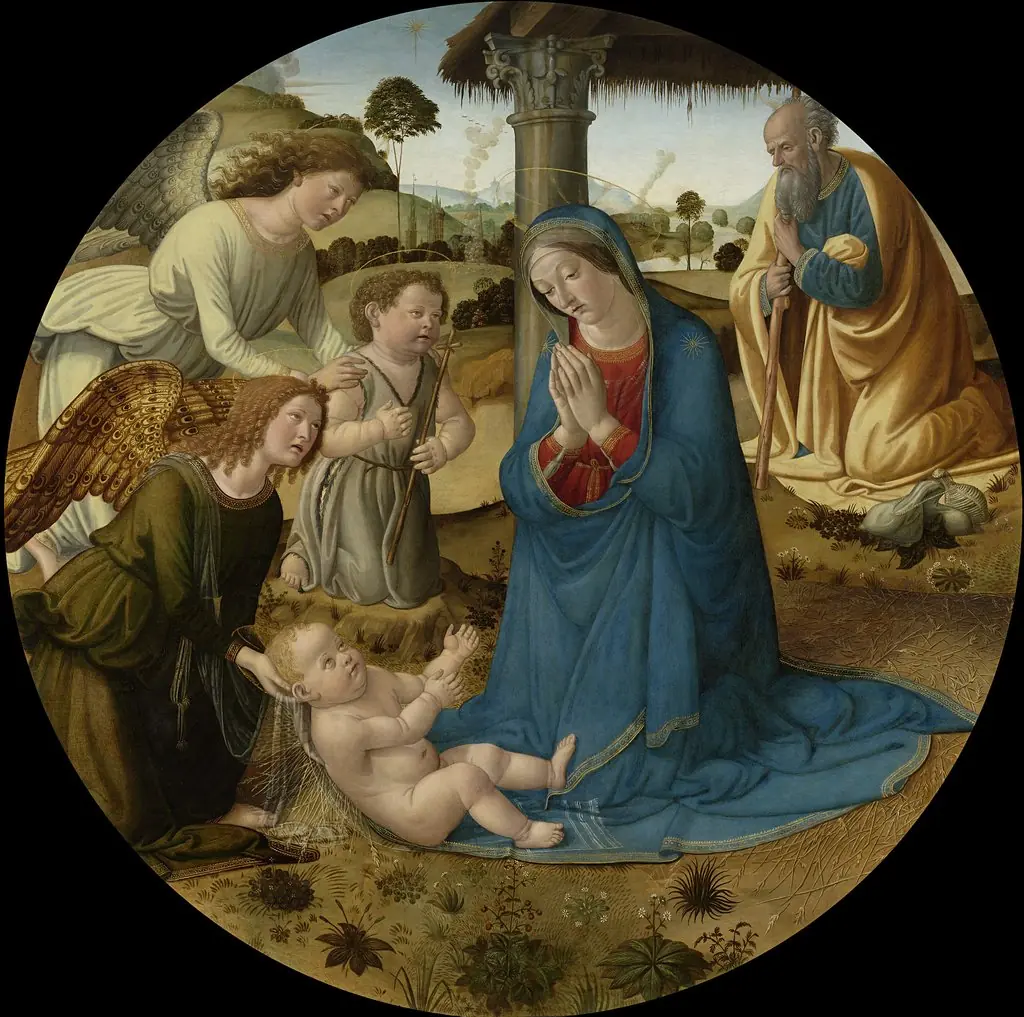
Worshipping the Christ Child
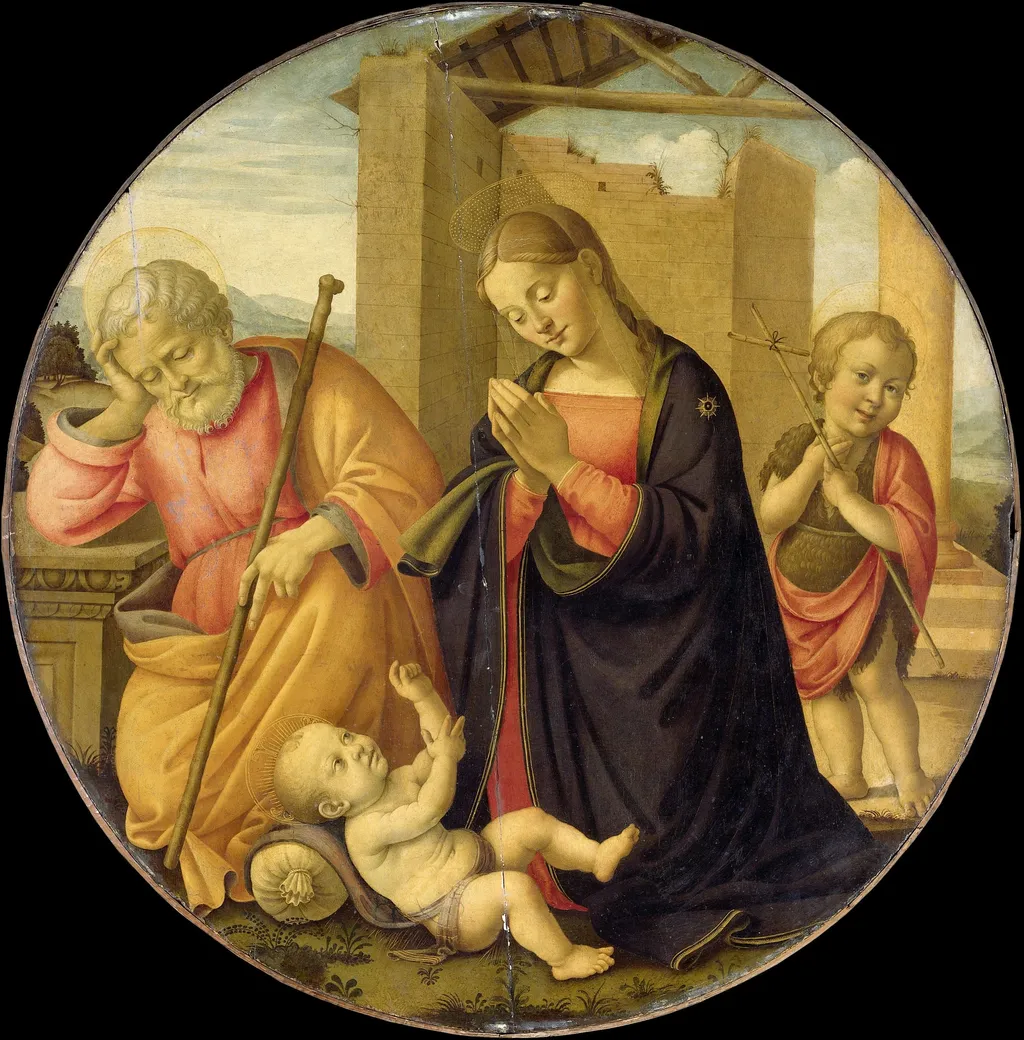
Worshipping the Christ Child is a tempera painting by the Northern Renaissance artist Meester Allegro. It dates from 1500 and is held in the collection of the Rijksmuseum.
About this work
Technique & Style
The composition centers on the holy figures, adhering to the iconographic conventions of Northern European religious art of the era.
Created around 1500 by Master Allegro, this religious painting is executed in tempera on a panel support. The work depicts the Nativity of Jesus, with a specific focus on the adoration of the Christ Child. As a piece from the turn of the sixteenth century, it utilizes traditional materials characteristic of the period, combining pigment bound in egg with a rigid wooden ground.
The composition centers on the holy figures, adhering to the iconographic conventions of Northern European religious art of the era.
History & Provenance
Worshipping the Christ Child was painted by the Master Allegro around 1500 as a religious panel work in tempera. It entered the collection of Peter II, Grand Duke of Oldenburg, and remained in the Grand ducal family, passing to Frederick Augustus II, Grand Duke of Oldenburg. The painting was later acquired by the Rijksmuseum and is now housed in the museum's Augusteum wing.
The painting is housed in the Rijksmuseum within the Augusteum building, listed in the museum's inventory as accession number 1955-A-1234. Its provenance traces back to the collections of Peter II, Grand Duke of Oldenburg, and later Frederick Augustus II, Grand Duke of Oldenburg, before entering the Rijksmuseum's holdings. The work has been featured in several exhibitions at the Rijksmuseum, including a 2005 display of early Netherlandish religious paintings and a 2018 retrospective on Meester Allegro.
Overview
Created around 1500 by the artist known as Master Allegro, this tempera panel presents a modest devotional scene centered on the infant Christ. The work is part of the Rijksmuseum’s collection and is composed within a circular frame that encloses four figures against a simple architectural backdrop and a sky mottled with clouds.
Subject & Meaning
At the heart of the composition is a kneeling woman in a dark garment, cradling a swaddled baby whose serene expression conveys a moment of quiet reverence. To her left, a bearded elder leans on a staff, while a small child on the right clutches a cross, suggesting layers of intergenerational piety and the promise of salvation.
Context
During the turn of the 16th century, tempera remained a common medium for intimate religious works, even as oil painting began to dominate larger altarpieces. The inclusion of a staff and a cross reflects contemporary iconography that linked the earthly lineage of believers with the spiritual narrative of Christ’s incarnation.
Own this work as a print
Artist & collection
Artist
Italian painter from the late 1400s to early 1500s, Meester Allegro made small devotional panels meant for private chapels.

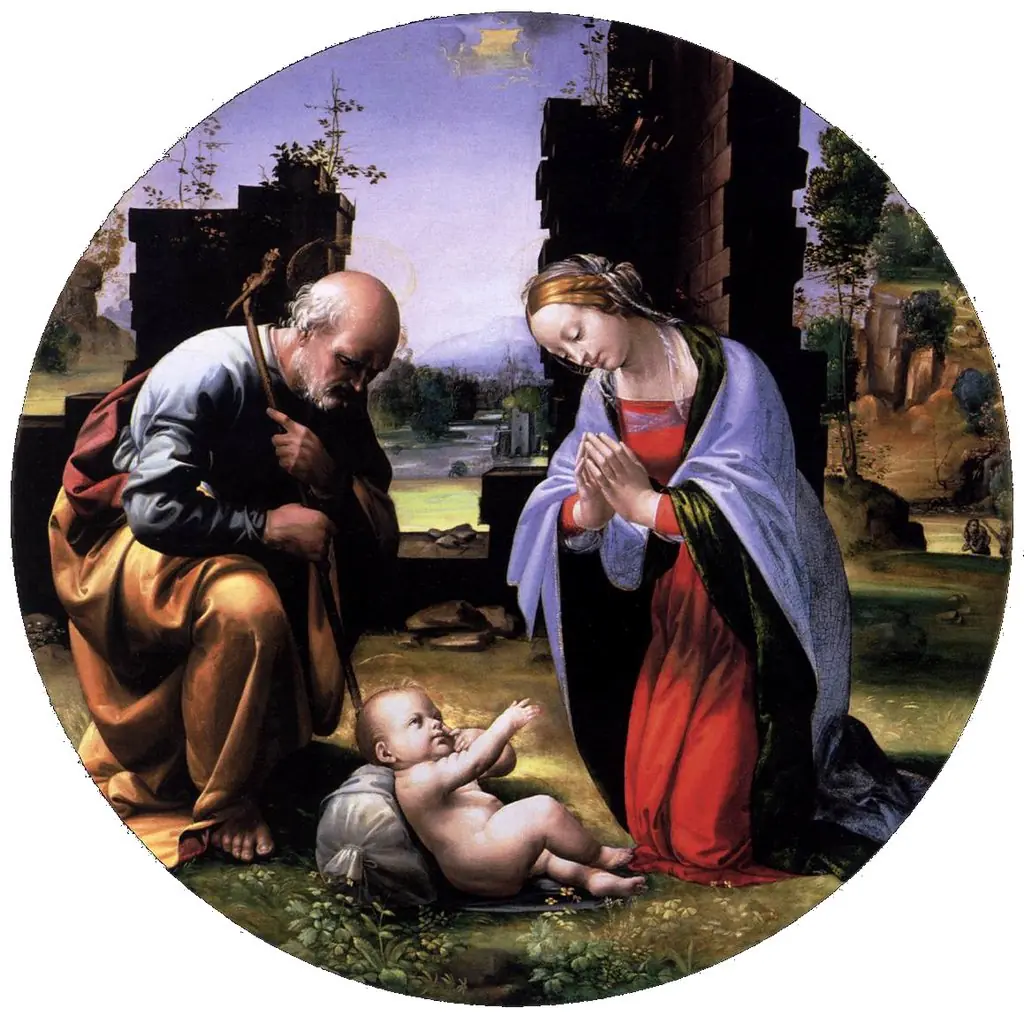 Adoration of the Child
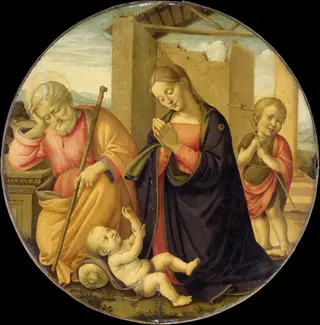 Worshipping the Christ Child
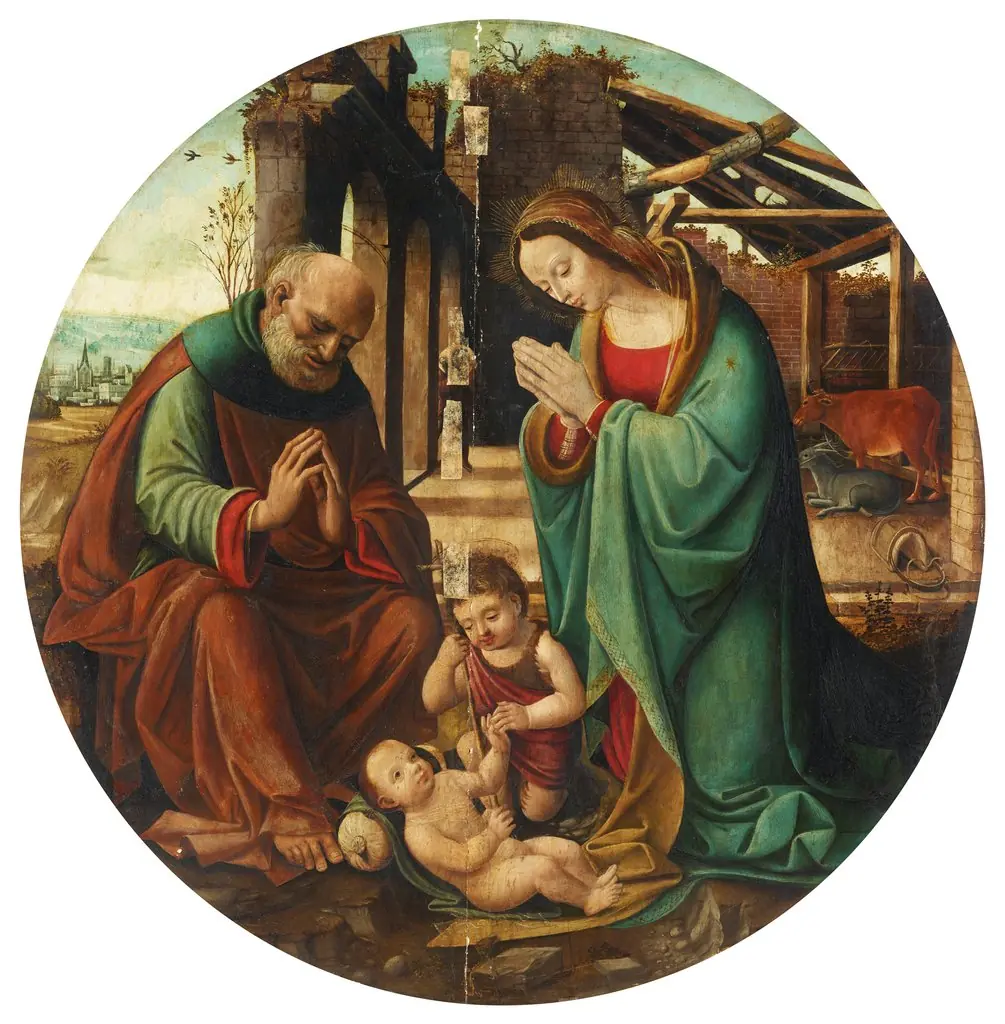 The Holy Family with Young St. John, Adoring the Child
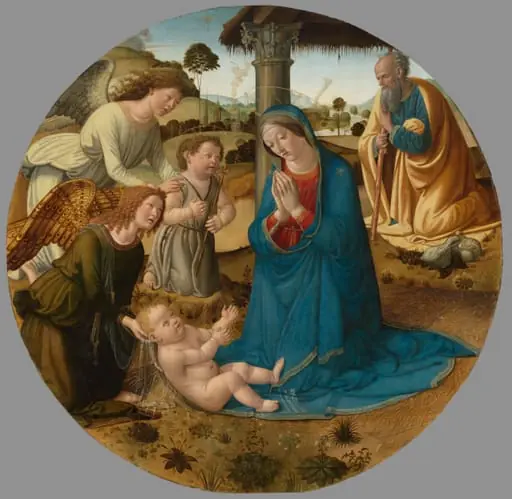 De aanbidding van het Christuskind
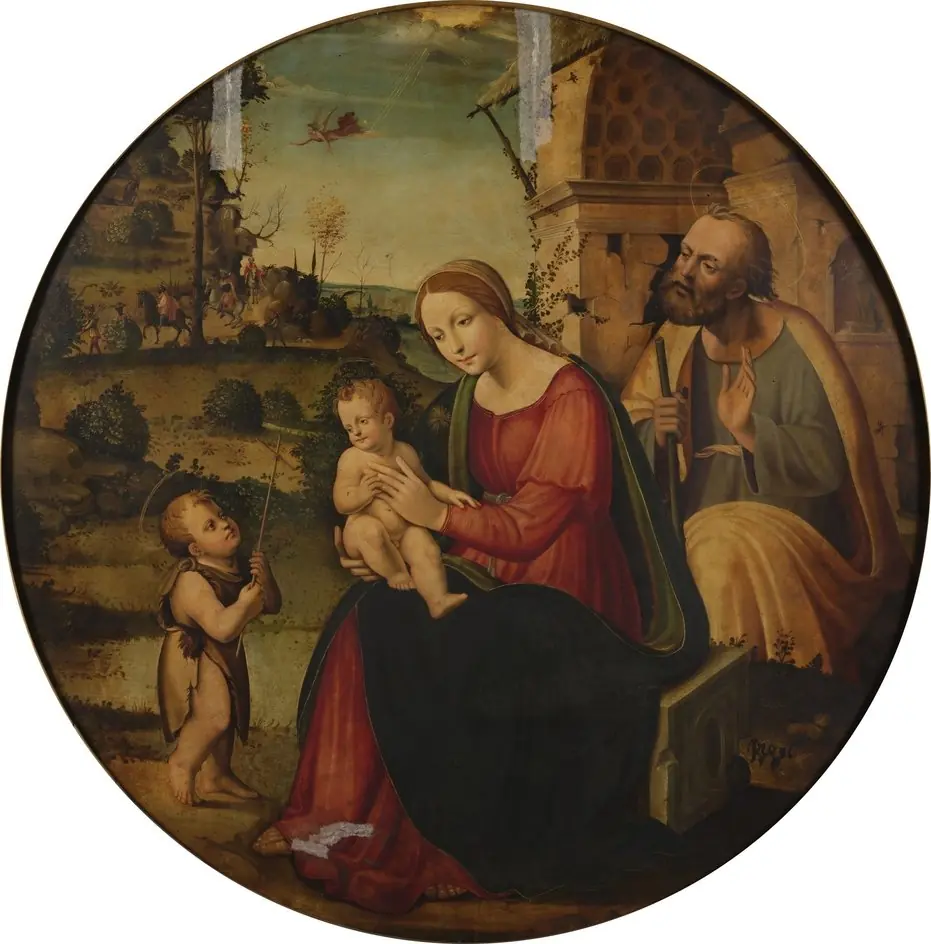 The Holy Family with the young St John the Baptist
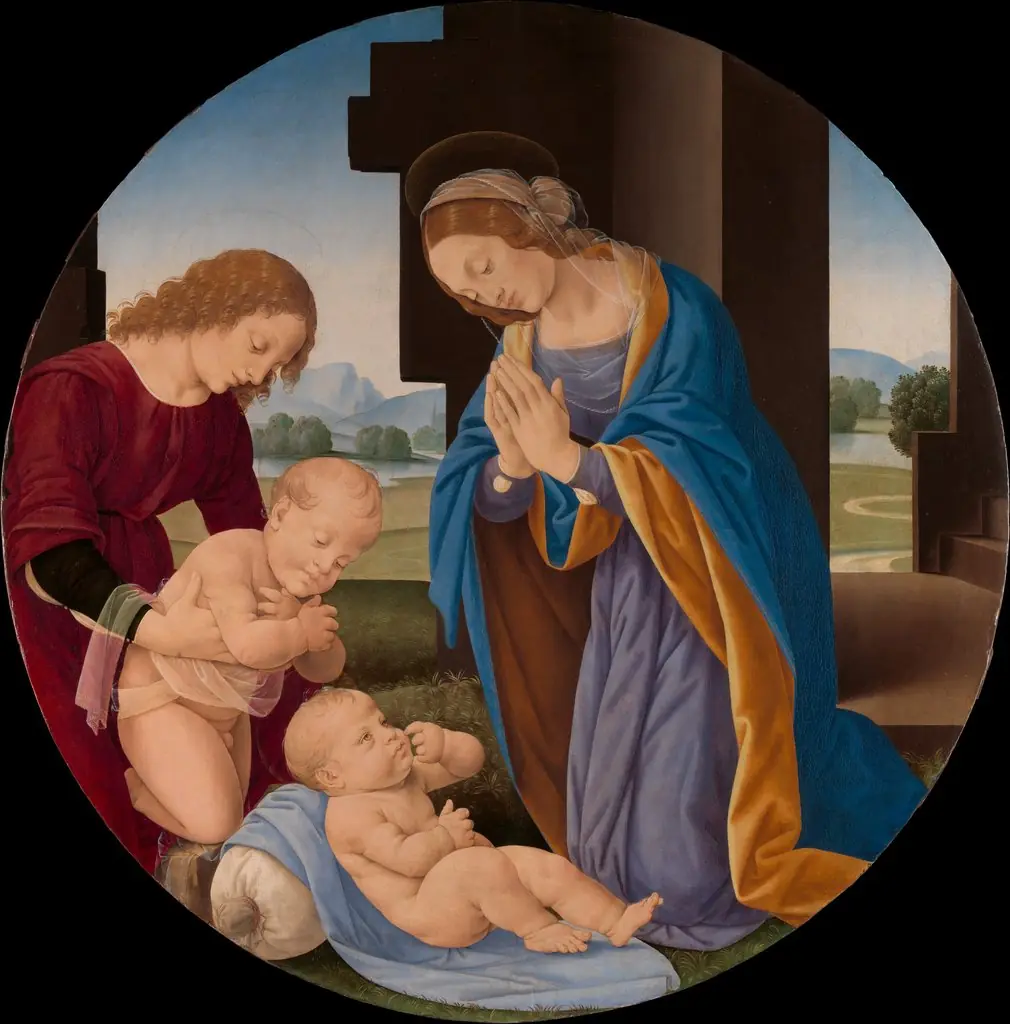 Madonna Adoring the Child with the Infant Saint John the Baptist and an Angel
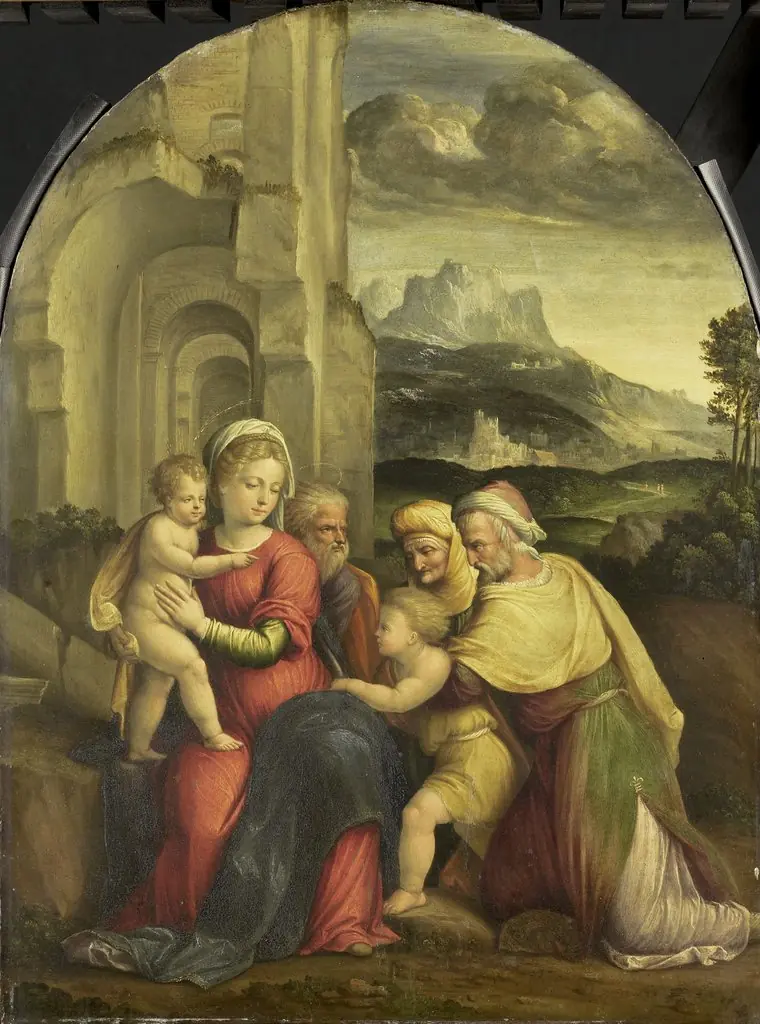 Holy Family
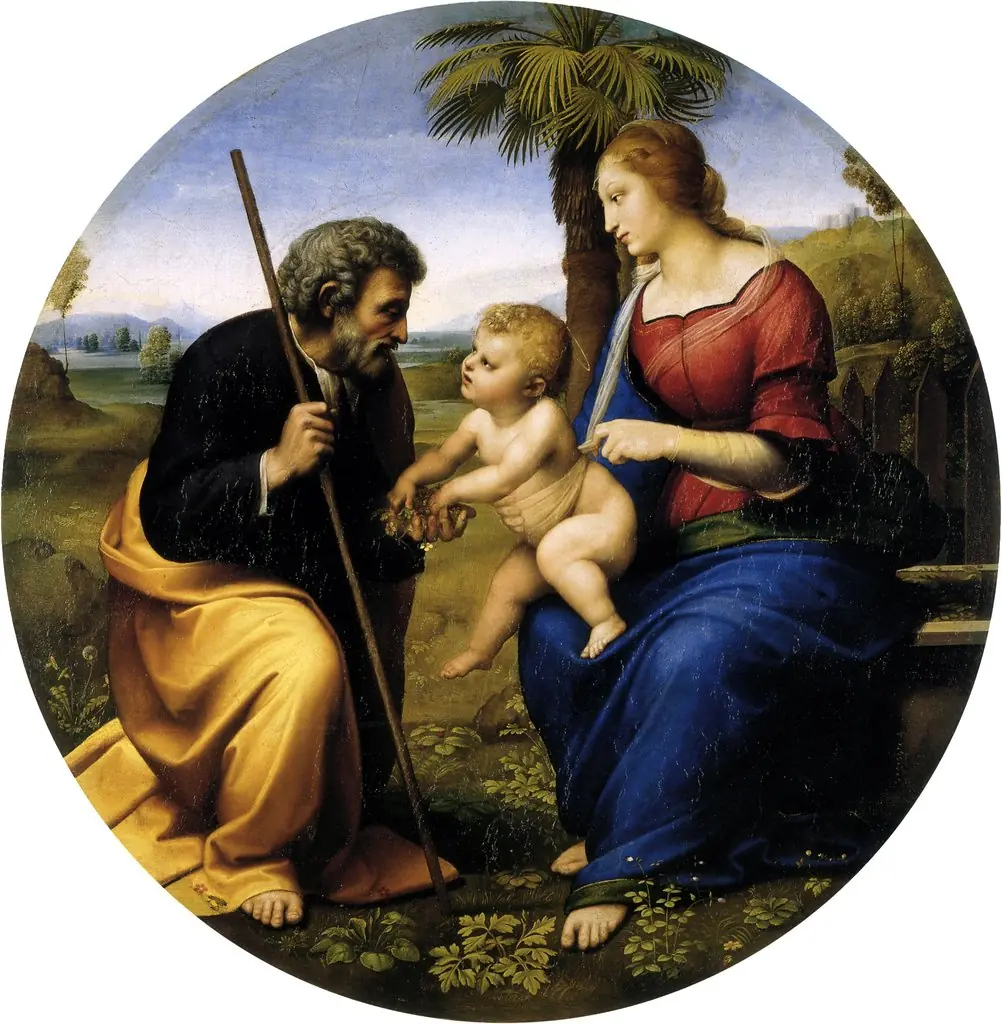 The Holy Family With a Palm Tree