Artwork
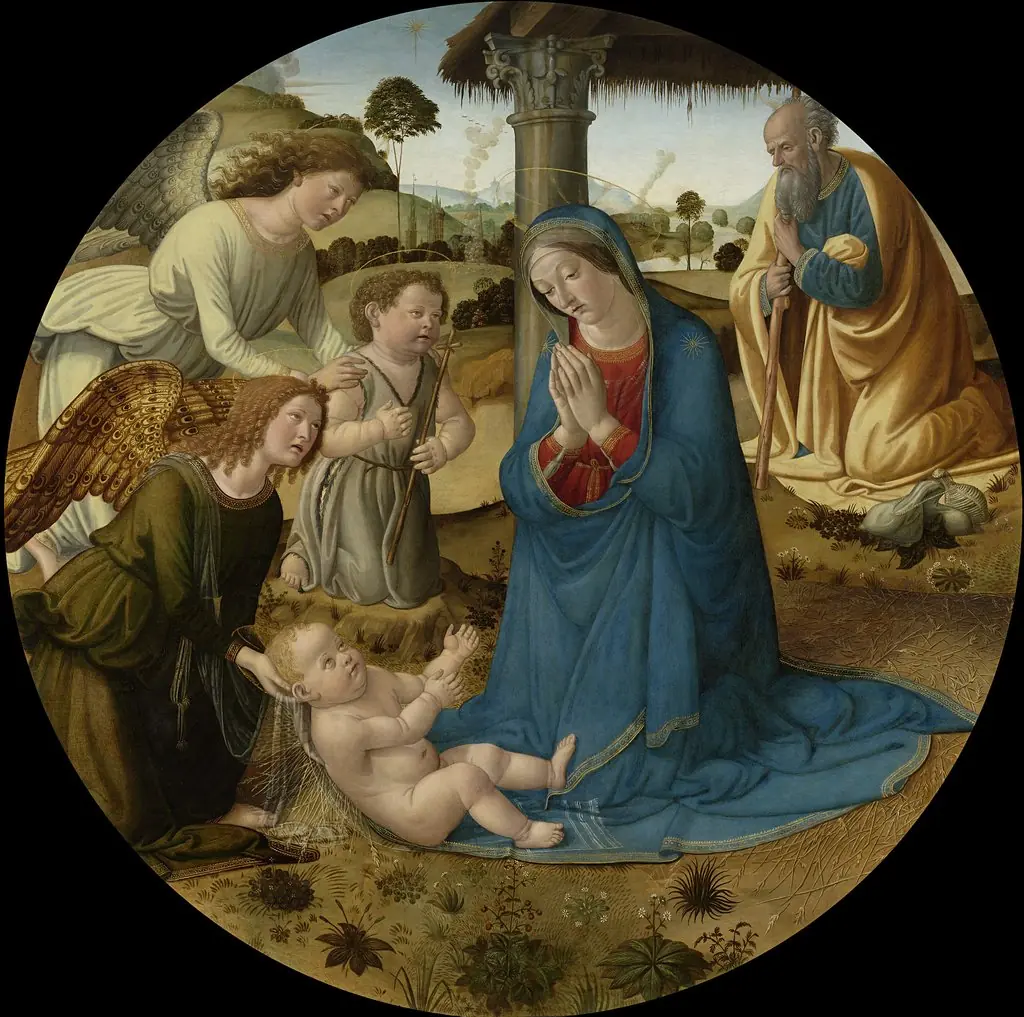
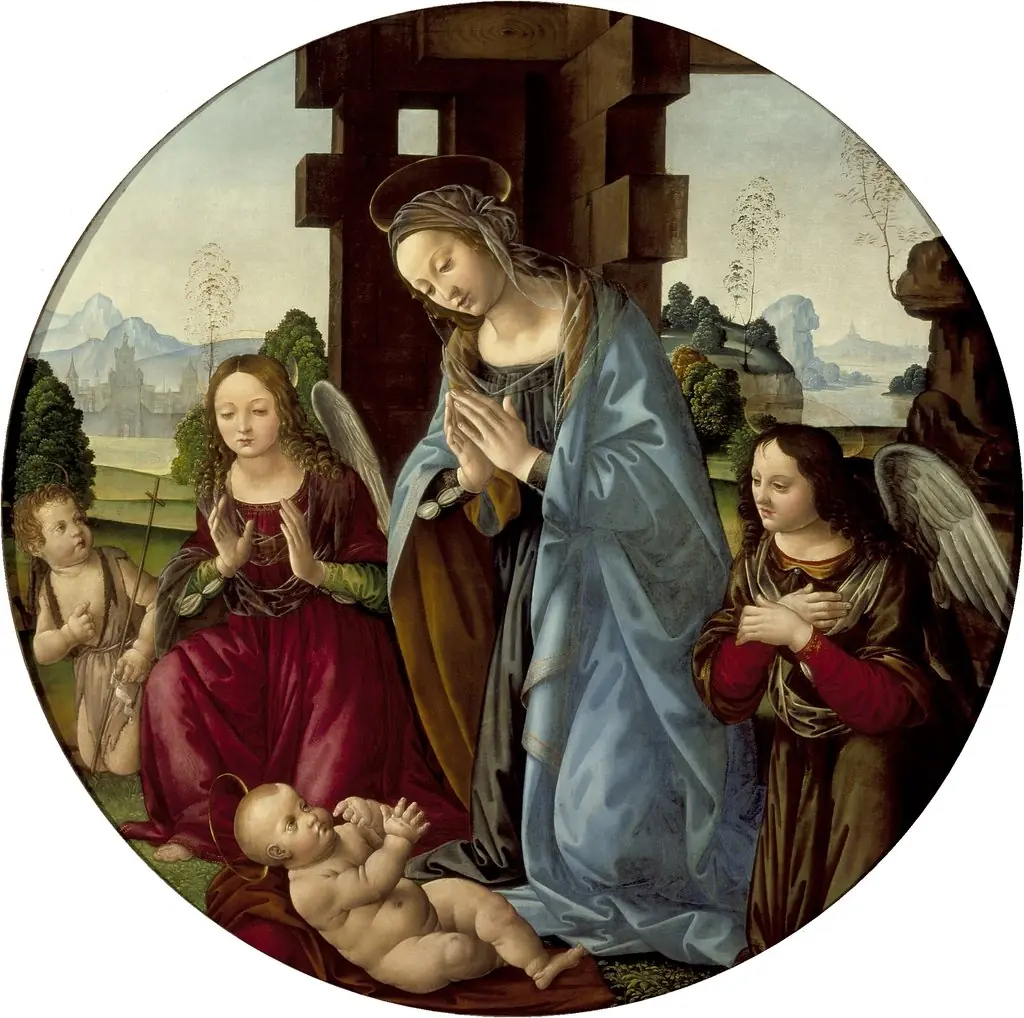
De aanbidding van het Christuskind
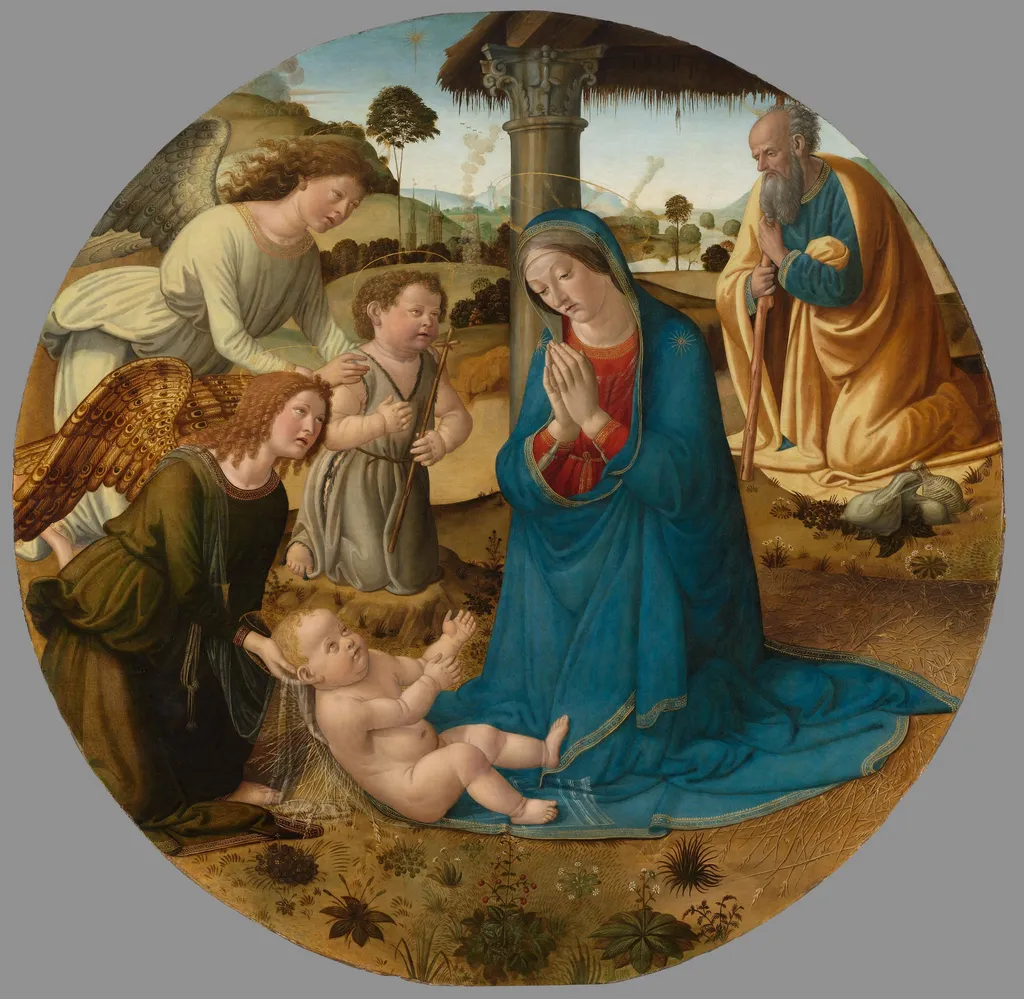
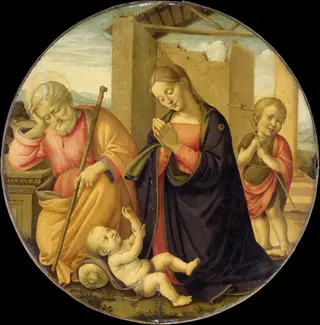
De aanbidding van het Christuskind is an unspecified painting by Cosimo Rosselli. It dates from 1485 and is held in the collection of the Rijksmuseum.
About this work
Technique & Style
De aanbidding van het Christuskind is classified as a painting and is associated with Cosimo Rosselli, a Quattrocento Florentine artist.
De aanbidding van het Christuskind is classified as a painting and is associated with Cosimo Rosselli, a Quattrocento Florentine artist. According to one catalogue entry for a work of the same title and approximate period, the medium is oil on panel, executed in the tondo format with a diameter of 114 cm.
Stylistically, Rosselli's work is situated within the Quattrocento movement. Vasari observed that, unlike his contemporaries at the Sistine Chapel who followed a common pattern, Rosselli employed brighter colors and a large amount of gold, a handling that distinguished his frescoes. This inclination toward vivid coloration and ornamental gold is consistent with the painter's broader practice and would likely inform the chromatic character of his panel works as well.
History & Provenance
The painting De aanbidding van het Christuskind is attributed to Cosimo Rosselli and dates to approximately 1485-1507, placing it within his active period in Florence and Rome. It was likely created during his time in the city, possibly for a devotional or liturgical context tied to the Dominican convent at Santissima Annunziata, where he completed other works in the 1470s. The work reflects the artistic milieu of the Quattrocento in Florence, where Rosselli was commissioned to fresco the Sistine Chapel in 1481 under papal patronage from Pope Sixtus IV, alongside Botticelli and Ghirlandaio. His involvement in this commission underscores his standing as a recognized, though not dominant, talent among Florentine painters. The painting's provenance is not documented through explicit ownership records, but its attribution and dating are supported by stylistic analysis and its alignment with known works from this period, including altarpieces and frescoes in churches such as Sant'Ambrogio and the Accademia in Florence.
Context
Cosimo Rosselli worked within the Quattrocento tradition of Florentine religious painting, a context reflected in his major commissions for the Sistine Chapel in 1481 alongside Botticelli and Ghirlandaio. His contribution to the frescoes there, particularly noted by Vasari for the use of bright colors and gold, formed part of a broader workshop practice involving assistants such as Piero di Cosimo. This activity placed his work within the artistic milieu of late 15th-century Florence and Rome, where he also executed significant local projects like the frescoes in the Chapel of the Holy Blood at Sant'Ambrogio. Contemporary scholarship, as evidenced by later catalogues and restoration studies, continues to assess his role within this Renaissance context, including his influence on pupils and the stylistic characteristics of works such as the altarpiece in Berlin's Gemäldegalerie.
Own this work as a print
Artist & collection
Artist
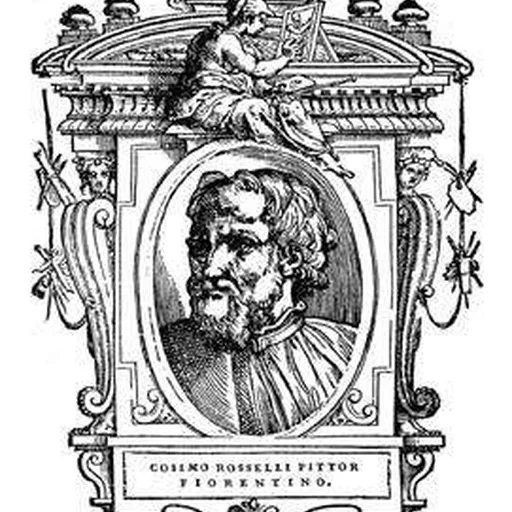
Cosimo Rosselli (Italian:; 1439–1507) was an Italian painter of the Quattrocento, active mainly in his birthplace of Florence, but also in Pisa earlier in his career and in 1481–82 in the Sistine Chapel in Rome, where…

 Virgin Adoring the Christ Child with St. John the Baptist and Two Angels
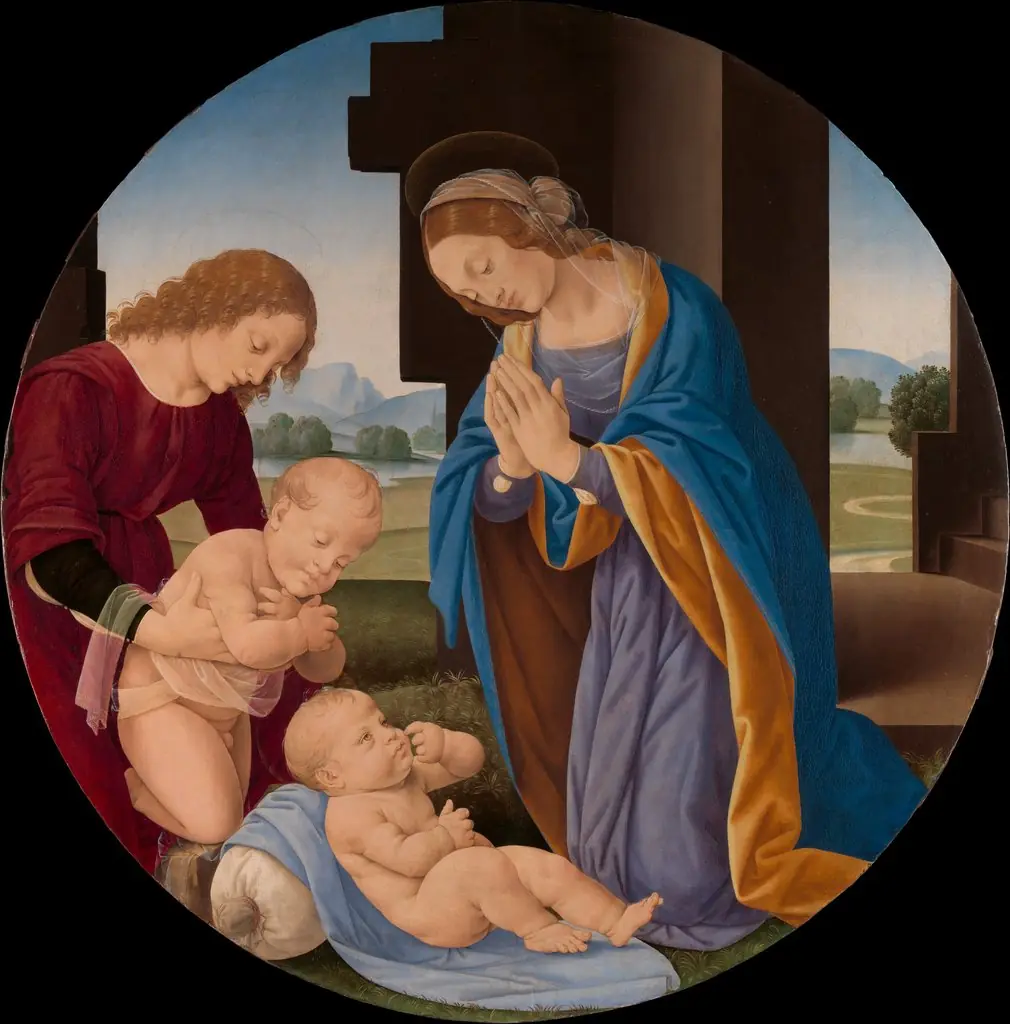 Madonna Adoring the Child with the Infant Saint John the Baptist and an Angel
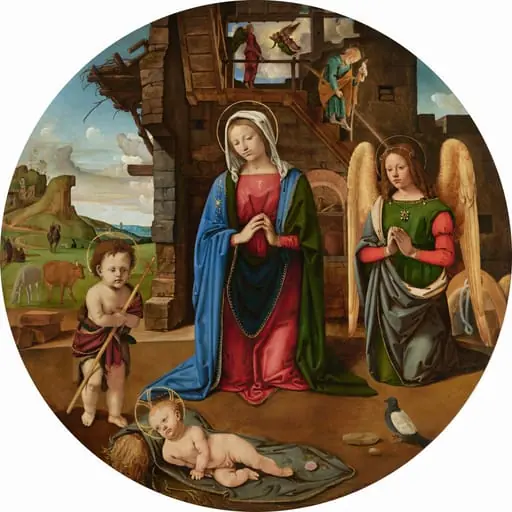 The Nativity with the Infant Saint John
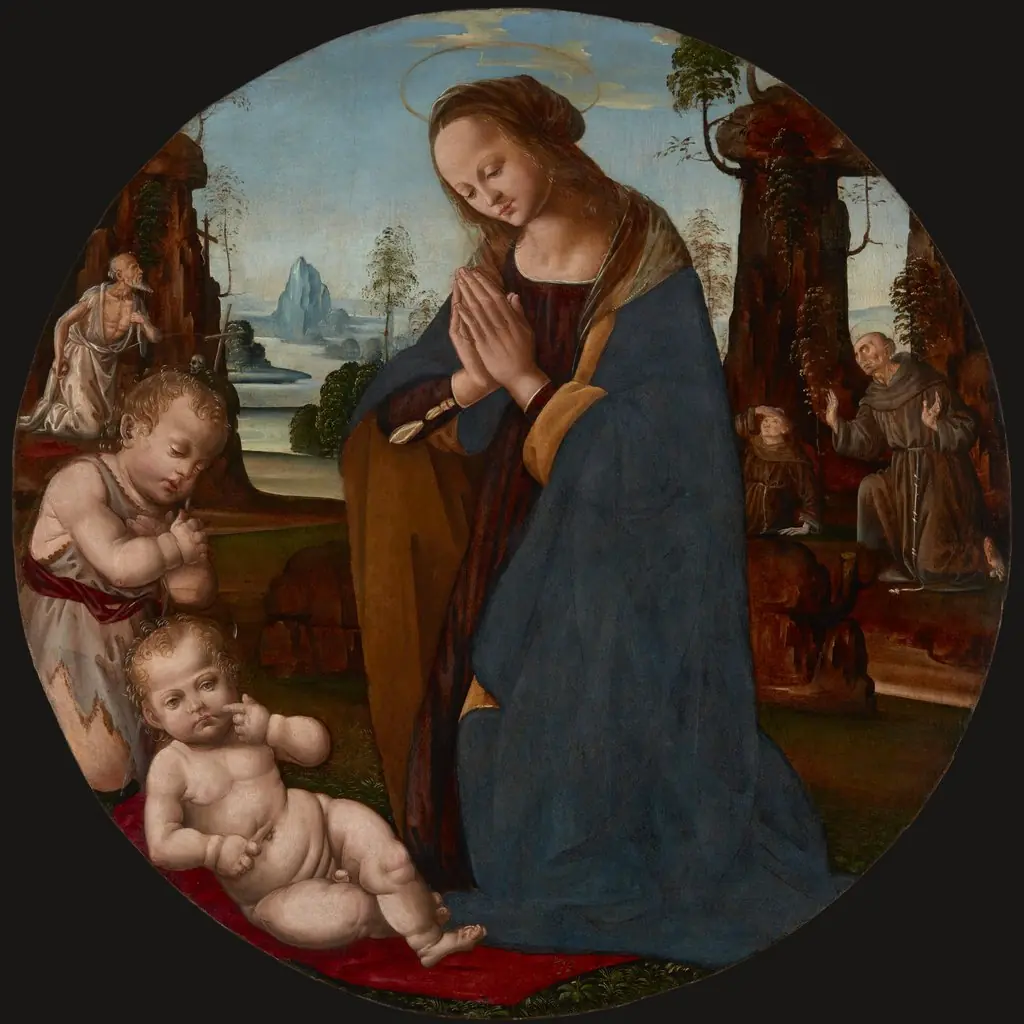 Adoration of the Child with Young St John the Baptist – Tondo
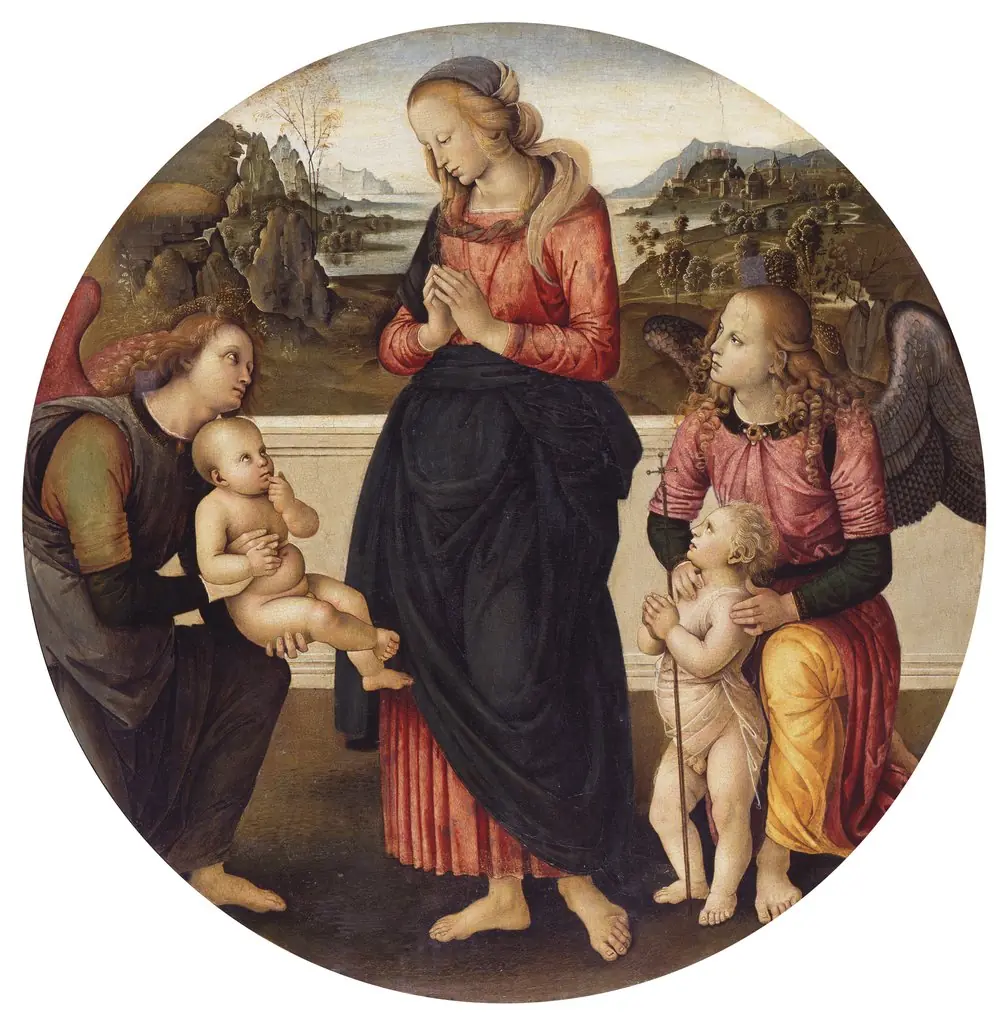 The Virgin Adoring the Child with John the Baptist as a Child and two Angels
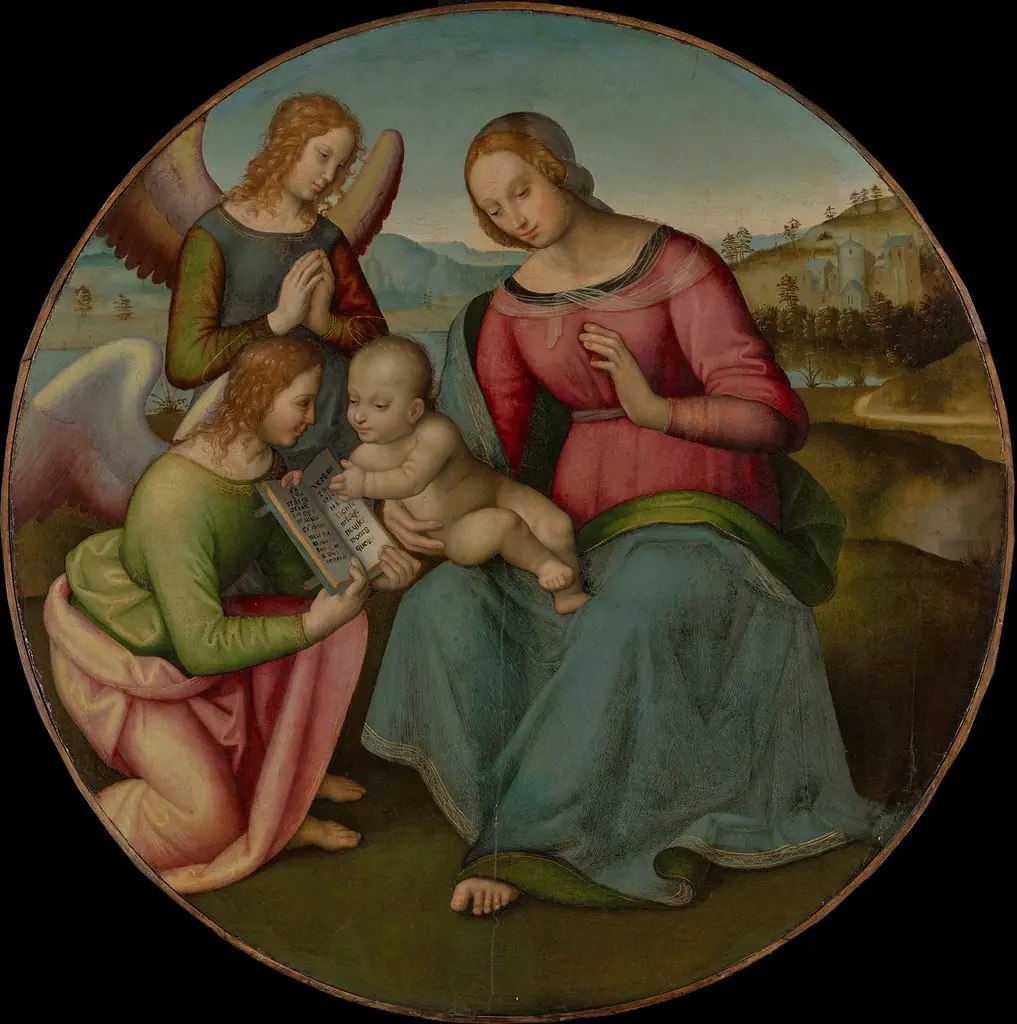 The Virgin and Child with two Angels
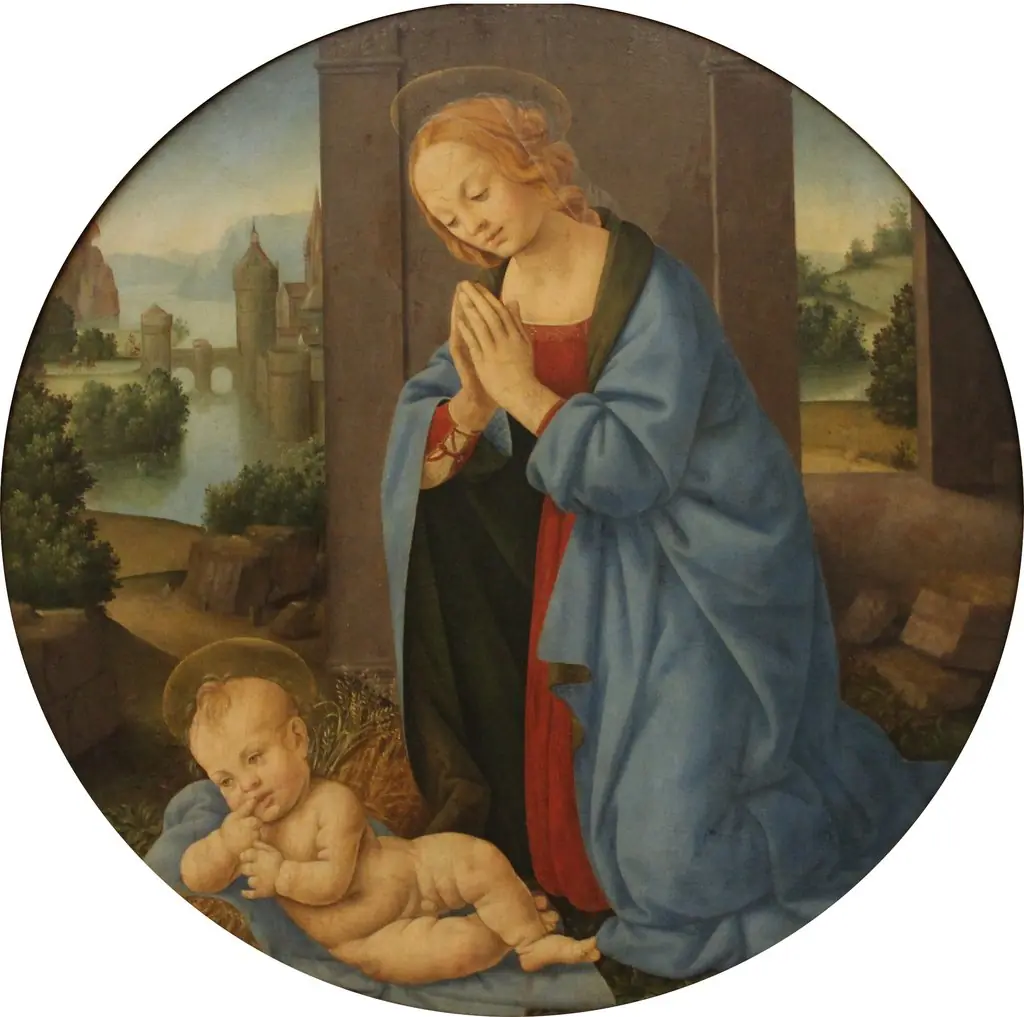 The Virgin adoring the Child
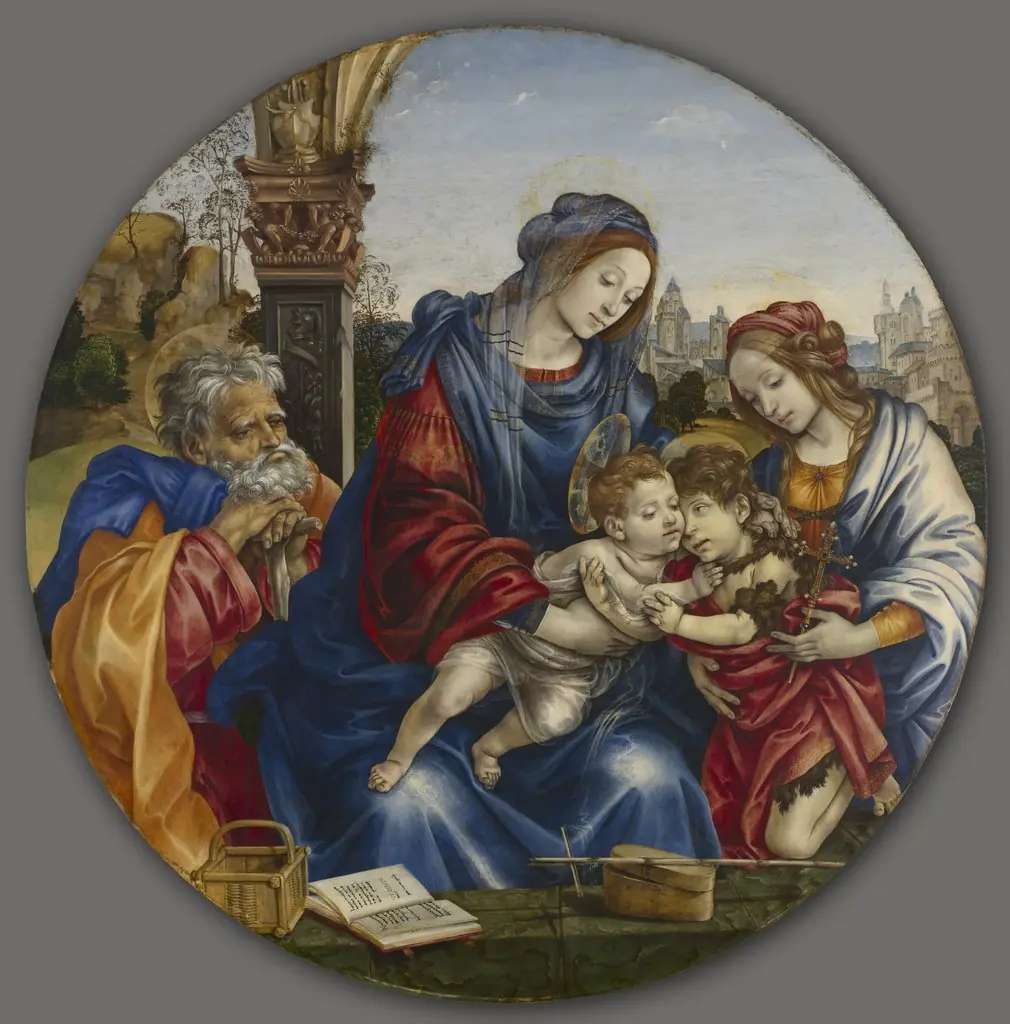 The Holy Family with Saint John the Baptist and Saint Margaret
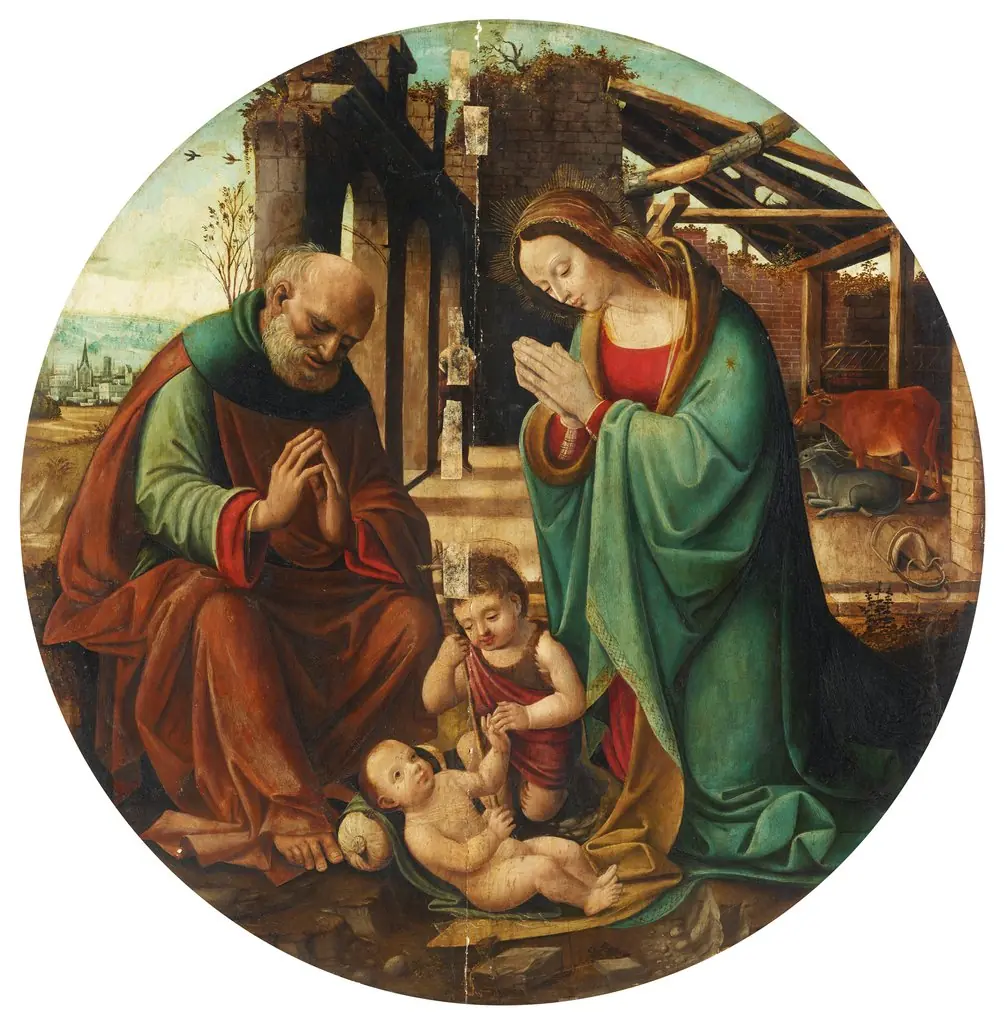 The Holy Family with Young St. John, Adoring the Child
 Worshipping the Christ Child
- Virgin and Child with the Young Saint John the Baptist, Saint Cecilia, and Angels