Artwork
The Holy Family With a Palm Tree
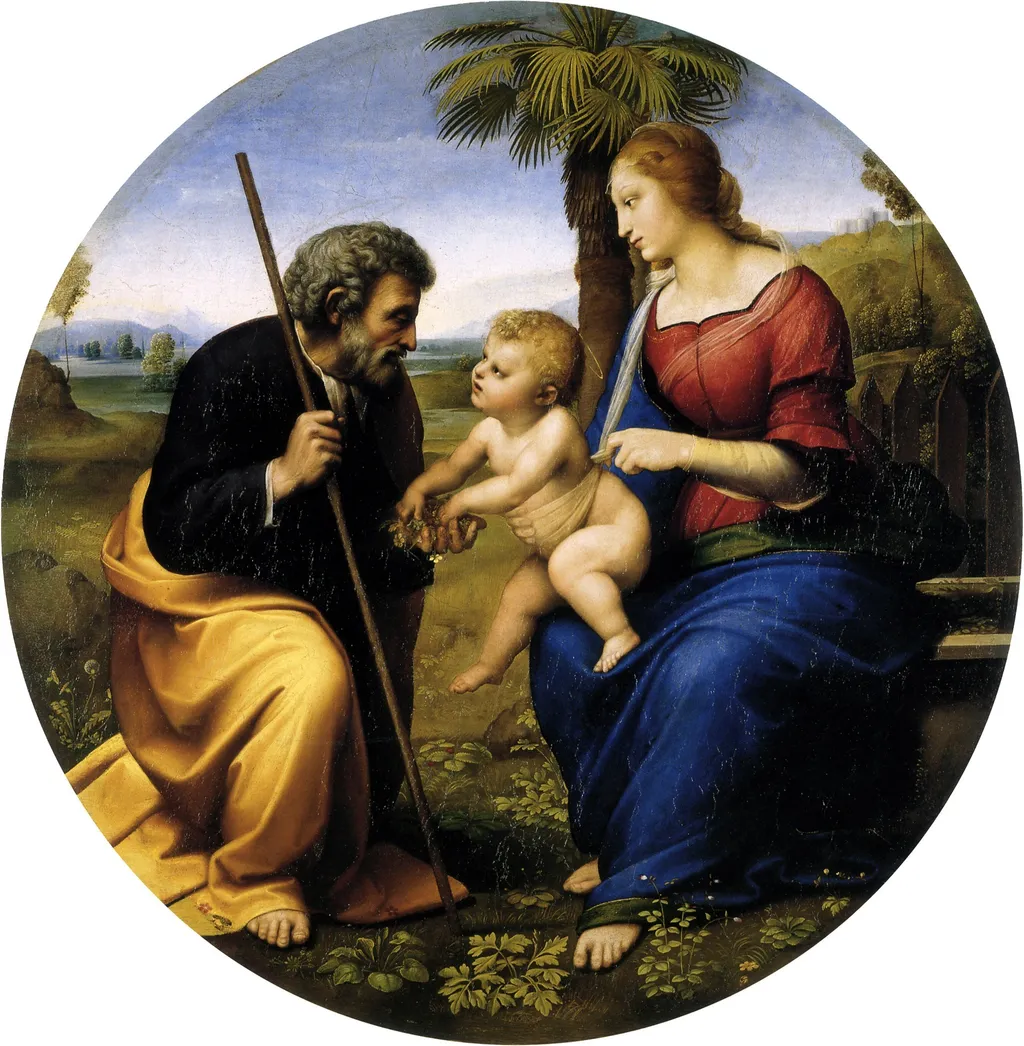
The Holy Family With a Palm Tree is an oil painting by the High Renaissance artist Raphael. It dates from 1506 and is held in the collection of the National Galleries Scotland.
About this work
Subject & Meaning
The flowers in the foreground carry Marian and Passion symbolism, while a fence behind Mary evokes the hortus conclusus, signifying her virginity.
The painting depicts the Holy Family, Mary, the Christ Child, and Joseph, gathered in a landscape setting, likely during the Flight into Egypt. Mary sits at the right, dressed in her traditional red and blue garments, holding the infant Jesus at the center. Joseph kneels at the left, offering flowers to the child. The palm tree dominates the composition, positioned between Jesus and Mary. It symbolizes Christ's future martyrdom and his entry into Jerusalem. The flowers in the foreground carry Marian and Passion symbolism, while a fence behind Mary evokes the hortus conclusus, signifying her virginity. The holy figures are shown barefoot with discreet elliptical halos. The composition emphasizes the Christ Child as its focal point, with the palm tree serving as his visual support. The lively interaction among the three figures, their exchanged glances creating an unusual dynamic where Mary looks toward Joseph rather than her son, contributes to the work's emotional resonance.
Technique & Style
Executed in oil paint around 1506, the work was originally created on a wood panel before being transferred to a canvas support. The painting is a tondo with a diameter of 101.5 cm. Historically, the piece underwent restoration to address and cover two deep vertical splits in the structure. Stylistically, the composition reflects High Renaissance ideals with a dense, rich color palette characteristic of the artist's mature period. The handling displays meticulous attention to detail, particularly in the botanically accurate rendering of the central palm tree and foreground vegetation. The figures are arranged with a dynamic interaction, while the background utilizes atmospheric perspective reminiscent of Leonardo da Vinci. Discreet, elliptical halos surround the sacred figures, who are depicted barefoot within a landscape that balances human presence with natural elements.
History & Provenance
Created around 1506, this tondo is attributed to Raphael and likely represents the second of two works the artist painted in Florence for Taddeo Taddei, as recorded by Vasari. Definitive provenance records emerge in the 17th century within the collection of the Countess of Chiverni in Paris. The painting subsequently entered the holdings of the Duke of Orléans before being sold in 1792, following the Duke's adoption of the name Philippe Égalité. It later joined the Ellesmere collection in London. An early restoration was undertaken to conceal two significant vertical cracks in the support. The work arrived at its current location, the National Gallery of Scotland in Edinburgh, in 1945.
Context
The Holy Family With a Palm Tree has been understood as a pivotal work within Raphael's religious oeuvre, particularly for its synthesis of devotional intimacy and symbolic landscape. Scholarship emphasizes its role in the High Renaissance devotional tradition, where the palm functions not merely as botanical detail but as a prefiguration of Christ's Passion, positioned between Mary and Jesus to signify impending martyry. This iconographic device aligns with contemporary theological interpretations of the Holy Family's Flight into Egypt, a theme also reflected in the painting's compositional balance and botanical precision. The work's provenance, traced from the Chiverni collection in Paris through the Orléans and Ellesmere holdings to its 1945 acquisition by the National Gallery of Scotland, underscores its enduring significance in European art collecting. Its technical execution, oil on panel with meticulous rendering of the palm's stipe and surrounding flora, demonstrates Raphael's mastery of naturalistic detail, while the compositional influence of Leonardo da Vinci and Perugino is evident in the atmospheric landscape and figure interaction. The painting's restoration to address vertical fissures further informs its material history without altering its symbolic integrity.
Legacy
The Holy Family With a Palm Tree influenced later religious compositions through its innovative tondo format and symbolic use of the palm tree as a harbinger of Christ's Passion. Its botanical precision, particularly in rendering the palm and foreground flora, set a precedent for naturalistic detail in sacred art. The work's composition, blending High Renaissance harmony with early signs of Mannerist dynamism, was noted by contemporaries and later artists for its emotional engagement and technical mastery. The painting's journey through private and royal collections, including its acquisition by the National Gallery of Scotland in 1945, cemented its status as a significant example of Raphael's transitional style between Florence and Rome.
Own this work as a print
Artist & collection
Artist
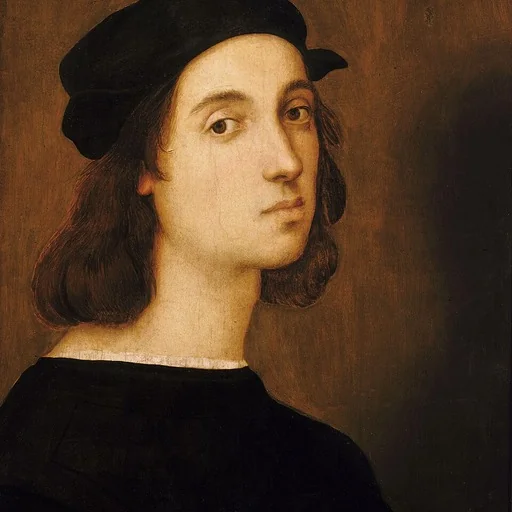
Raphael was born Raffaello Sanzio in Urbino on April 6, 1483, the son of Giovanni Santi, a painter and poet attached to the ducal court.

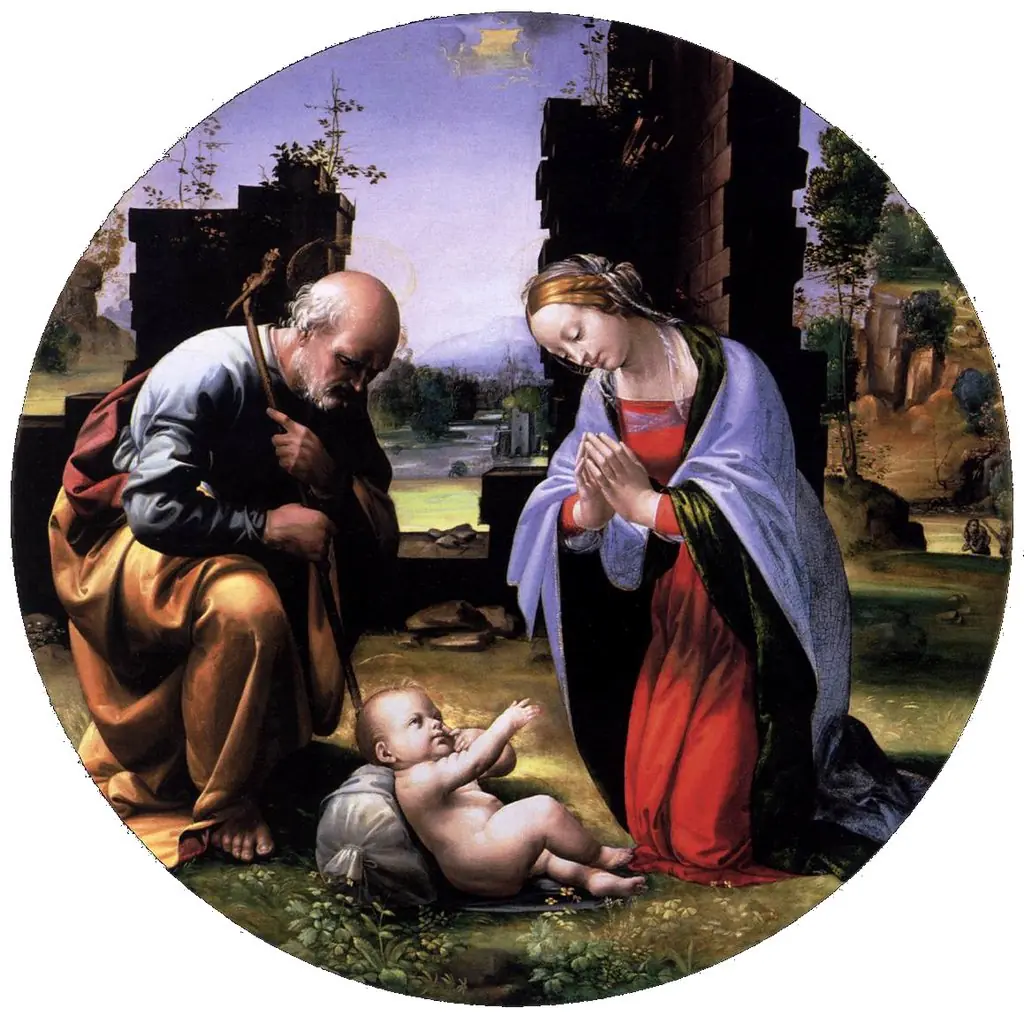 Adoration of the Child
 Holy Family
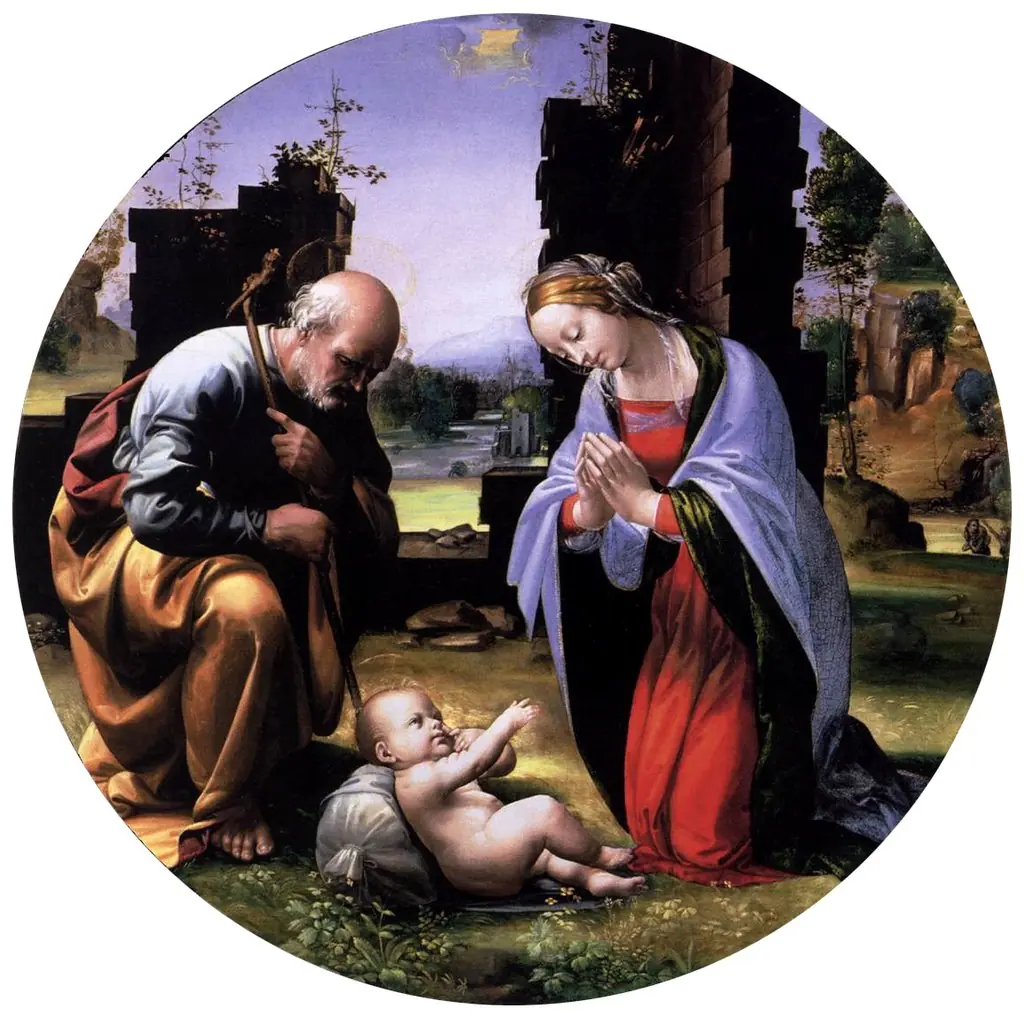 The Adoration of the Child
 Worshipping the Christ Child
 Worshipping the Christ Child
 The Mystic Marriage of Saint Catherine
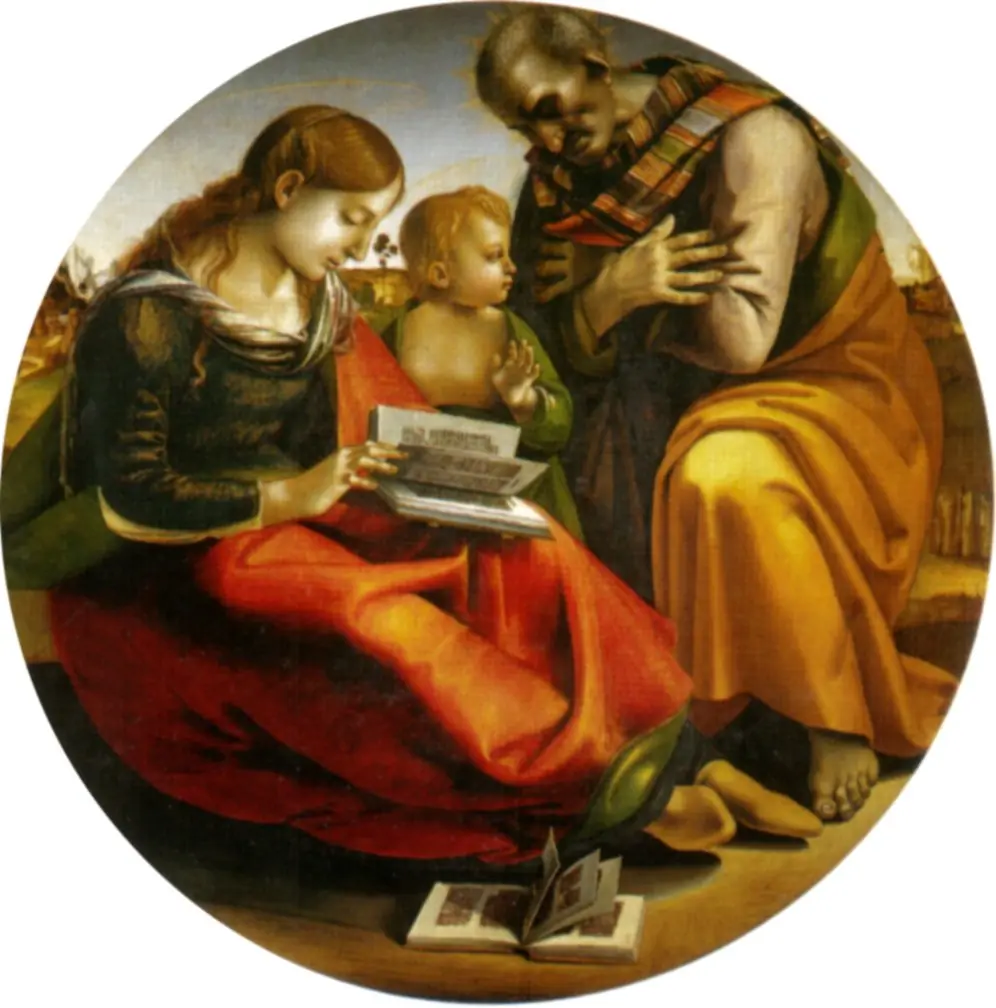 The Holy Family di Parte Guelfa
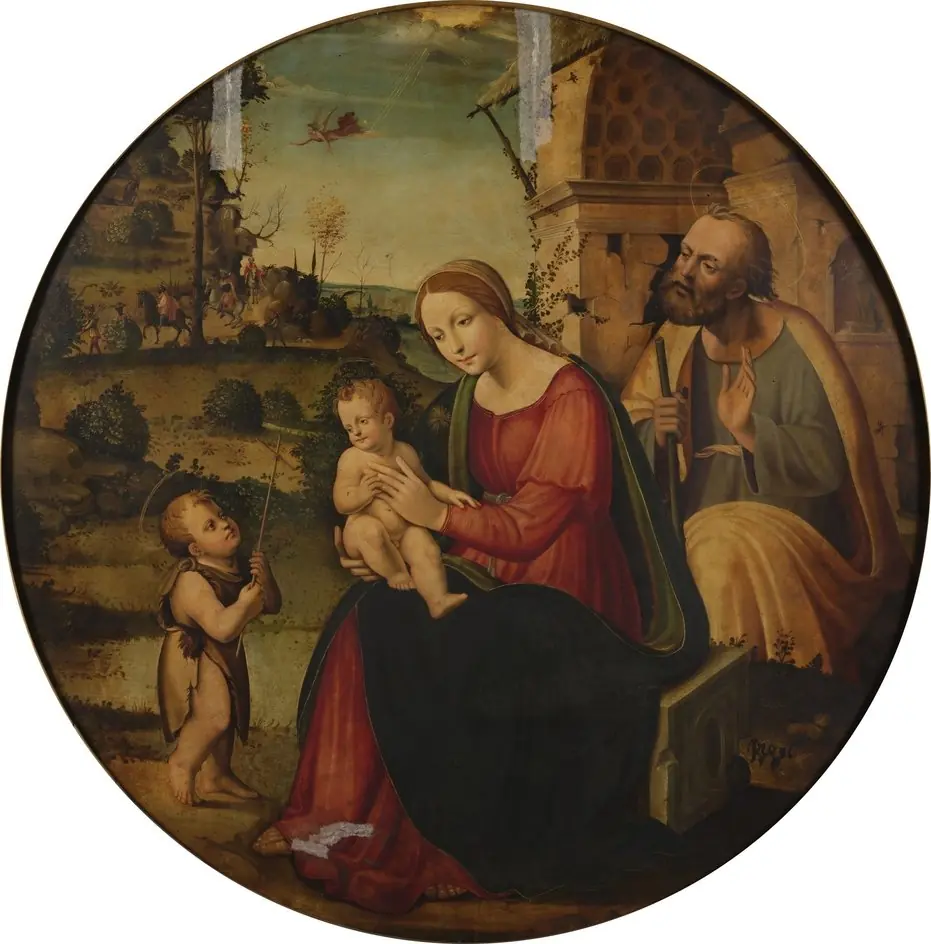 The Holy Family with the young St John the Baptist
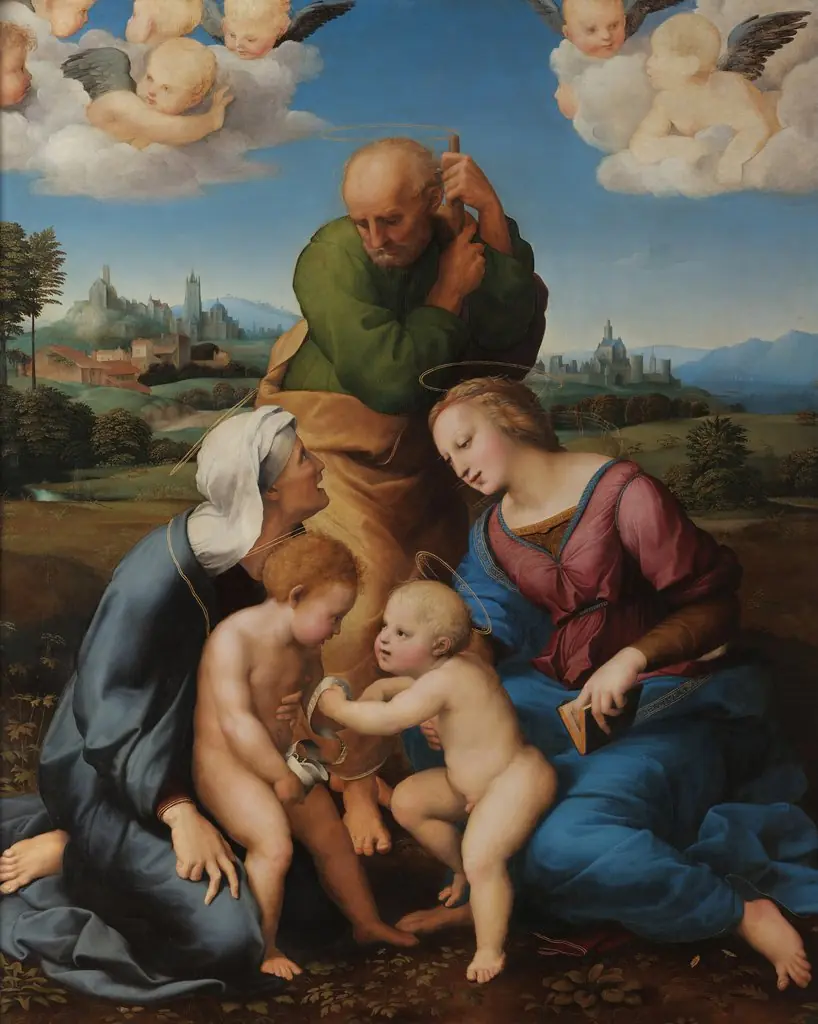 Canigiani Holy Family
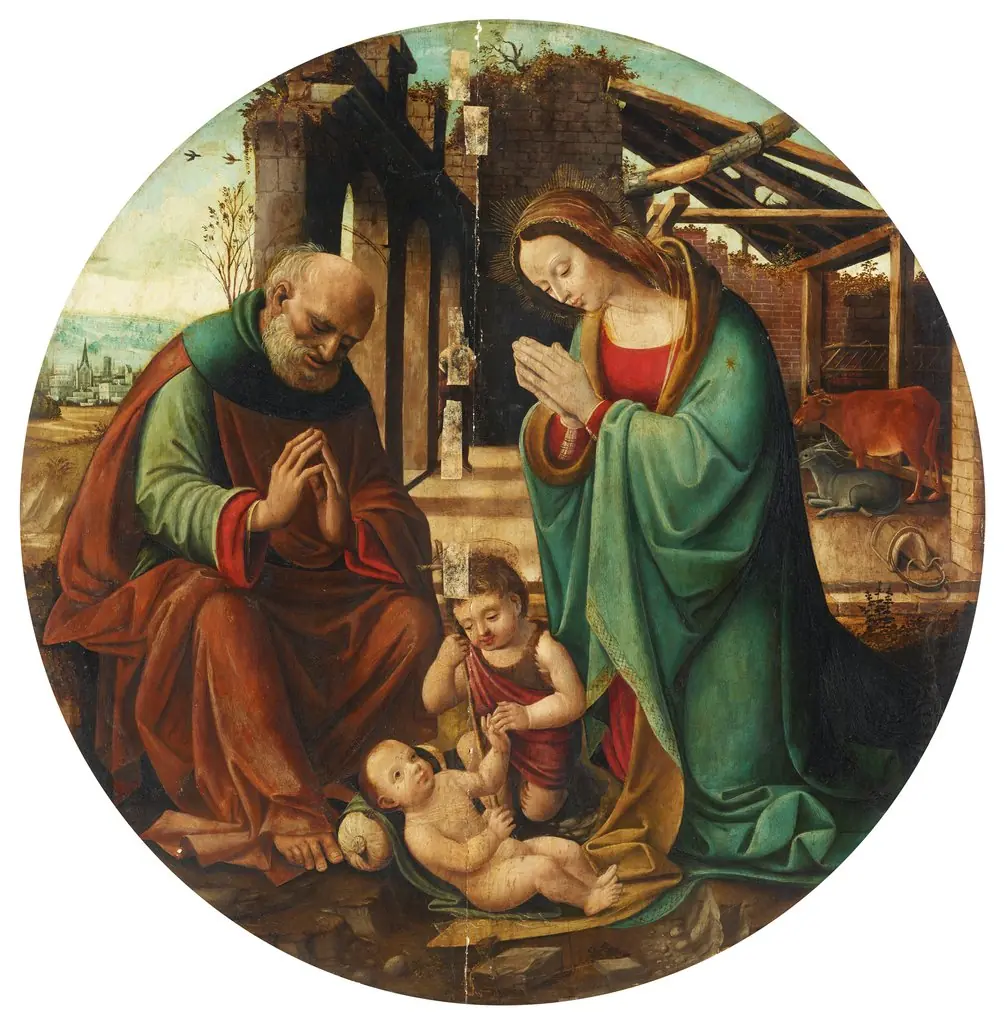 The Holy Family with Young St. John, Adoring the Child