Artwork
Meeting of Achilles and Hector
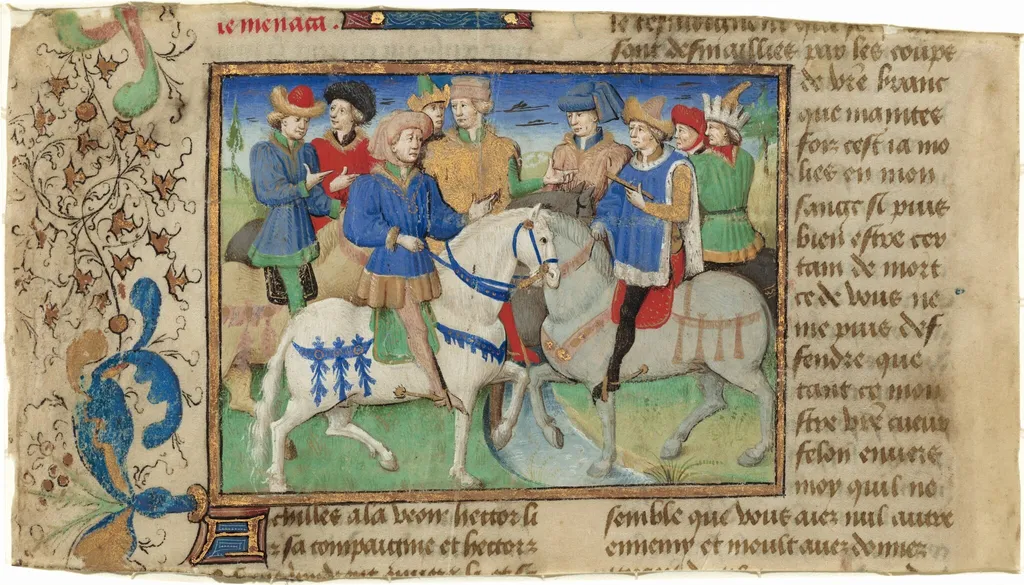
Meeting of Achilles and Hector is a drawing by the Renaissance artist Master of Girart de Roussillon. It dates from 1455 and is held in the collection of the National Gallery of Art.
About this work
Overview
The work titled “Meeting of Achilles and Hector” is a small-scale painted drawing on vellum, executed around 1455 by the anonymous artist known as the Master of Girart de Roussillon. Measuring only a few centimeters, the piece presents a vivid tableau of mounted figures set against a gently rolling landscape, framed by ornamental blue borders typical of the period’s manuscript illumination.
Subject & Meaning
The central figure, a rider in blue astride a white horse, appears to lead the encounter, while other mounted men in red, green and brown flank the scene.
The image depicts a moment from the Iliadic narrative in which the Greek hero Achilles confronts the Trojan champion Hector. The central figure, a rider in blue astride a white horse, appears to lead the encounter, while other mounted men in red, green and brown flank the scene. The composition suggests a staged meeting rather than a battle, emphasizing the dramatic tension between the two legendary warriors.
Technique & Style
Rendered as a miniature on vellum, the drawing employs fine, linear brushwork to outline the riders and horses, while the application of bright pigments creates a richly colored surface. The figures are rendered with a certain rigidity, a characteristic of early Northern Renaissance manuscript art, and the surrounding decorative border features intricate blue motifs that echo contemporary illumination practices.
History & Provenance
Created in the mid‑15th century, the piece likely originated as an illustration intended for insertion into a luxury codex. The attribution to the Master of Girart de Roussillon rests on stylistic parallels with other works linked to this anonymous workshop. The drawing’s subsequent ownership history is undocumented, but it now resides in a museum collection devoted to medieval and Renaissance manuscripts.
Context
During the 1450s, manuscript illumination was transitioning toward the more naturalistic approaches of the Renaissance, yet many artists retained the stylized conventions of earlier Gothic art. This miniature exemplifies that hybrid moment: its vivid coloration and narrative focus align with emerging humanist interests, while its formal stiffness and decorative borders reflect lingering medieval aesthetic norms.
Artist & collection

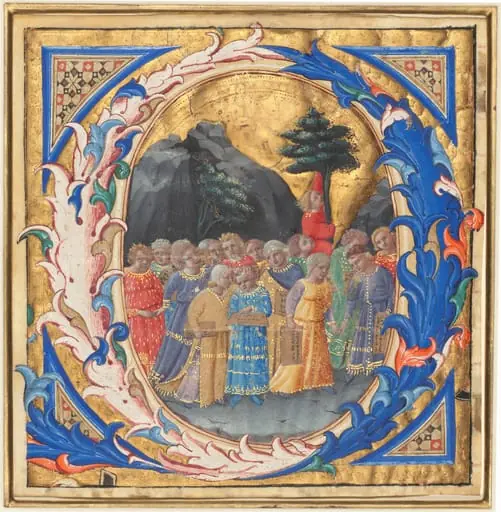 Initial Q with a Procession of Children
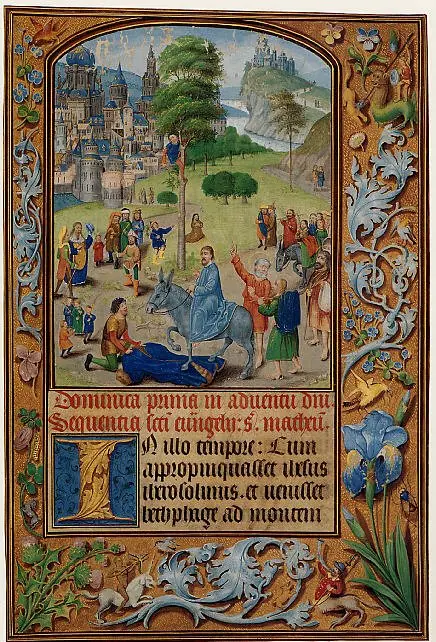 Christ's Entry into Jerusalem
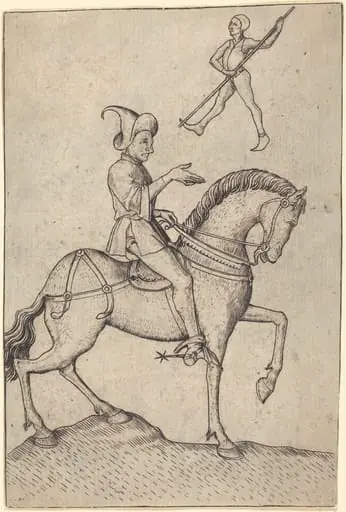 The Knight of Men
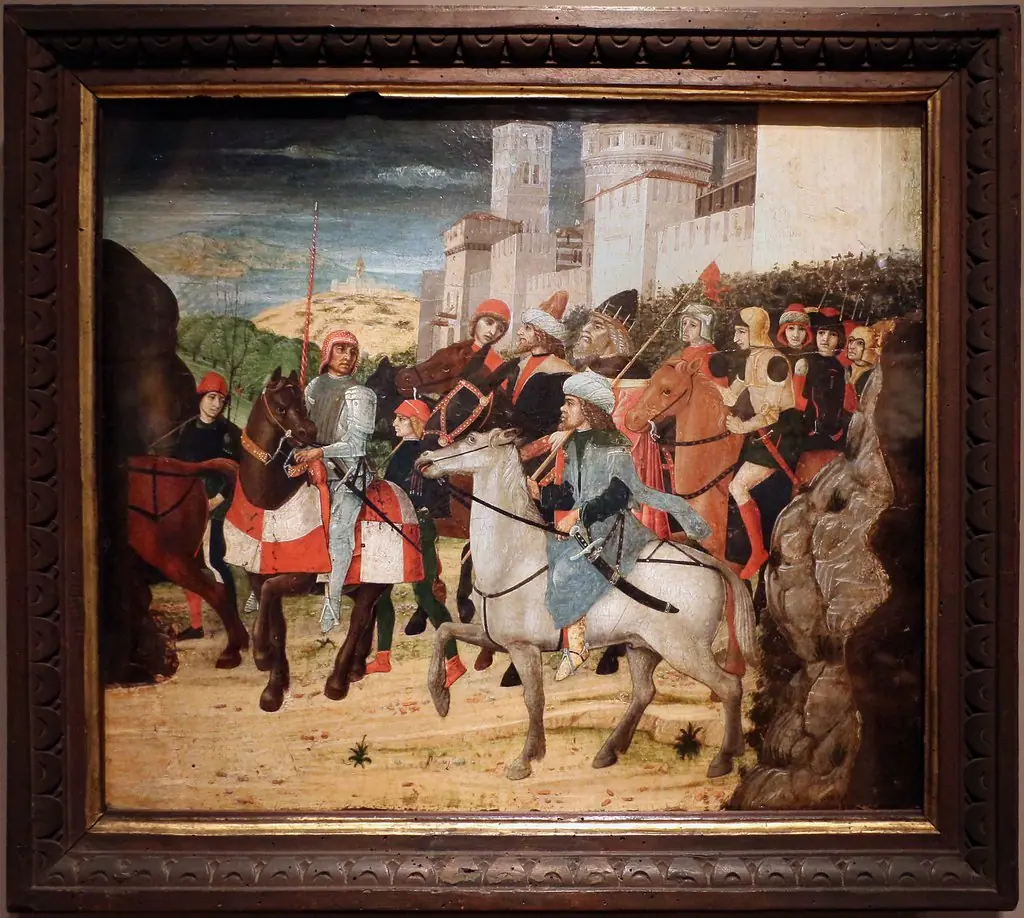 processione dei magi
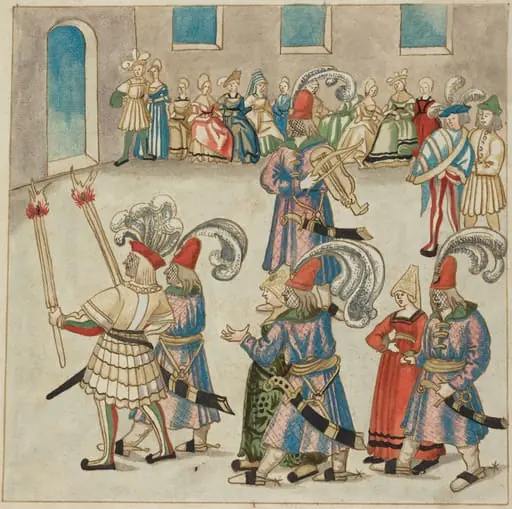 Two Dancing Couples Led by Torch-bearing Knights
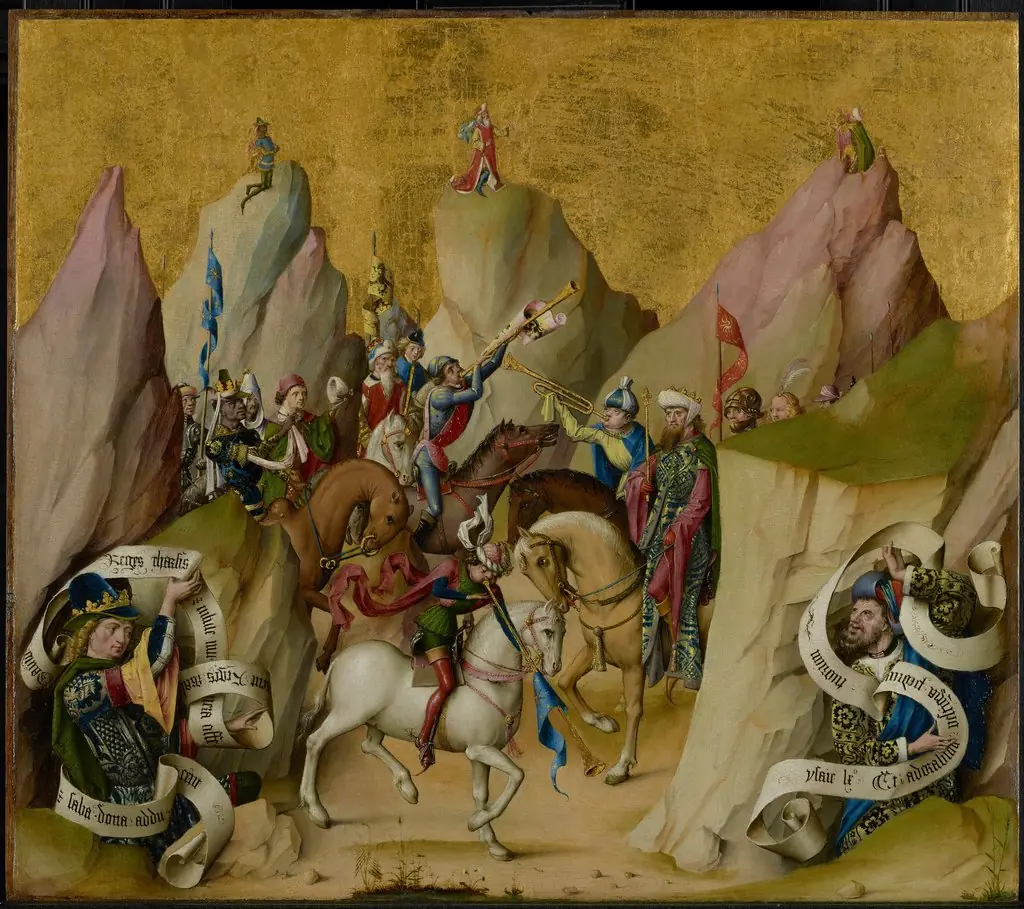 The Meeting of the Three Kings, with David and Isaiah (recto); The Assumption of the Virgin (verso)
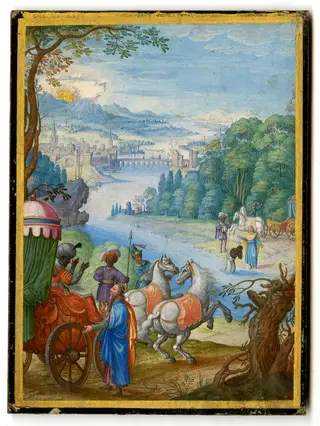 Baptism of the Chamberlain of Queen Candace of Ethiopia
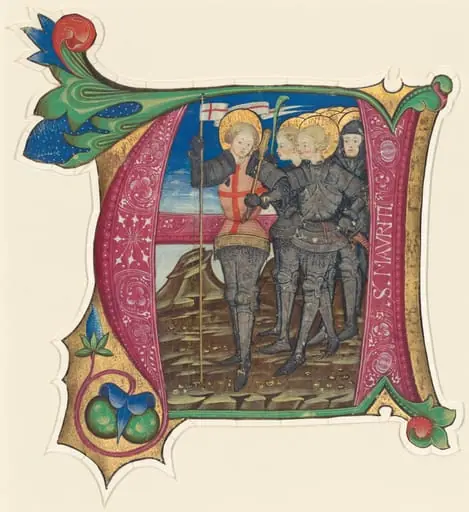 Saint Maurice and the Theban Legion
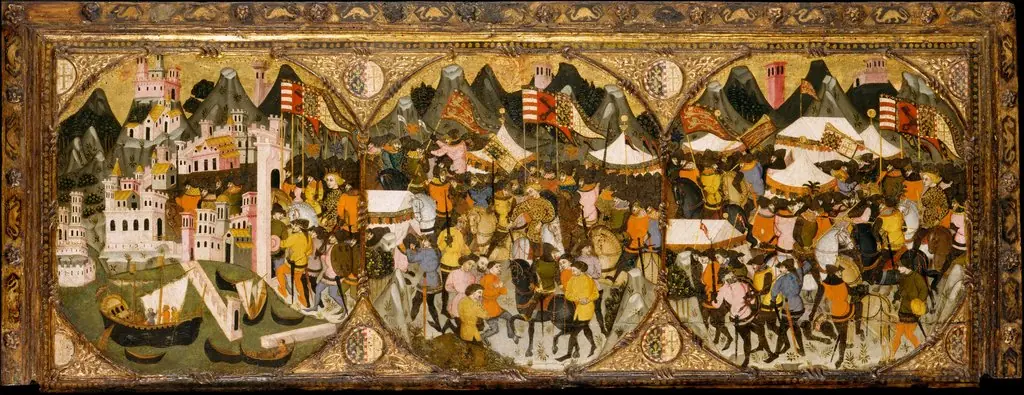 The Conquest of Naples by Charles of Durazzo
 Opening Page of Book VIII of Valerius Maximus's Facta et dicta memorabilia
 Masquerade
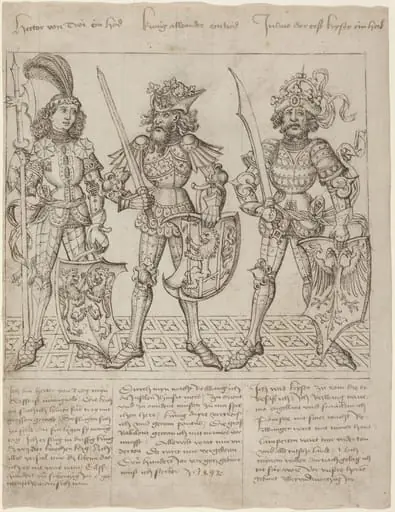
- Hector of Troy, Alexander the Great and Julius Caesar