Artwork
The Conquest of Naples by Charles of Durazzo
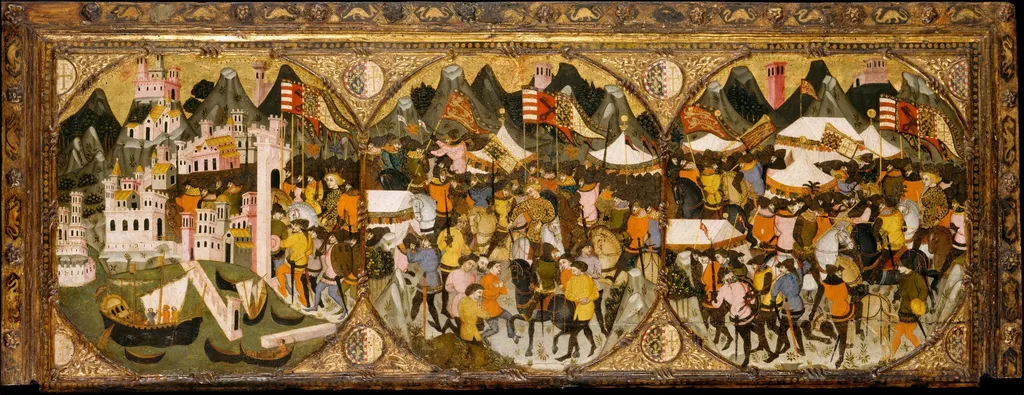
The Conquest of Naples by Charles of Durazzo is a tempera painting by the Byzantine icon painting artist Master of Charles of Durazzo. It dates from 1391 and is held in the collection of the Metropolitan Museum of Art.
About this work
Technique & Style
The panel painting is executed in tempera on wood, a common medium for Italian panel painting of the late fourteenth century.
The panel painting is executed in tempera on wood, a common medium for Italian panel painting of the late fourteenth century. The support measures 49.2 cm in height and 128.9 cm in width, indicating a horizontal format suited to narrative scenes. Handling follows contemporary Sienese and Neapolitan practices, with fine linear draftsmanship and flat, patterned drapery typical of the Master of Charles of Durazzo’s style.
Ornamentation is integrated into the surface, consistent with the decorative approach seen in works of the period. The painting’s condition is not detailed in the cited sources, but its survival into modern collections suggests stable preservation relative to comparable works of the 1380s.
Formal and stylistic qualities emphasize clarity and linearity, with figures arranged in a shallow, stage-like space. The composition organizes the narrative around Charles of Durazzo’s military actions, using crisp contours and restrained modeling to convey movement and hierarchy.
History & Provenance
Created in 1381, this tempera painting on wood is attributed to the Master of Charles of Durazzo. The work depicts Charles III of Naples within the genre of military art. It currently resides in the collection of the Metropolitan Museum of Art, where it is held as part of their permanent holdings.
The piece has been featured in exhibitions including "Italian Art: Loss and Survival" and "The Beautiful Italy: Art and Identity of Capital Cities." No specific details regarding its original commission or intermediate ownership history prior to its museum acquisition are provided in the available records.
The painting is held in the collection of the Metropolitan Museum of Art. According to its recorded data, the work has been included in two exhibitions: "Italian Art: Loss and Survival" and "The Beautiful Italy: Art and Identity of Capital Cities."
Context
Created in 1381 by the Master of Charles of Durazzo, this tempera and wood panel stands as a significant example of military art from late 14th-century Italy. The work depicts Charles III of Naples and is currently held in the collection of the Metropolitan Museum of Art. Its dimensions of 49.2 cm in height and 128.9 cm in width reflect the format typical for narrative panels of the period.
The painting has been featured in exhibitions such as "Italian Art: Loss and Survival" and "The Beautiful Italy: Art and Identity of Capital Cities," highlighting its role in discussions regarding the preservation and identity of Italian artistic heritage.
Overview
The Conquest of Naples by Charles of Durazzo is a late 14th-century panel painting attributed to the artist known as the Master of Charles of Durazzo. Created in 1391, this work on wood depicts a pivotal historical event: Charles III of Naples's seizure of the city. The painting is part of the collection at The Metropolitan Museum of Art, offering a vivid historical record of a significant moment in the Kingdom of Naples.
Subject & Meaning
The painting illustrates the dramatic military takeover of Naples by Charles of Durazzo, who became Charles III of Naples. This event, occurring in 1382, saw Charles depose his cousin, Queen Joanna I, to claim the throne. The composition likely centers on Charles and his retinue, possibly depicted under a prominent canopy, symbolizing his authority and the culmination of his campaign to establish his rule over the kingdom.
Artist & collection
Artist
Master of Charles of Durazzo is the notname given to an anonymous Florentine painter active in the last decades of the fourteenth century and the early fifteenth.

- The Battle of Anghiari
 Horatius Cocles Defending the Sublician Bridge
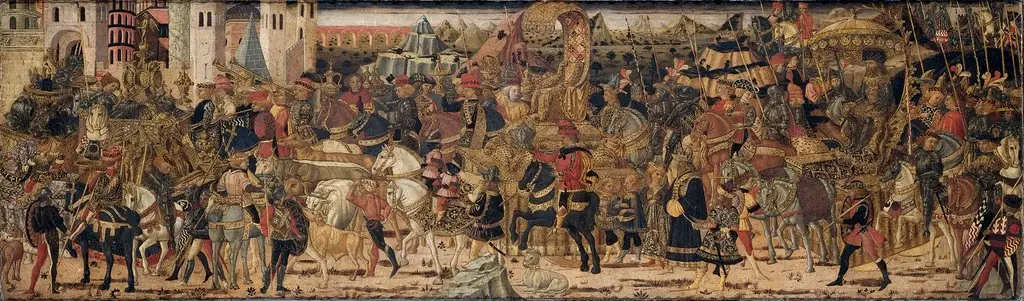 The Triumph of Aemilius Paulus after the Battle of Pydna
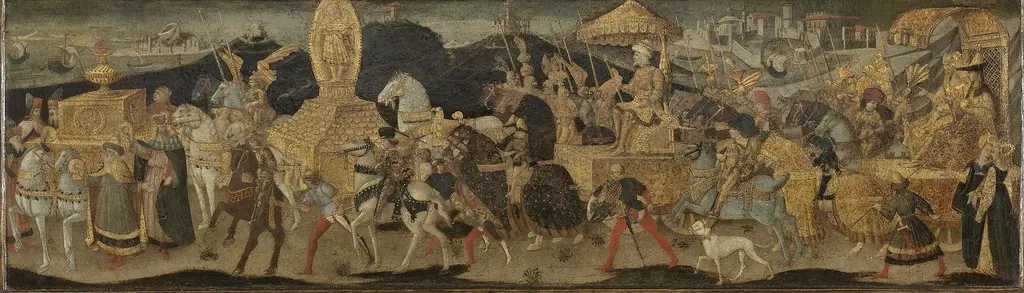 Darius Marching to the Battle of Issus
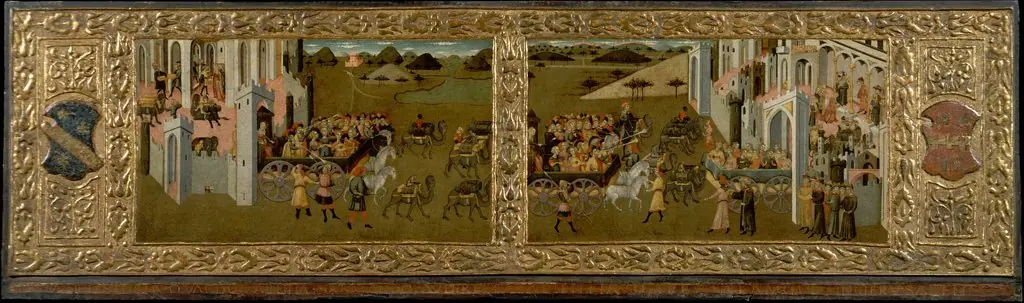 King Solomon and the Queen of Sheba
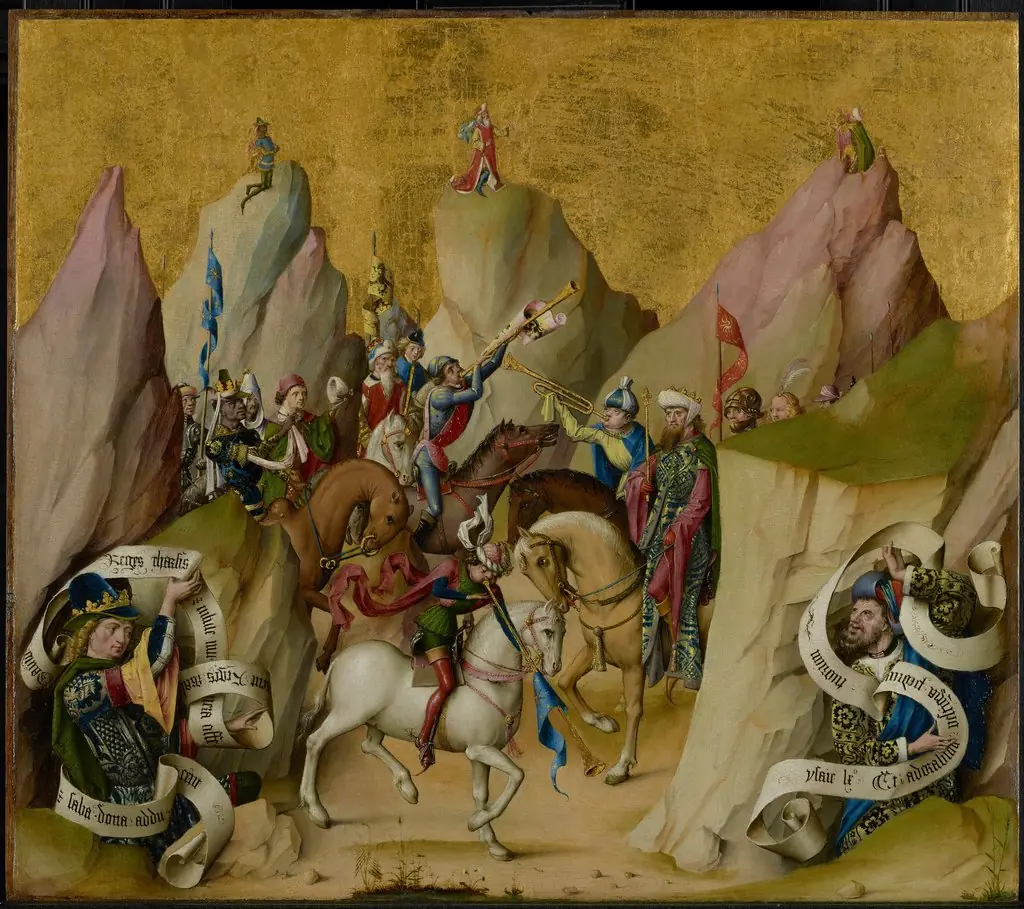 The Meeting of the Three Kings, with David and Isaiah (recto); The Assumption of the Virgin (verso)
 The Taking of Pisa
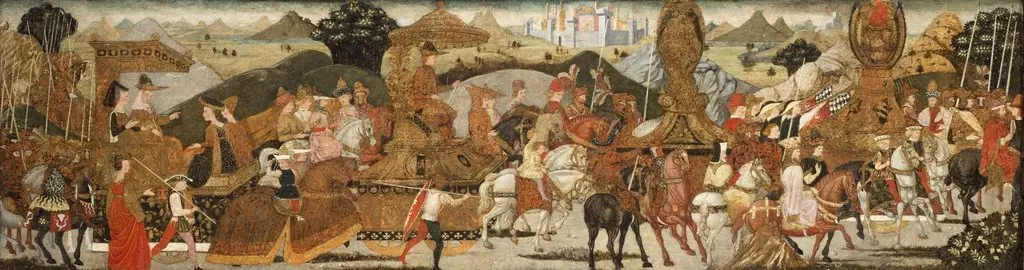 The Triumph of Alexander
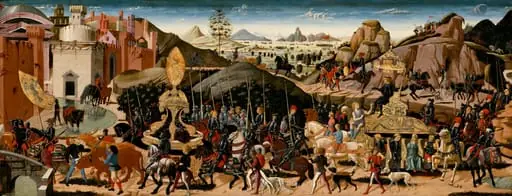 The Triumph of Camillus
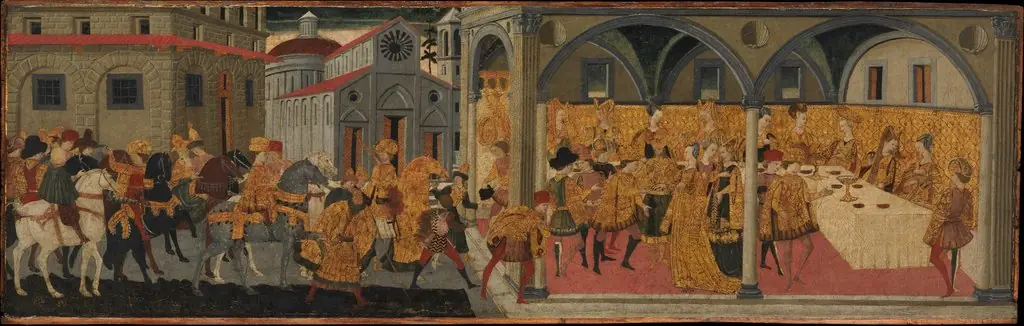 The Story of Esther
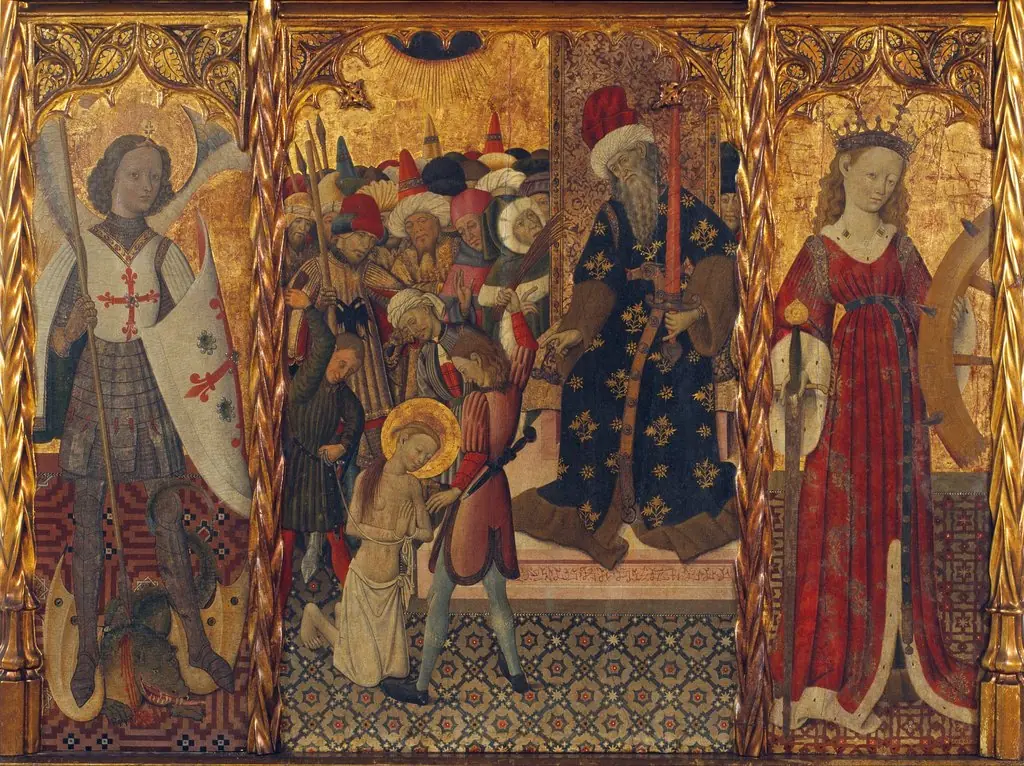 Saint Michael, Martyrdom of Saint Eulalia and Saint Catherine
 War of the Emperor Charles V against Tunis (1535): Turks from La Goletta