Artwork
Death of the Virgin
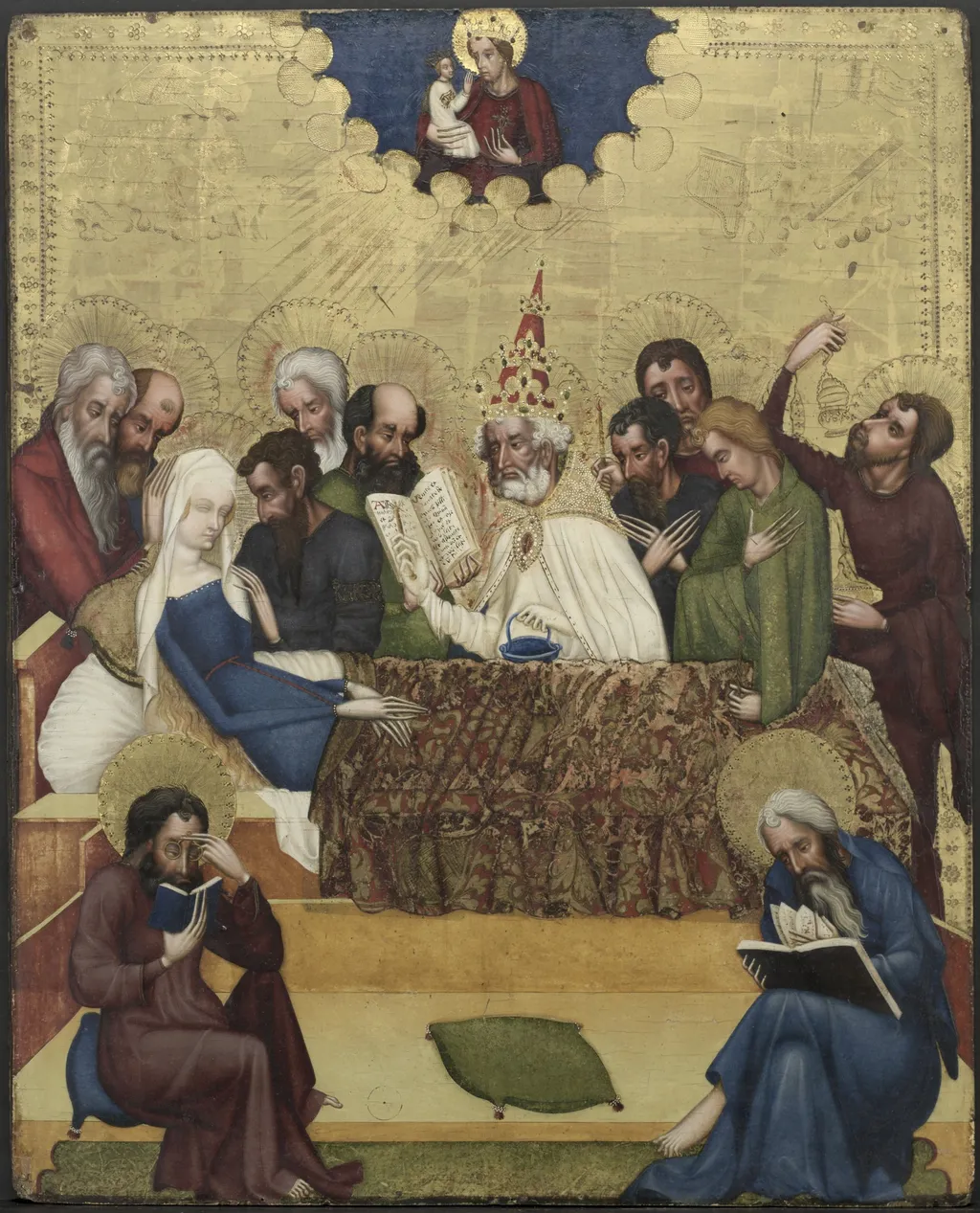
Death of the Virgin is an unspecified painting by the Gothic painting artist Master of Heiligenkreuz Abbey. It dates from 1400 and is held in the collection of the Cleveland Museum of Art.
About this work
Subject & Meaning
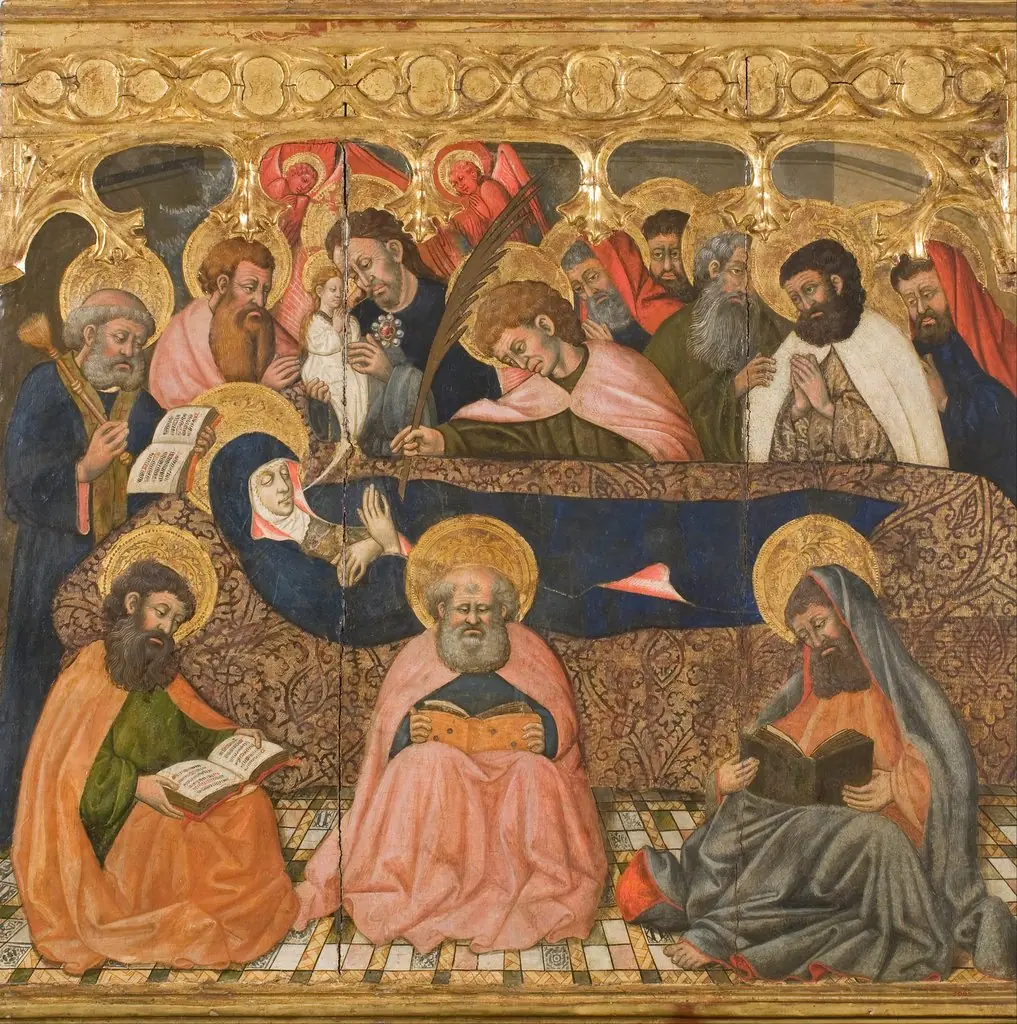
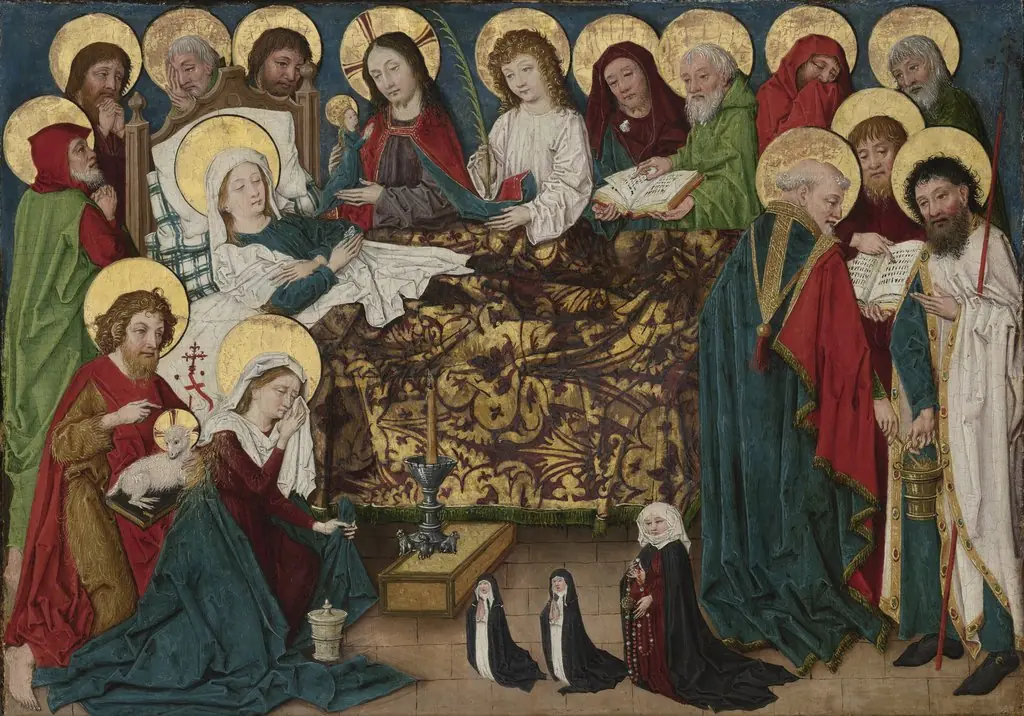
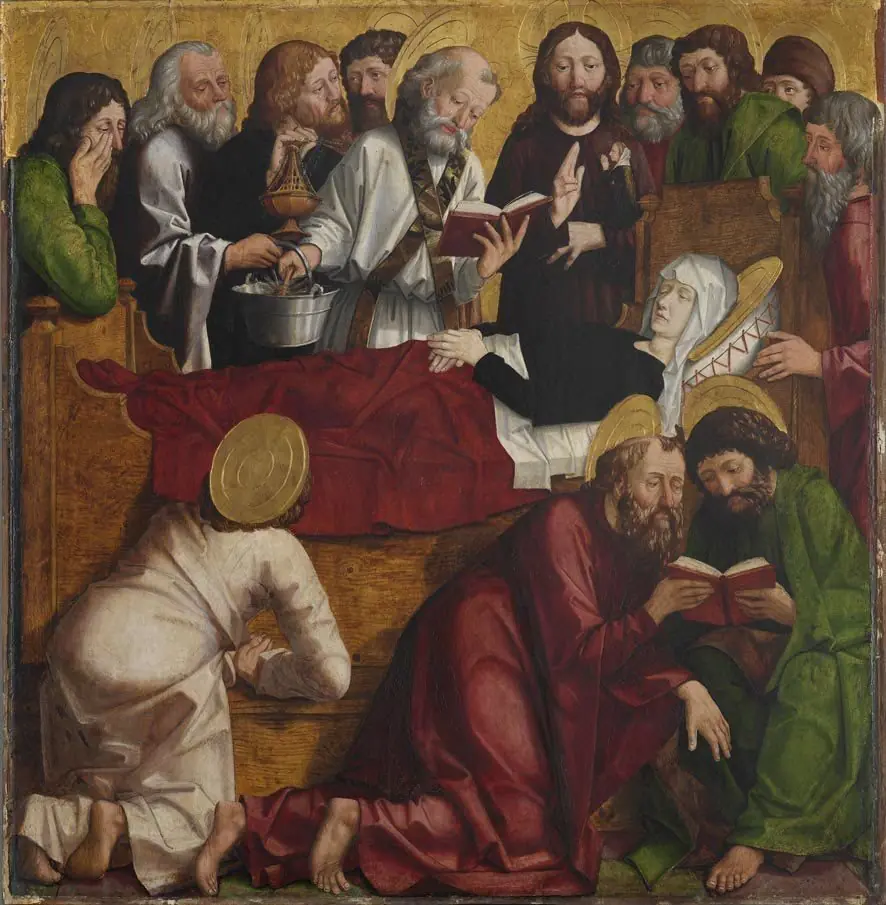
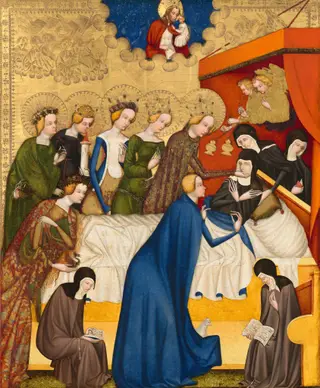
The artwork depicts the Death of the Virgin, a central event in Christian religious art where the Virgin Mary passes away before her Assumption.
The artwork depicts the Death of the Virgin, a central event in Christian religious art where the Virgin Mary passes away before her Assumption. Created around 1400 by the Master of Heiligenkreuz Abbey, the painting belongs to the genre of religious art. As indicated by its title and classification, the composition focuses entirely on this specific biblical narrative, serving as a devotional image for contemplation on the end of Mary's earthly life.
History & Provenance
The panel is dated to circa 1400 by its creatorship under the Master of Heiligenkreuz, an Austrian painter active around that period. It entered the Cleveland Museum of Art in 1936 as accession number 1936.496, where it remains in the collection today. No commission records or early provenance details are preserved in the museum’s documentation of the acquisition.
The painting Death of the Virgin, created by the Master of Heiligenkreuz Abbey around 1400, is held in the collection of the Cleveland Museum of Art in Cleveland. The work is cataloged under the accession number 1936.496. While the sources confirm its current location and inventory details within this American institution, no specific exhibition history or past loan records are provided in the available documentation.
The artwork, classified as a religious panel painting, measures 71 cm in height and 54 cm in width. It remains a part of the museum's permanent holdings, where it is identified as a significant example of early 15th-century Austrian religious art.
Context
Death of the Virgin is a 1400 religious painting attributed to the Master of Heiligenkreuz Abbey, classified as a work of the late medieval Austrian school. The panel measures 71 cm by 54 cm and is part of the Cleveland Museum of Art collection. Scholars have positioned the composition within the artist’s oeuvre as a key example of devotional imagery that reflects contemporary Marian veneration in Central European art.
Its inclusion in major surveys of early Netherlandish and regional painting underscores its relevance to the development of sacred narrative techniques in the early 15th century.
Overview
The painting Death of the Virgin is attributed to the Master of Heiligenkreuz Abbey, an Austrian artist active during the early 15th century. This Gothic work portrays a pivotal religious event, depicting the final moments of the Virgin Mary. It is currently housed within the collection of The Cleveland Museum of Art, serving as an example of late medieval Central European painting. The composition adheres to the stylistic conventions prevalent in its era.
Technique & Style
Characteristic of the Gothic period, the painting employs a vibrant yet subdued color palette, featuring deep blues, rich reds, and luminous golds. Intricate patterns adorn the drapery and bedding, adding decorative detail. A striking gold background unifies the composition, imbuing the entire scene with a sacred and timeless quality.
The figures are rendered with a sense of quiet dignity, their expressions conveying a meditative focus rather than overt emotion.
Own this work as a print
Artist & collection

Artist
The Master of Heiligenkreuz was an Austrian painter active at the beginning of the 15th century; a tentative lifespan of 1395 to 1430 has been put forth but this appears highly conjectural.