Artwork
The Baptism of Clovis
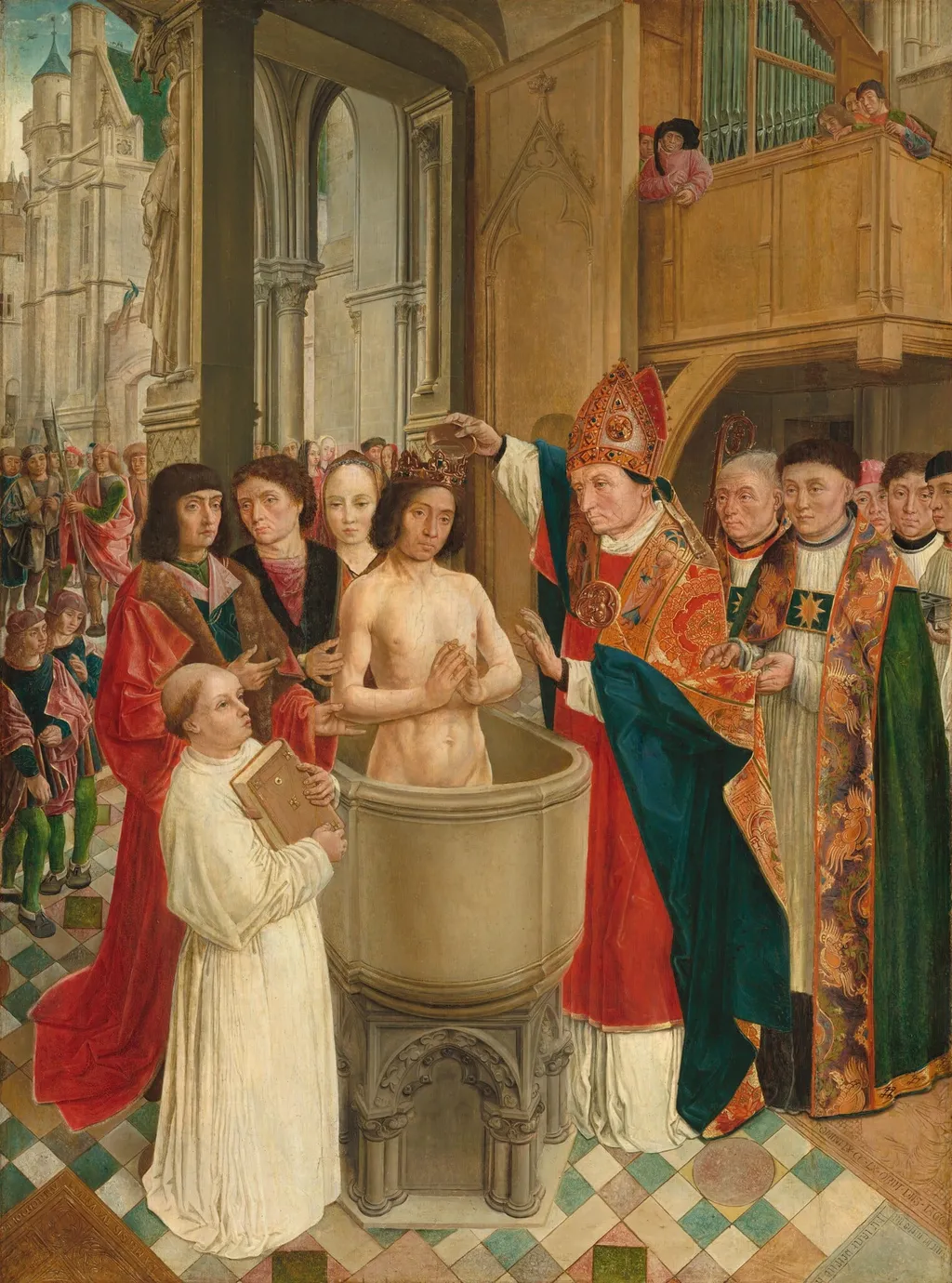
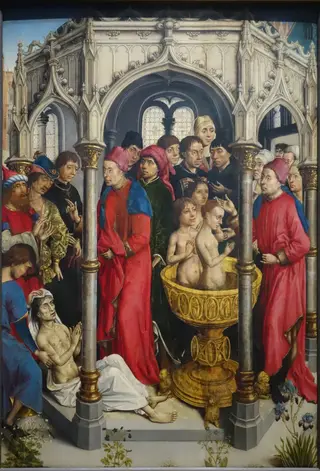
The Baptism of Clovis is an oil painting by the Northern Renaissance artist Master of Saint Giles. It dates from 1500 and is held in the collection of the National Gallery of Art.
About this work
The priest is wearing a colorful robe and a tall hat, and the people around him are dressed in clothing from the 16th century.
The painting shows a man standing in a large stone baptismal font, with his hands clasped in prayer. He is surrounded by a group of people, including a priest pouring water over his head, and others watching from a balcony.
The priest is wearing a colorful robe and a tall hat, and the people around him are dressed in clothing from the 16th century.
If you want to learn more about the style of this painting, you might look into the Renaissance.
Technique & Style
The Baptism of Clovis, attributed to the Master of Saint Giles, is executed in oil on panel, a common medium for religious paintings of the late 15th and early 16th centuries. The support consists of wooden panels, measuring 61.5 cm in height and 45.5 cm in width. The technique reflects the Northern Renaissance tradition, emphasizing meticulous detail and luminous glazing, characteristic of oil painting's capacity for layered transparency and depth.
Stylistically, the work demonstrates refined handling, with delicate modeling of figures and drapery, alongside precise architectural and landscape elements. The artist's approach aligns with contemporary Burgundian or Netherlandish practices, favoring naturalistic representation and spatial coherence.
History & Provenance
The Baptism of Clovis is attributed to the Master of Saint Giles and dated to circa 1500. The work's early provenance traces to Chevalier Alexandre de Lestang-Parade in Aix-en-Provence by 1823. It remained in the family under Count Melchior de Lestang-Parade until sold at the 1882 Hôtel Drouot auction in Paris as an anonymous fifteenth-century piece.
The painting next entered the collection of Baron Étienne Martin de Beurnonville, whose estate sale in 1883 transferred it to M. Watel in Paris.
It resurfaced in the Paris art market by 1937 before being handled by Wildenstein and Co. between 1938 and 1946. The Samuel H. Kress Foundation purchased it in 1946 and gifted it to the National Gallery of Art, Washington, D.C., in 1952, where it remains as part of the Samuel H. Kress Collection. The panel was included in the exhibition "Francis I and the Art of the Netherlands."
Legacy
The painting entered the National Gallery of Art in 1952 as a gift from the Samuel H. Kress Foundation, which had acquired it in 1946, and it remains a core work of the Kress Collection there. Its inclusion in the exhibition "Francis I and the Art of the Netherlands" reflects ongoing interest in its early Netherlandish-influenced French style and its place within the study of late-fifteenth- and early-sixteenth-century religious painting.
Overview
The Baptism of Clovis, an oil painting on panel, was created around 1500 by the artist known as the Master of Saint Giles. This religious work depicts a pivotal moment in early French history, illustrating the conversion of the Frankish king Clovis I to Christianity. The composition presents a detailed narrative scene, characteristic of Northern European art at the turn of the 16th century.
Subject & Meaning
The painting centers on Clovis, depicted with clasped hands, standing within a substantial stone baptismal font. A priest, distinguished by a vibrant robe and a tall hat, pours water over the king's head. Numerous onlookers, dressed in attire typical of the 16th century rather than the historical period of Clovis, observe the ceremony from various vantage points, including a balcony. This anachronistic costuming serves to connect the historical event with the contemporary viewer.
Own this work as a print
Artist & collection


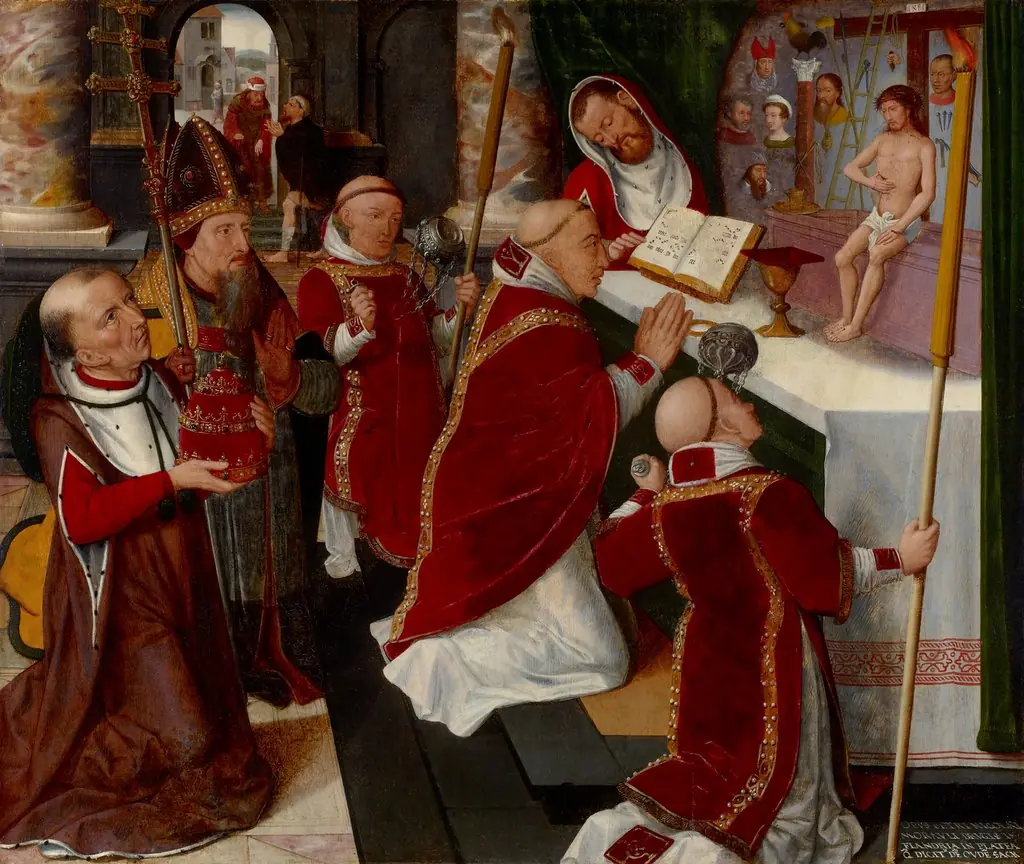
- The Mass of Saint Gregory
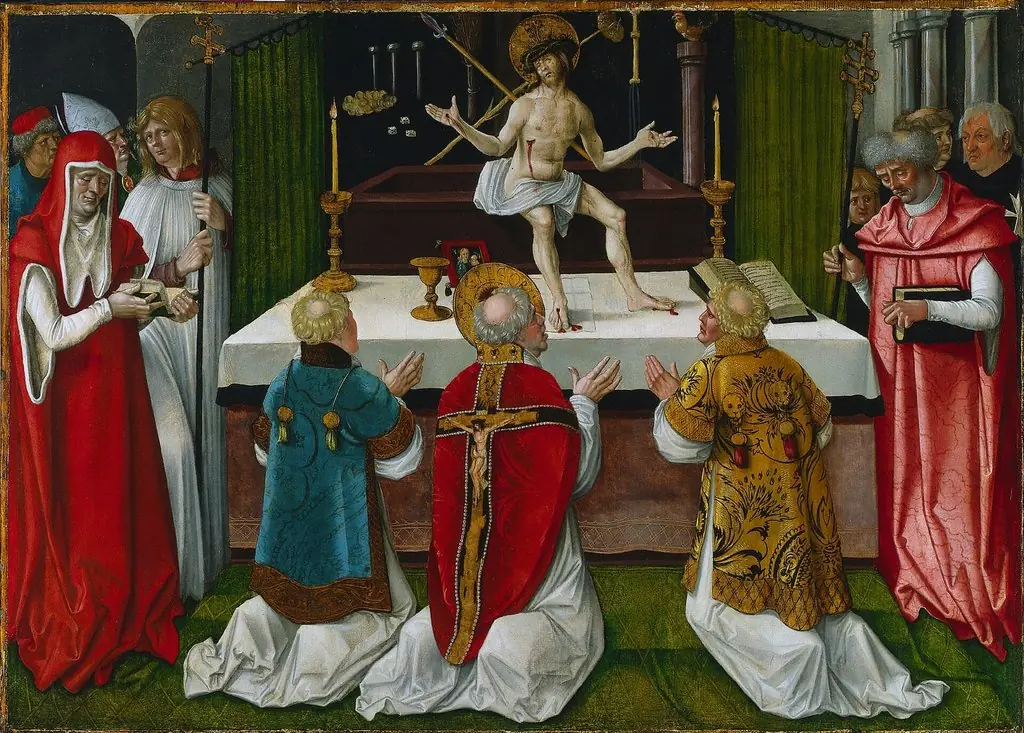 The Mass of Saint Gregory
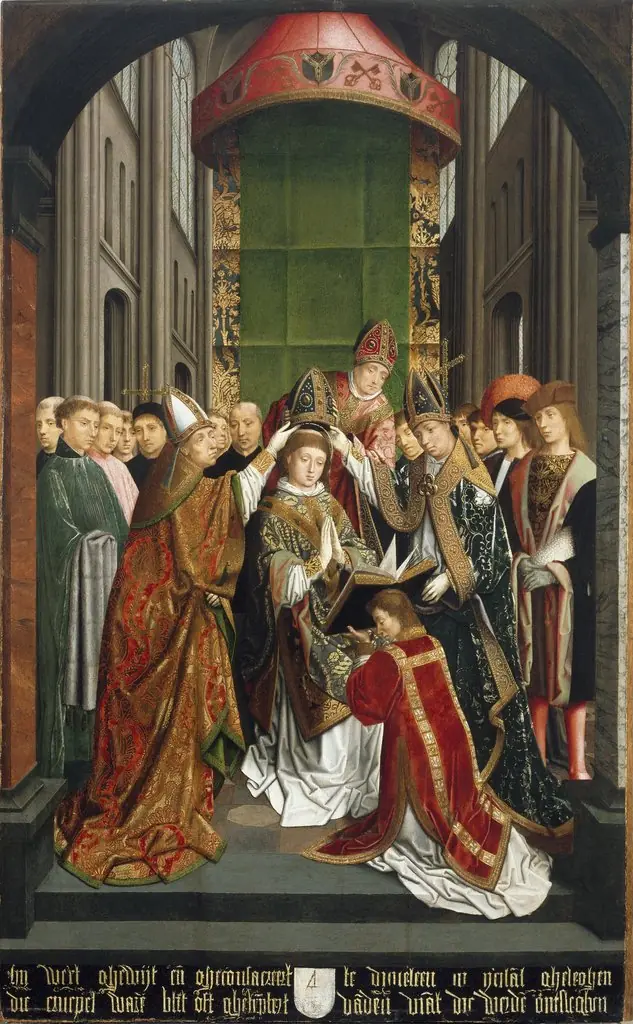 The Enthronement of Saint Romold as Bishop of Dublin
 Scenes from the Life of Saint Catherine of Alexandria
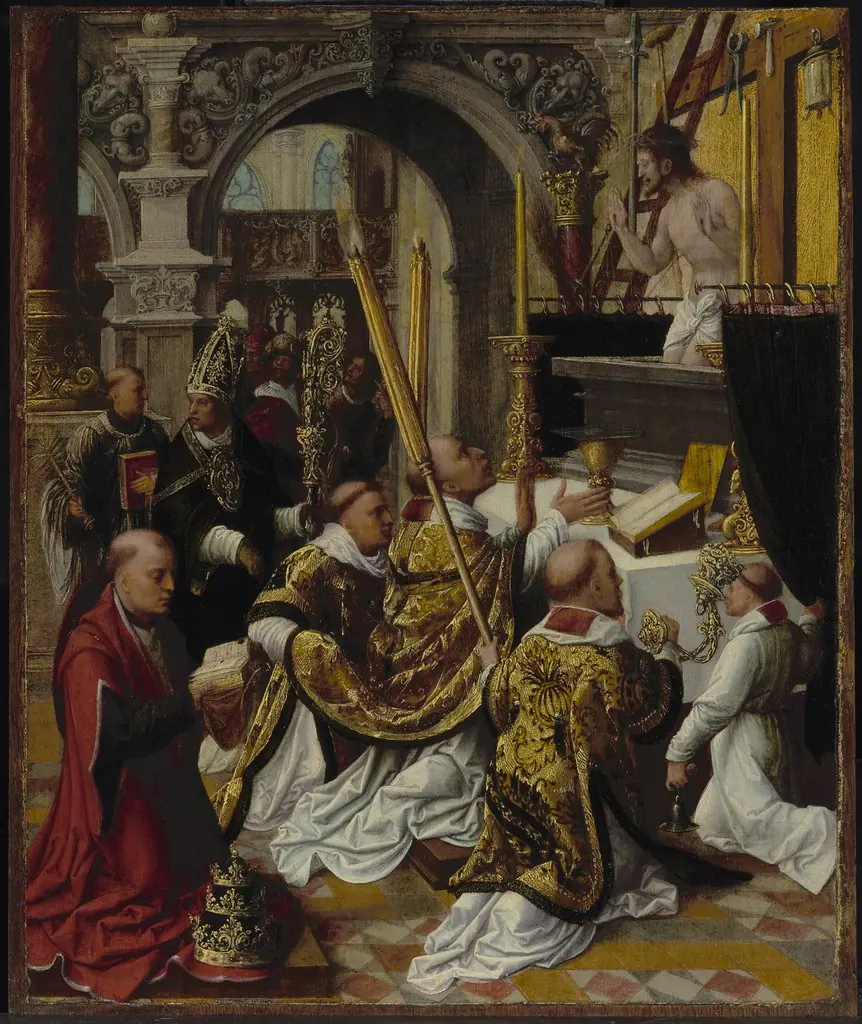 The Mass of Saint Gregory the Great
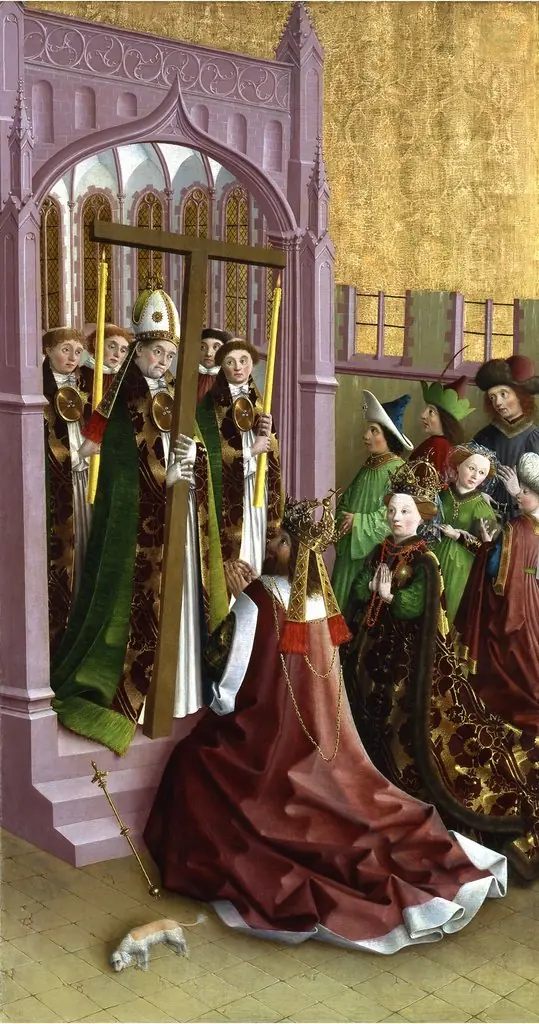 Darmstadt Altarpiece: Constantine and His Mother Helena Venerating the True Cross
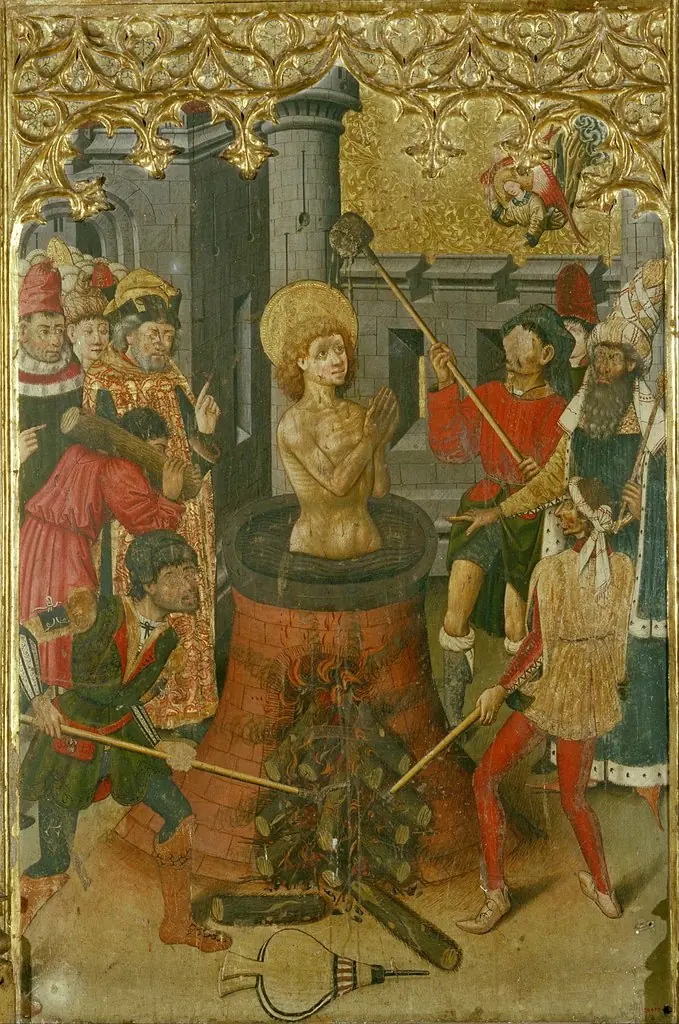 Martyrdom of Saint John the Evangelist
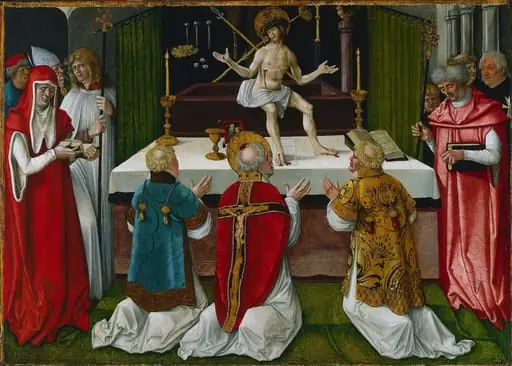 The Mass of Saint Gregory
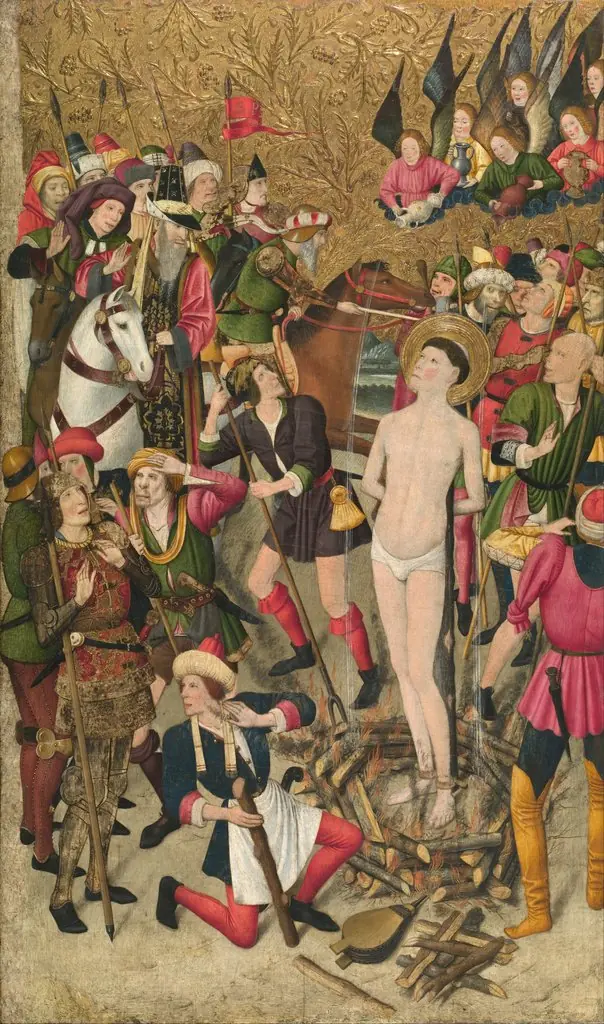 Saint Vincent at the Stake
 Two Scenes from the Life of a Saint
 Flagellation of Saint Vincent