Artwork
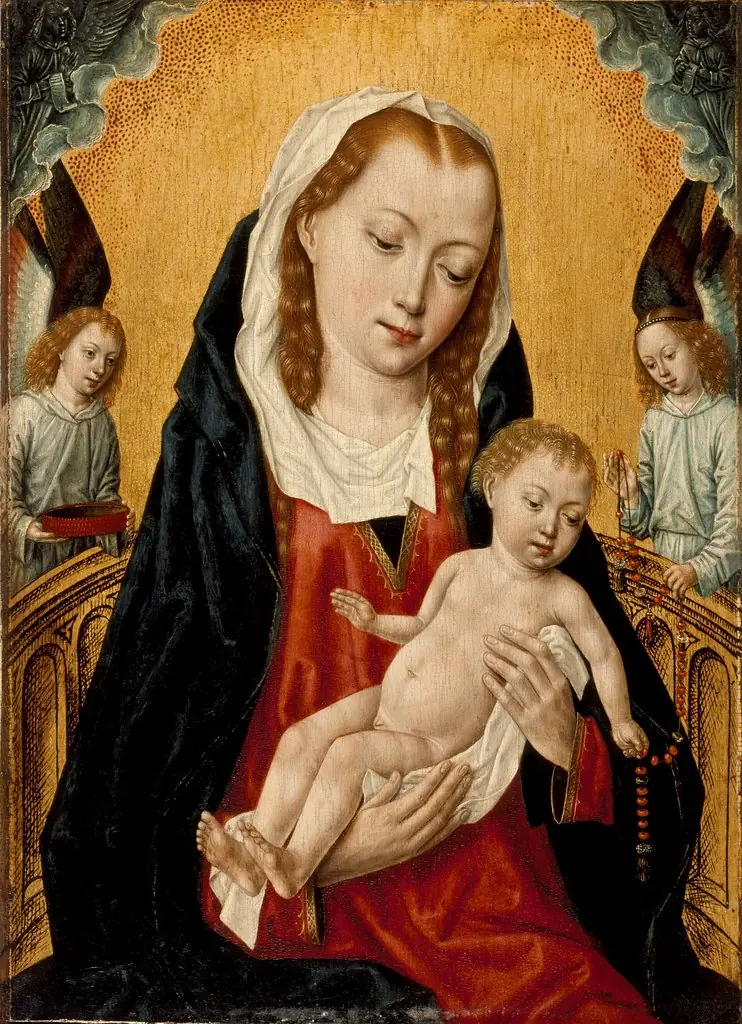
Virgin and Child with Angels
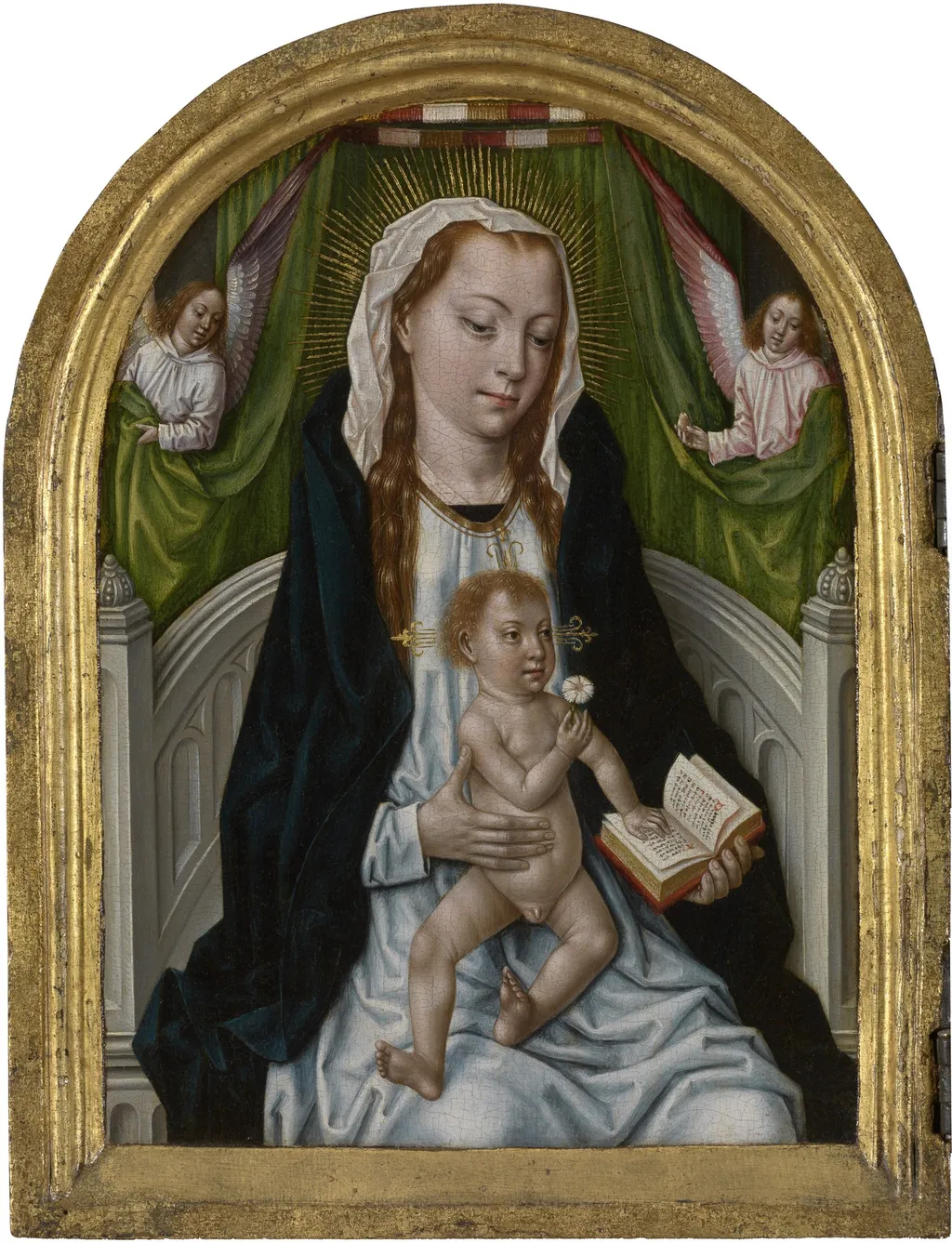
Virgin and Child with Angels is an oil painting by the Northern Renaissance artist Master of the Bruges Legend of St. Ursula. It dates from 1494 and is held in the collection of the Royal Museum of Fine Arts Antwerp.
About this work
Subject & Meaning
The intimate scale of the panel, measuring 28 by 21 centimeters, supports its use as a personal, handheld object of veneration rather than a large altarpiece.
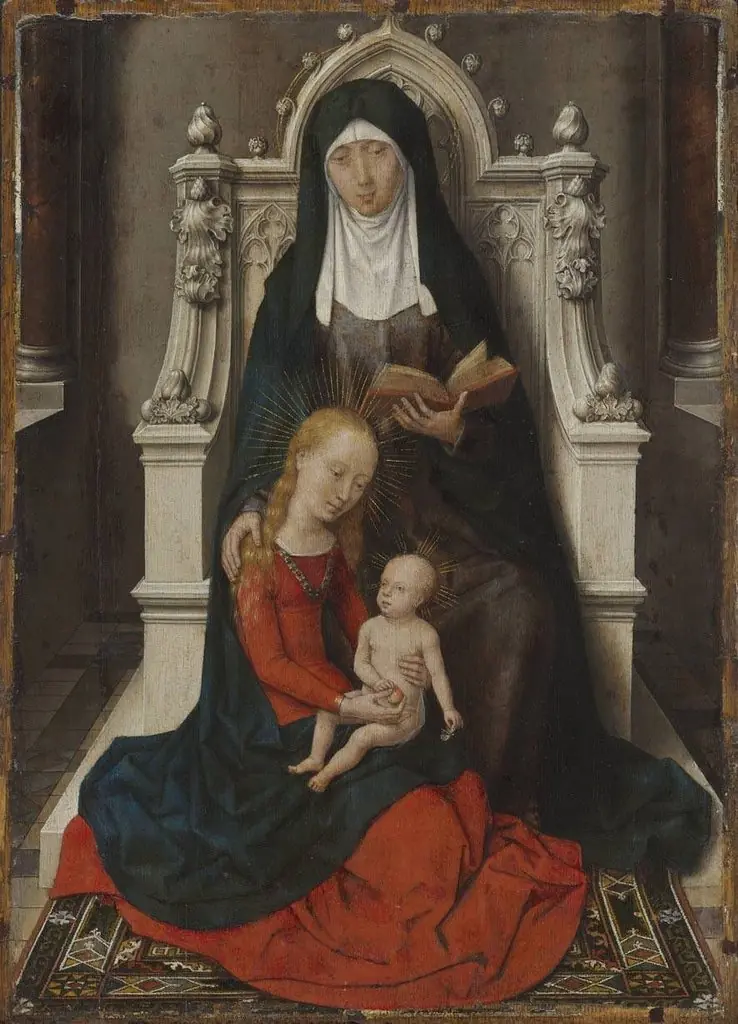
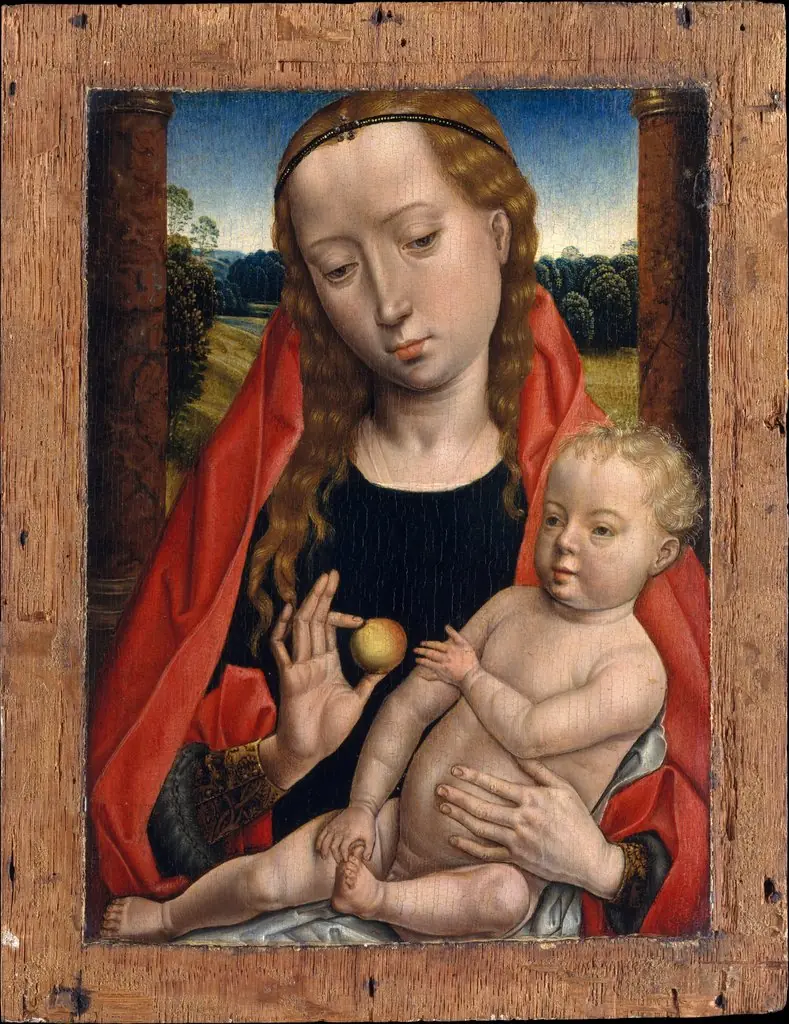
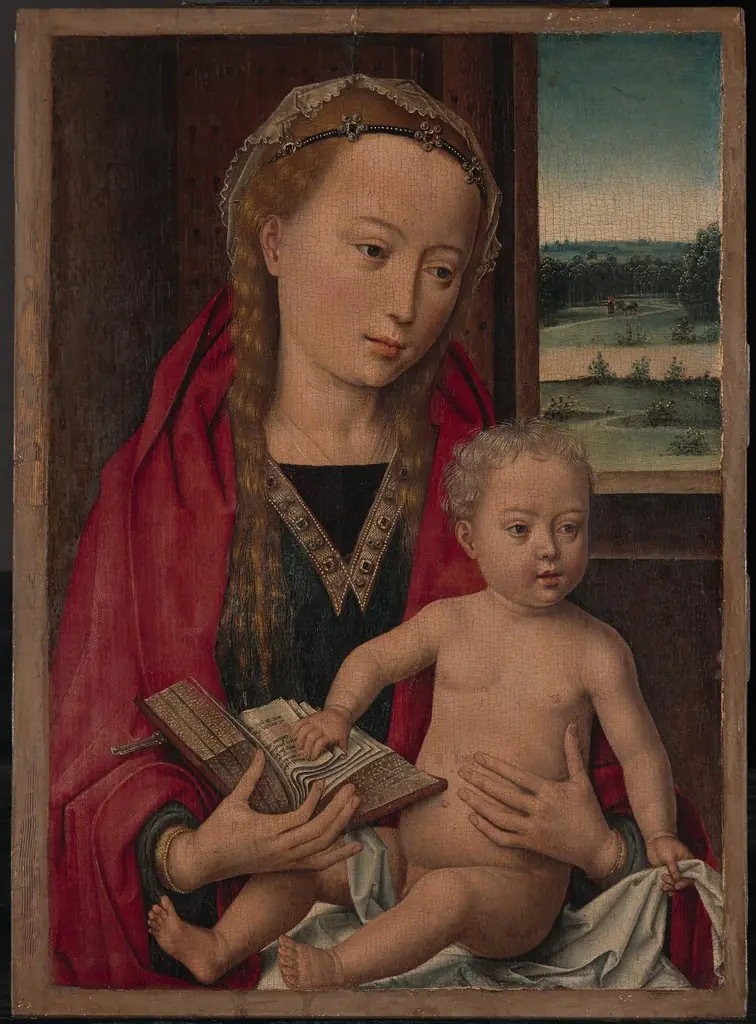
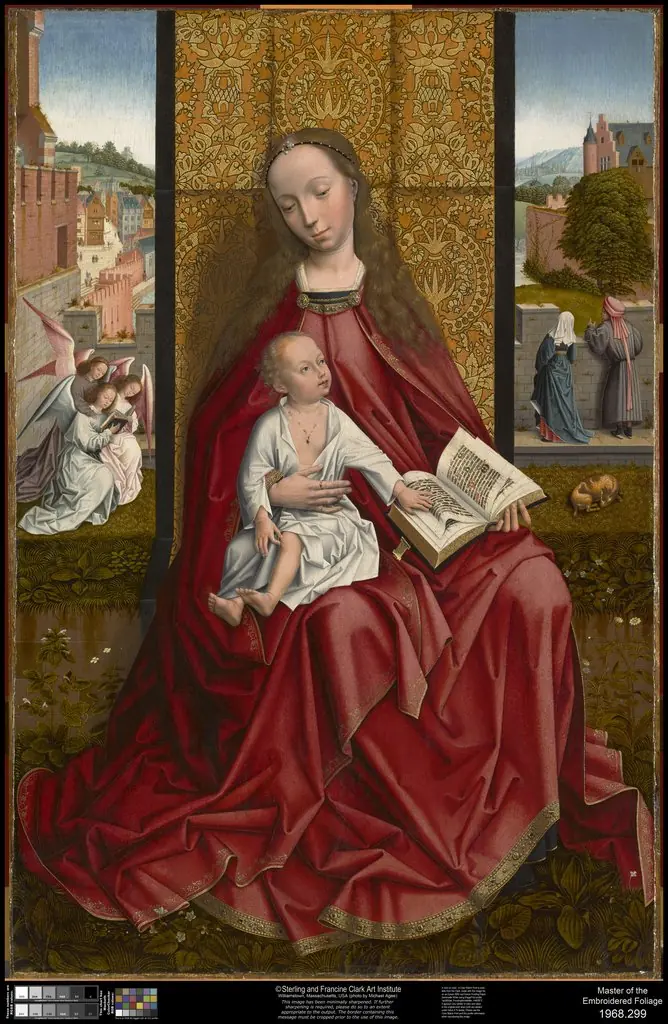
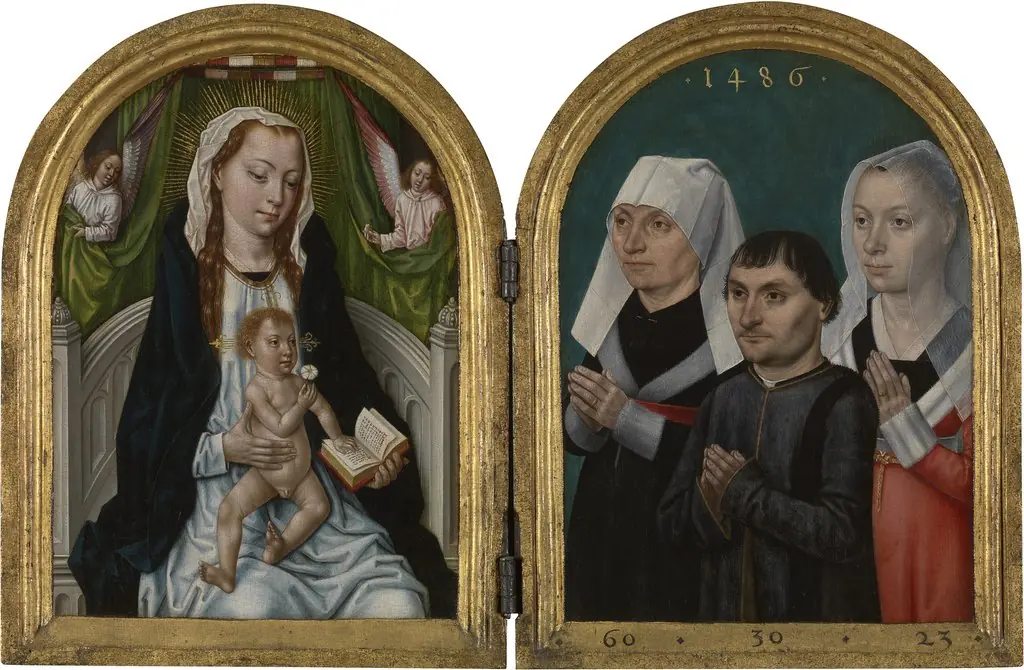
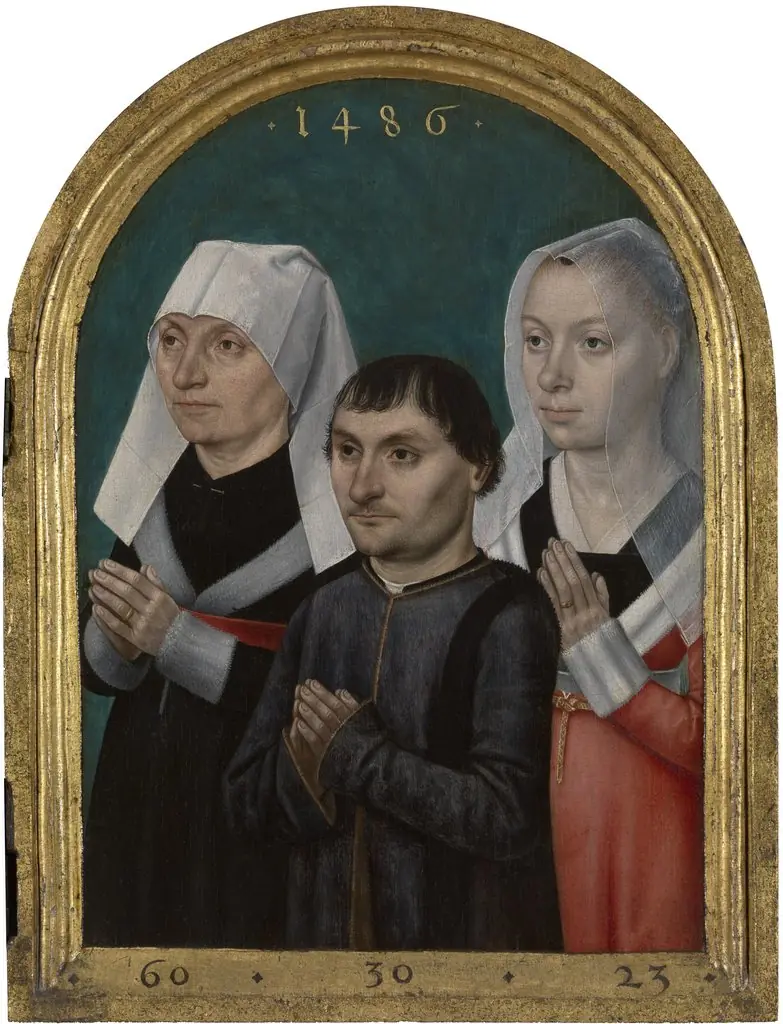
The painting depicts the Madonna and Child, with the Virgin Mary holding the Christ Child as the central devotional focus. According to the structured record, the work's main subject is identified as Madonna and Child, and the figures depicted are Mary and the Christ Child, rendered in oil on panel. As the left-hand panel of a diptych, it would have functioned as an object of private devotion, paired with a now-separate panel showing three donors kneeling in prayer.
Such devotional diptychs were common in late fifteenth-century Netherlandish practice, where the sacred image of the Virgin and Child faced the patron, mediating between the worshipper and the holy figures through visual contemplation. The intimate scale of the panel, measuring 28 by 21 centimeters, supports its use as a personal, handheld object of veneration rather than a large altarpiece. The religious genre classification and 1486 date situate the work within the late medieval tradition of Marian devotion in Bruges.
Technique & Style
Executed in oil paint on panel, the work is a small devotional object measuring 28 cm in height by 21 cm in width. The use of a rigid wooden support rather than canvas is consistent with late fifteenth-century Netherlandish practice, and the oil medium allowed the painter to build up the translucent layers and fine glazes typical of the period. The composition is treated as the left-hand panel of a diptych, pairing the sacred figures with a donors' wing on the opposite side.
Stylistically, the work is attributed to the anonymous Master of the Bruges Legend of St. Ursula, a Bruges-based workshop active in the later fifteenth century, and reflects the religious iconography of the Madonna and Child rendered for devotional use.
History & Provenance
The painting is dated to 1486 and is attributed to the Master of the Bruges Legend of St. Ursula. It is identified as the left-hand panel of a diptych that originally included the Virgin and Child together with three donors. The work is held in the collection of the Royal Museum of Fine Arts Antwerp.
The left-hand panel is held by the Royal Museum of Fine Arts Antwerp, where it remains in the permanent collection.
It carries accession number 478 (oil on panel, 28 cm × 21 cm) and is catalogued as part of the museum’s holdings of early Netherlandish painting.
Context
The Virgin and Child with Angels, dated to 1486, is identified as the left-hand panel of a diptych titled Diptych with the Virgin and Child and Three Donors. Created by the Master of the Bruges Legend of St. Ursula, the work exemplifies the religious painting tradition within the Bruges school of the late 15th century. Executed in oil on panel, the piece depicts the Madonna and Child, a central subject in Northern Renaissance devotional art.
Currently held by the Royal Museum of Fine Arts Antwerp, the painting measures 28 cm in height and 21 cm in width. Its attribution to this specific anonymous master places it within a corpus known for detailed religious narratives produced in Flanders during the 1480s.
Overview
The Virgin and Child with Angels is a 15th-century oil painting by a Flemish artist known as the Master of the Bruges Legend of St. Ursula. It is now part of the Royal Museum of Fine Arts Antwerp's collection.
Own this work as a print
Artist & collection
Artist
Master of the Bruges Legend of St. Ursula
The Master of the Legend of St. Ursula (1436–1505) was a Flemish painter active in the fifteenth century. His name is derived from a polyptych depicting scenes from the life of Saint Ursula painted for the convent of…

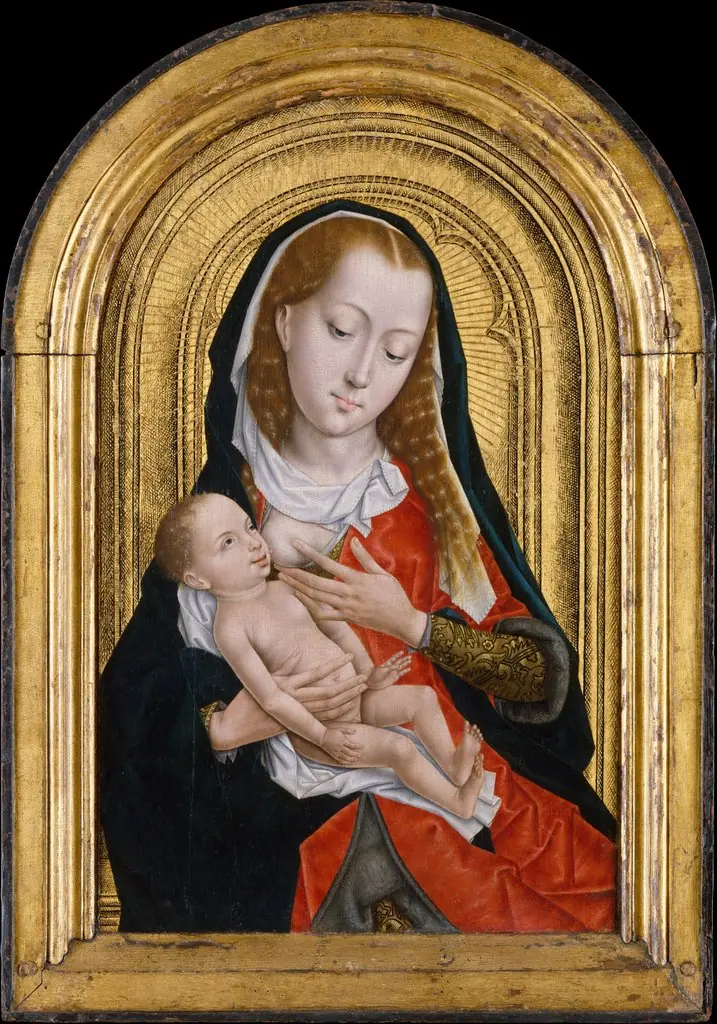 Virgin and Child
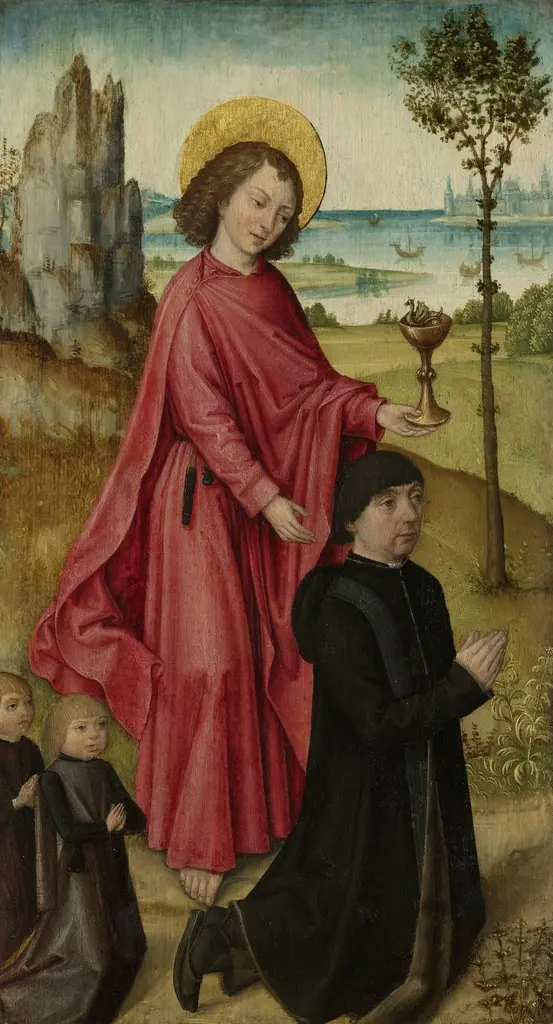 Inner left wing of a triptych with the donor, his two sons and St John the Evangelist
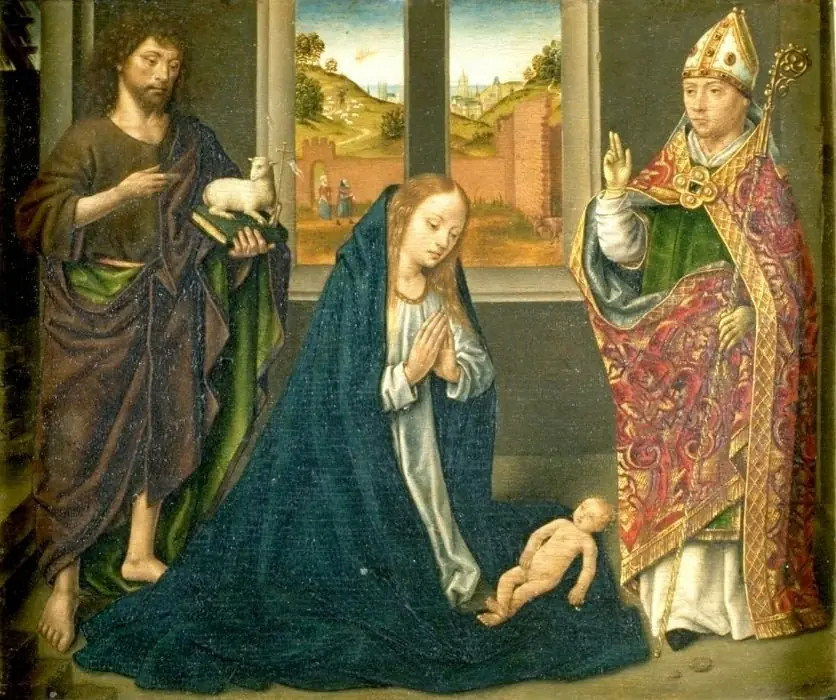 The adoration of the Christ-child and Saints John the Baptist and Donatius
 Virgin and Child and Saint John the Baptist
 Diptych with the Virgin and Child and Three Donors
 Three Donors
 Portrait of a young man
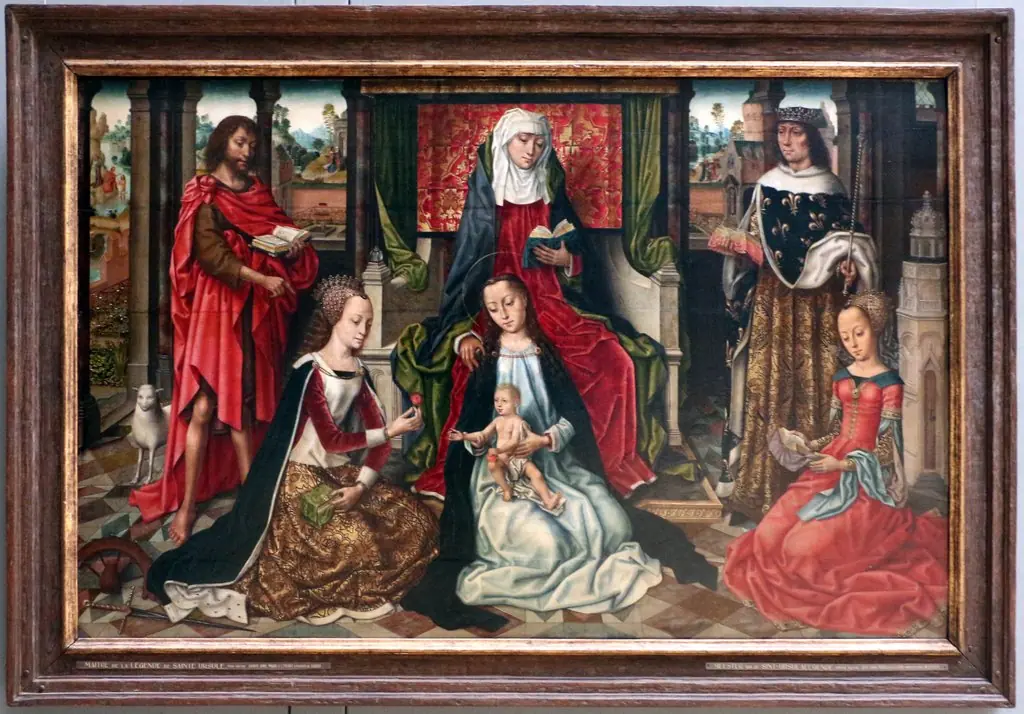 Saint Anne with the Virgin and Child and four saints (John the Baptist, Louis IX, Catherine and Barbara)