Artwork
Virgin and Child
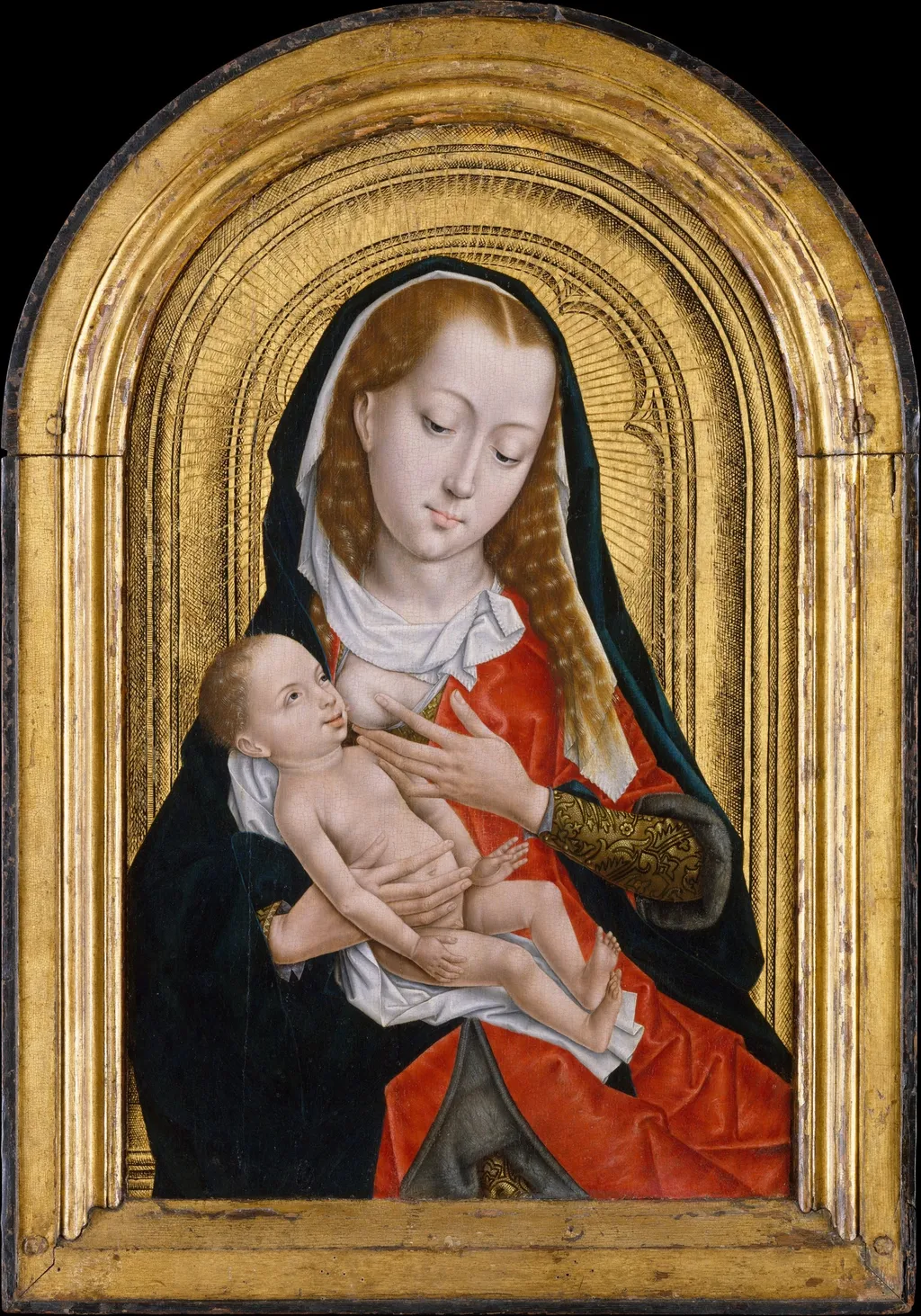
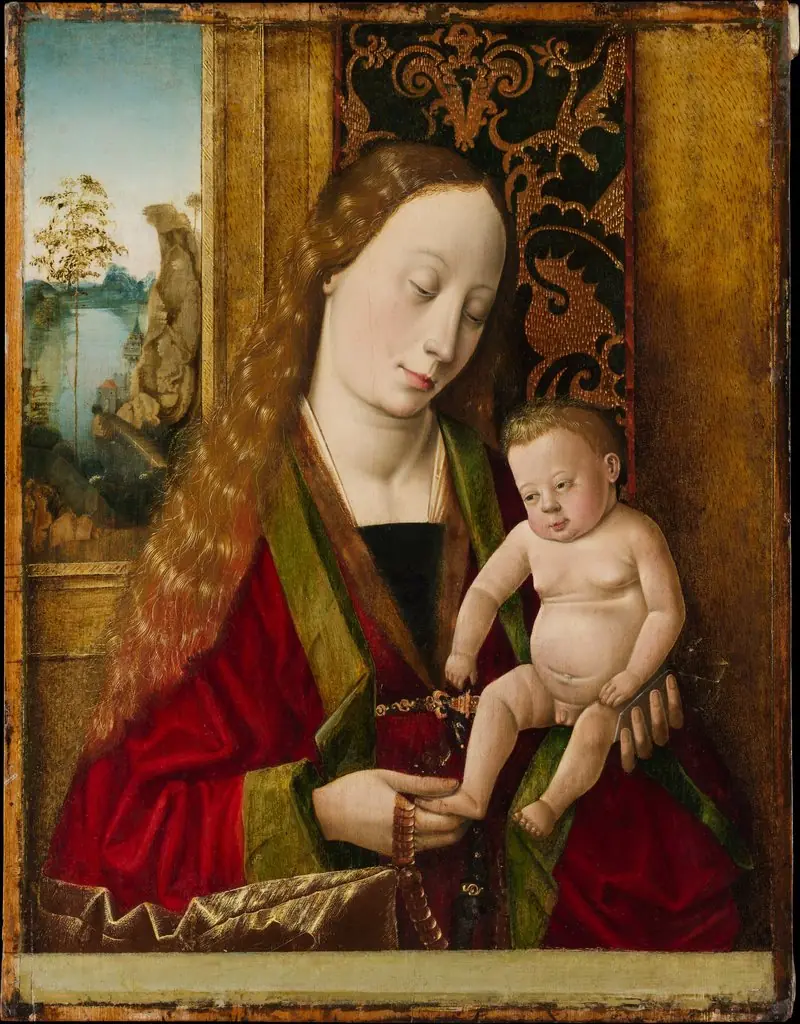
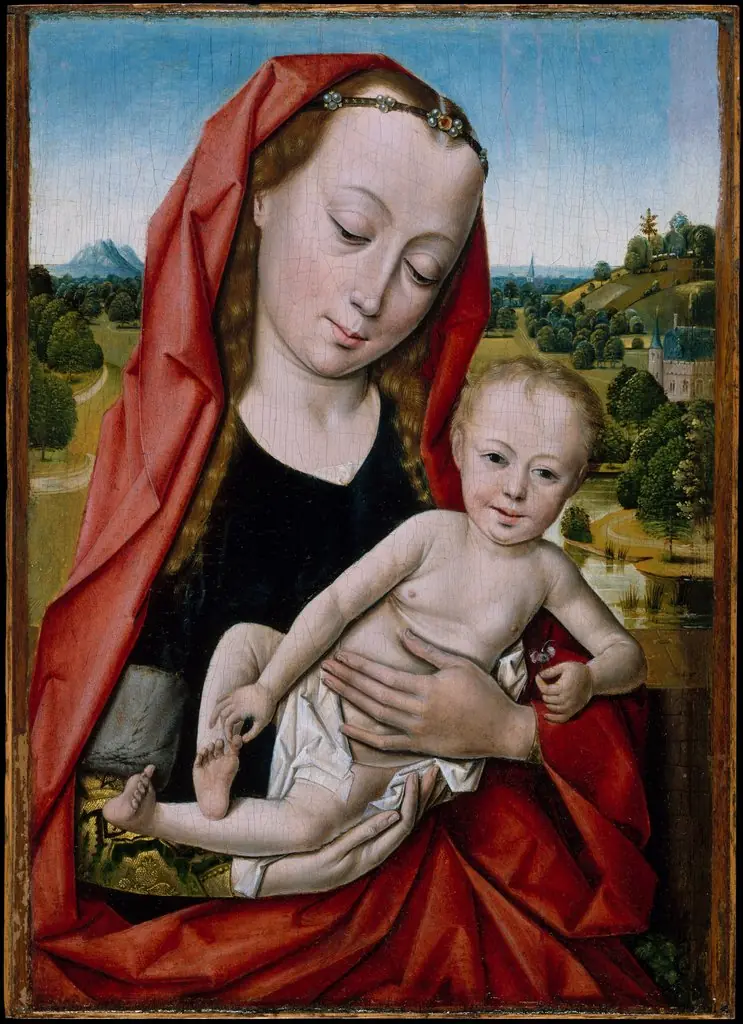
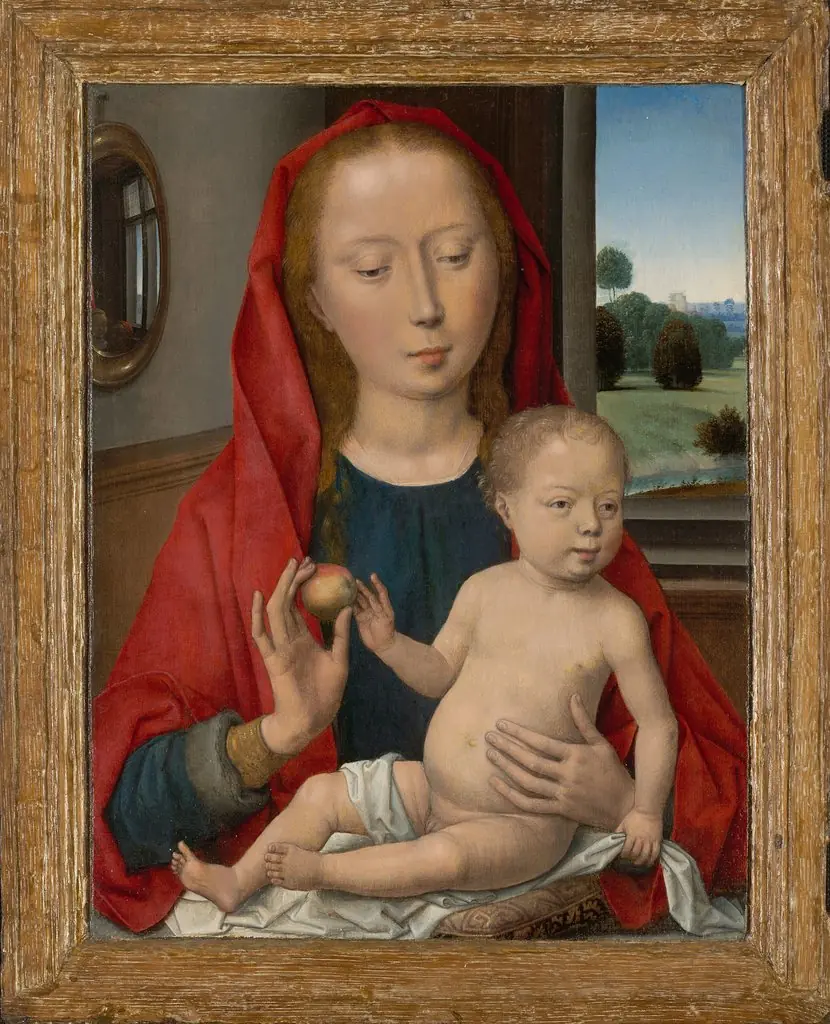
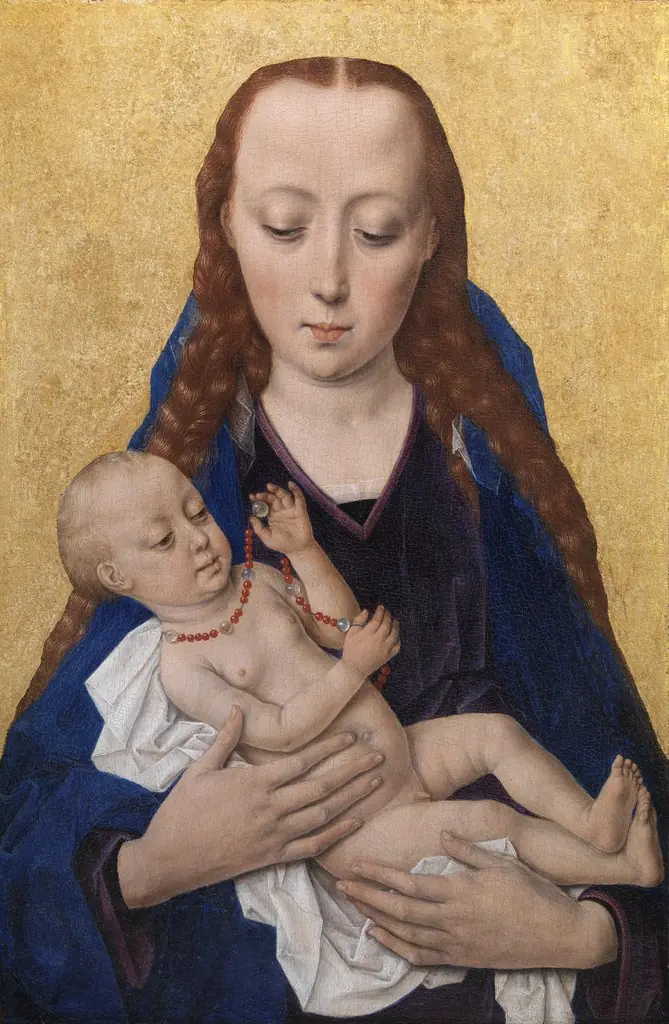
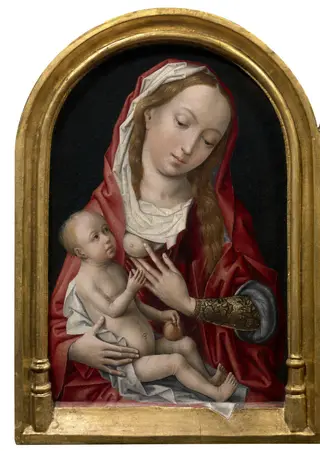
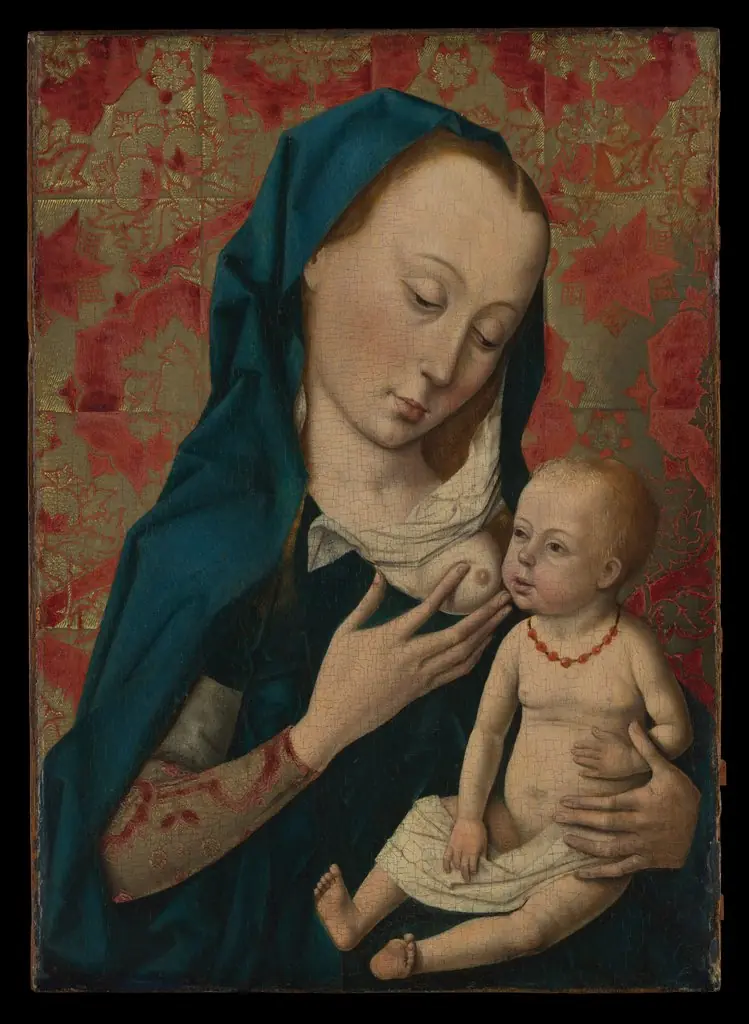
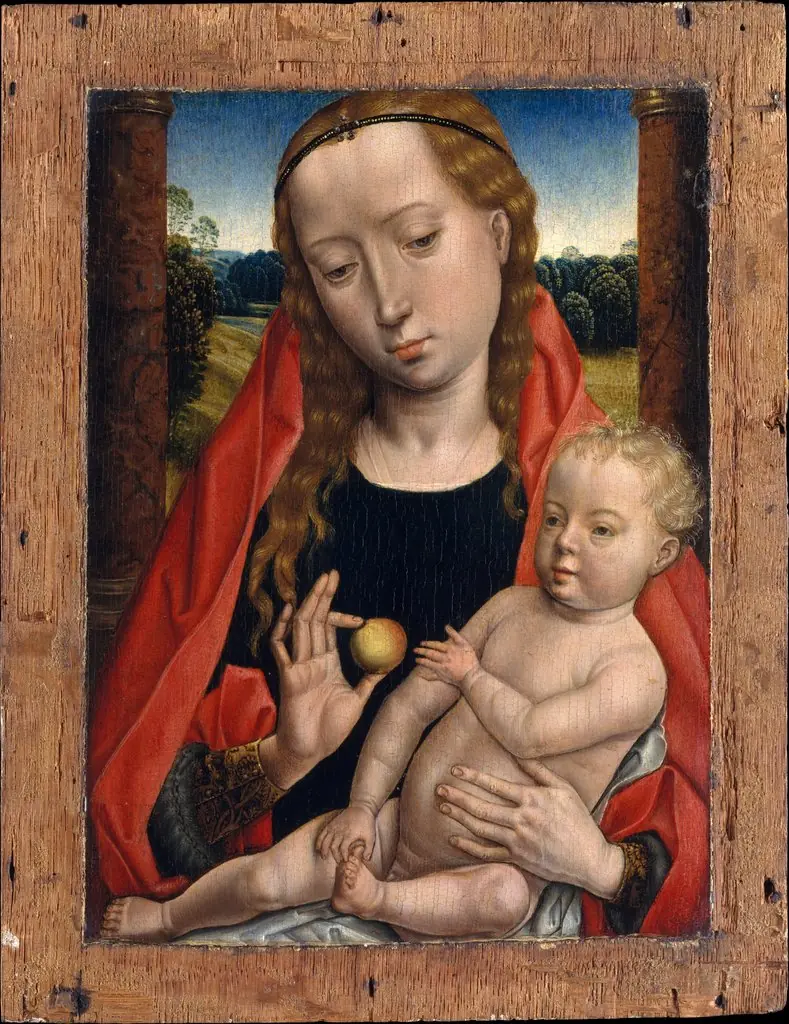
Virgin and Child is an oil painting by the Northern Renaissance artist Master of the Bruges Legend of St. Ursula. It dates from 1494 and is held in the collection of the Metropolitan Museum of Art.
About this work
Subject & Meaning
The tender, physical closeness between mother and child invites the viewer's contemplation of divine incarnation expressed through human motherhood.
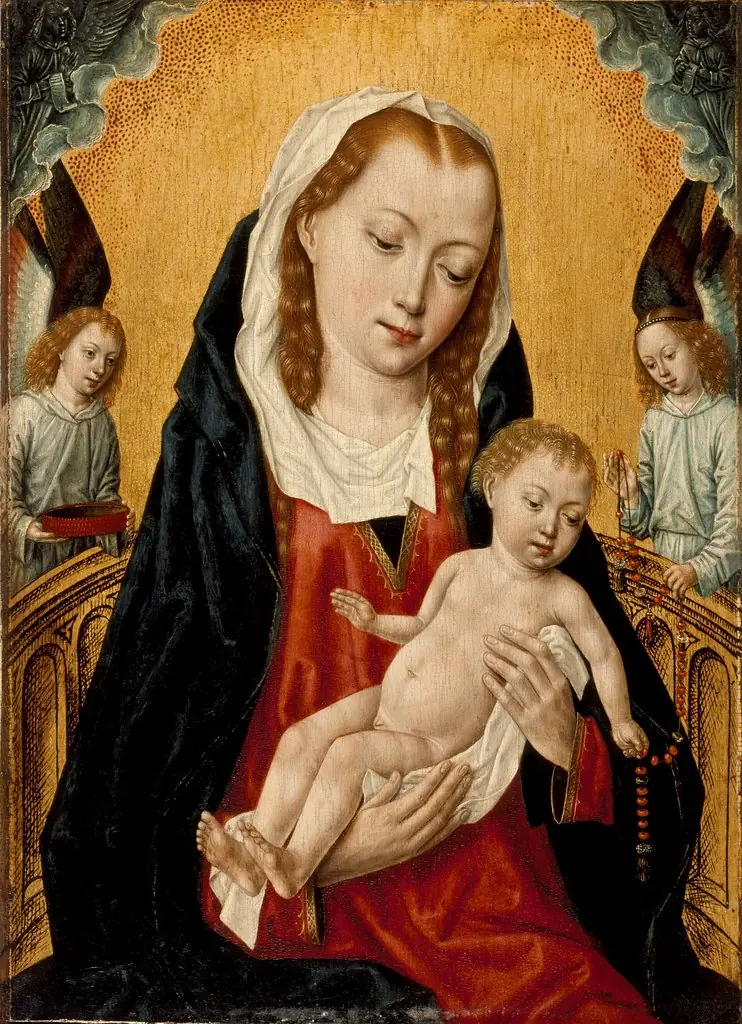
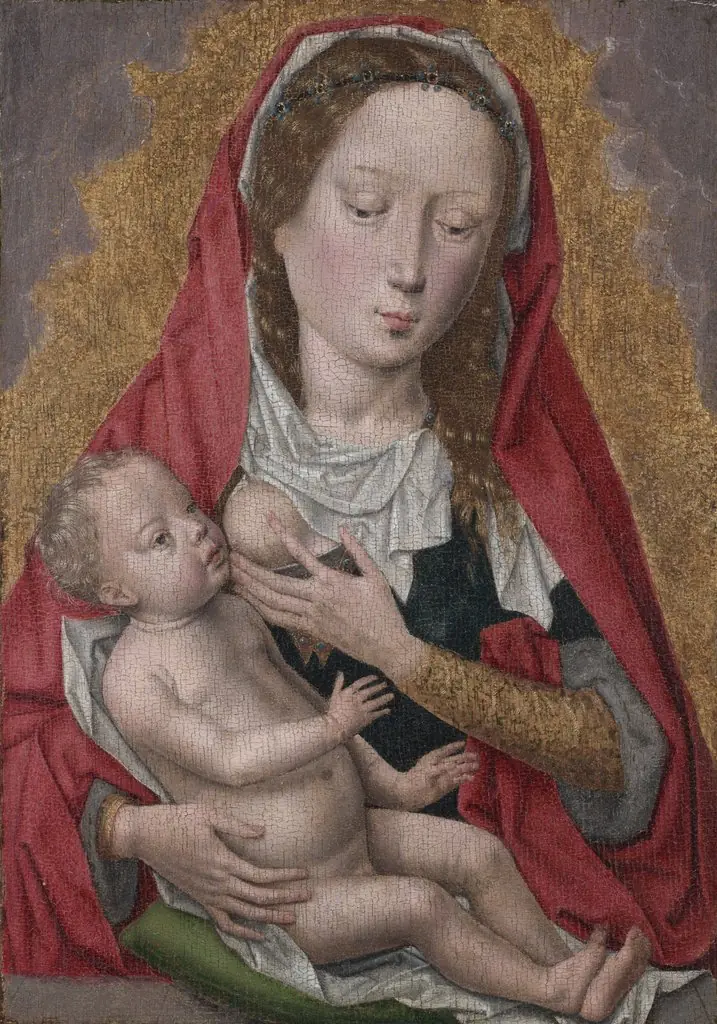
The painting depicts the Nursing Madonna, a devotional subject in which the Virgin Mary breastfeeds the Christ Child. This intimate maternal motif emphasizes Mary's role as both mother and nurturer, while also carrying Eucharistic symbolism: her milk was understood as a typological prefiguration of Christ's nourishing blood. The work belongs to the broader category of Madonna and Child imagery central to late medieval religious art, presenting Mary and the infant Jesus as objects of veneration.
The tender, physical closeness between mother and child invites the viewer's contemplation of divine incarnation expressed through human motherhood.
Technique & Style
Created in 1487 by the Master of the Bruges Legend of St. Ursula, this religious painting is executed in oil paint on a wooden panel support. The work measures 56.2 cm in height and 34.3 cm in width, presenting a vertical format typical of devotional images. Stylistically, the piece depicts the Nursing Madonna, capturing the Virgin Mary breastfeeding the Christ Child.
The medium of oil paint allows for the detailed rendering characteristic of late 15th-century Flemish art. Currently held in the collection of the Metropolitan Museum of Art, the panel serves as a primary example of the artist's handling of religious subjects, focusing on the intimate interaction between mother and child within a compact, upright composition.
History & Provenance
Created in 1487, this oil painting on panel is attributed to the Master of the Bruges Legend of St. Ursula. The work, which depicts the Nursing Madonna, entered the collection of the Metropolitan Museum of Art, where it is currently housed. While the specific circumstances of its original commission and the details of its ownership chain prior to arriving at the museum are not detailed in the available records, the date of inception and the artist's identity are established as 1487 and the Master of the Bruges Legend of St. Ursula, respectively.
The painting is held in the collection of the Metropolitan Museum of Art, according to Wikidata records. It is catalogued as a religious oil-on-panel work by the Master of the Bruges Legend of St. Ursula, dated 1487, with recorded dimensions of 56.2 cm in height and 34.3 cm in width. The sources do not provide a specific accession number, nor do they document any exhibition history or loan record for the work.
Context
The Master of the Bruges Legend of St. Ursula, active in late fifteenth-century Flanders, is associated with devotional works emphasizing intimate, affective piety, a trend that shaped the region’s religious painting during the 1480s and 1490s. The Virgin and Child exemplifies this approach, aligning with contemporaneous devotional practices that favored emotionally resonant imagery to foster contemplation and devotion. The composition’s modest scale and refined execution reflect the Bruges school’s technical sophistication, where oil painting enabled precise detail and luminous coloration to heighten spiritual engagement.
Within the broader context of Northern European art, the work participates in a broader tradition of Marian imagery that prioritized the humanizing portrayal of sacred figures, a tendency evident in works by contemporaries such as Hans Memling and Hugo van der Goes. Its inclusion in the Metropolitan Museum of Art’s collection underscores its recognition as a significant example of late medieval religious art, representative of the cultural and artistic exchanges in the Burgundian Netherlands.
Overview
This oil painting, Virgin and Child, was created in 1494 by the artist known as the Master of the Bruges Legend of St. Ursula. It exemplifies the Northern Renaissance style, depicting the Madonna tenderly nursing the infant Christ. The work is now part of the collection at The Metropolitan Museum of Art.
Own this work as a print
Artist & collection
Artist
Master of the Bruges Legend of St. Ursula
The Master of the Legend of St. Ursula (1436–1505) was a Flemish painter active in the fifteenth century. His name is derived from a polyptych depicting scenes from the life of Saint Ursula painted for the convent of…