Artwork
Virgin and Child with the Infant Saint John the Baptist
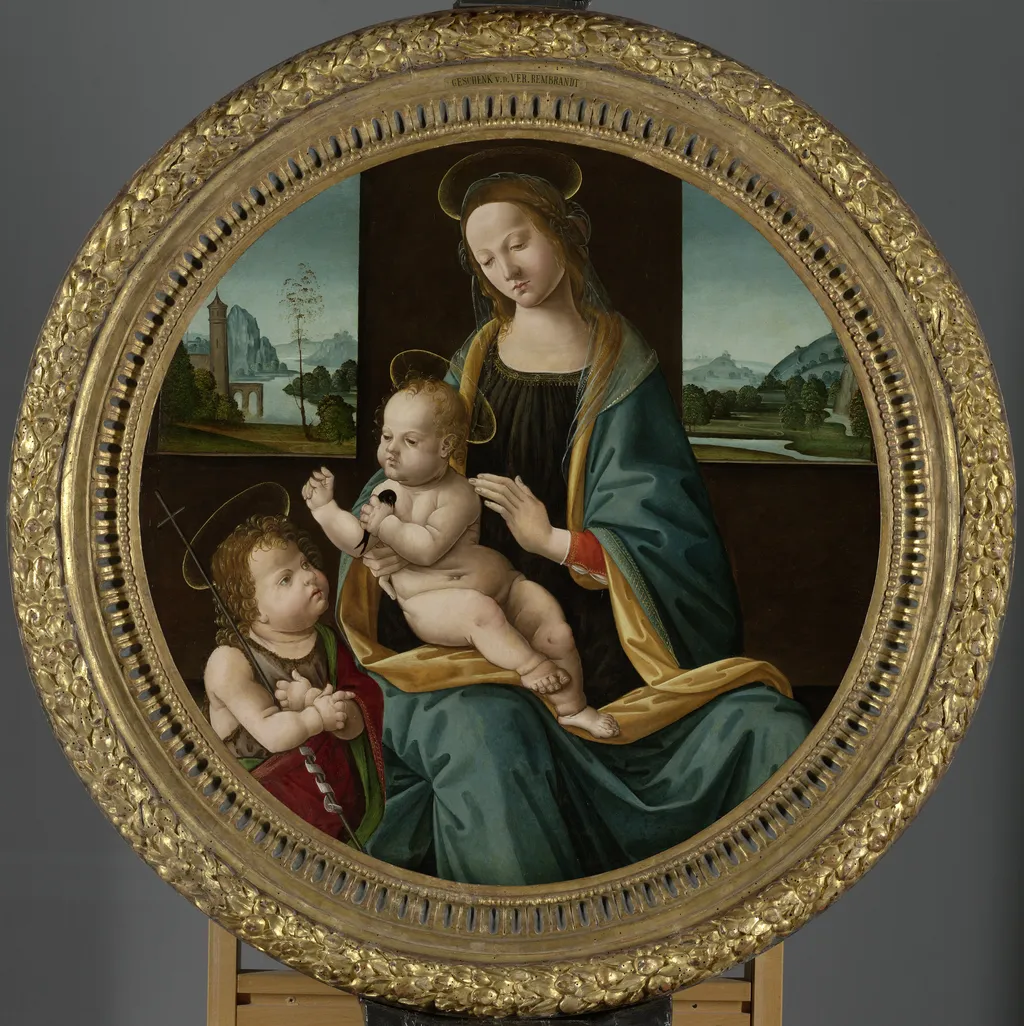
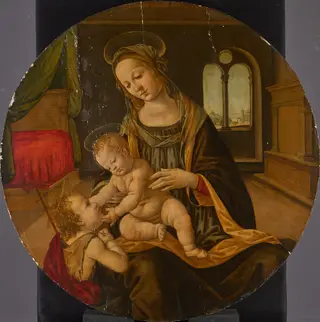
Virgin and Child with the Infant Saint John the Baptist is an oil painting by the Italo Byzantine artist Master of the Conversazione di Santo Spirito. It dates from 1500 and is held in the collection of the Rijksmuseum.
About this work
Subject & Meaning
The painting depicts the Virgin Mary holding the Christ Child, accompanied by the infant Saint John the Baptist.
The painting depicts the Virgin Mary holding the Christ Child, accompanied by the infant Saint John the Baptist. Mary is shown in a tender moment with the Christ Child, who reaches toward her while John the Baptist kneels in prayer, holding a reed cross, a traditional symbol of his future role as the "voice crying in the wilderness" and forerunner of Christ. The composition emphasizes maternal tenderness and the divine mission of the Christ Child, framed by the religious context of late medieval and early Renaissance Florence.
The inclusion of Saint John underscores the theme of preparation for the coming of Christ, reinforcing the work’s devotional purpose within the Christian tradition.
History & Provenance
Created in Florence around 1500, the oil-on-panel painting Virgin and Child with the Infant Saint John the Baptist is attributed to the Master of the Conversazione di Santo Spirito. The work originated within the Grand Ducal collection of Oldenburg, where it was held by Peter II, Grand Duke of Oldenburg, and subsequently by his successor, Frederick Augustus II, Grand Duke of Oldenburg. This ownership chain eventually led the piece to the Augusteum before it entered the holdings of the Rijksmuseum.
Legacy
The painting’s composition and iconography were widely copied in early 16th-century Florentine workshops, influencing devotional imagery that emphasized the intimate bond between the Virgin, Child, and infant Saint John. Its presence in the ducal collections of the Grand Duchy of Oldenburg helped disseminate the model across Northern Europe, where it informed later altarpieces and private devotional works.
Reproductions in contemporary inventories and treatises on sacred art attest to its reputation as a exemplar of the Conversazione format, while 19th-century scholars such as Giovanni Morelli identified its stylistic traits as indicative of a distinct Florentine workshop tradition.
Overview
Created around 1500, this oil painting portrays a devotional grouping of the Virgin Mary, the infant Christ, and the young Saint John the Baptist. Executed by the anonymous Master of the Conversazione di Santo Spirito, the work is part of the Rijksmuseum’s collection and exemplifies early sixteenth‑century religious art.
Technique & Style
The painting employs chiaroscuro to model the figures, creating a subtle contrast between light and shadow that enhances three‑dimensionality. The background is divided by a dark vertical band separating two distant landscapes: a tower on the left and a mountainous scene with a bridge on the right, adding depth and narrative context.
Context
The painting reflects Italian Renaissance influences, particularly in its balanced composition and use of light. Such depictions of the Virgin with Child and John the Baptist were common devotional motifs, serving both liturgical and private devotional purposes during the period.
Own this work as a print
Artist & collection
Artist
Master of the Conversazione di Santo Spirito
Master of the Conversazione di Santo Spirito is a conventional name for an unidentified Florentine painter active in the late fifteenth and early sixteenth centuries.

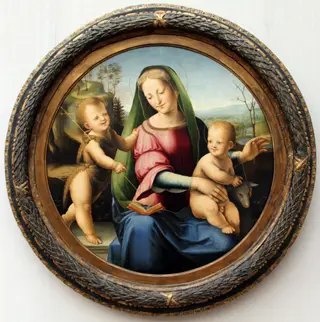 Maria mit dem Kind und dem Johannesknaben
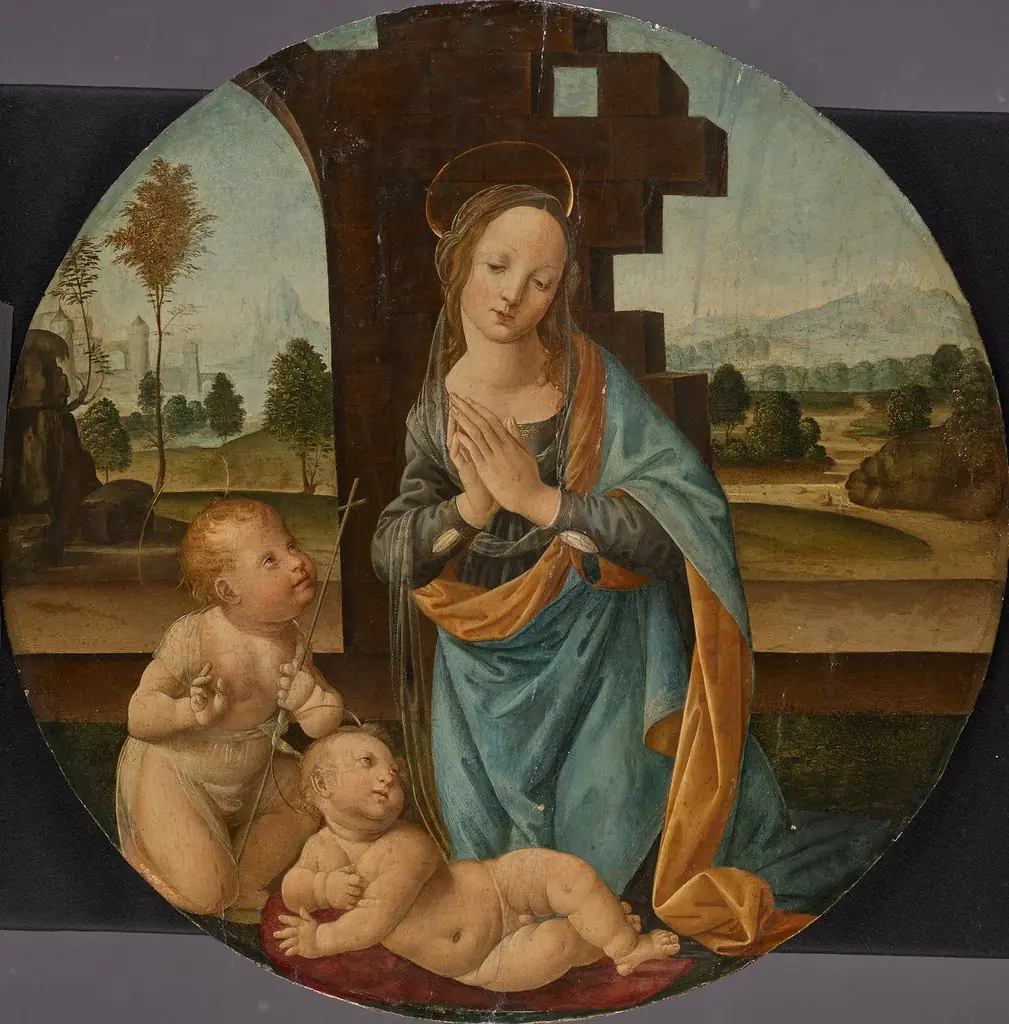 The Virgin and Child with the Young St. John
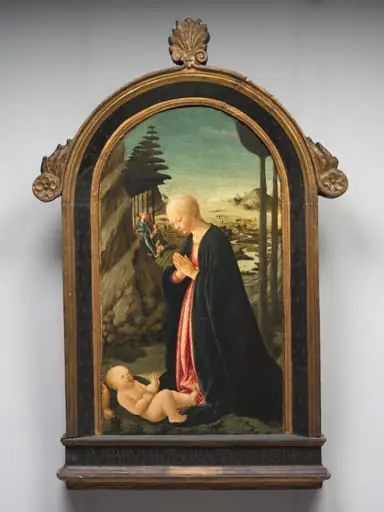 Madonna and Child with Tobias and the Angel Raphael
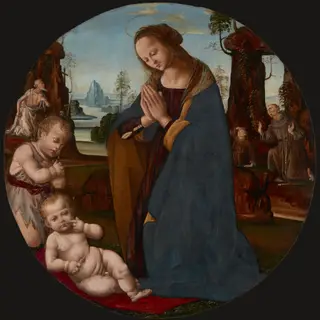 Adoration of the Child with Young St John the Baptist – Tondo
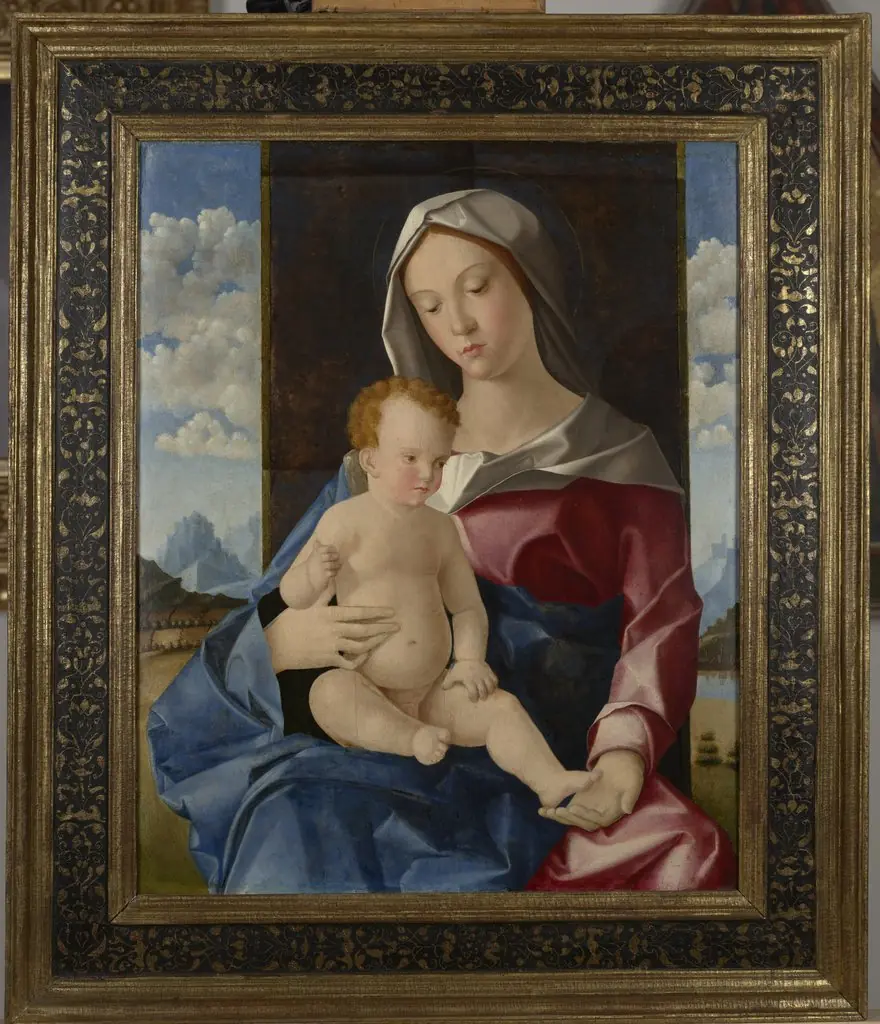 Madonna and Child
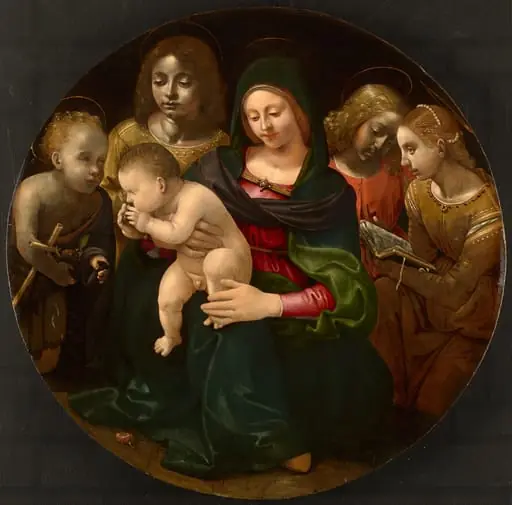 Virgin and Child with the Young Saint John the Baptist, Saint Cecilia, and Angels
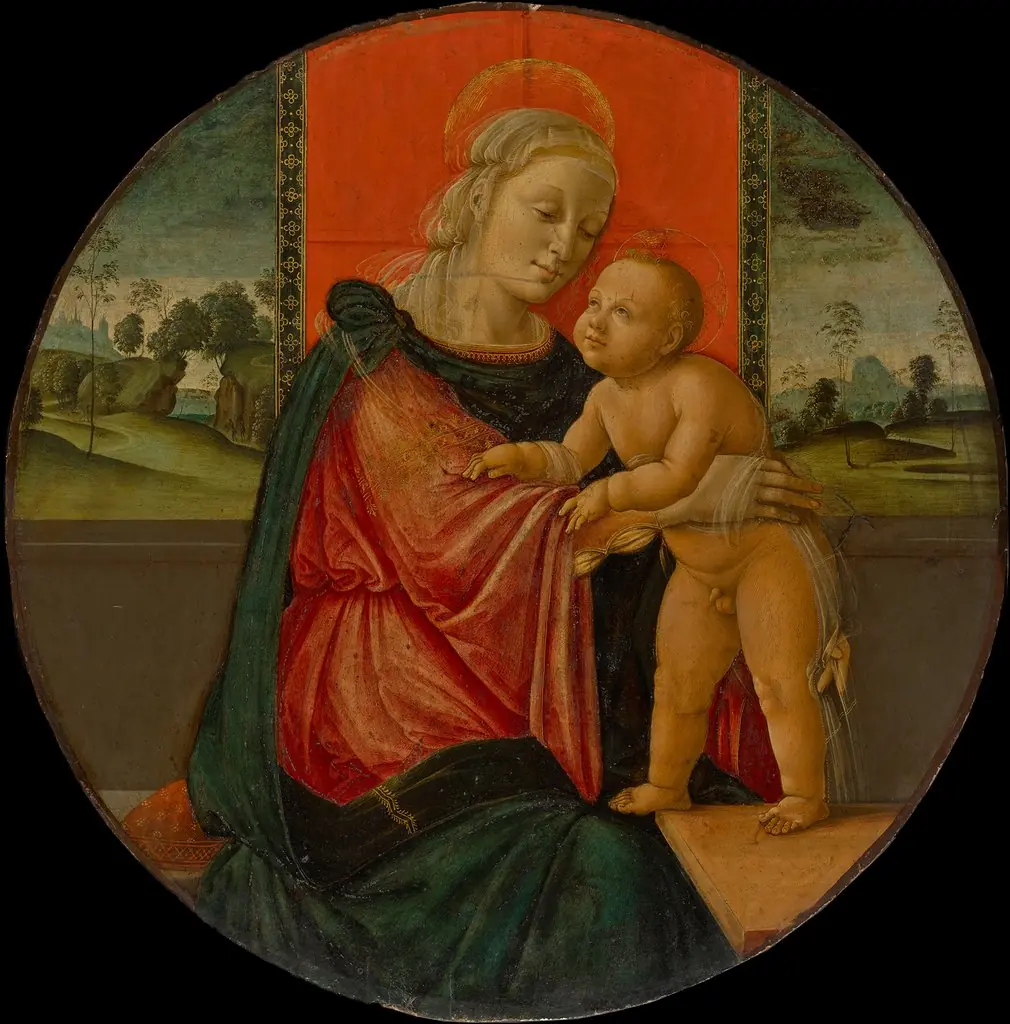 The Virgin and Child
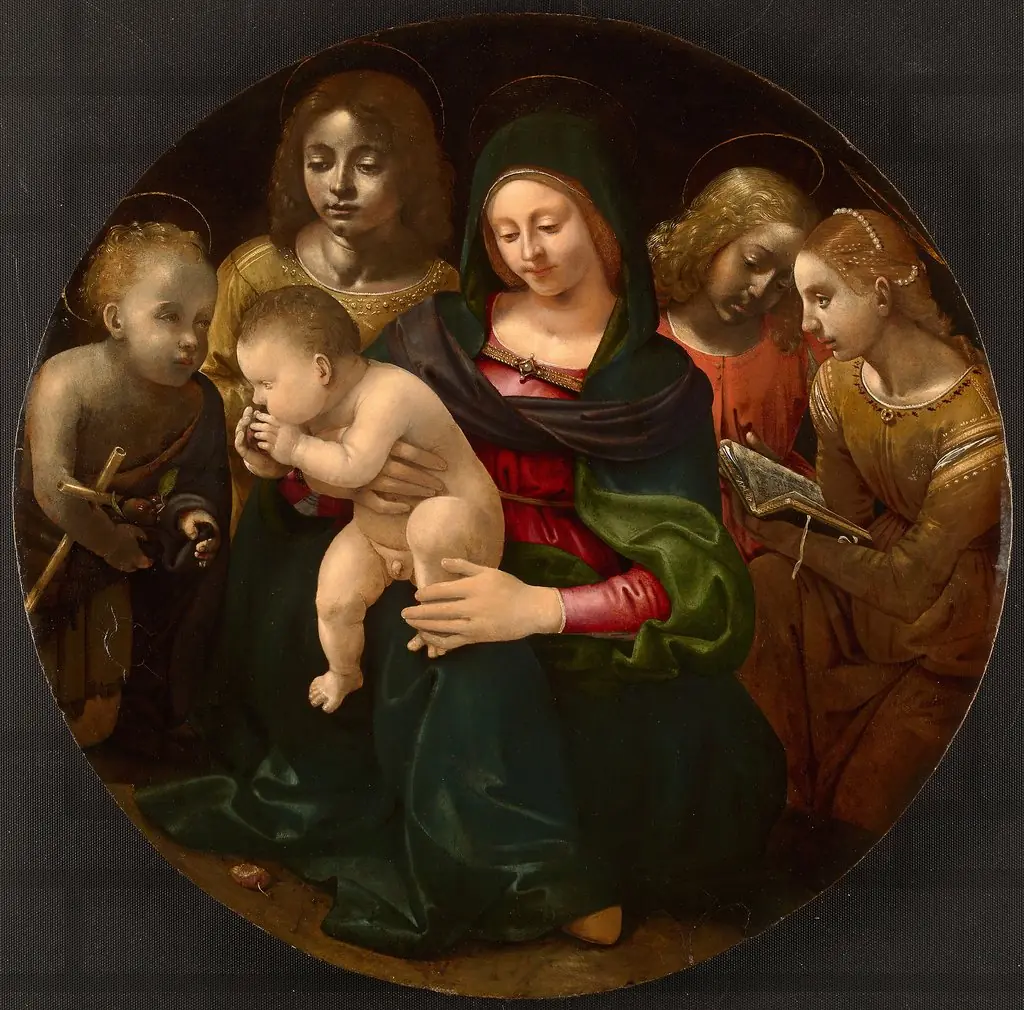 Virgin and Child with the Young Saint John the Baptist, Saint Cecilia, and Angels
 The Virgin with the Child and Young St. John