Artwork
The Virgin and Child
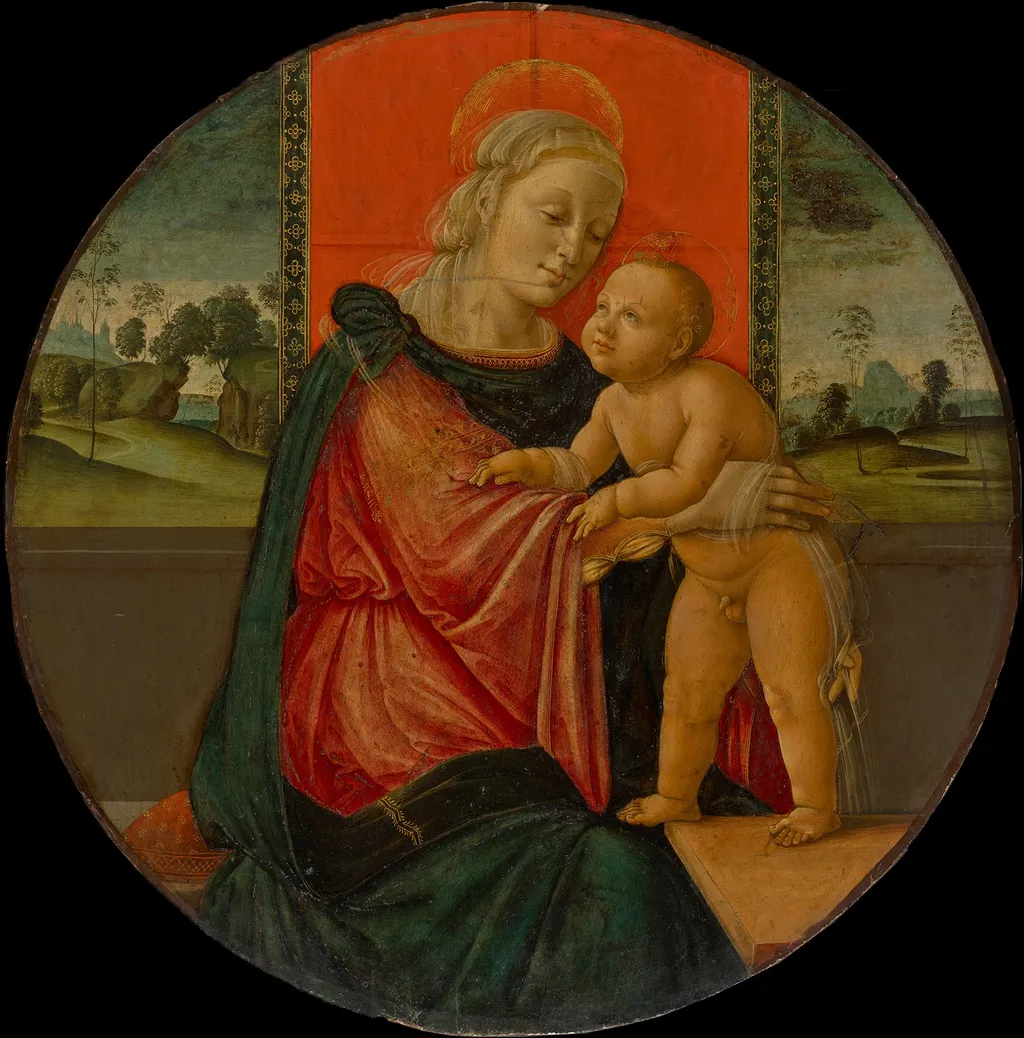
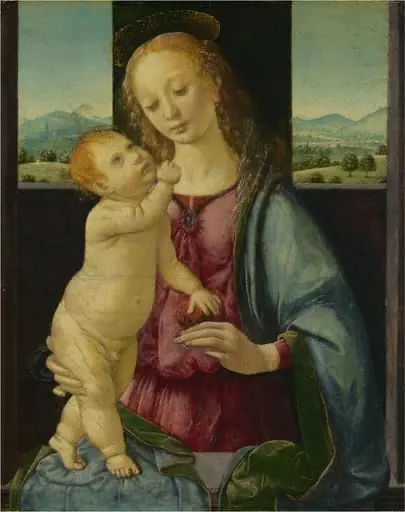
The Virgin and Child is a paint painting by Pseudo Granacci. It dates from 1510 and is held in the collection of the Gemäldegalerie Berlin. Created around 1510, this painted panel portrays the Virgin Mary and the infant Christ in an intimate encounter.
About this work
Overview
The Virgin and Child is a religious painting dated to 1510, executed in paint on a poplar panel.
The Virgin and Child is a religious painting dated to 1510, executed in paint on a poplar panel. The work is attributed to the Pseudo Granacci, a designation indicating an artist whose style recalls the Florentine painter Francesco Granacci but whose exact identity remains unresolved. The painting is currently held in the Gemäldegalerie Berlin. It depicts the Madonna and Christ Child in a circular composition, combining intimate figural interaction with a distant landscape vista, characteristic of early sixteenth-century Florentine devotional imagery.
Technique & Style
The artist executed the work in paint on a poplar panel support. The composition is circular, centering on the two figures against a flat red panel bordered by narrow ornamental bands. A low gray wall separates the foreground from a landscape of green hills, scattered trees, and a pale blue-green sky. Stylistically, the modeling of the faces and drapery is smooth and gradual, with soft transitions between light and shadow. The palette contrasts the dominant reds, greens, and warm flesh tones of the figures against the cooler greens and blues of the background. The paint surface exhibits fine craquelure throughout, along with areas of thinning and age-related wear, particularly in the darker pigments.
History & Provenance
Created in 1510, the painting is cataloged as GG 1134 in the Gemäldegalerie Berlin, where it is currently housed. The specific details of its early commission and ownership chain prior to entering the Berlin collection are not documented in the available sources. Its attribution to Pseudo Granacci reflects a scholarly classification rather than a firm identification of the creator. The painting's survival with its original support intact has allowed for its continued study and display as an example of early sixteenth-century Florentine painting in the museum's collection.
Context
The attribution to Pseudo Granacci places the work within the broader orbit of Francesco Granacci, an Italian Renaissance painter active in Florence. Granacci trained in the workshop of Domenico Ghirlandaio alongside Michelangelo, and his early works show the strong influence of Ghirlandaio and Filippino Lippi. By the early sixteenth century, Florentine painting was shifting toward High Renaissance idioms, and artists in Granacci's circle increasingly absorbed the influence of Fra Bartolommeo. The Pseudo Granacci designation suggests the painter was closely associated with this stylistic transition, producing works that echo the compositional structures and delicate handling of light and shadow characteristic of Granacci's mature phase, even if the master's individuality remains debated by scholars like Sydney Joseph Freedberg.
Own this work as a print
Artist & collection
Artist
Pseudo Granacci made religious paintings in early 1500s Italy. One signed work here shows the Virgin holding the Christ Child in tempera paint, a common choice before oil took over. The figures have soft folds in their…

- The Virgin and Child
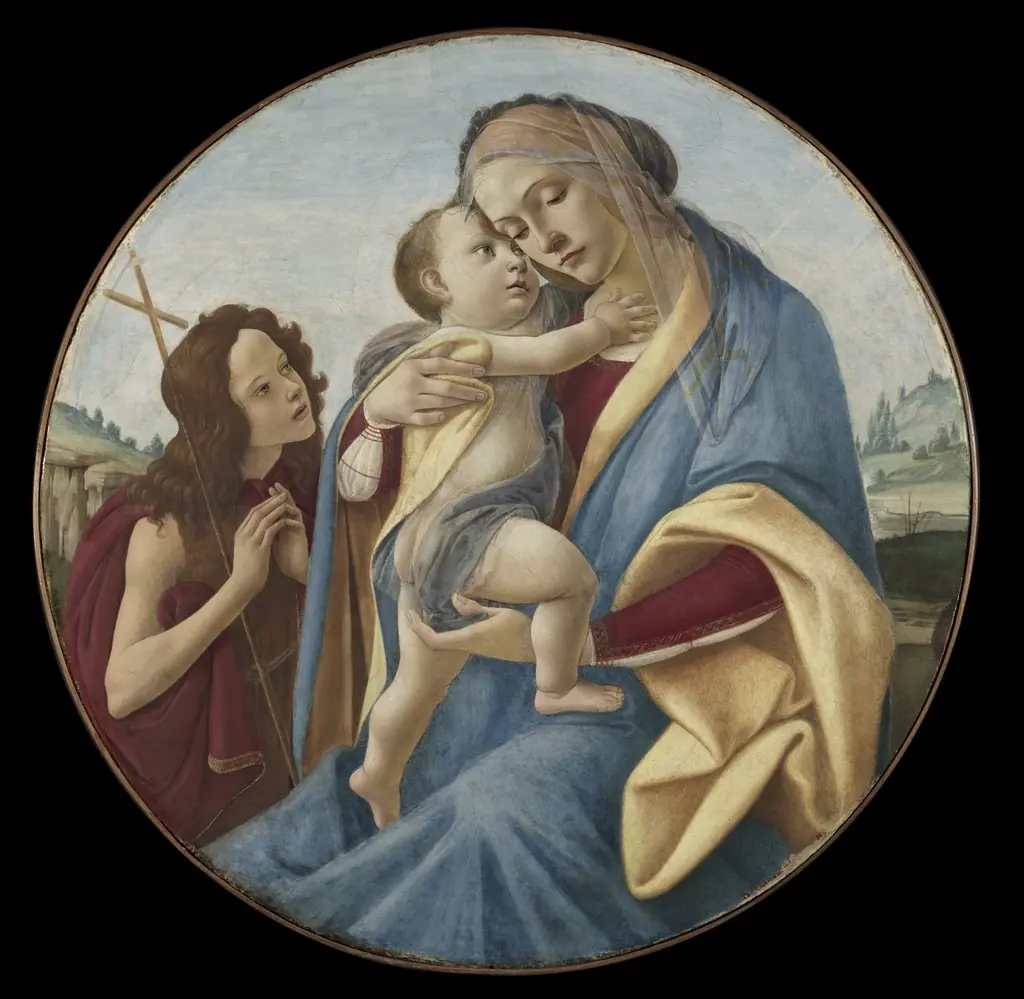 Virgin and Child with the Young Saint John the Baptist
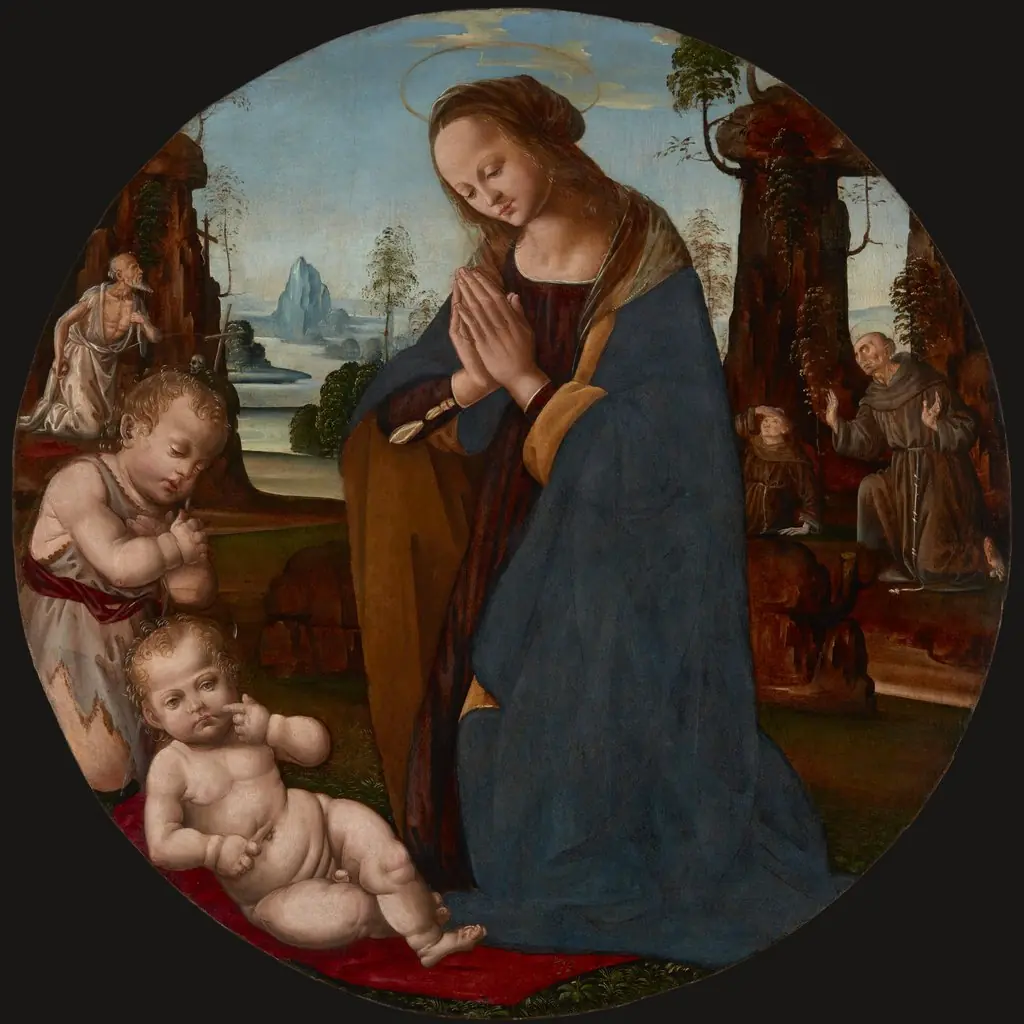 Adoration of the Child with Young St John the Baptist – Tondo
 The Virgin Adoring the Child
 Madonna and Child
 Madonna and Child
 Virgin and Child
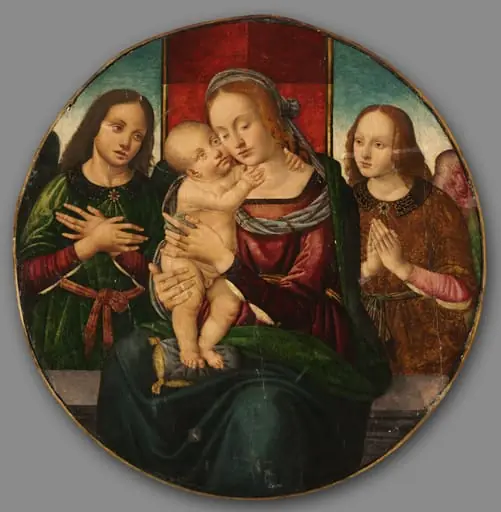 Virgin and Child with Angels
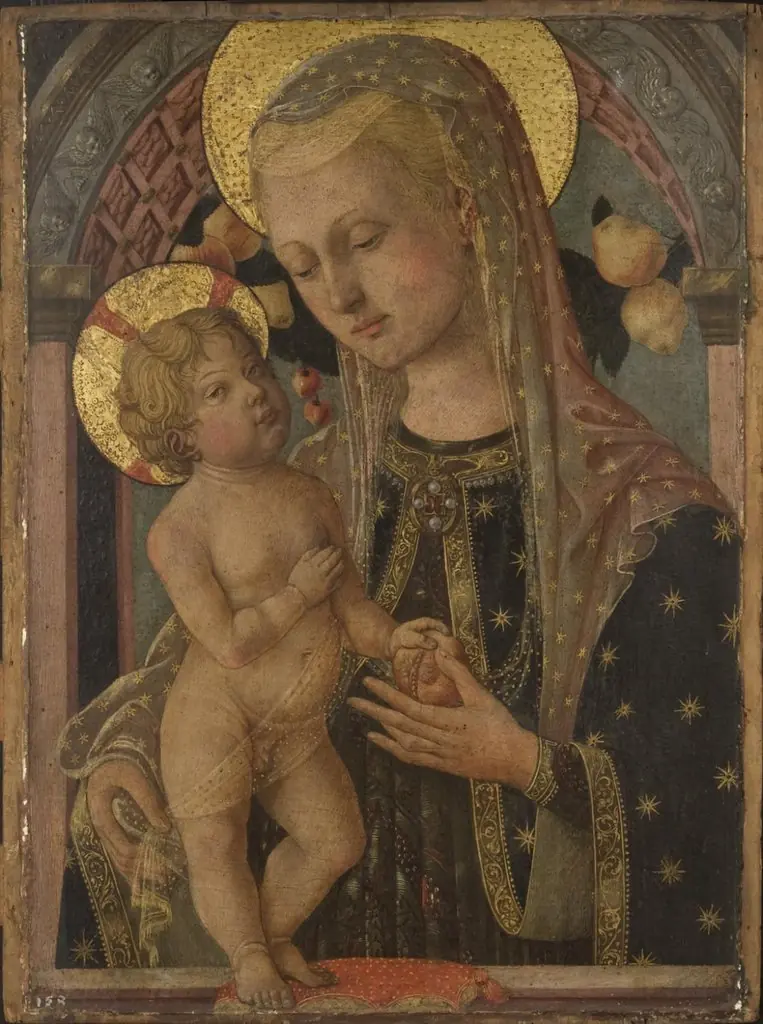 Virgin and Child with a Pomegranate
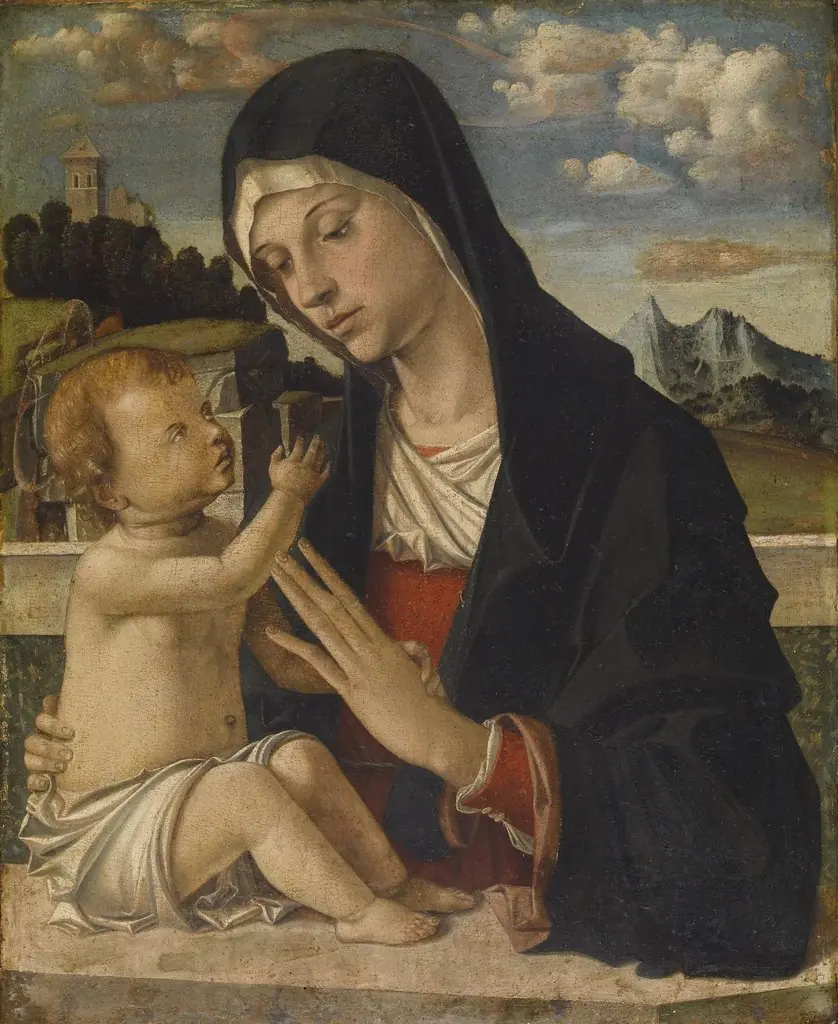 Madonna and Child
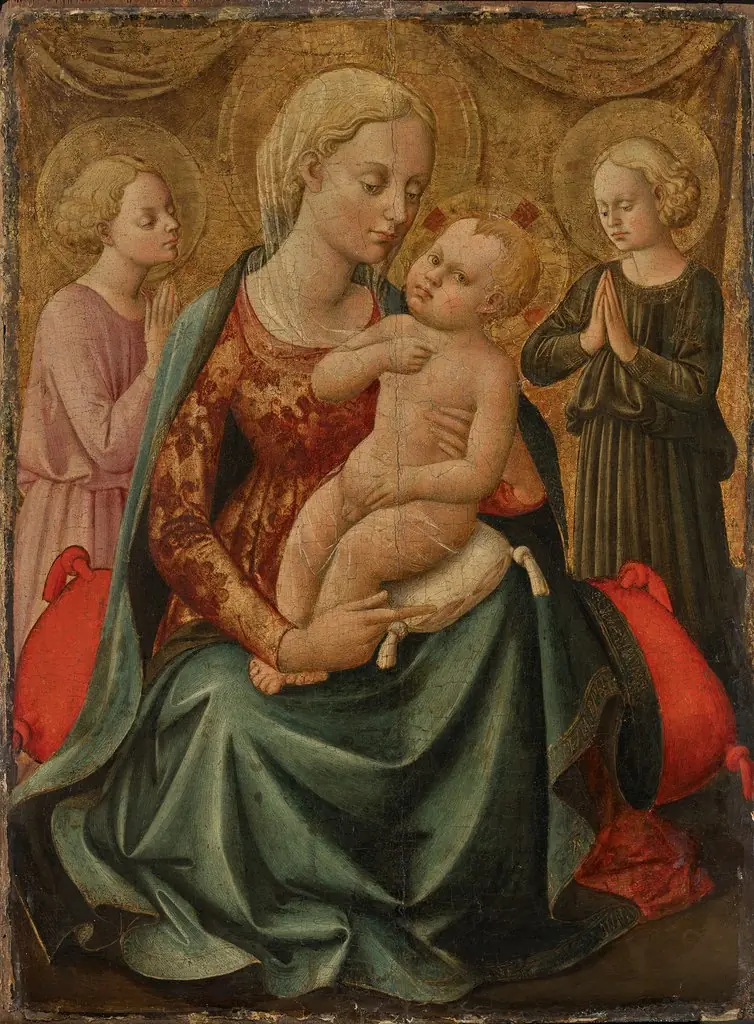 Madonna and Child
 Madonna and Child with a Pomegranate