Artwork
Madonna and Child
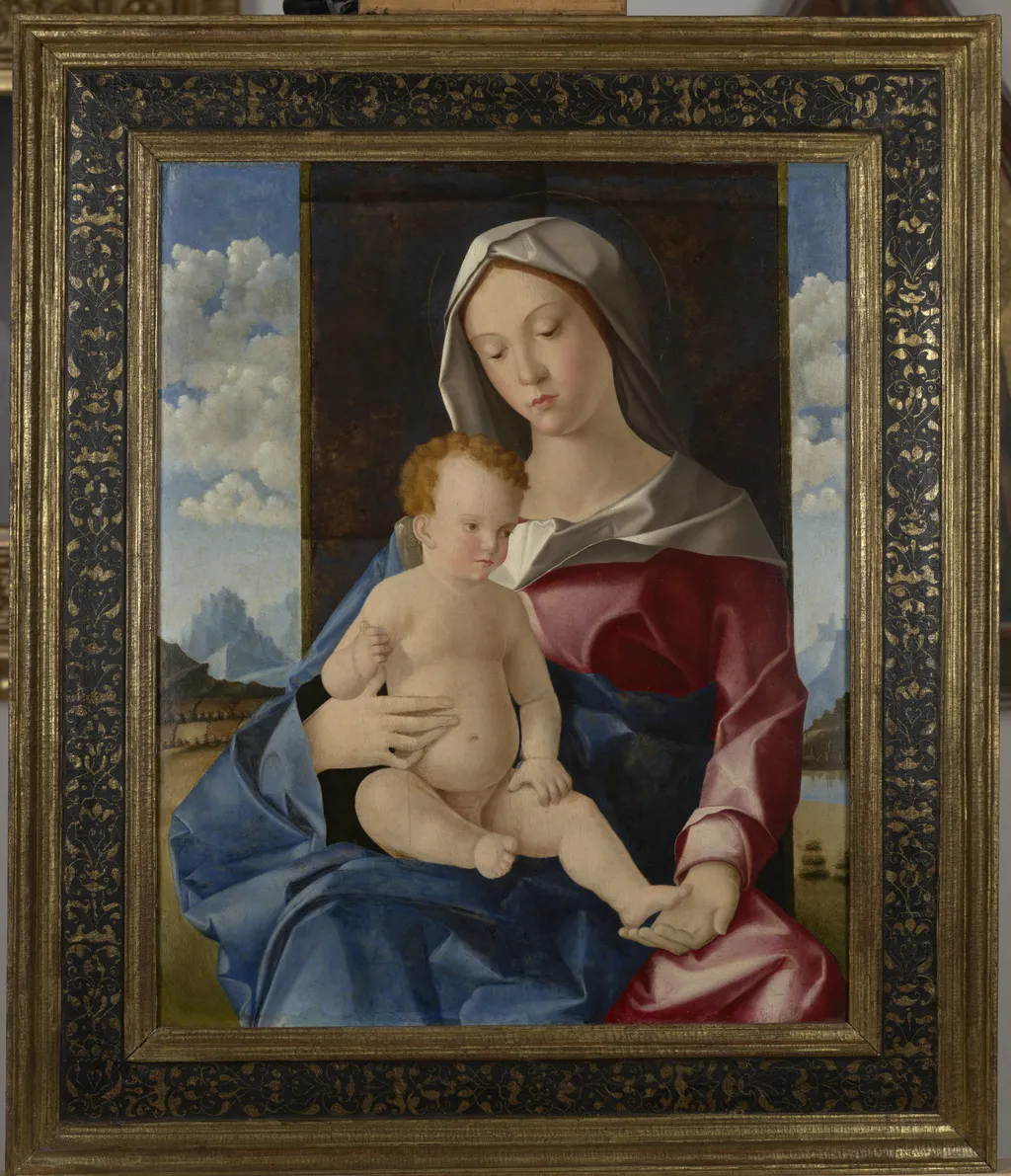
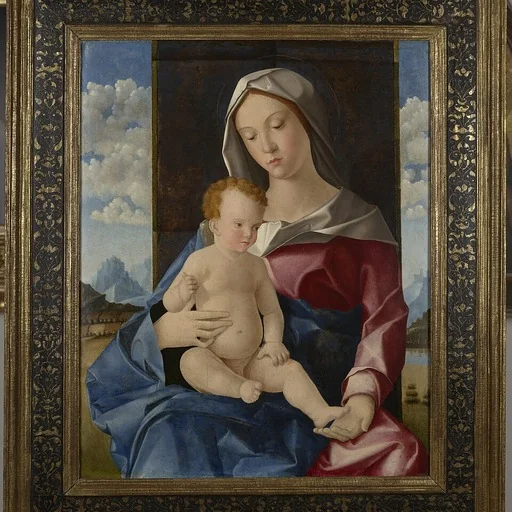
Madonna and Child is an unspecified painting by the High Renaissance artist Vincenzo Catena. It dates from 1500 and is held in the collection of the National Museum in Kraków.
About this work
Overview
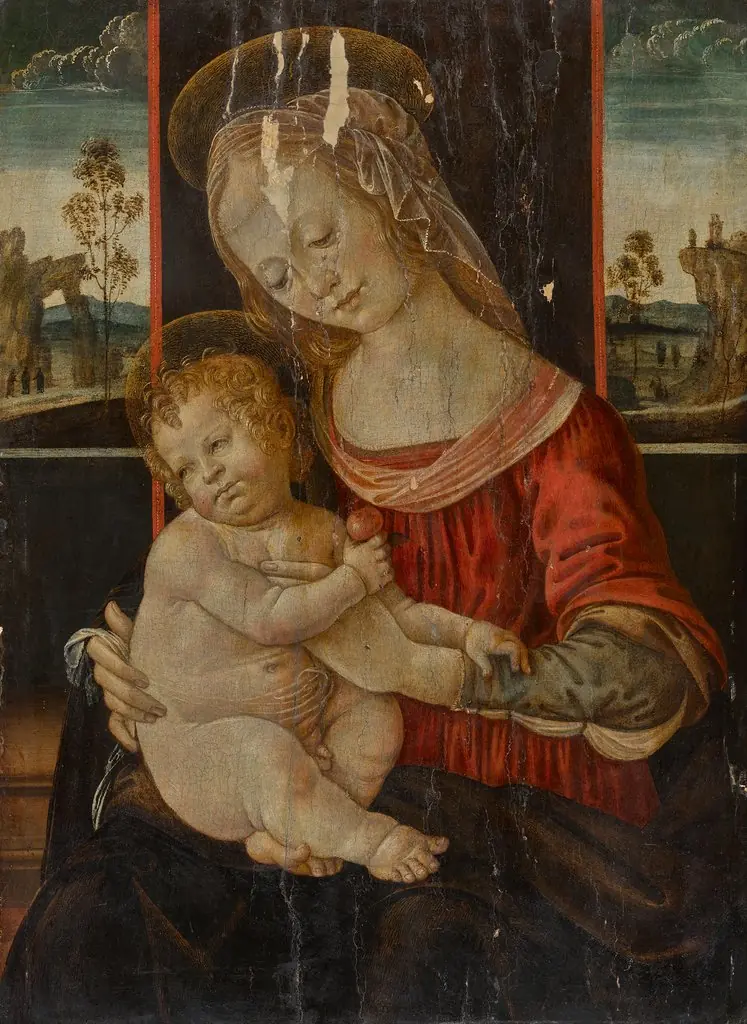
It depicts the Virgin Mary holding the infant Jesus, rendered with delicate halos against a dark backdrop flanked by narrow vertical landscape panels.
Madonna and Child is a religious painting by the Venetian artist Vincenzo Catena, dated to the year 1500. Executed as an oil painting on a wood panel, the artwork measures 55.2 by 44.5 centimeters. It depicts the Virgin Mary holding the infant Jesus, rendered with delicate halos against a dark backdrop flanked by narrow vertical landscape panels. The painting belongs to the collection of the National Museum in Kraków.
Subject & Meaning
The artwork portrays the Virgin Mary and the Christ Child, a central motif in Christian art representing the maternal bond between Mary and Jesus. Mary is shown wearing a gray head covering, a red gown, and blue drapery, supporting the nude infant on her lap. She cradles his feet with her left hand and supports his back with her right. The infant has curly reddish hair and looks downward to his right. Both figures feature delicate halos, signifying their sacred status. The composition centers the figures, isolating them to emphasize their venerated roles within the devotional tradition.
Technique & Style
Catena executed the work in oil on a wood panel. The dominant palette consists of deep blue, crimson red, soft gray, and flesh tones. Light falls evenly across the figures, modeling their forms with soft shadows. The composition places the central figures against a dark brown backdrop flanked by narrow vertical landscape panels that depict blue skies with white clouds, distant mountains, and green terrain. The paint surface exhibits fine craquelure throughout. The panel is surrounded by an ornate frame featuring gold floral patterning on a dark ground.
History & Provenance
Created in 1500, the painting eventually entered the collection of the National Museum in Kraków, where it remains today. The specific details of its early commission and the chain of ownership prior to its institutional acquisition are not documented in the available records.
Context
Vincenzo Catena worked within the Venetian tradition during a period when the Bellini family pioneered new approaches to the altarpiece and the use of oil painting in Italy. Venetian devotional paintings of this era often employed close cropping and tight groupings of figures at the picture plane. Around 1506, Catena entered a partnership with Giorgione, a collaboration that led to shared compositional ideas. X-ray analysis of a painting believed to be a Giorgione self-portrait in the Herzog Anton Ulrich Museum revealed an underlying Virgin and Child with an unusual Christ Child pose similar to designs Catena employed, suggesting that specific figural arrangements may have originated with Giorgione.
Own this work as a print
Artist & collection
Artist
Vincenzo Catena (c. 1480–1531) was an Italian painter of the Renaissance Venetian school. He is also known as Vincenzo de Biagio.

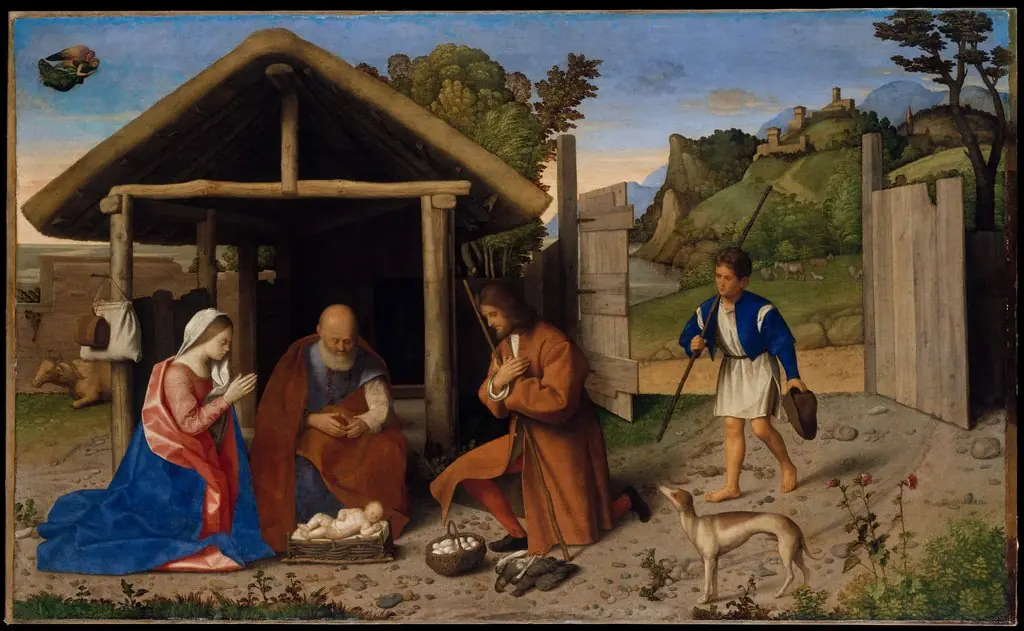 The Adoration of the Shepherds
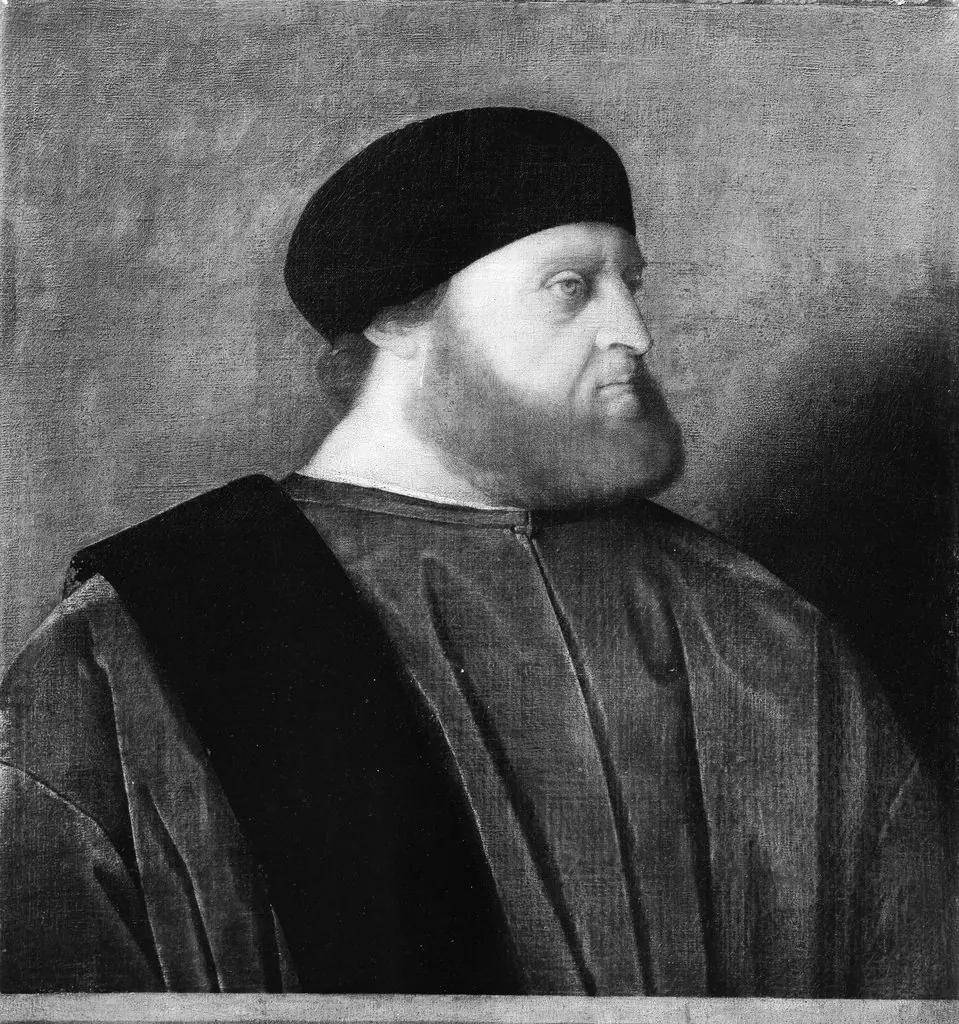 Portrait of a Venetian Senator
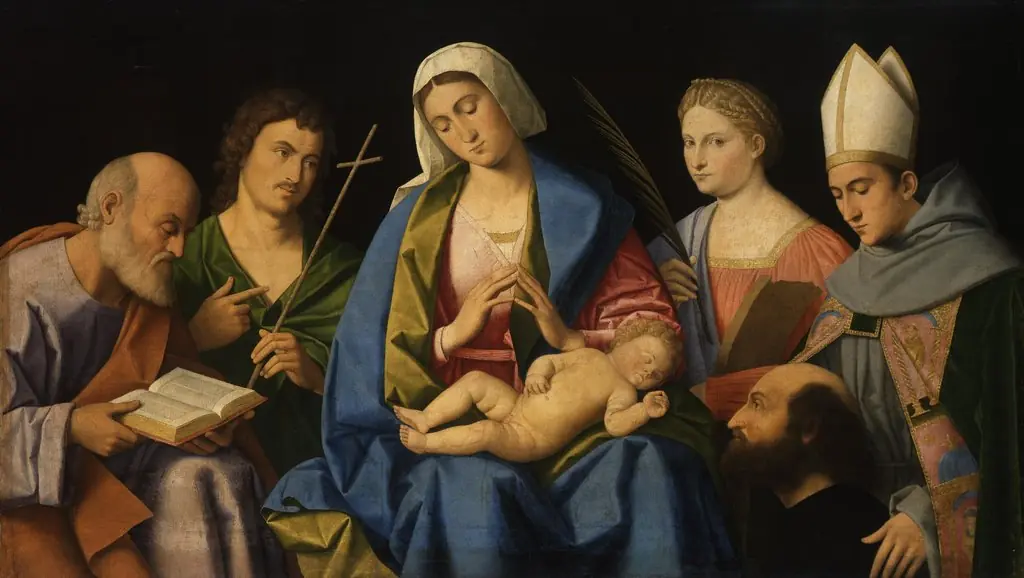 Madonna and Child with Saints and Donor
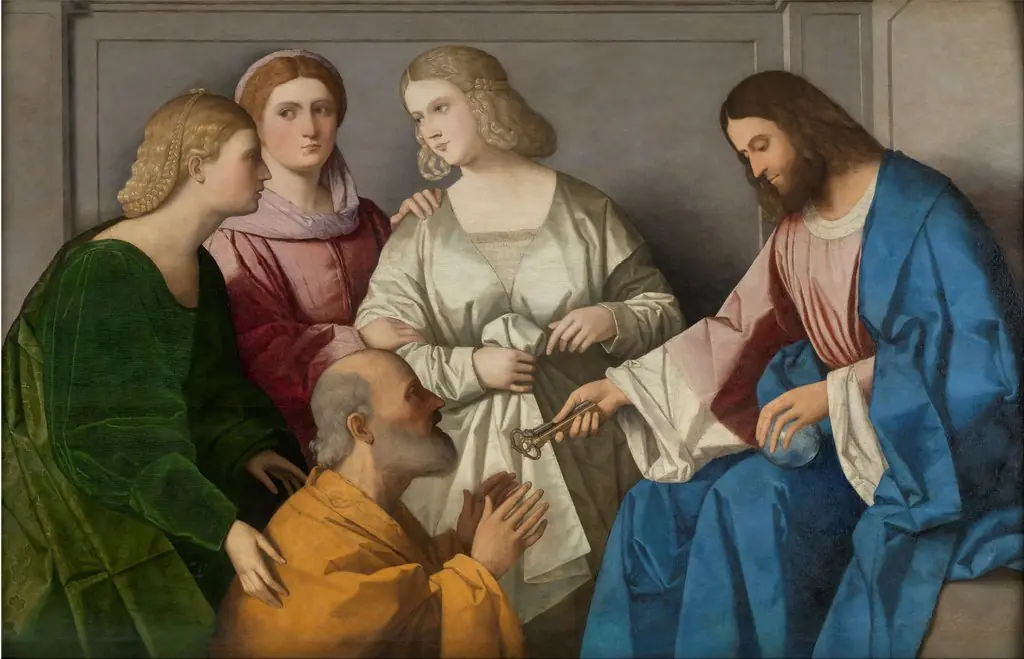 Christ giving the Keys to Saint Peter
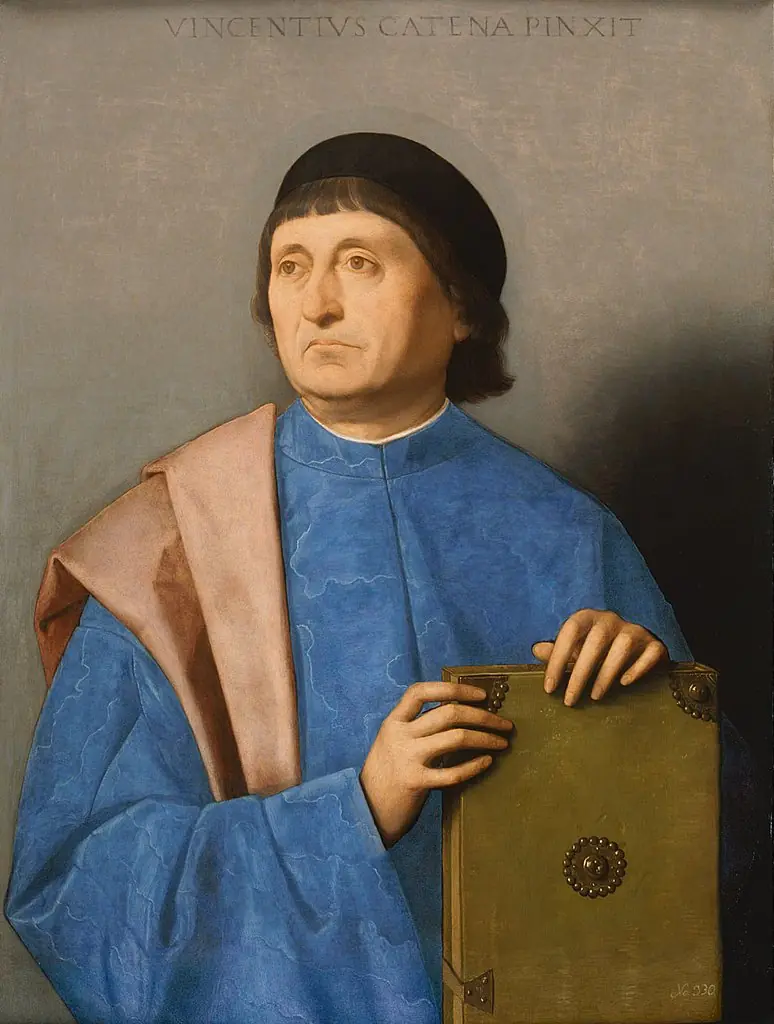 Portrait of a man with a book
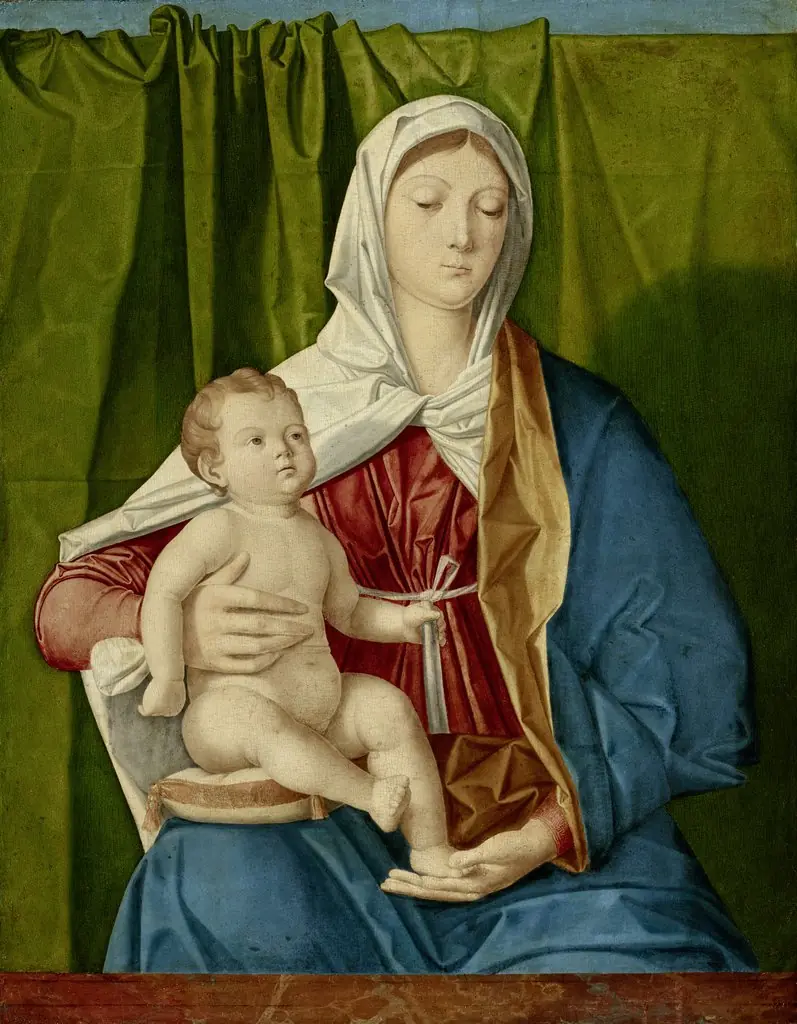 The Virgin and Child
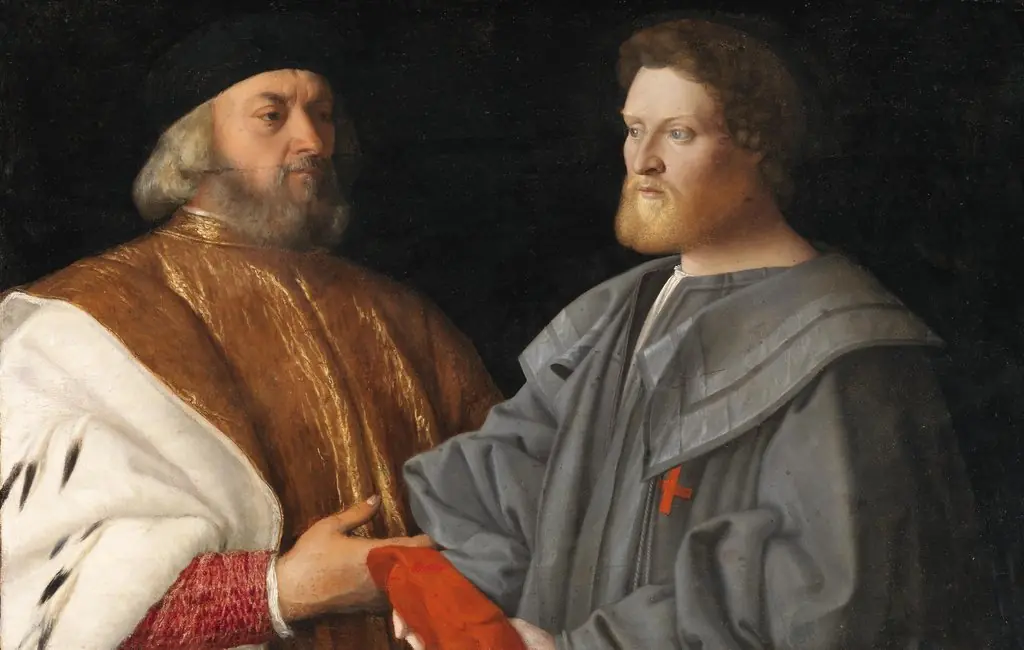 Giorgio Cornaro (1452-1527) and his son Francesco Cornaro (1478-1543)
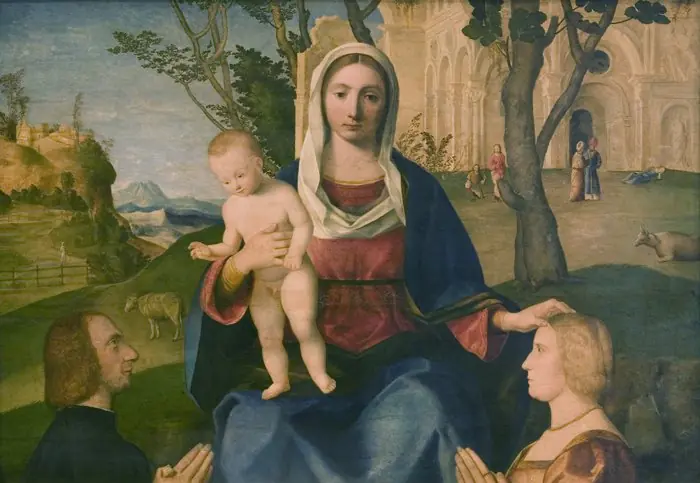 The Virgin and Child with a Male and a Female Donor