Artwork
Virgin and Child
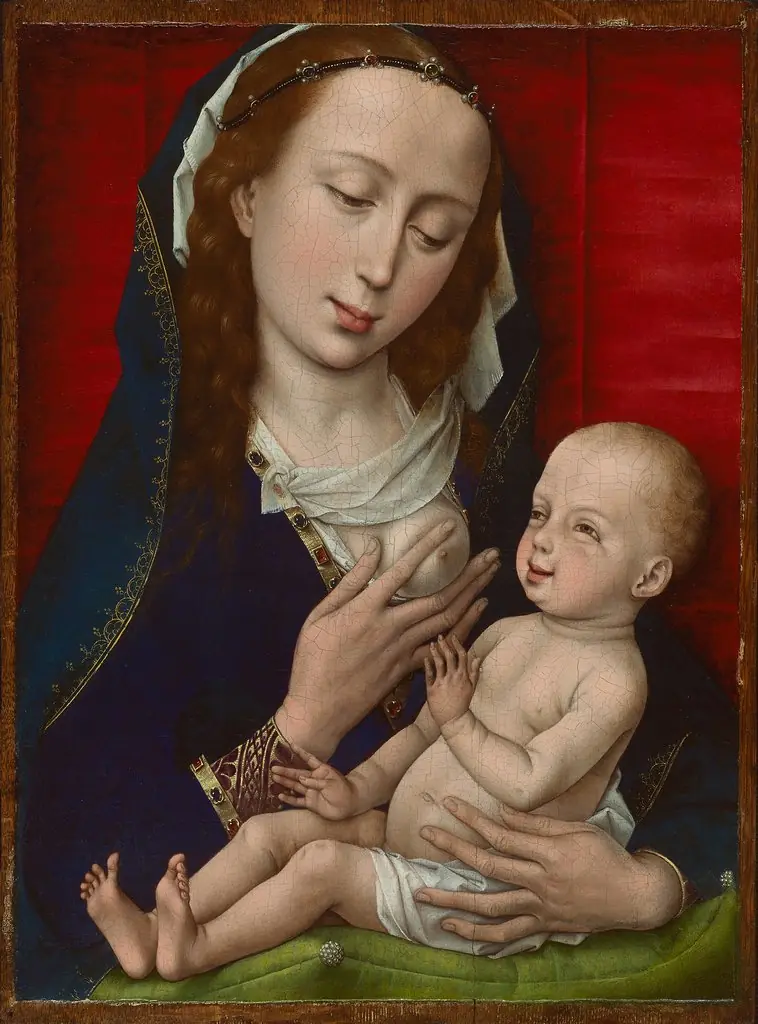
Virgin and Child is an unspecified painting by the Northern Renaissance artist Master of the Habsburgs. It dates from 1496 and is held in the collection of the Kunsthistorisches Museum.
About this work
Subject & Meaning
The painting depicts the Madonna and Child, a central subject in Christian religious art.
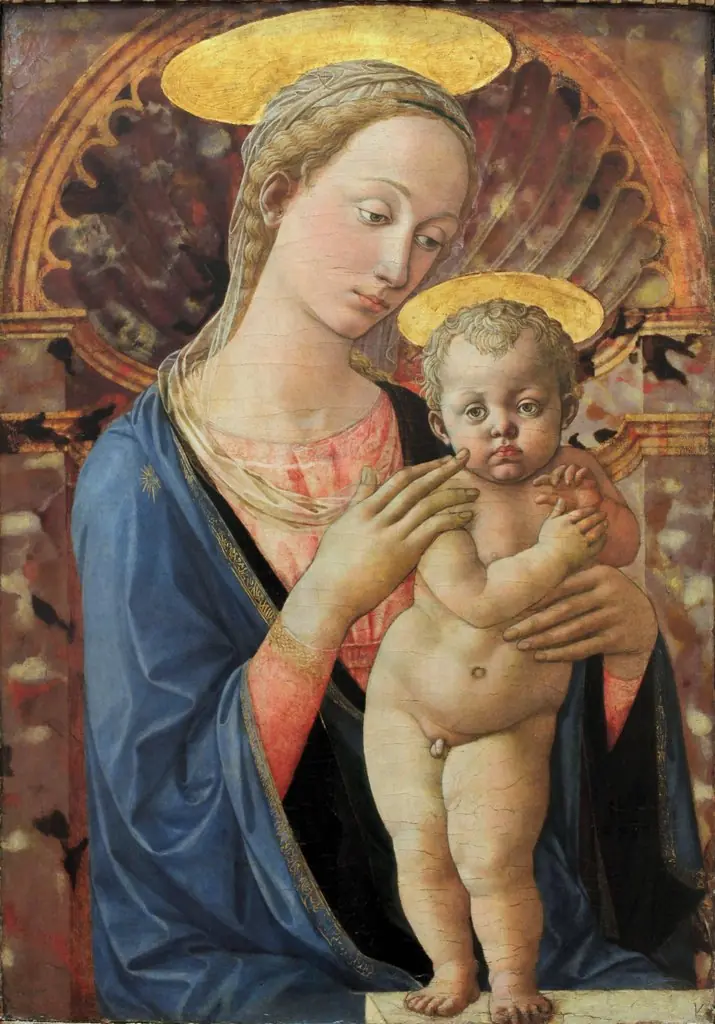
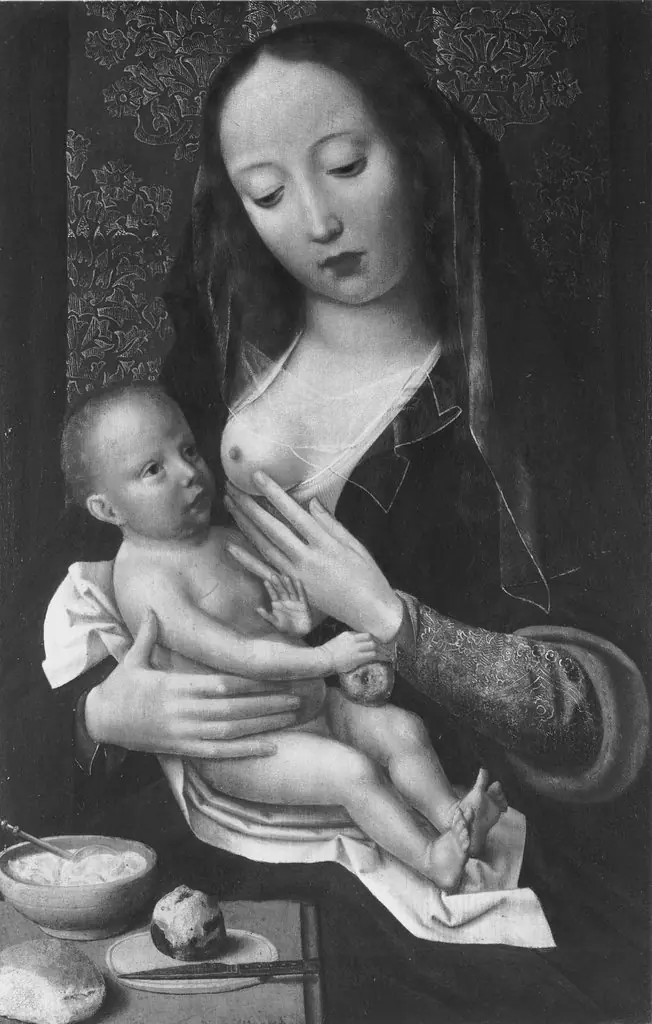
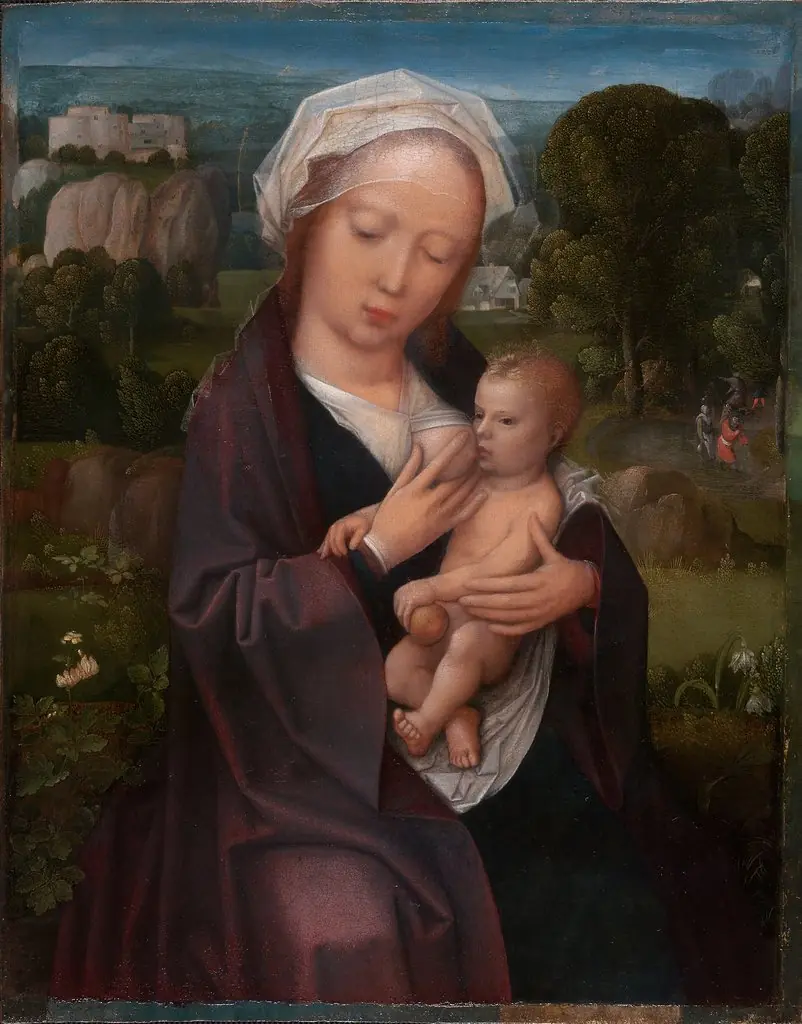
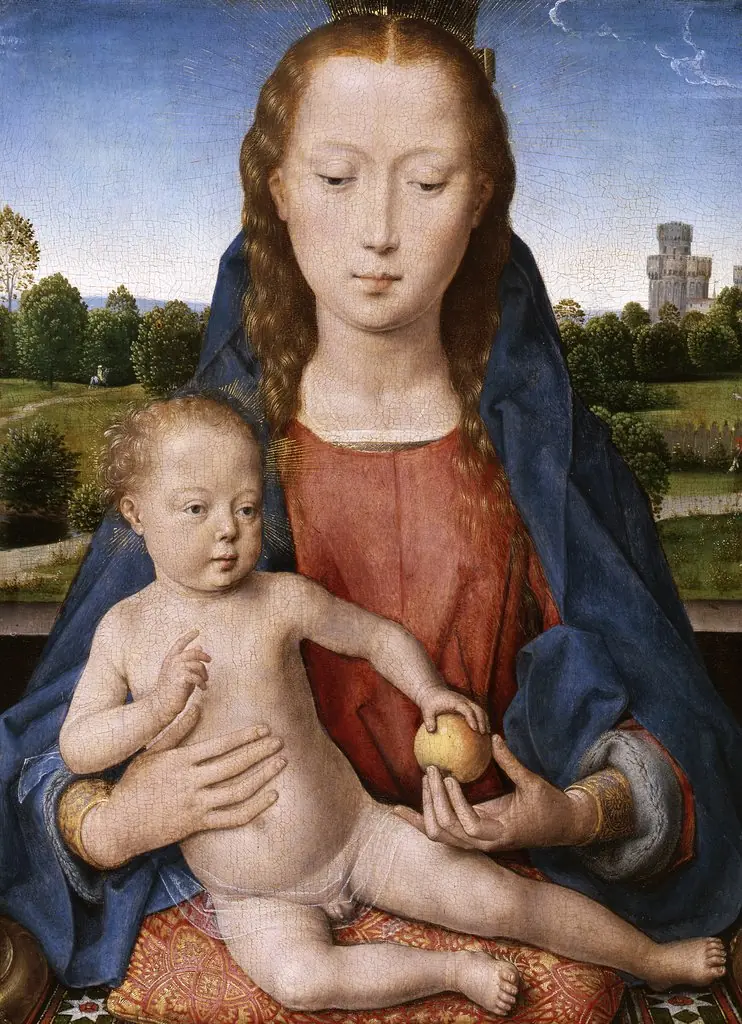
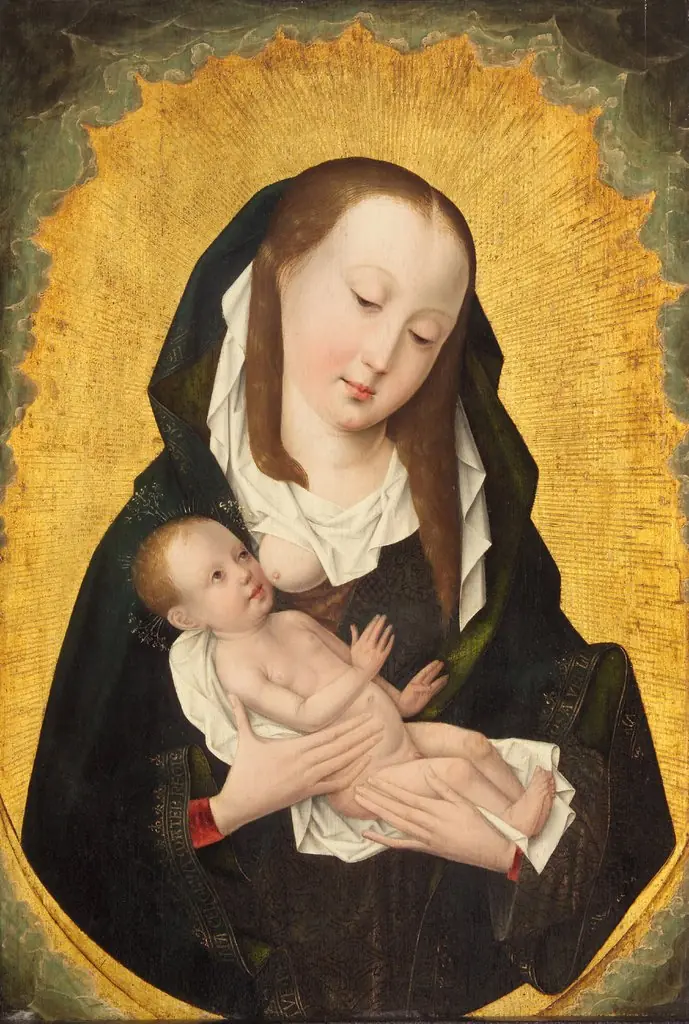
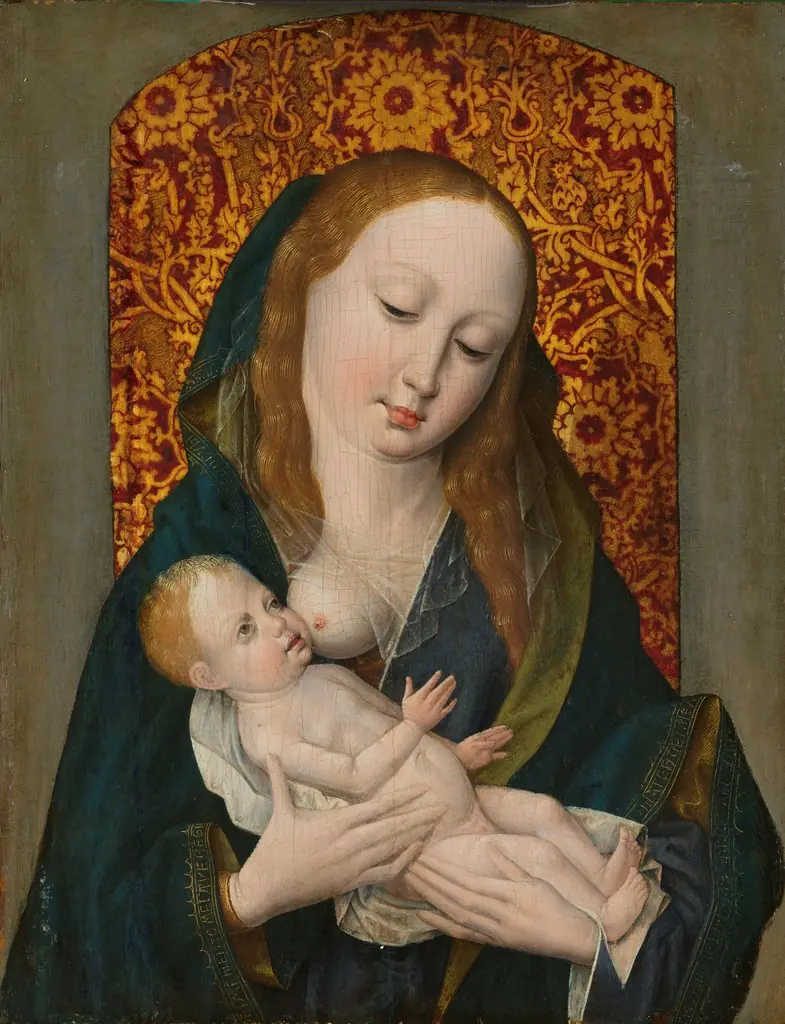
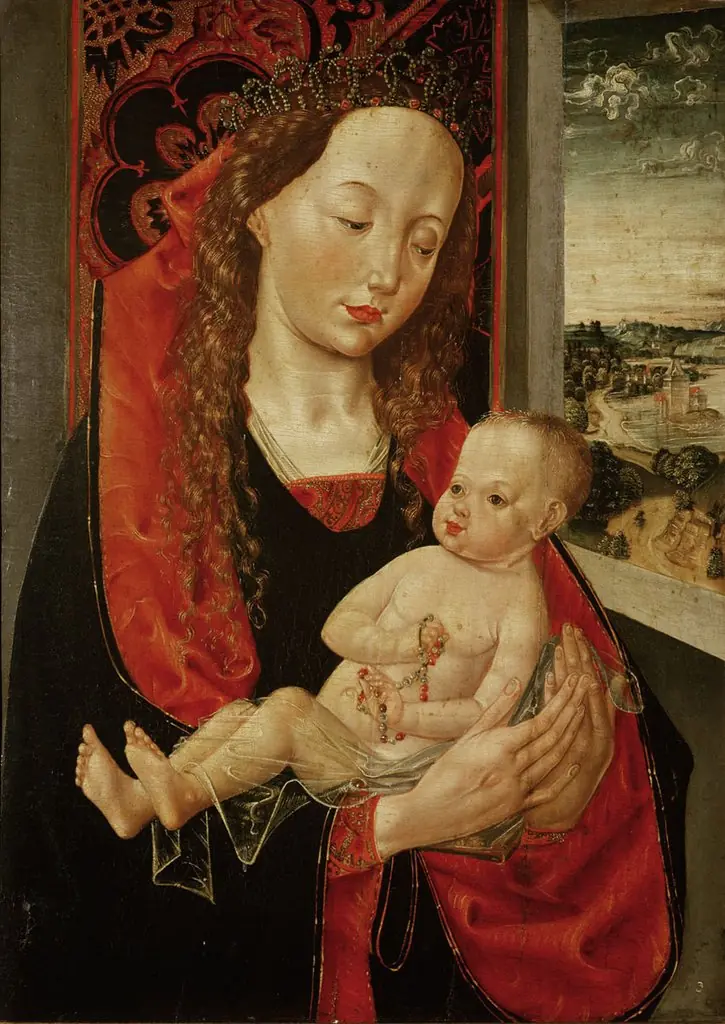
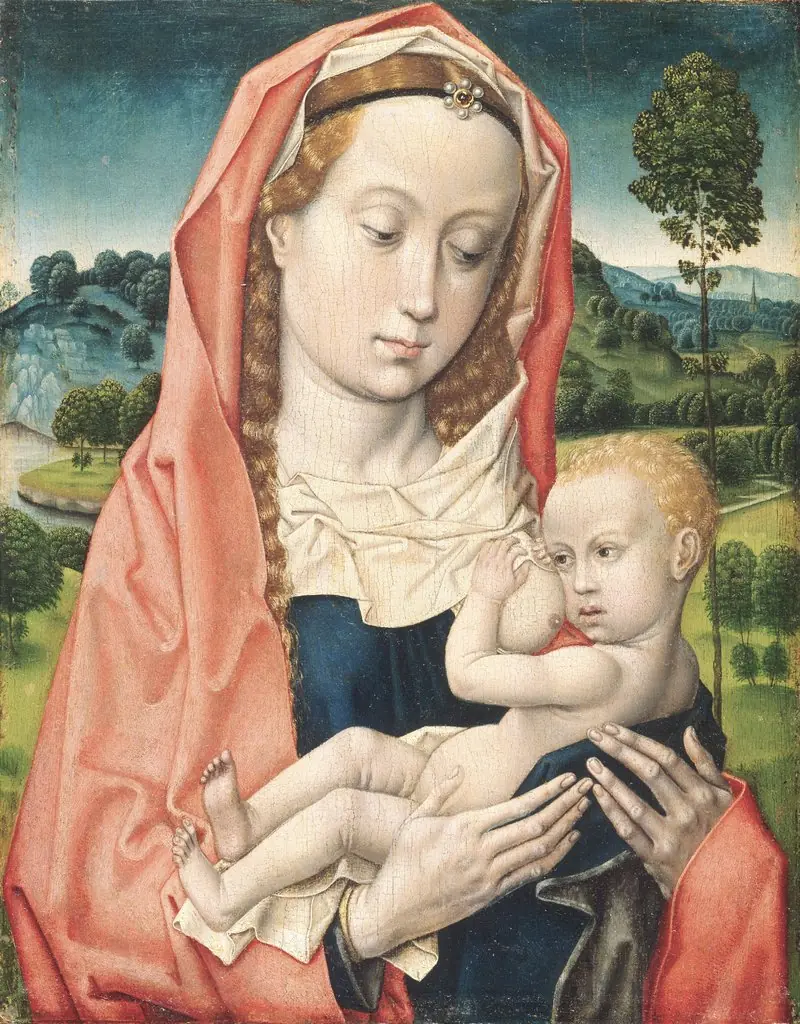
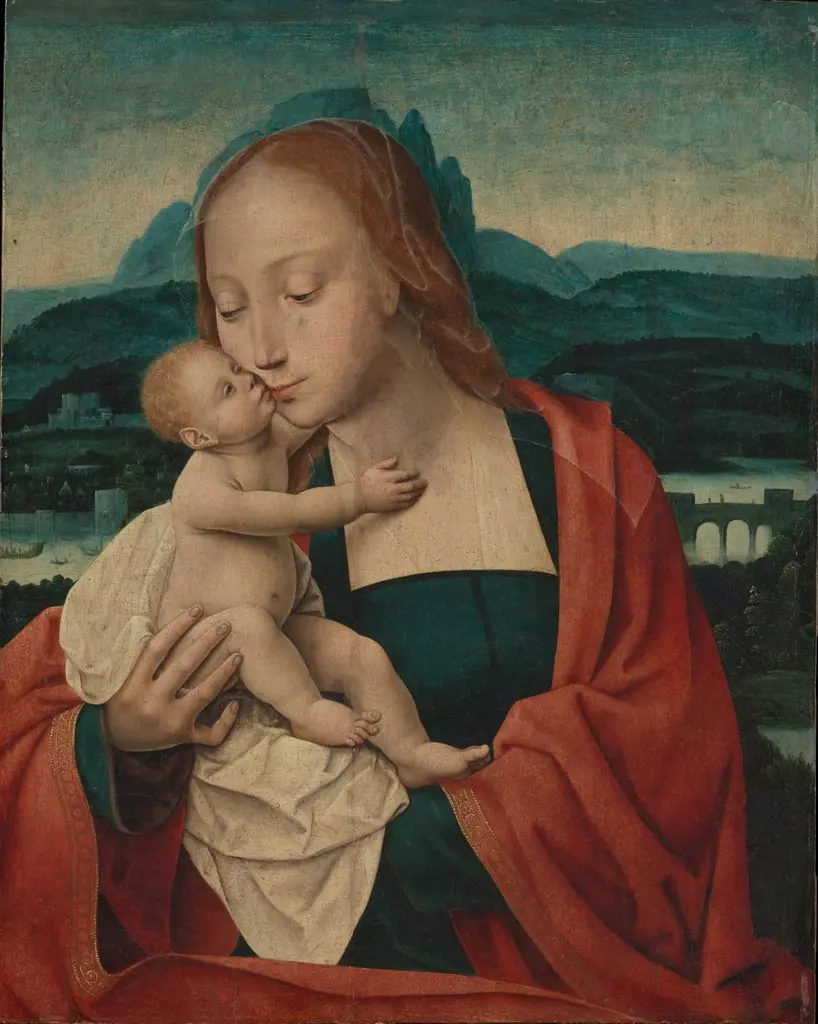
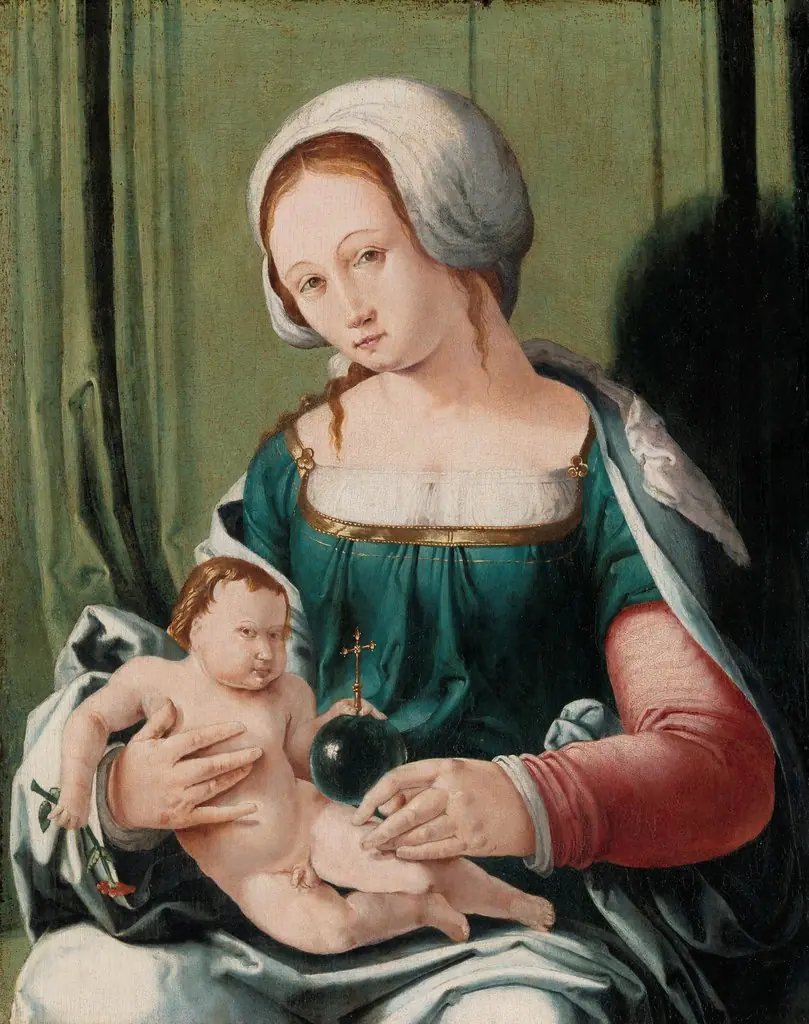
The painting depicts the Madonna and Child, a central subject in Christian religious art. Mary appears with the Christ Child, embodying the traditional iconography of the Virgin and Child that was especially prevalent in late medieval and early Renaissance European painting. As a devotional image, the work would have served private meditation and piety, representing the intimate bond between mother and divine son while affirming Christ's incarnation.
The genre of religious art to which this work belongs typically emphasized the humanity of sacred figures, making the divine accessible to viewers through familiar maternal imagery.
History & Provenance
The painting is part of the Belvedere collection at the Kunsthistorisches Museum and is catalogued under the inventory number 1995.1.2. It has been exhibited in the museum's permanent display of early Netherlandish works and featured in the 2003 exhibition "Divine Images: Early Religious Paintings".
Context
The painting was created by the Master of the Habsburgs around 1490, a pivotal moment in late 15th-century Central European religious art. Its composition of the Madonna and Child reflects evolving devotional practices within the region's Catholic tradition, emphasizing intimate familial connection alongside theological significance. Stylistic analysis places this work within the Master's documented output for the Habsburg court, distinguishing it from contemporary Venetian interpretations of the same subject through its more rigid composition and gold ground background, which aligns with Burgundian patronage preferences of the era.
Scholarship on the piece has focused on its role in understanding workshop practices of the period, with recent studies highlighting its importance in tracing the Master's development of a distinct Central European visual language for sacred imagery. The work remains a key reference point for understanding the transmission of devotional art forms across the Holy Roman Empire's northern territories during the pre-Reformation period.
Overview
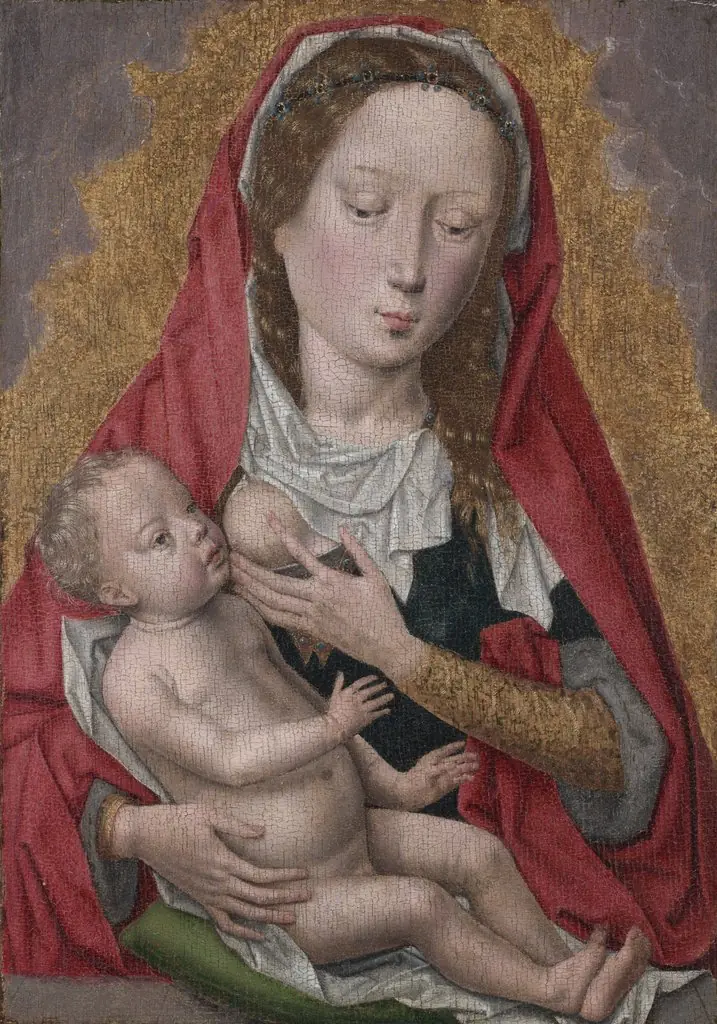
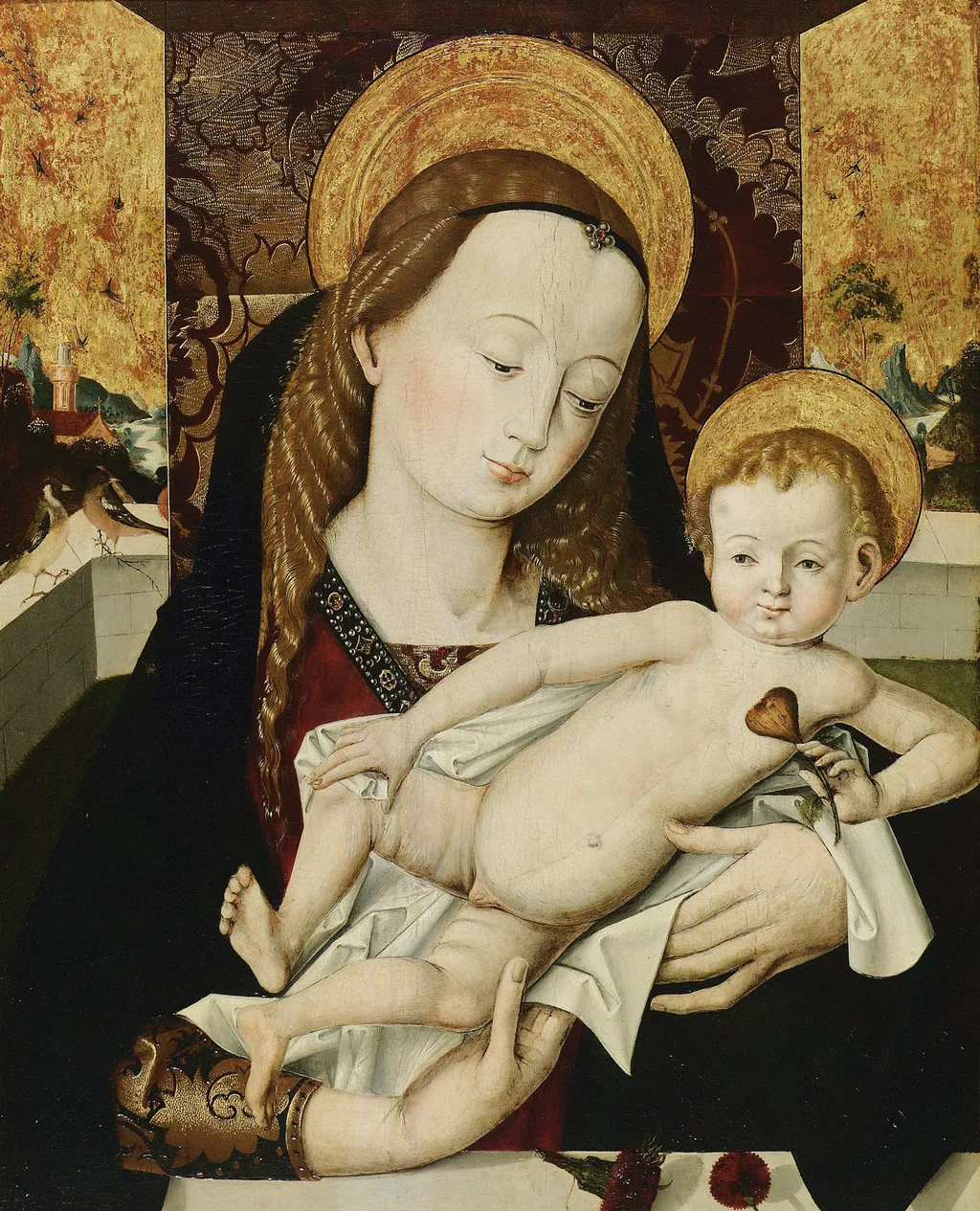
Created in 1496, the panel titled Virgin and Child is attributed to the workshop known as the Master of the Habsburgs. The work presents a seated Mary holding the infant Jesus, both encircled by golden halos. Executed in tempera on panel, the composition is now part of the permanent collection of Vienna’s Kunsthistorisches Museum.
Technique & Style
Rendered with a restrained palette, the figures are outlined in fine brushwork that highlights the delicate folds of Mary’s red garment and the soft modeling of flesh. The use of a luminous halo around each head creates a subtle contrast against the dark, atmospheric landscape that recedes behind them, a hallmark of late‑15th‑century Northern European painting.
Own this work as a print
Artist & collection
Artist
Master of the Habsburgs (1450–1550) was an artist, born in North Tyrol.