Artwork
The Descent from the Cross
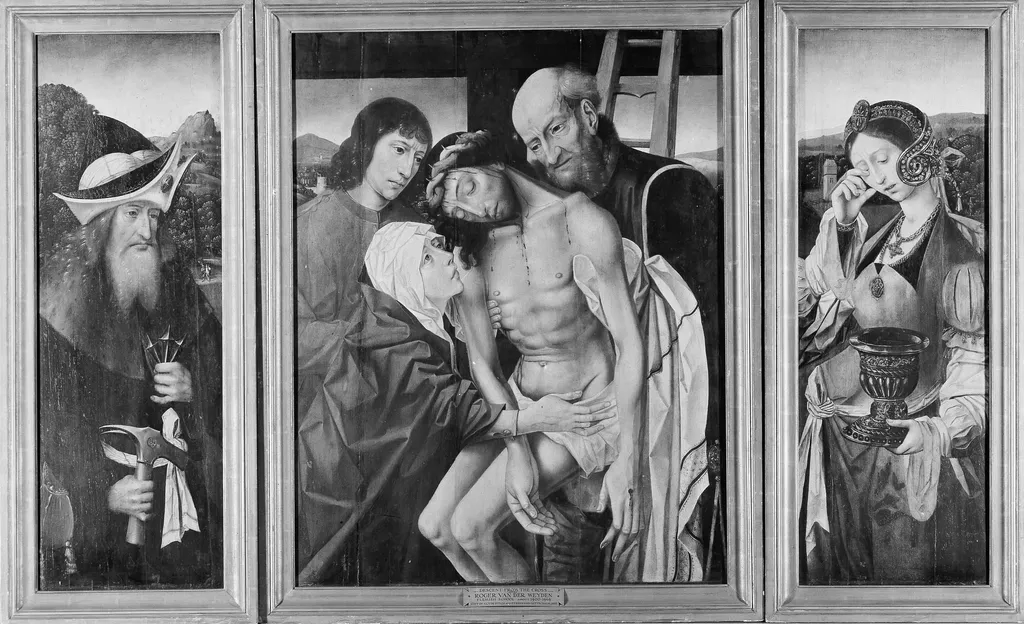
The Descent from the Cross is an oil painting by the Northern Renaissance artist Master of the Holy Blood. It dates from 1520 and is held in the collection of the Metropolitan Museum of Art.
About this work
Technique & Style
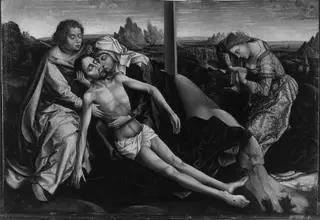
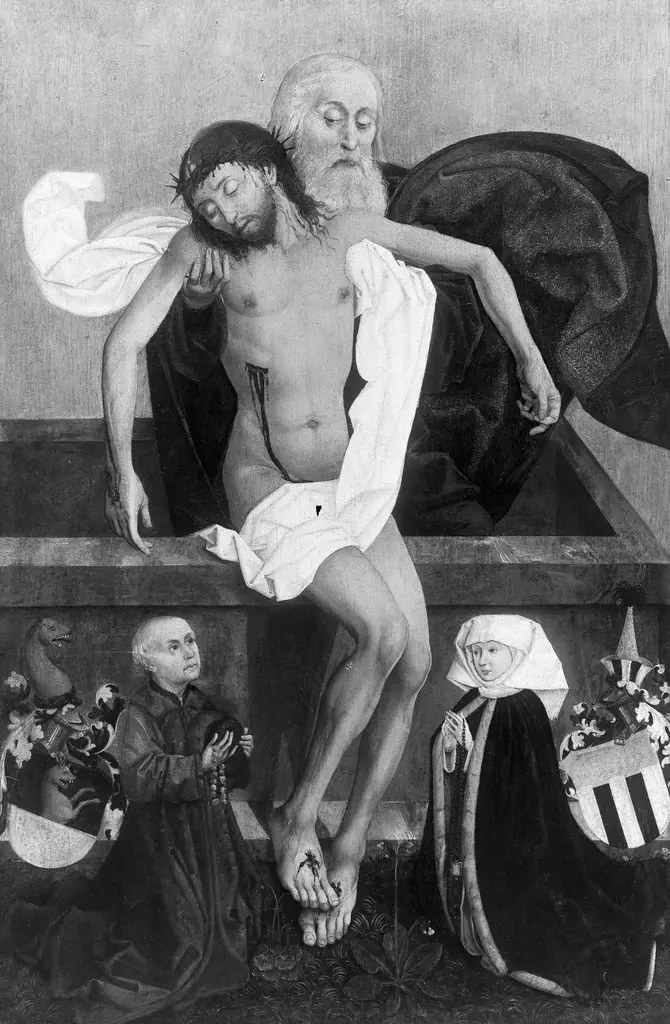
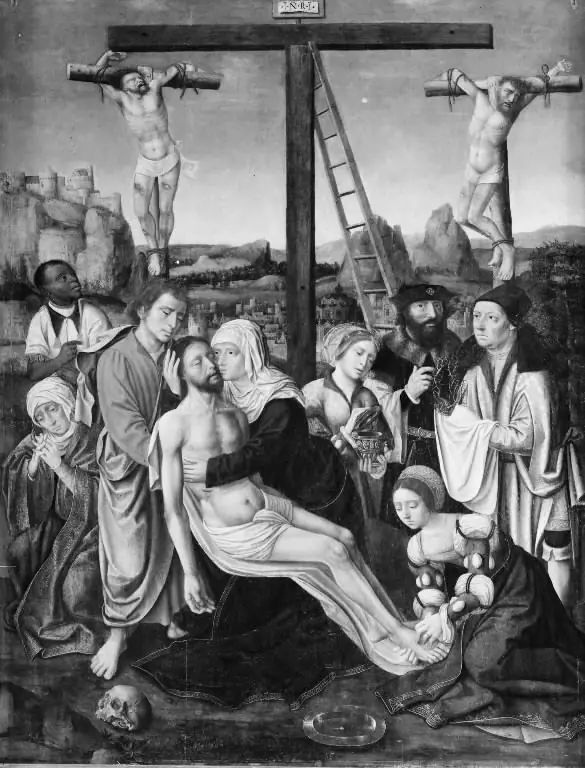
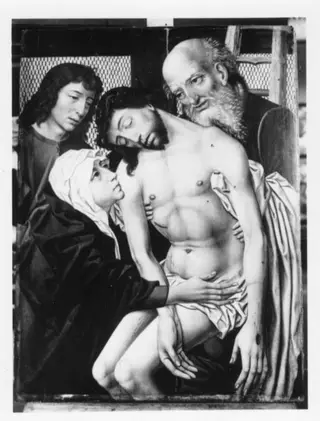
The composition depicts the Descent from the Cross, featuring figures of Jesus Christ, a man, and a woman within a vertical format measuring approximately 89.
Executed in 1520 by the Master of the Holy Blood, this religious work is an oil painting applied to a wooden panel support. The composition depicts the Descent from the Cross, featuring figures of Jesus Christ, a man, and a woman within a vertical format measuring approximately 89.9 by 31.8 centimeters. As a product of early sixteenth-century Netherlandish practice, the piece uses oil media to render its sacred subject on a rigid panel surface, a standard technique for devotional images of this period.
The slender proportions of the support focus the viewer's attention on the central group of figures involved in the deposition scene.
History & Provenance
The Descent from the Cross is an oil painting on panel attributed to the Master of the Holy Blood, executed circa 1520. The work measures 89.9 × 31.8 cm and portrays the biblical scene of the Descent, with the body of Christ supported by a woman and a man. It is classified as a religious painting and is held in the collection of the Metropolitan Museum of Art.
No accession number or specific gallery location is recorded in the available documentation, and no exhibition history is documented in the provided sources.
Overview
The Descent from the Cross is an oil painting created in 1520 by the Master of the Holy Blood. This work depicts the solemn moment of Christ's removal from the cross, a common theme in Northern Renaissance art. The artist, active in Bruges during the early 16th century, produced detailed religious scenes. This painting is now part of The Metropolitan Museum of Art's collection.
Subject & Meaning
The painting portrays the somber event of Jesus Christ being taken down from the cross. Three figures, including a man and a woman, attend to his body, which bears a side wound and a crown of thorns. One individual gently supports his head with a cloth, while another cradles his form.
The background features a subdued landscape under an overcast sky, contributing to the overall mood of sadness and reverence that pervades the scene.
Context
The Master of the Holy Blood was an artist active in Bruges, a prominent artistic and commercial center in Flanders, during the early decades of the 16th century. His workshop contributed to the vibrant artistic landscape of the Northern Renaissance, specializing in religious commissions. This period saw a flourishing of devotional art, often characterized by its realism and emotional depth, reflecting the spiritual concerns of the era.
Own this work as a print
Artist & collection
Artist
Master of the Holy Blood (active 1510–1520) was an Early Netherlandish painter, whose workshop was located in Bruges (Belgium).