Artwork
Beschneidungsaltar: Die hll. Barbara(?), Christina und Maria Magdalena
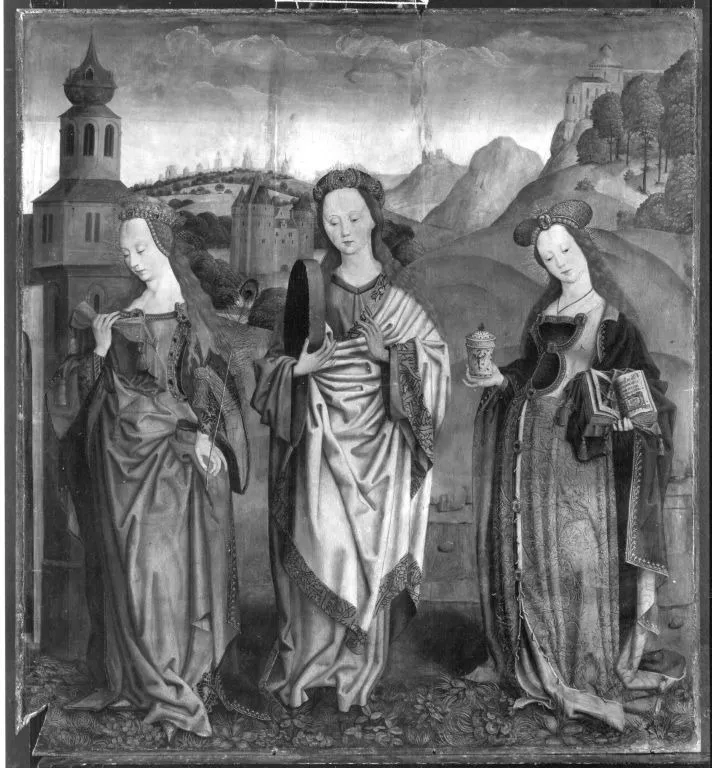
Beschneidungsaltar: Die hll. Barbara(?), Christina und Maria Magdalena is an unspecified painting by Master of the Holy Kinship the Elder. It is held in the collection of the Bavarian State Painting Collections.
About this work
Subject & Meaning
The work functions as a devotional image within the Christian tradition, presenting these specific holy figures for veneration.
This religious painting depicts three female saints: Mary Magdalene, Saint Barbara, and Christina of Bolsena. The work functions as a devotional image within the Christian tradition, presenting these specific holy figures for veneration. The inclusion of these saints reflects the theological interests and devotional practices associated with the Master of the Holy Kinship the Elder, who specialized in representations of sacred lineages and holy women.
Technique & Style
The Beschneidungsaltar: Die hll. Barbara(?), Christina und Maria Magdalena is executed in tempera on wood, measuring 100.7 cm in height and 91.6 cm in width. The painting depicts the Virgin Mary with Saints Barbara, Christina, and Mary Magdalene, rendered in a restrained, devotional style characteristic of late Gothic religious art.
The figures occupy a shallow spatial field with flattened perspective and delicate linear contours, emphasizing symbolic clarity over naturalism. The work is housed in the Alte Pinakothek in Munich and is attributed to the Master of the Holy Kinship the Elder, whose use of tempera on panel reflects the material practices of 15th-century German religious painting.
History & Provenance
The altarpiece was commissioned as a religious work depicting the Holy Kinship, featuring Saint Barbara, Saint Christina, and Saint Mary Magdalene. It was created by the Master of the Holy Kinship the Elder and is part of the Bavarian State Painting Collections, housed in the Alte Pinakothek in Munich. The work measures 100.7 cm in height and 91.6 cm in width.
The painting is held in the collection of the Bavarian State Painting Collections. It is currently located at the Alte Pinakothek in Munich. The provided sources confirm the work's presence in this institution but do not list a specific inventory or accession number. Furthermore, no information regarding the exhibition history of this specific panel is available in the referenced records.
Legacy
The work's later influence and legacy are rooted in its attribution to the Master of the Holy Kinship the Elder, a key figure in the Munich school of the early 16th century. Stylistic analysis of the Beschneidungsaltar: Die hll. Barbara(?), Christina und Maria Magdalena has informed broader understandings of devotional painting in southern Germany, particularly in relation to the visual representation of female saints within the Holy Kinship motif.
Its compositional treatment of Mary Magdalene, Saint Barbara, and Saint Christina contributed to iconographic discourse in early modern religious art, as reflected in scholarly studies of the period. The painting's inclusion in the Bavarian State Painting Collections' holdings at the Alte Pinakothek has ensured its continued visibility in museum-based research and public interpretation of the era's artistic legacy.
Overview
This panel painting, attributed to the workshop of the Master of the Holy Kinship the Elder, presents a devotional grouping of three female saints. Executed in the late Gothic style, it now belongs to the collection of the Alte Pinakothek in Munich.
Context
The composition reflects the late 15th‑century German devotion to female saints, often displayed together in altarpieces intended for private chapels or confraternities. The inclusion of Christina, Mary Magdalene and Barbara aligns with contemporary hagiographic interests in virginity, repentance and protection.
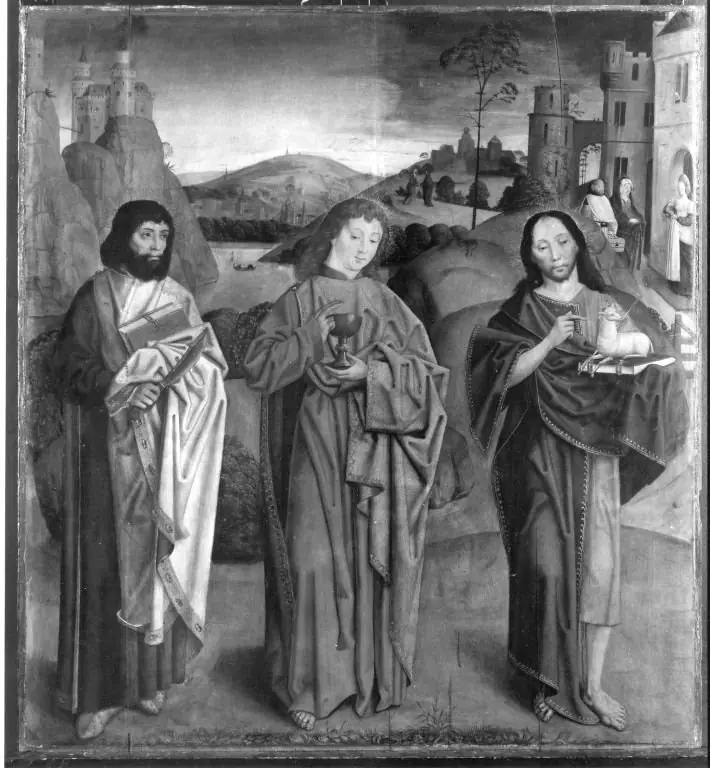
Artist & collection
Artist
Master of the Holy Kinship the Elder
The Master of the Holy Kinship the Elder was an anonymous German painter active in Cologne in the early fifteenth century, roughly between 1410 and 1440.

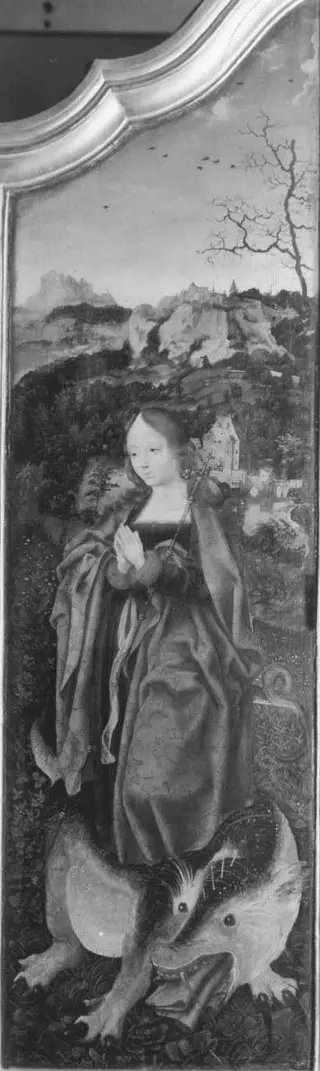 Lamentation triptych: St. Margaret On reverse: Angel of the Annunciation
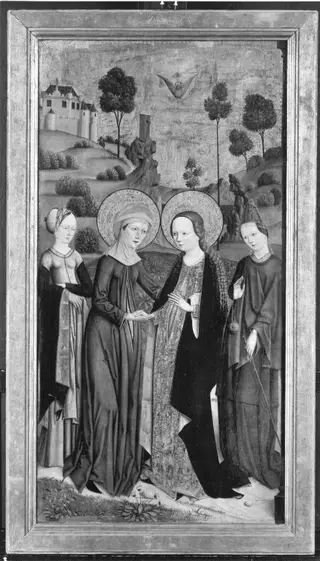 Heimsuchung Mariens Außenseite: Krönung Mariens
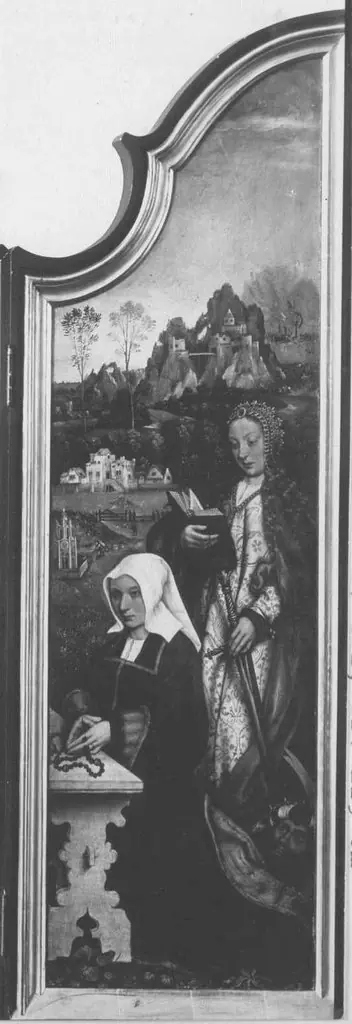 Beweinungsaltar: Hl. Katharina mit Stifterin
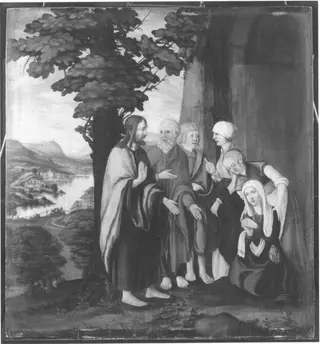 Christus und die Sünderin
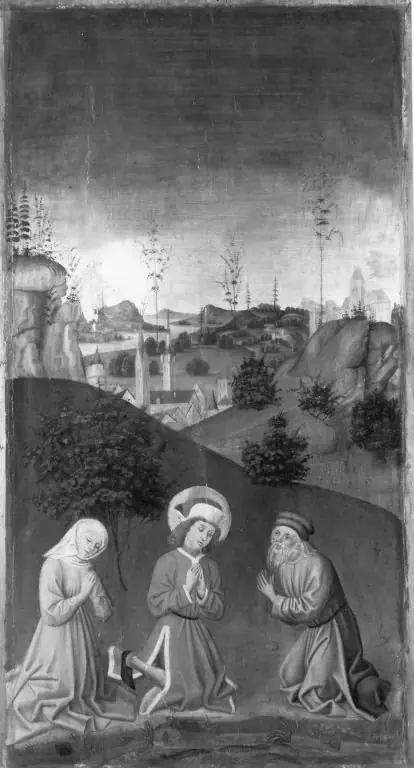 The Saints Vitus, Modestus and Crescentia
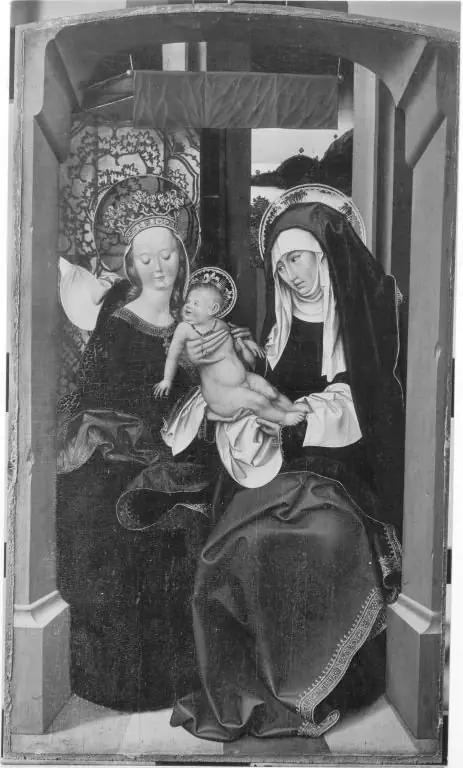 Teile eines Altares: Hl. Anna Selbdritt
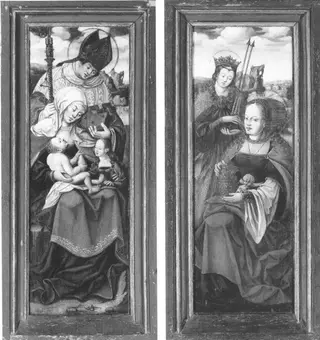 Left and Right Wing of an Altarpiece with St Anne with the Virgin and Child on her Lap, a Holy Bishop, St Magdalen and St Ursula
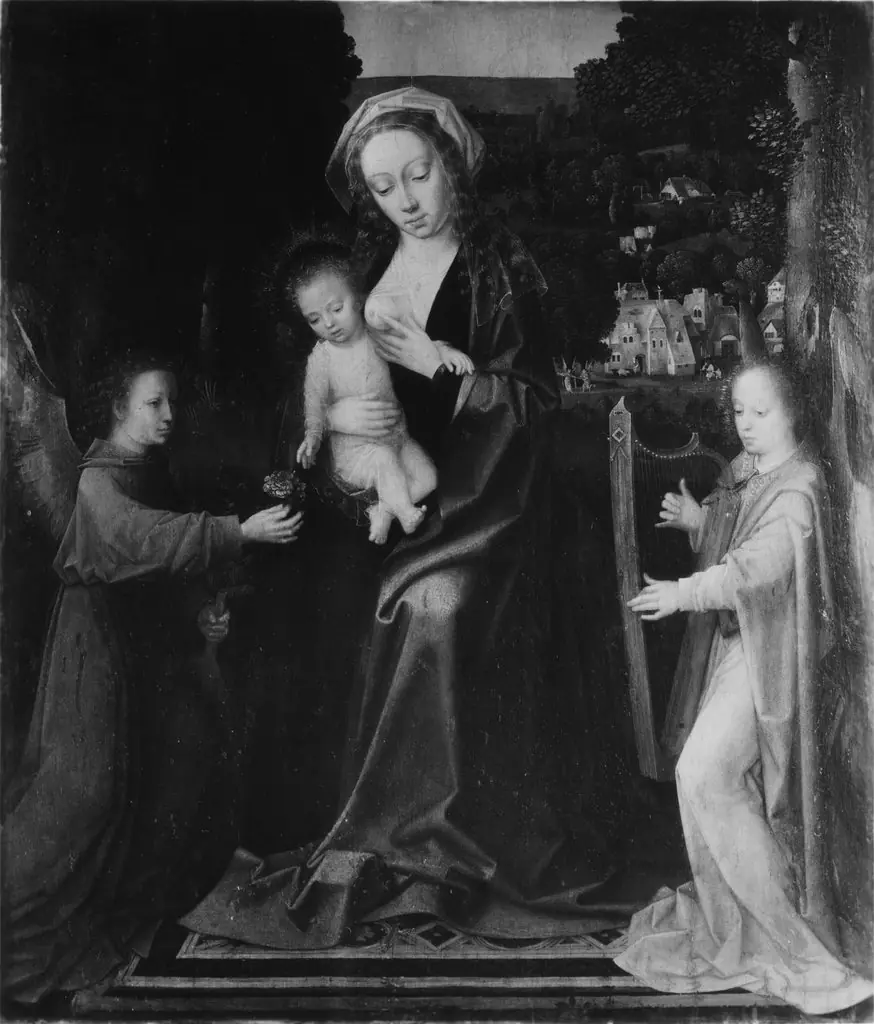 Virgin and Child with Two Angels in a Landscape