Artwork
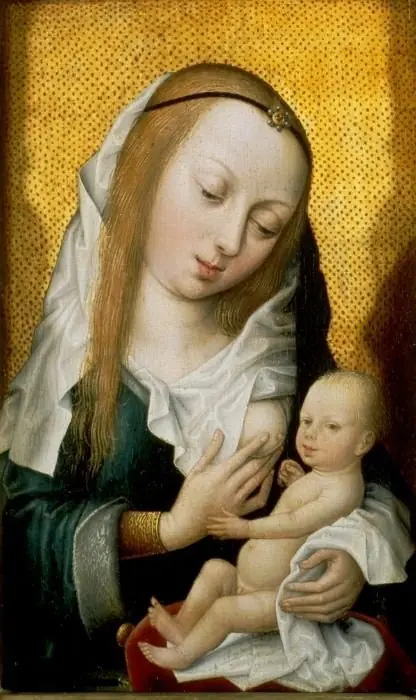
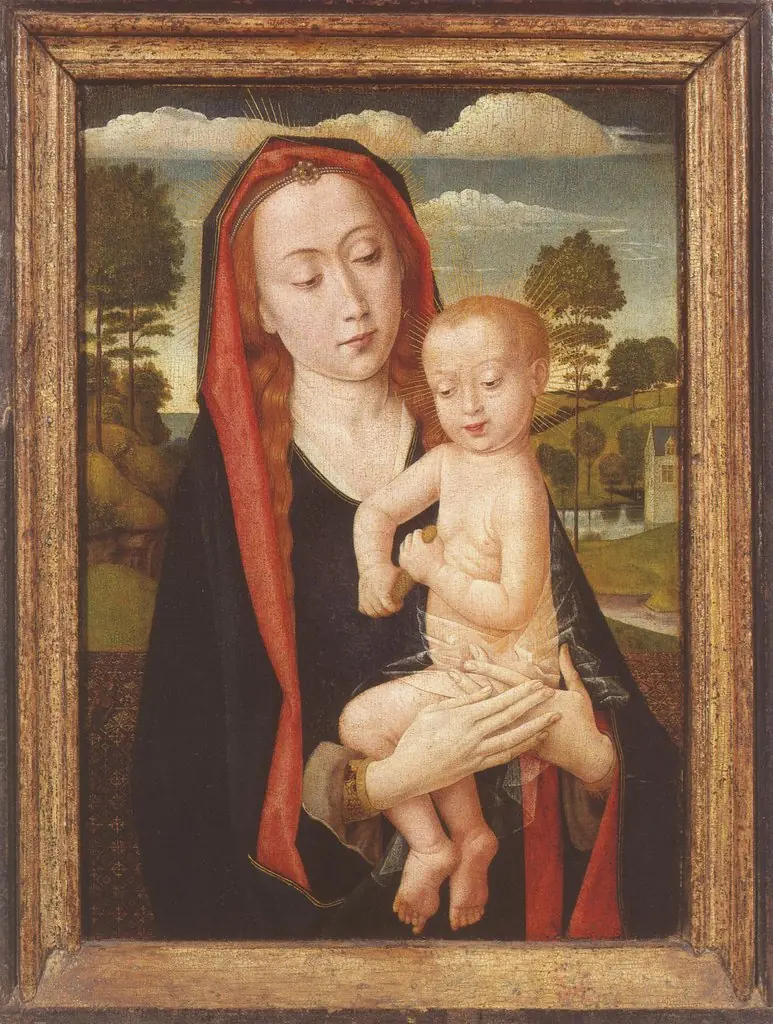
Maria mit dem Kind
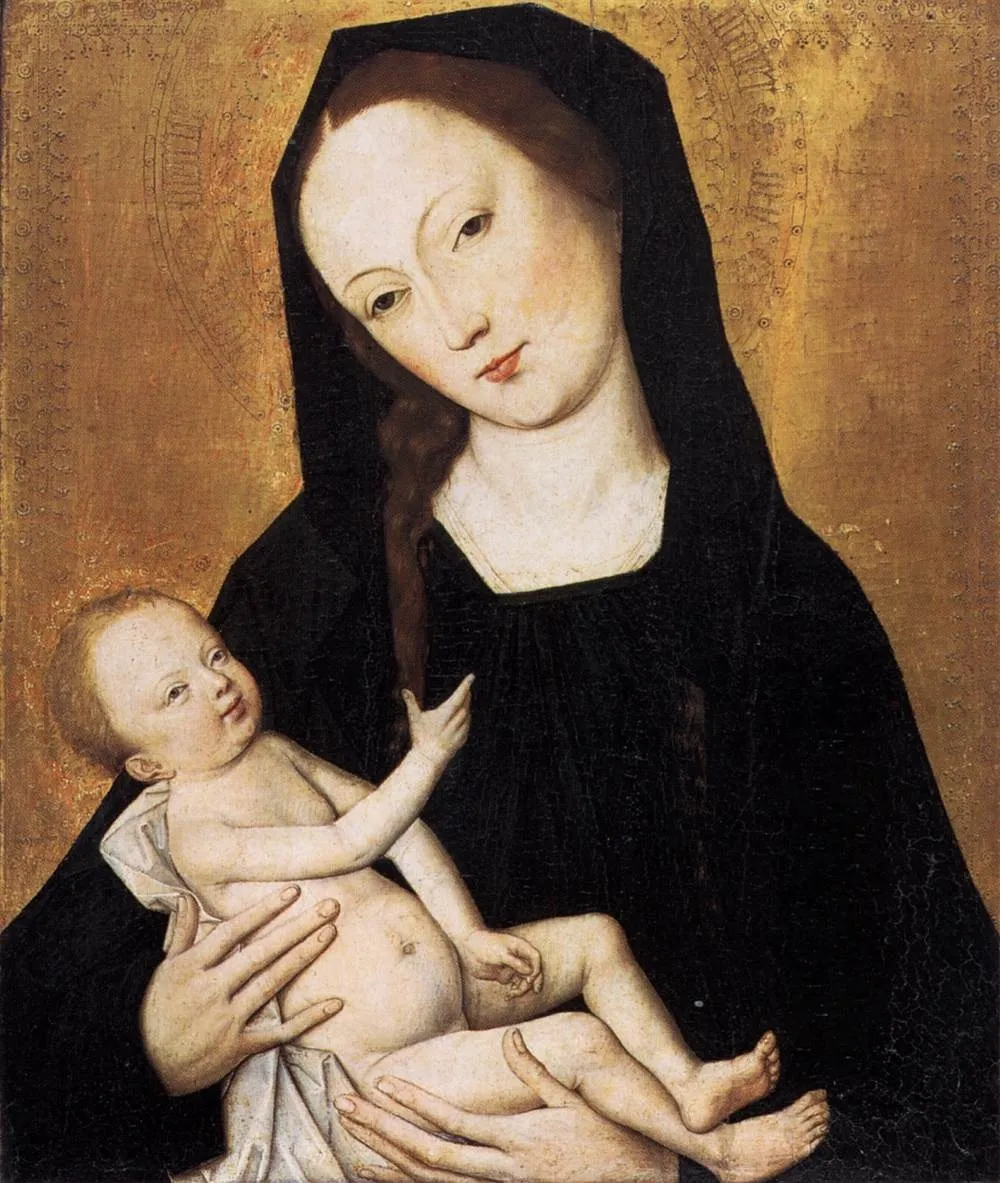
Maria mit dem Kind is an unspecified painting by the Northern Renaissance artist Master of the Life of the Virgin. It dates from 1470 and is held in the collection of the Gemäldegalerie Berlin.
About this work
Overview
It is held in the collection of the Gemäldegalerie in Berlin, where it is owned by the Kaiser Friedrich Museumsverein.
Maria mit dem Kind is a religious painting by the Master of the Life of the Virgin, a Northern Renaissance painter active in Cologne from approximately 1463 to 1490. Dated to 1470, the work is executed in oil on oak wood and measures 58 by 51 centimeters. It is held in the collection of the Gemäldegalerie in Berlin, where it is owned by the Kaiser Friedrich Museumsverein. The painting represents a significant example of late Gothic devotional imagery from the Cologne School, demonstrating the artist's refined handling of figural composition and his engagement with Netherlandish artistic traditions.
Subject & Meaning
The painting depicts the Virgin Mary holding the Christ Child, a central subject in Christian devotional art known as the Madonna and Child. Mary appears in a dark blue or black hooded robe with a white undergarment visible at her neckline, her head tilted downward as she gazes at the infant. The Christ Child reclines partially across her lap, wrapped in a white cloth, with his right arm raised and hand extended toward Mary's chest. This intimate, half-length composition emphasizes the tender relationship between mother and child, a hallmark of late medieval piety. The close framing of the figures creates a direct, personal encounter for the viewer, characteristic of devotional images intended for private contemplation.
Technique & Style
The painting is executed in oil on oak wood, a support typical of Netherlandish and German panel painting of this period. The surface displays fine craquelure throughout, indicating its age and the natural aging of the paint film. The artist employs a smooth, precise brushwork with careful rendering of facial features and delicate detail in the hands and drapery. Light falls evenly from the left, modeling the faces and hands with soft shadows. The palette is dominated by the dark robe, warm gold ground, and pale flesh tones. The background consists of a flat, burnished gold surface with faint circular decorative patterns, though some wear is visible. This use of a gold ground combined with naturalistic modeling of forms reflects the transitional moment between late Gothic tradition and emerging Renaissance naturalism in the Cologne School.
History & Provenance
The painting was created in 1470 during the artist's mature period. It is currently located in the Gemäldegalerie in Berlin and is owned by the Kaiser Friedrich Museumsverein. The work's provenance and specific exhibition history are not detailed in the available sources, though its presence in one of Germany's major museum collections indicates its recognized importance within the corpus of late fifteenth-century German painting. The Master of the Life of the Virgin takes his name from his masterwork, a series of eight scenes from the Life of the Virgin painted for the Ursulakirche in Cologne, which has helped scholars identify and group his attributed works.
Context
The Master of the Life of the Virgin is recognized as the most celebrated Late Gothic painter of the Cologne School, though his actual name remains unknown; he has been tentatively identified as Johann van Duyren, an attribution not universally accepted. His style shows detectable influence from Netherlandish painters including Dirk Bouts and Rogier van der Weyden, and it is generally suggested that he received some training in the Low Countries. His elegant figural style exercised considerable influence on other painters in Cologne. The Cologne School during this period represented a significant center of artistic production, maintaining close contacts with Netherlandish developments while developing distinctive local characteristics. The artist's workshop is identified primarily through his eponymous Life of the Virgin series, with seven panels in the Alte Pinakothek, Munich, and one in the National Gallery, London.
Legacy
The Master of the Life of the Virgin's reputation rests on his status as the preeminent Late Gothic painter of the Cologne School, with his influence detectable in the work of contemporaries and followers in that city. His masterwork, the Life of the Virgin series, remains the foundation for attributions to his hand and workshop. The present painting, Maria mit dem Kind, contributes to this legacy as a representative example of his devotional imagery, preserved in the Gemäldegalerie Berlin as part of a major public collection. The work exemplifies the synthesis of Netherlandish naturalism and Gothic elegance that characterizes the finest achievements of late fifteenth-century German painting, and its continued presence in museum collections ensures its accessibility for scholarly study and public appreciation.
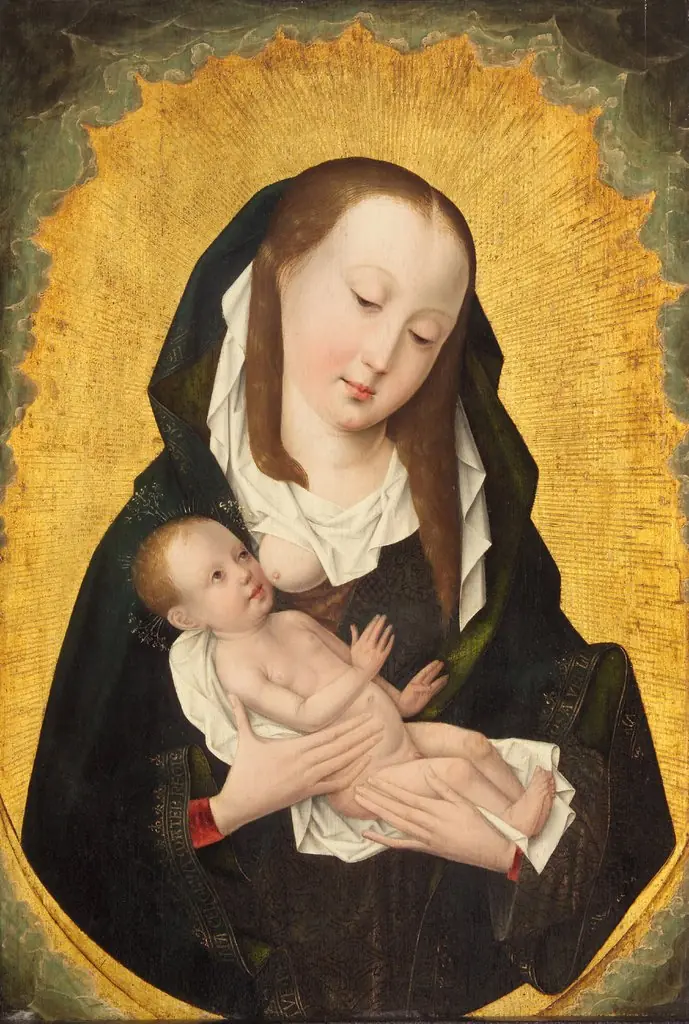
Artist & collection
Artist
Master of the Life of the Virgin
This anonymous painter worked in the 1470s, specializing in small devotional panels that tell the story of Mary’s life.

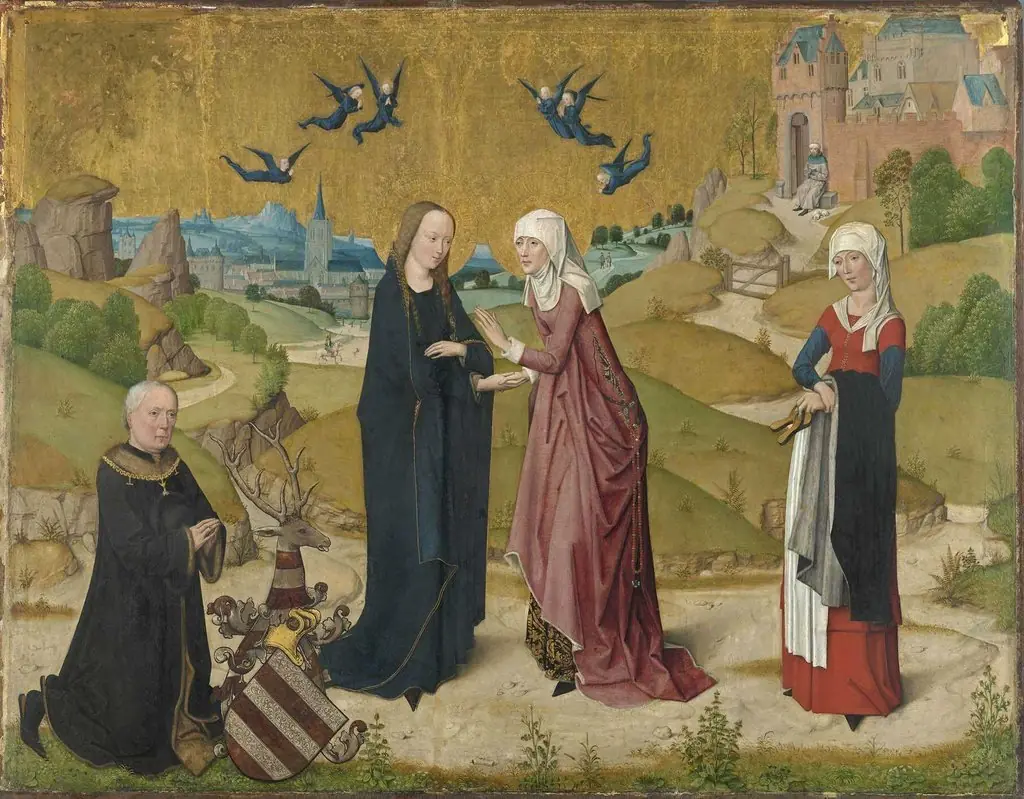 The Visitation with a portrait of donor Johann von Hirtz (?-?)
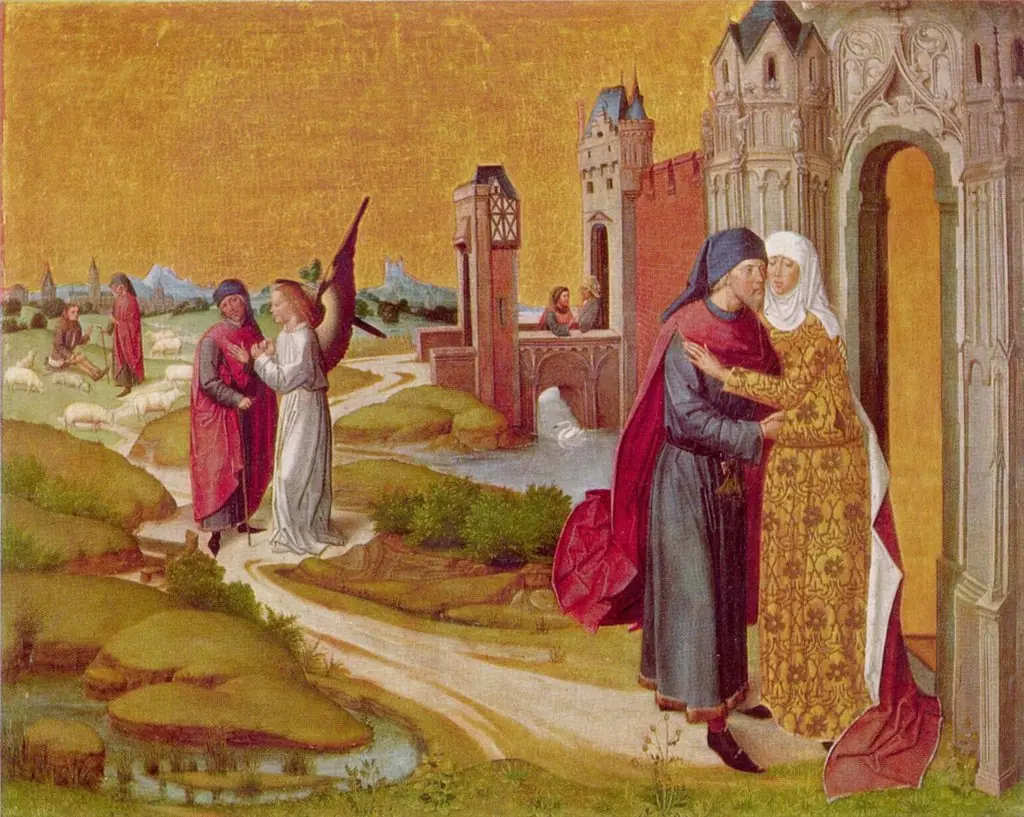 The Life of Mary: Joachim meets Anna at the Golden Gate; in the background the Annunciation of the birth of Mary to Joachim by an angel (verso: upper half of the Crucifixion of Christ)
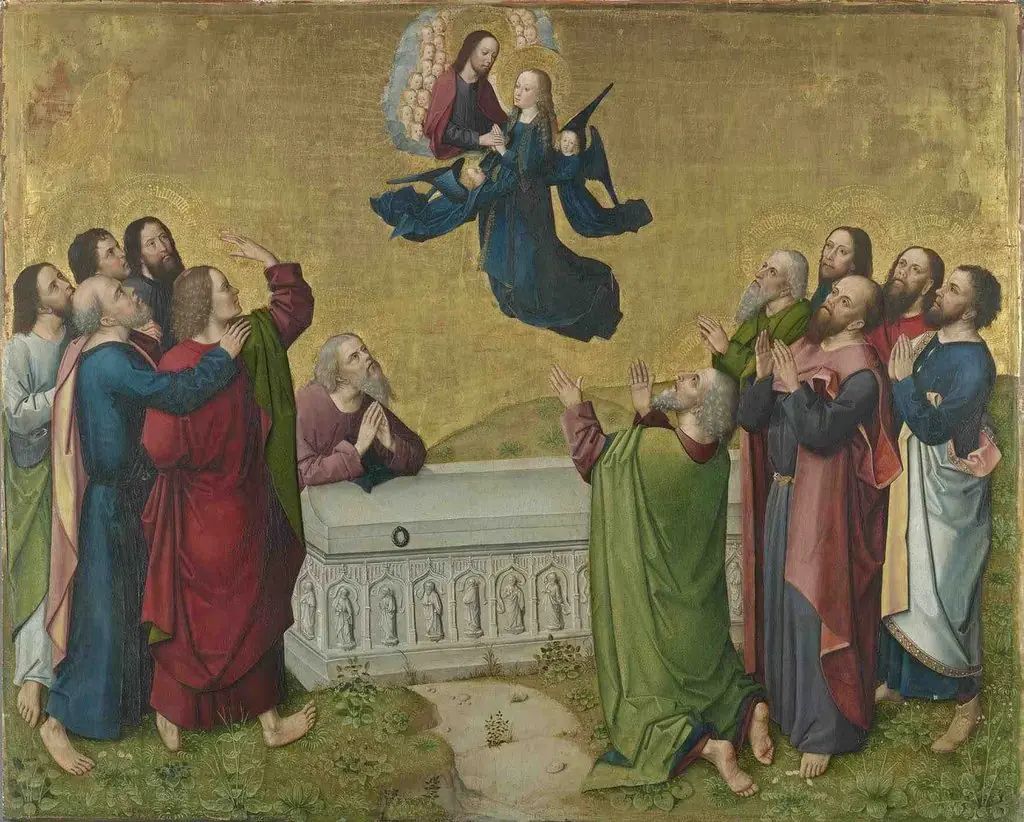 The Life of Mary: the Assumption of Mary (verso: lower half of the Coronation of Mary)
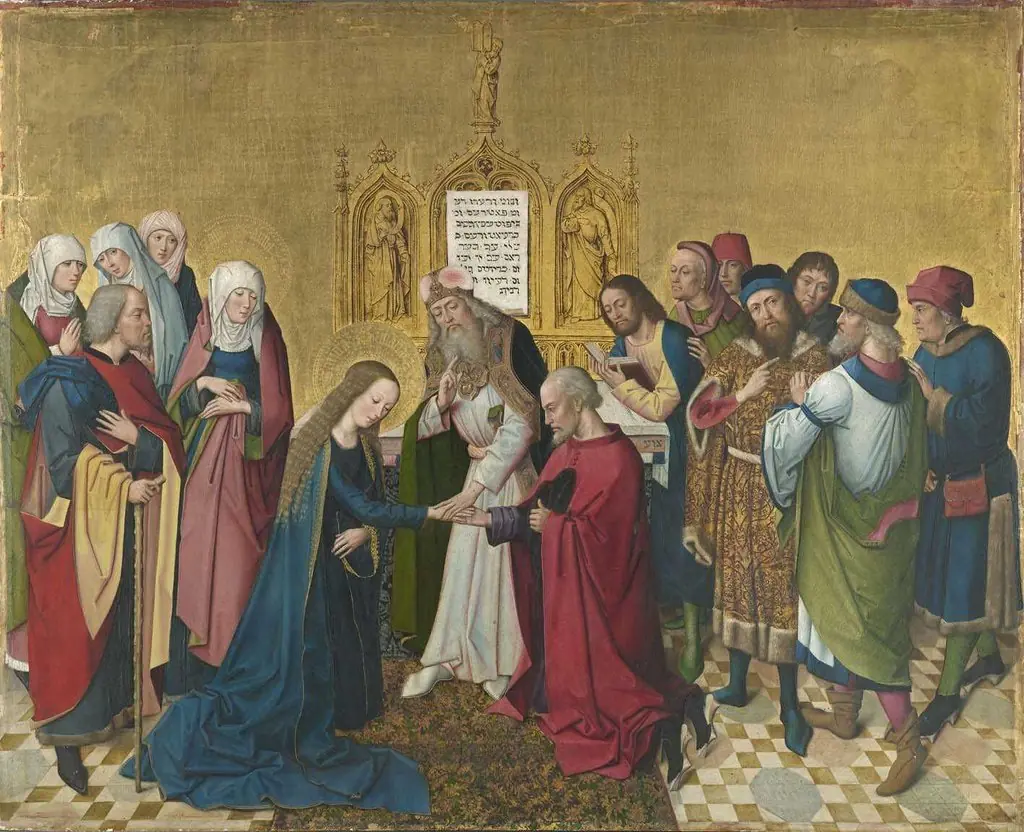 The Engagement of Mary (verso: upper half of the Coronation of Mary)
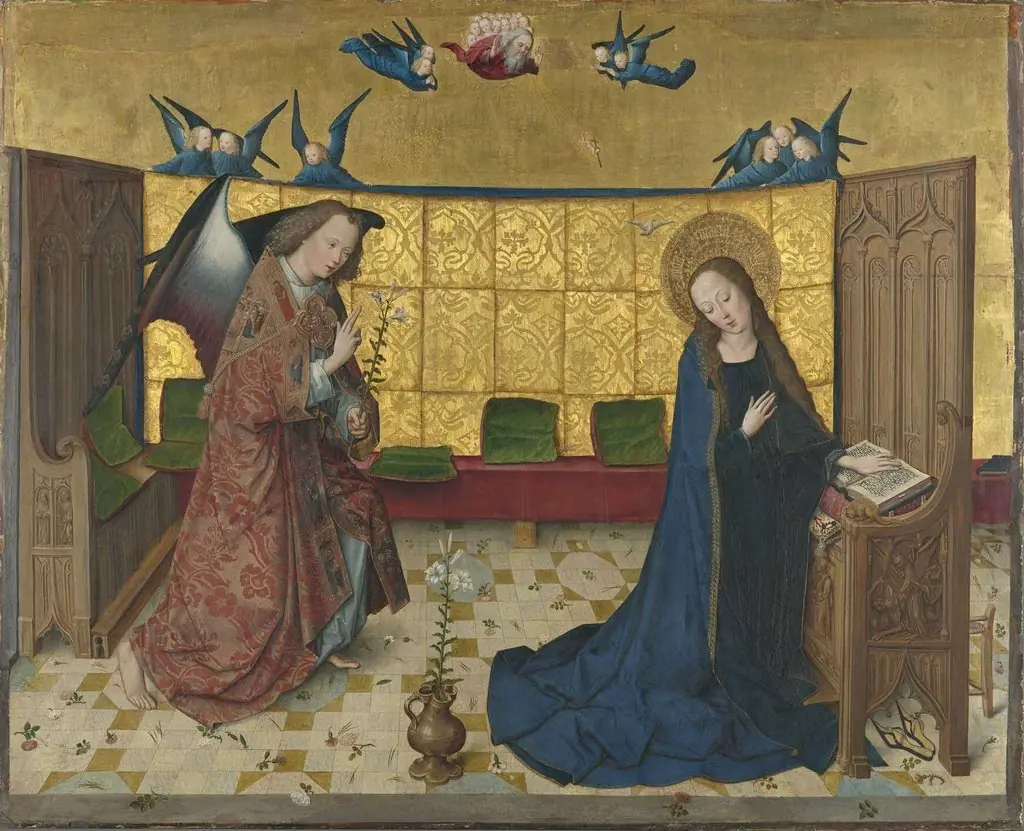 The Life of Mary: the Annunciation (lower half of the Crucifixion of Christ)
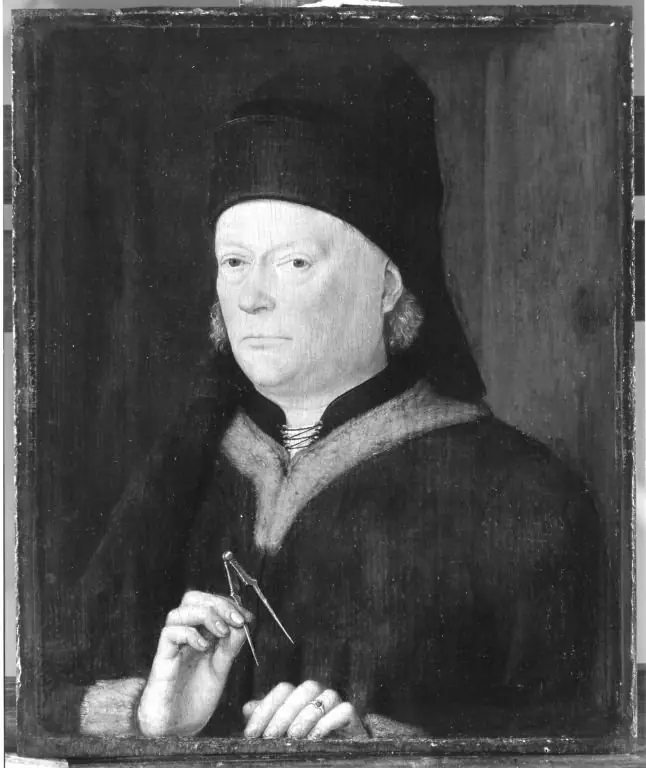 Portrait of an unknown master builder
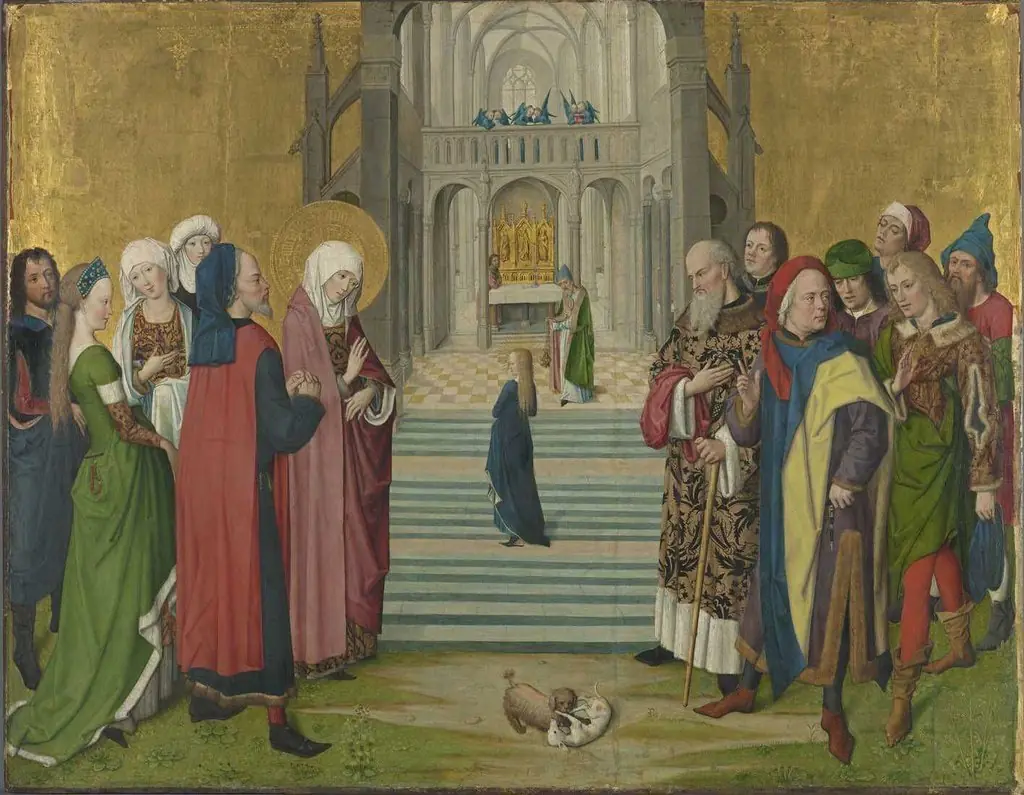 The life of Mary: the presentation of Mary in the temple
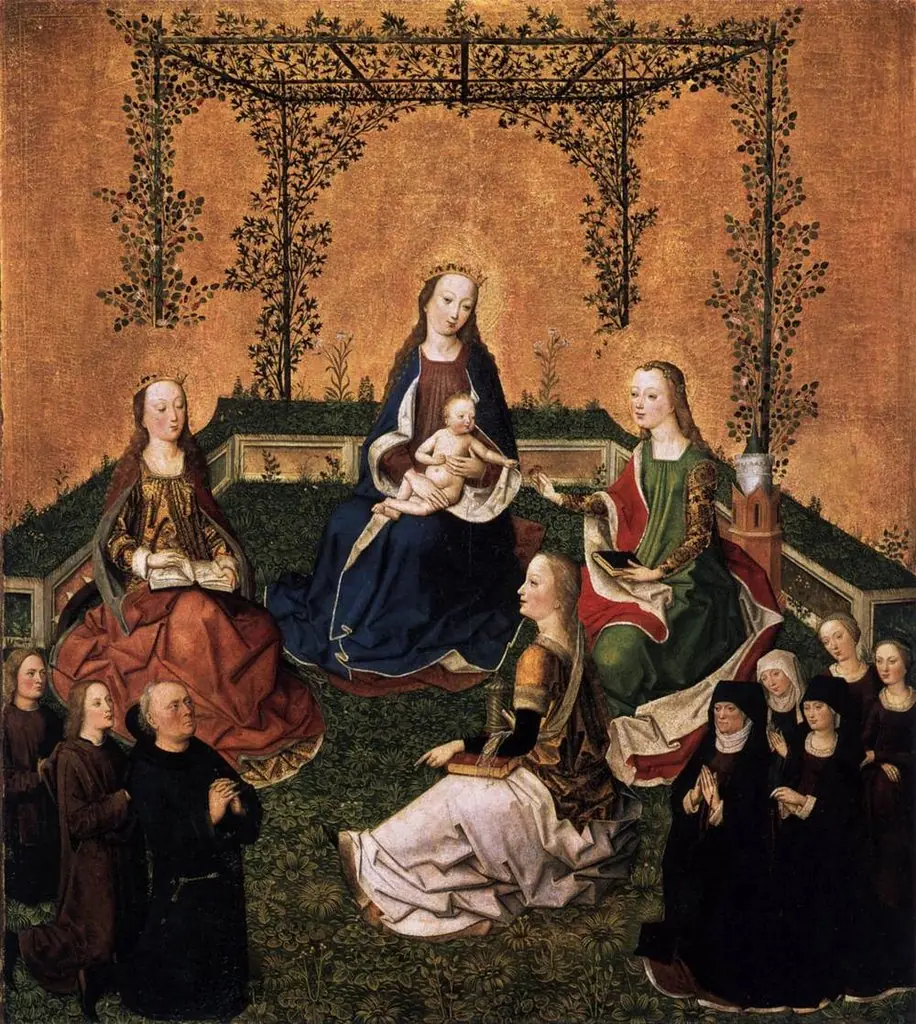 Virgin and Child with Three Saints
- Maria mit Kind in der Mondsichel
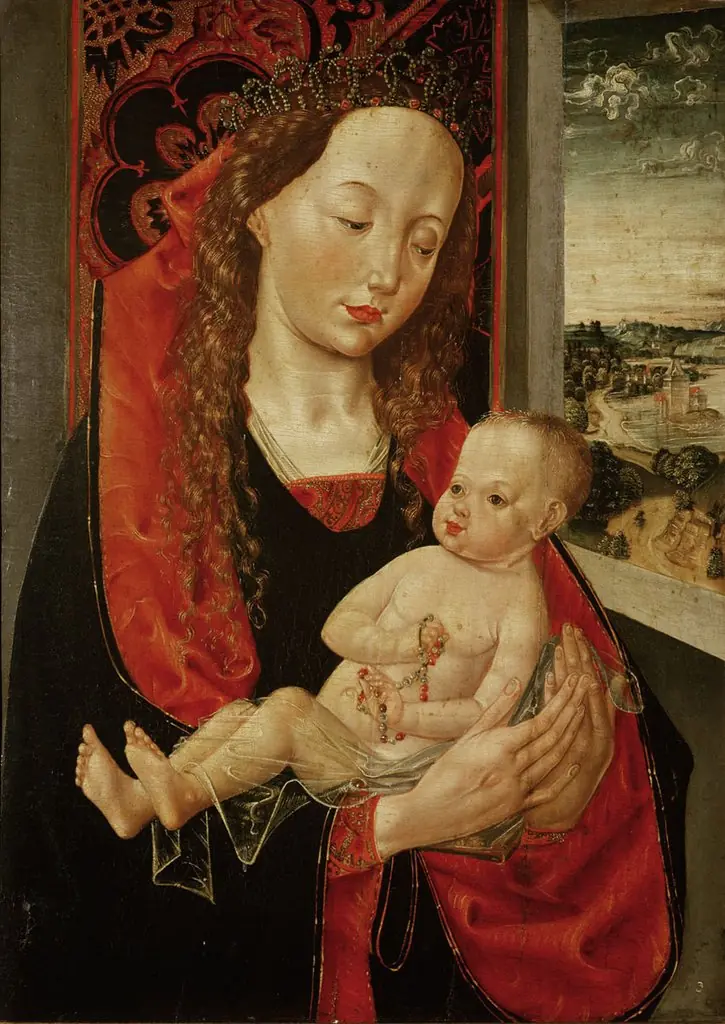 Madonna and Child
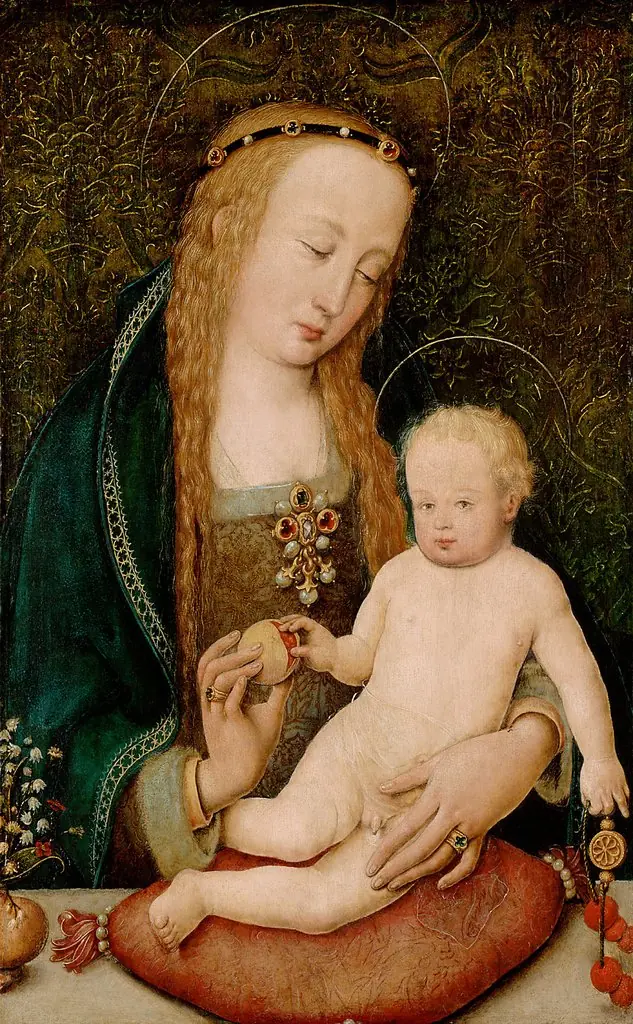 Maria, dem Kind einen Granatapfel reichend
 Virgin and Child
 Madonna
 Virgin and Child
 Madonna and Child
 Maria mit dem Kind
 The Virgin and child
 Madonna and Child
 Madonna and Child Eating an Apple
 Maria met kind voor een borstwering met doorzicht naar een heuvellandschap