Artwork
Madonna and Child
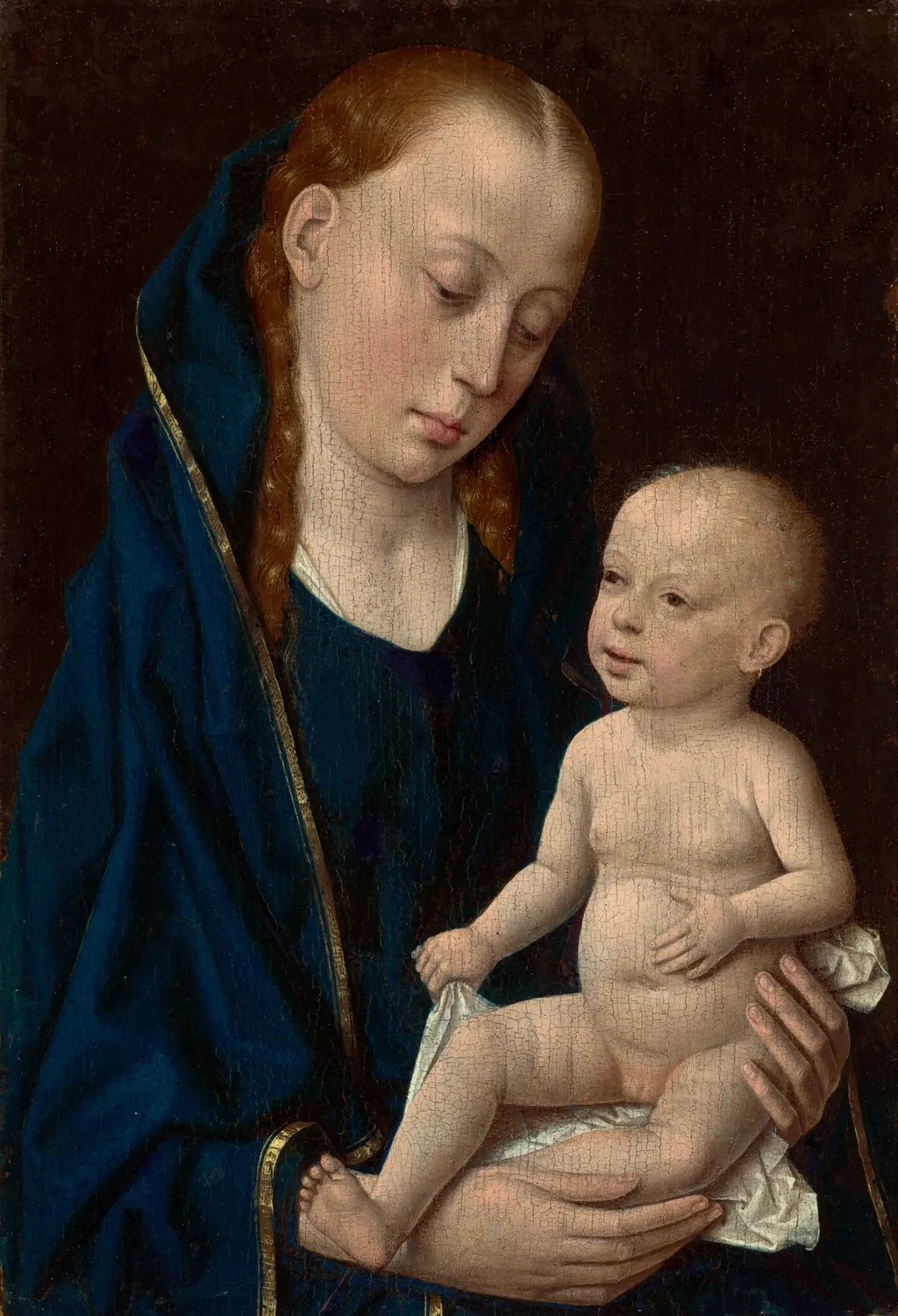
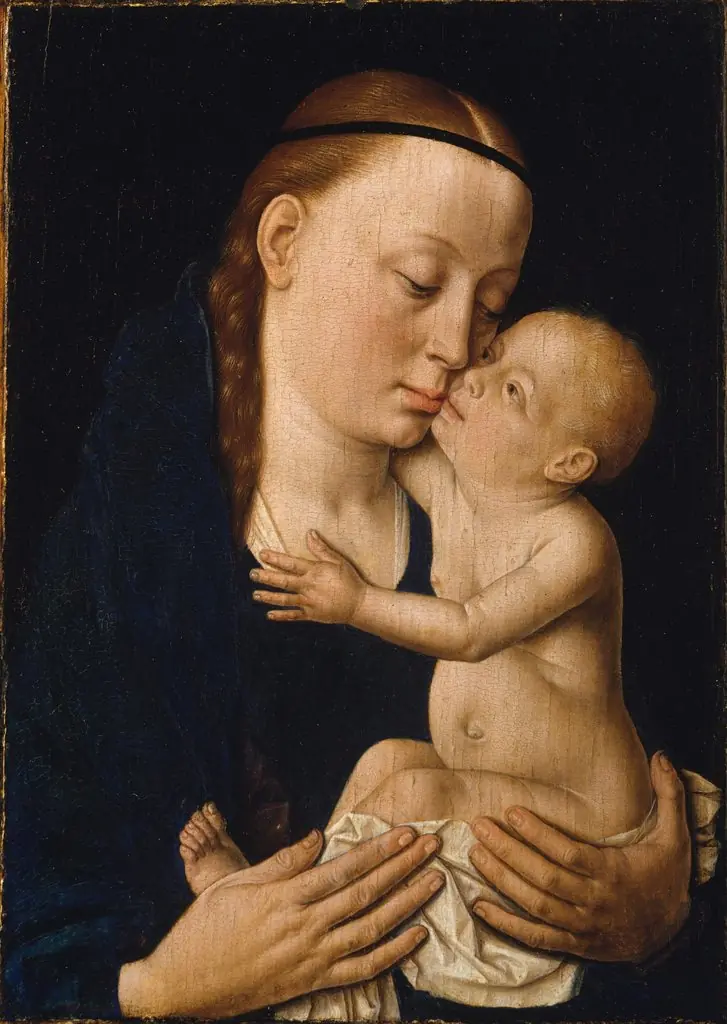
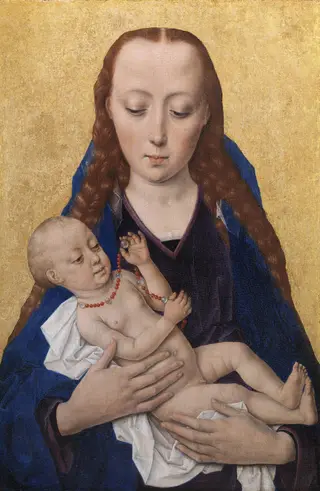
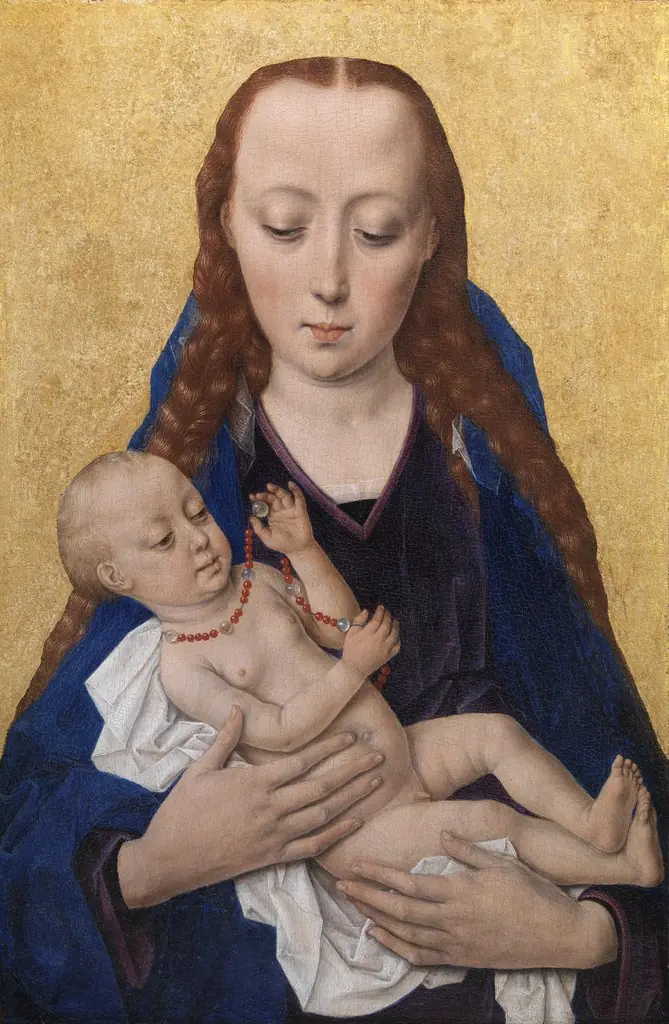
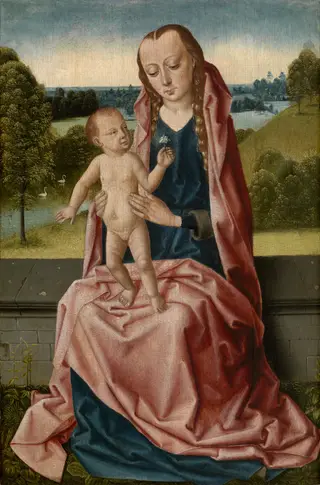
Madonna and Child is an oil painting by the Northern Renaissance artist Dieric Bouts. It dates from 1465 and is held in the collection of the National Gallery of Art.
About this work
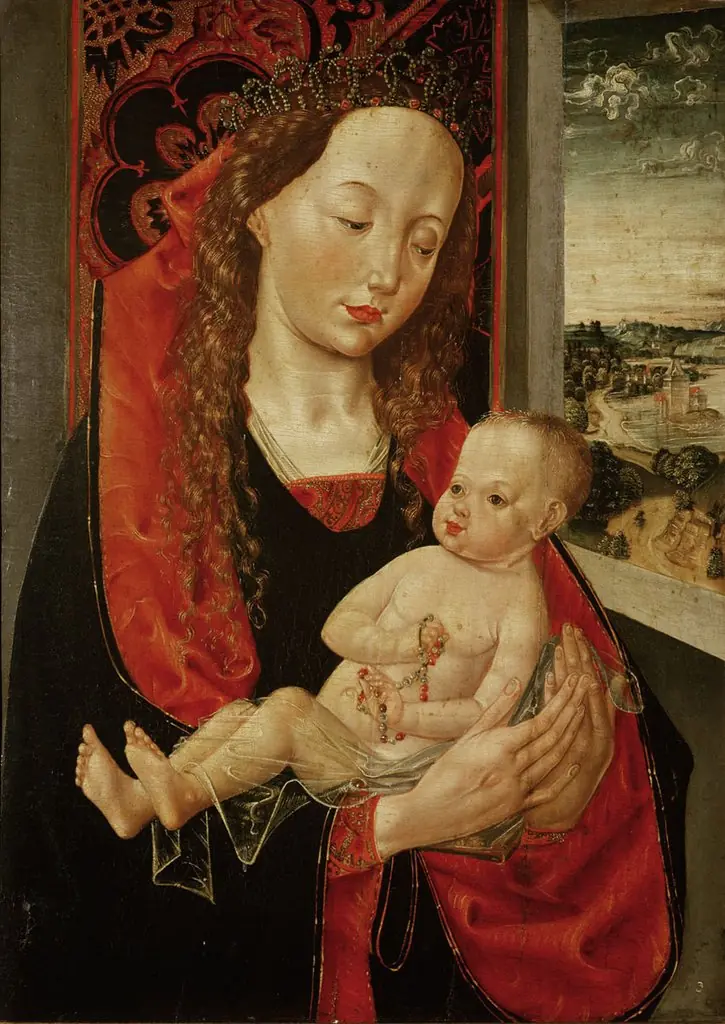
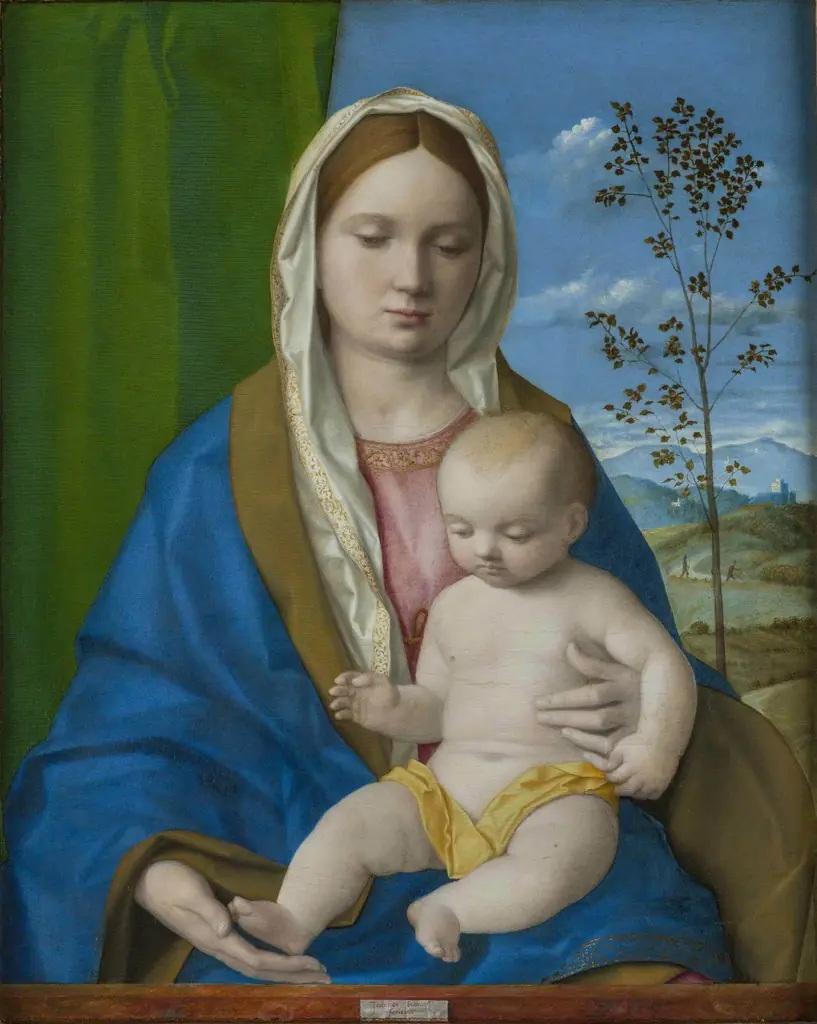
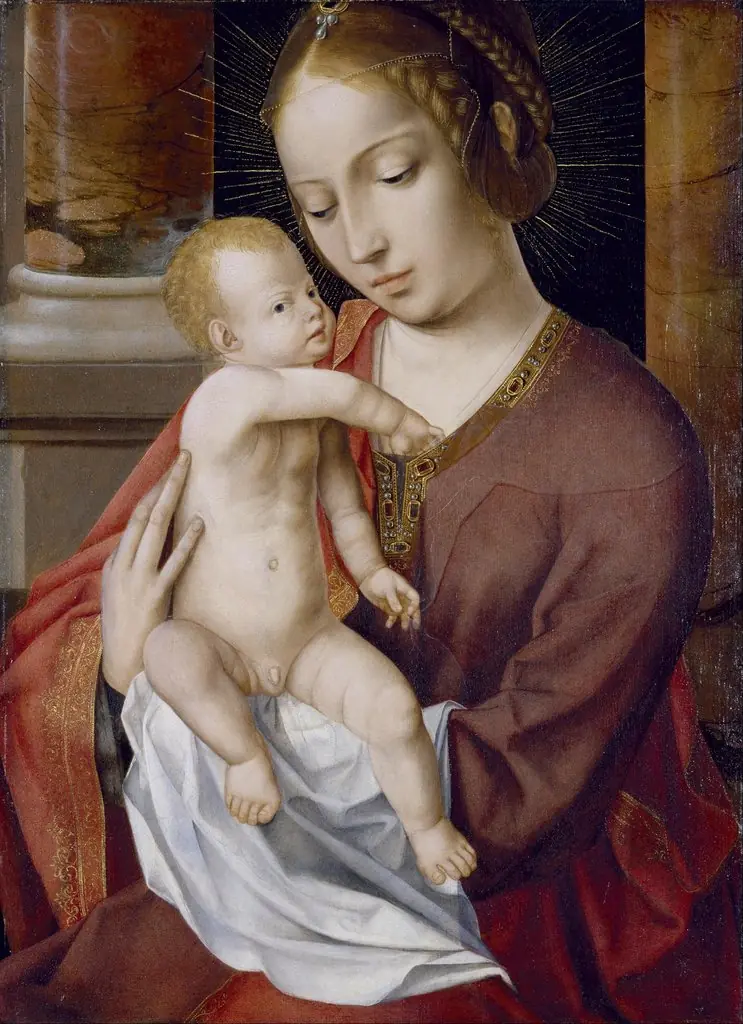
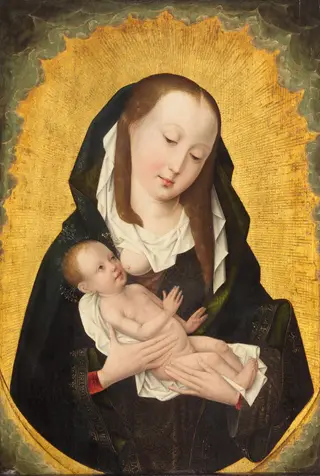
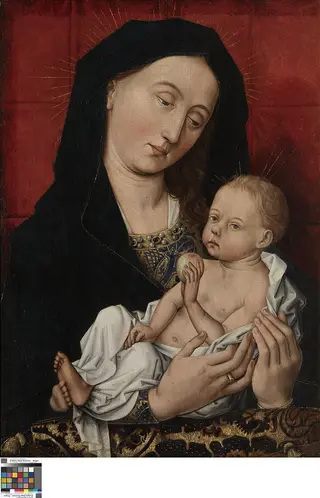
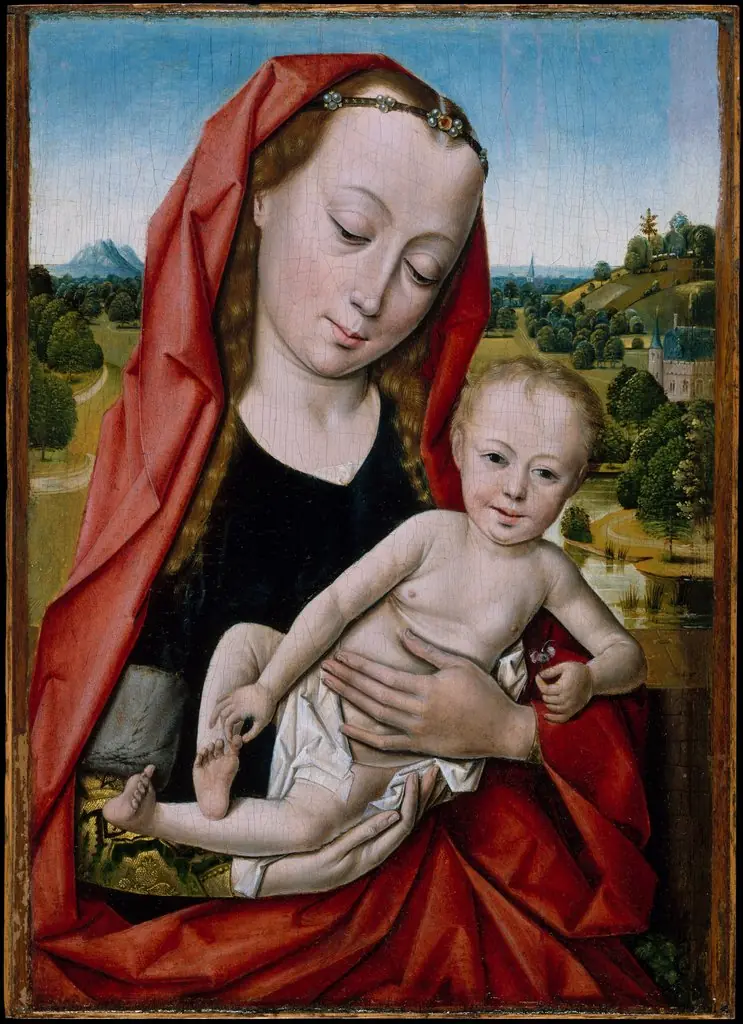
Mary in a red robe holds a calm infant Jesus, light falling softly on her face and his small hands while the dark background pushes them forward. Dirck Bouts painted it in the Netherlands in 1465, when oil paint was first learning to glow. The light shaping her cheek is chiaroscuro.
Subject & Meaning
The depiction focuses strictly on the two figures, emphasizing their human connection while affirming their sacred roles within Christian doctrine.
Created in 1465 by Dirck Bouts, this oil painting on panel portrays the Madonna and Child, a central subject in religious art. The composition features the Virgin Mary holding the Christ Child, representing the theological bond between mother and son. As a work of the Northern Renaissance, the piece utilizes the intimate scale typical of devotional images intended for private contemplation.
The depiction focuses strictly on the two figures, emphasizing their human connection while affirming their sacred roles within Christian doctrine. The artwork serves as a visual meditation on the incarnation, capturing a moment of tenderness that underscores the humanity of the divine figures.
Technique & Style
Dirck Bouts's Madonna and Child (1465) is a religious painting executed in oil paint on a wooden panel. The artwork is an intimate, small-scale composition, measuring 22.5 cm in height and 15.5 cm in width. The medium of oil on panel facilitated the rich coloration and detailed modeling characteristic of early Netherlandish painting, allowing for subtle gradations of tone in the depiction of the Virgin Mary and the Christ Child.
While specific details regarding the panel's condition or the artist's specific handling of the paint are not documented in the available sources, the work's survival and continued presence in the National Gallery of Art collection indicate its structural stability over the centuries.
History & Provenance
Created in 1465 by Dirck Bouts, this oil-on-panel painting depicts the Madonna and Child. Its early history includes an unconfirmed association with a convent in northern France prior to 1937, a detail noted in a 1942 exhibition catalogue and dealer invoice. By 1937, the work was documented in the collection of Baron Joseph van der Elst in Brussels, as published by Max J. Friedländer.
Ownership subsequently passed to the Baron's son, François van der Elst, also in Brussels. In 1986, the panel was sold through the New York dealer Spencer Samuels to the National Gallery of Art in Washington, D.C., where it remains in the collection.
The painting is held by the National Gallery of Art, Washington, D.C., where it carries the accession number 1986.118.1. It was first documented in a northern French convent before 1937, then owned by Baron Joseph van der Elst of Brussels by 1937, passing to his son Baron François van der Elst and sold in 1986 through Spencer Samuels, New York, to the NGA. No exhibition history is provided in the cited sources.
Overview
Dirck Bouts's "Madonna and Child" is an oil painting from approximately 1465. This devotional work on panel portrays the Virgin Mary cradling the infant Jesus. The composition emphasizes the tender interaction between mother and child, illuminated by a gentle light that highlights their forms against a subdued background. It exemplifies the detailed craftsmanship characteristic of Netherlandish painting during the 15th century.
Context
Created around 1465, this work reflects the artistic innovations emerging from the Netherlands during the 15th century. Artists like Dirck Bouts were instrumental in refining oil painting techniques, exploring its capacity to render fine details and achieve a rich luminosity. This period marked a significant shift in artistic practice, moving towards greater naturalism and emotional depth in religious subjects.
Own this work as a print
Artist & collection
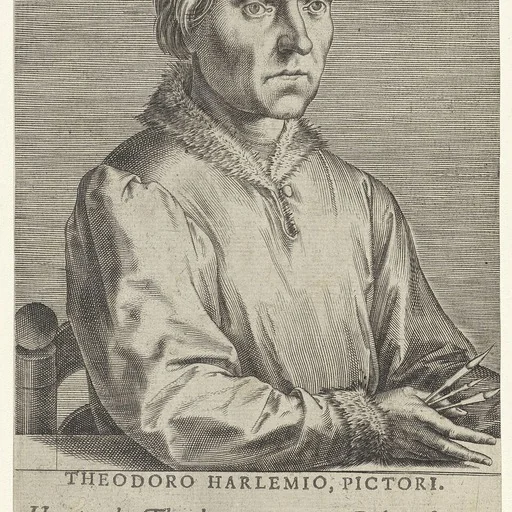
Artist
Dieric Bouts (born c. 1415 – 6 May 1475) was an Early Netherlandish painter. Bouts may have studied under Rogier van der Weyden, and his work was influenced by van der Weyden and Jan van Eyck. He worked in Leuven from…