Artwork
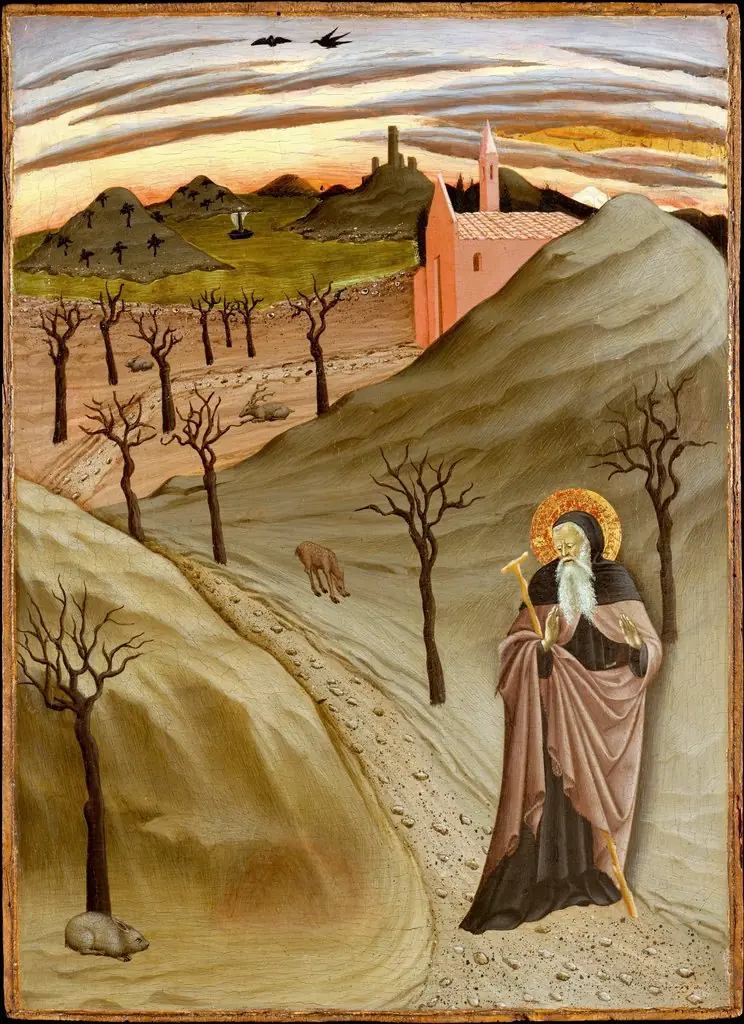
Saint Anthony Leaving His Monastery
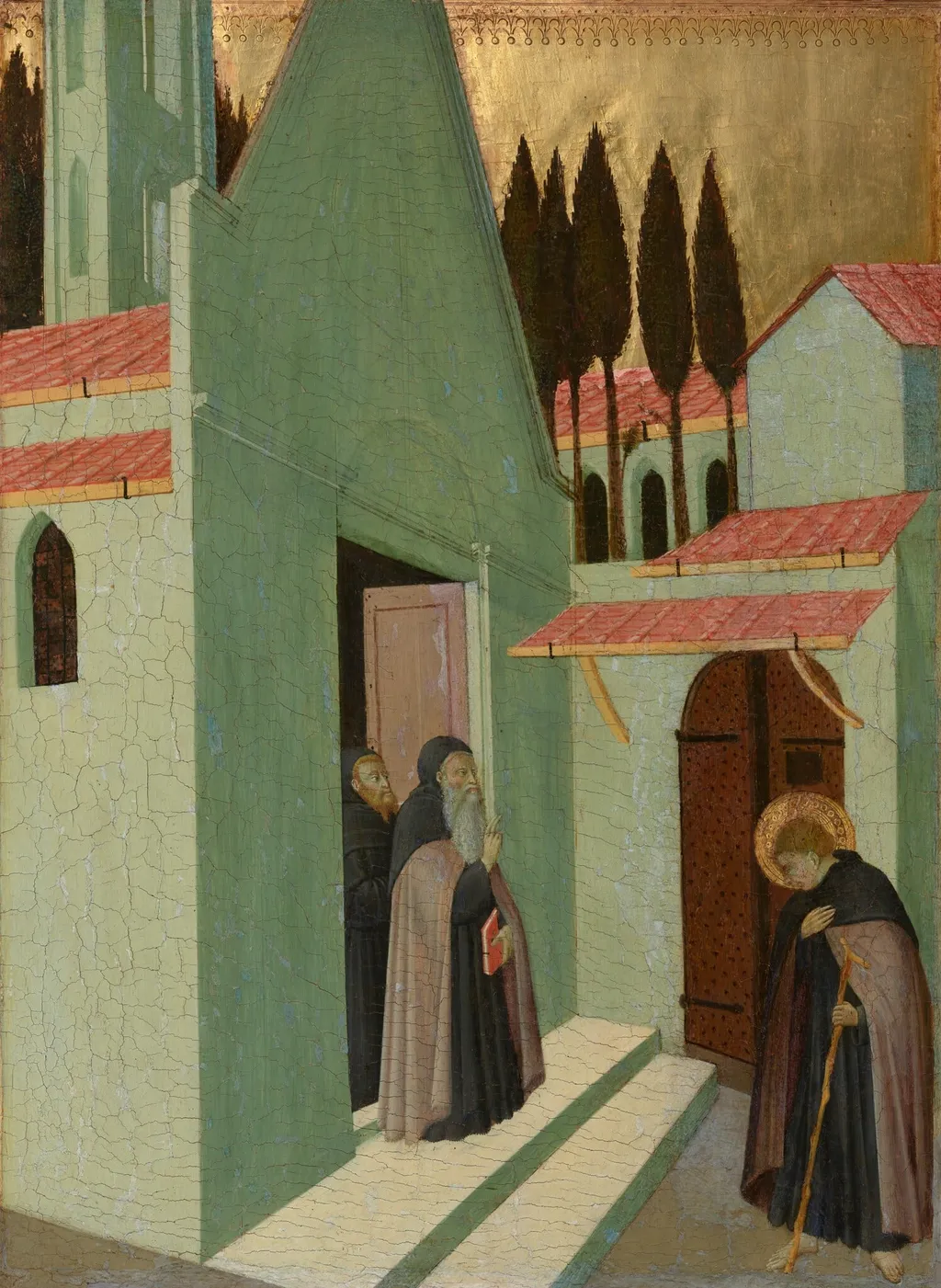
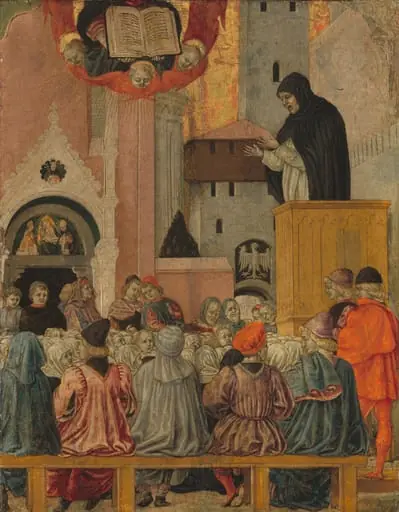
Saint Anthony Leaving His Monastery is a tempera painting by the Early Renaissance artist Master of the Osservanza. It dates from 1432 and is held in the collection of the National Gallery of Art.
About this work
Technique & Style
The work is attributed to the Master of the Osservanza, also identified as Sano di Pietro, and is dated to 1432.
The painting Saint Anthony Leaving His Monastery is executed in tempera on a poplar wood panel, a technique typical of early fifteenth-century Italian panel painting. The work is attributed to the Master of the Osservanza, also identified as Sano di Pietro, and is dated to 1432. Its support is a single poplar panel prepared for tempera application, and the composition portrays the saint in a narrative scene drawn from hagiographic tradition.
History & Provenance
Dated to 1432, this tempera on poplar panel by the Master of the Osservanza likely originated within the Aloisi-Vicoli-Caccialupi family of San Severino Marche. By inheritance, it entered the collection of Count Augusto Caccialupi Olivieri in Macerata by 1870. Following the Count's death, the American collector Robert Jenkins Nevin acquired the work in Rome around 1906.
Upon Nevin's death, the painting was obtained by Dan Fellows Platt of Englewood, New Jersey, in 1906. In November 1943, trustees of the Platt estate sold the piece to the Samuel H. Kress Foundation in New York. The foundation gifted the artwork to the National Gallery of Art in Washington, D.C., in 1952, where it remains part of the Samuel H. Kress Collection.
Overview
This painting, titled Saint Anthony Leaving His Monastery, was created around 1432 by the artist known as the Master of the Osservanza. Executed in tempera on a poplar panel, the work depicts a pivotal moment in the life of Anthony the Great. It captures the saint's departure from his monastic community, setting the stage for his subsequent solitary existence in the desert.
Subject & Meaning
The artwork illustrates Saint Anthony the Great embarking on a journey away from his monastery. Dressed in a simple brown robe with a rope belt, he is shown walking, accompanied only by a donkey laden with his few possessions. This scene reflects the saint's pursuit of an ascetic life in isolation, a spiritual quest that involved leaving behind communal living despite attempts by others to follow him into the wilderness.
Context
The narrative depicted in Saint Anthony Leaving His Monastery draws from a 15th-century Italian literary tradition. These stories recounted the lives and spiritual journeys of saints, providing moral and religious instruction. The portrayal of Saint Anthony's departure would have resonated with contemporary audiences familiar with tales of asceticism and the pursuit of spiritual purity through solitude.
Own this work as a print
Artist & collection

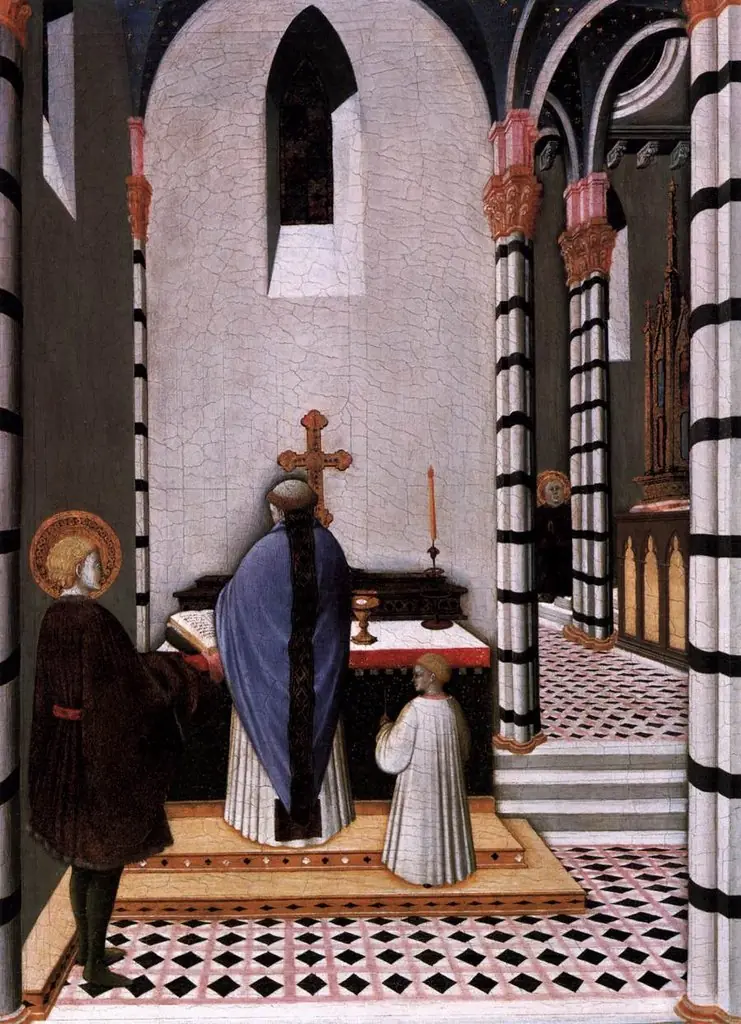 St Anthony at Mass Dedicates His Life to God
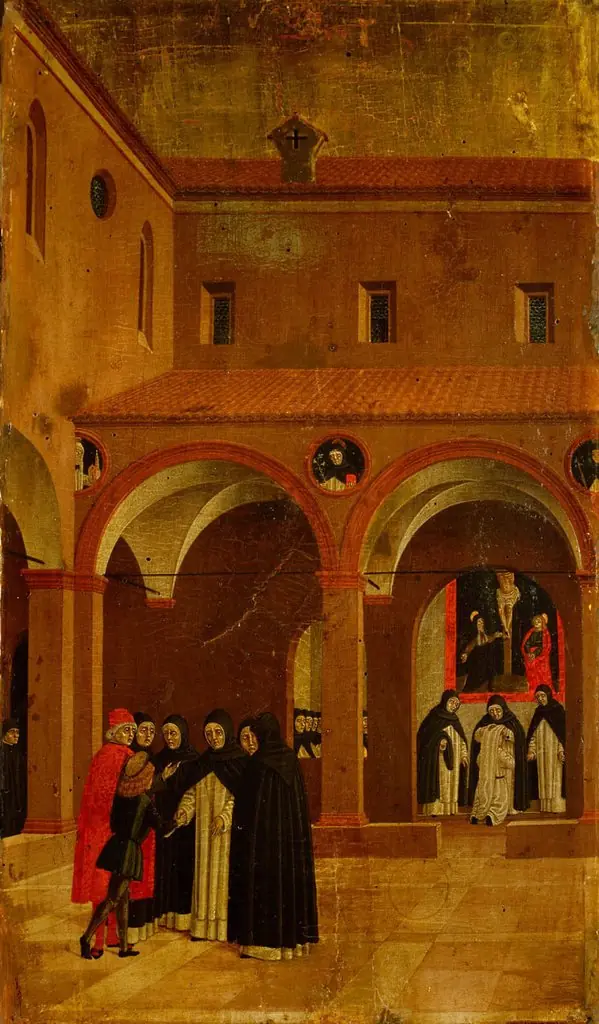 Szene aus dem Leben des Hl. Vinzenz Ferrer: Der Vater führt den Knaben Vinzenz zu den Dominikaners, von denen er drei Tage später eingekleidet wird
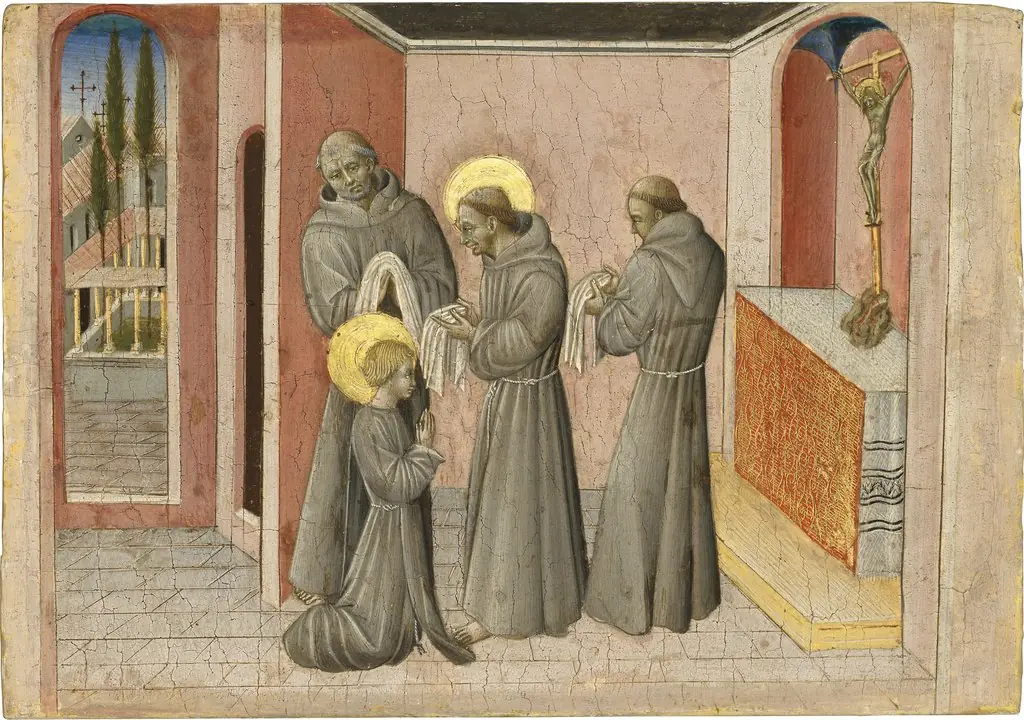 The Investiture of Saint Clare: the Saint receiving the clothes of her Order from Saint Francis
![The Papacy Offered to Saint Gregory the Great [?], by Fra Angelico](https://artifactworldgallery.com/img/fra-angelico--the-papacy-offered-to-saint-gregory-the-great--6c28505dc47c9093-w320.webp) The Papacy Offered to Saint Gregory the Great [?]
The Papacy Offered to Saint Gregory the Great [?]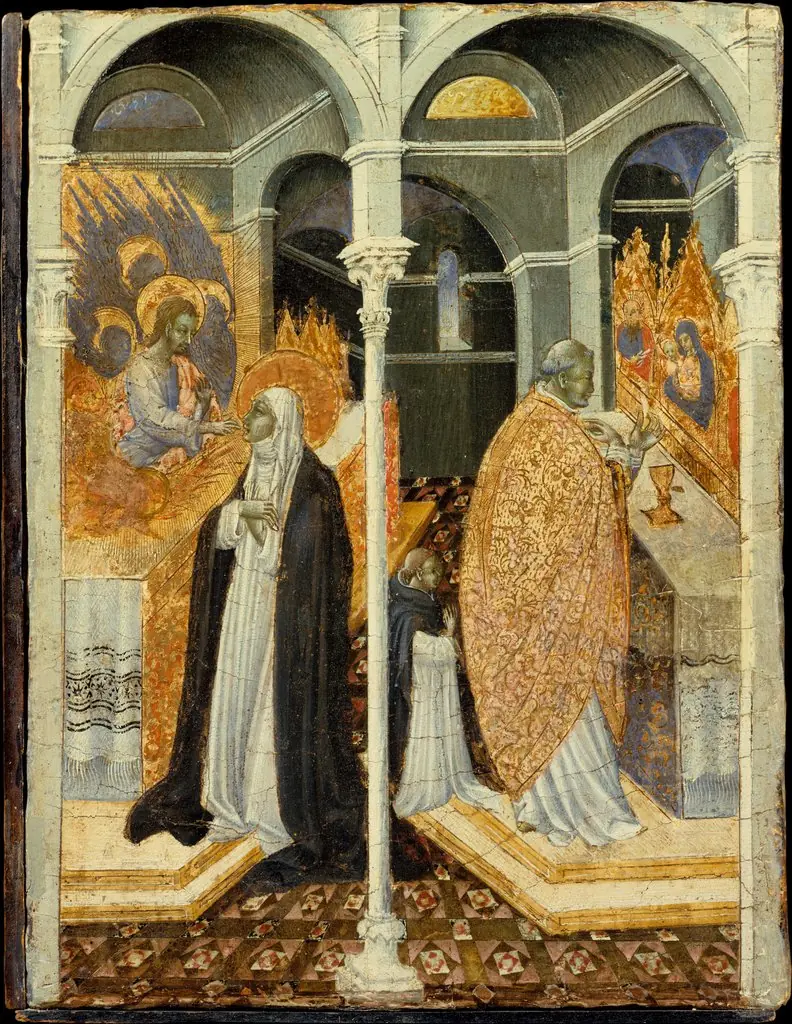 The Miraculous Communion of Saint Catherine of Siena
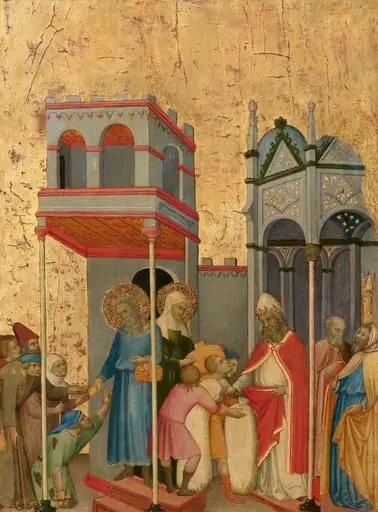 Joachim and Anna Giving Food to the Poor and Offerings to the Temple
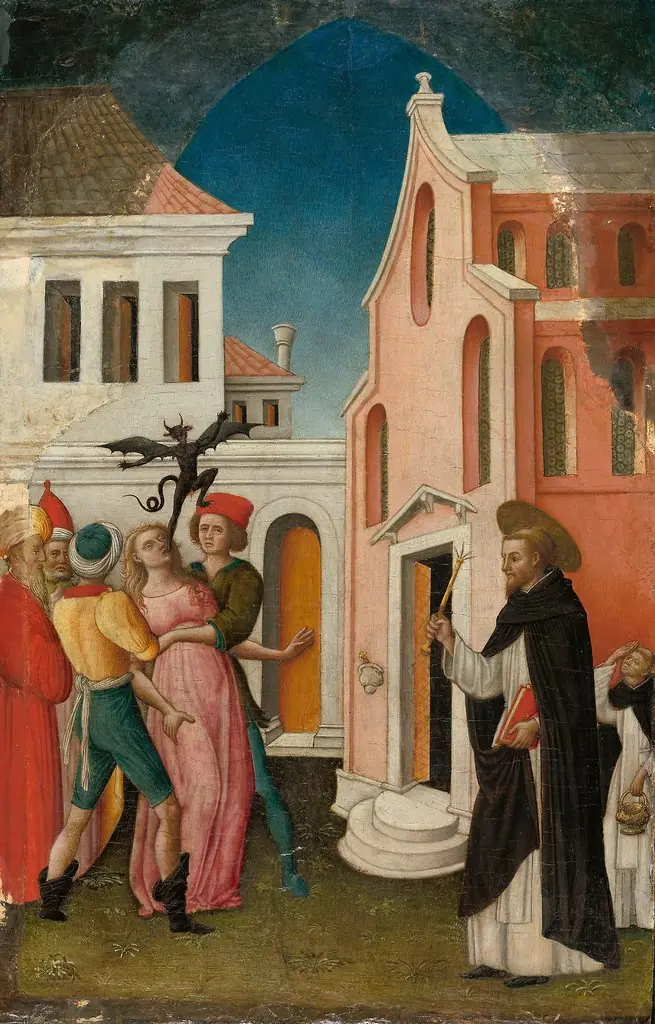 Saint Peter Martyr Exorcizing a Woman Possessed by a Devil
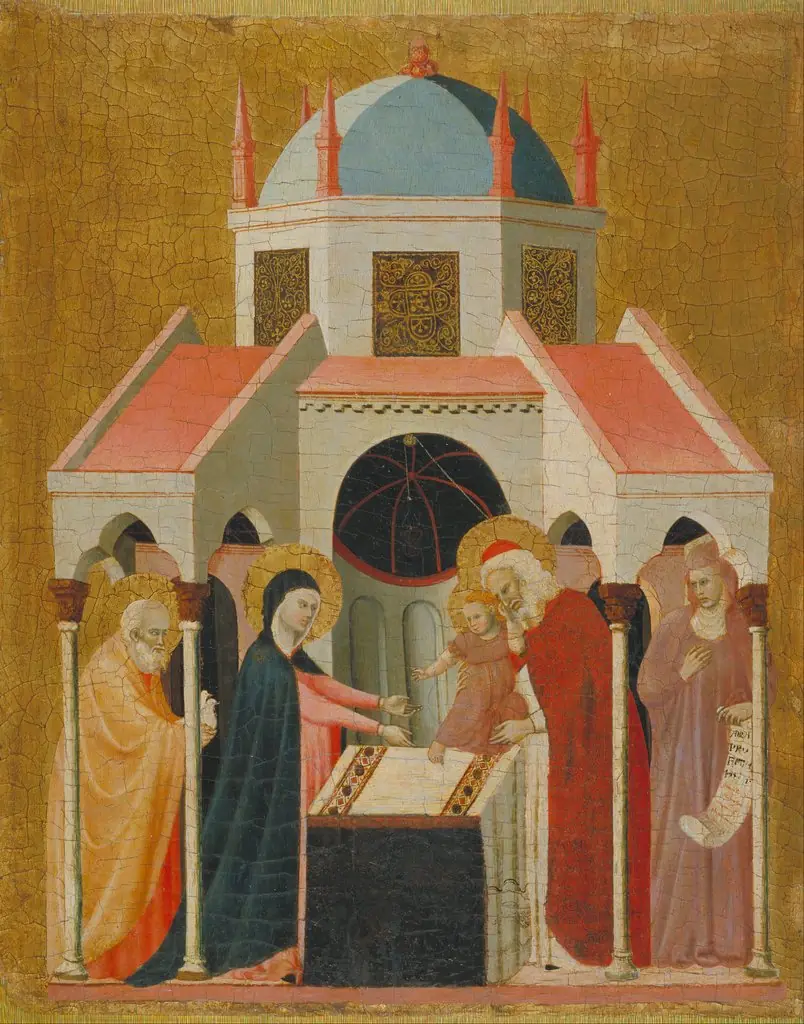 Presentation of Jesus at the Temple
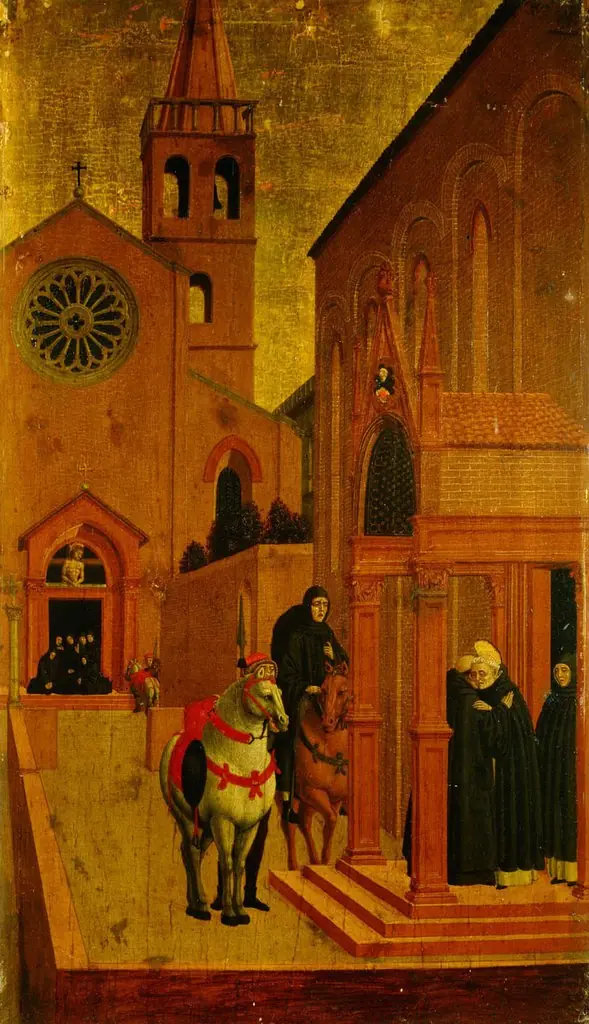 Szene aus dem Leben des Hl. Vinzenz Ferrer: Besuch des Priors von Oreola beim Heiligen; Tod des Bruders Gilabertus vor der Kirchentür
 A Dominican Preaching