Artwork
Saint Anthony Abbot Tempted by a Heap of Gold

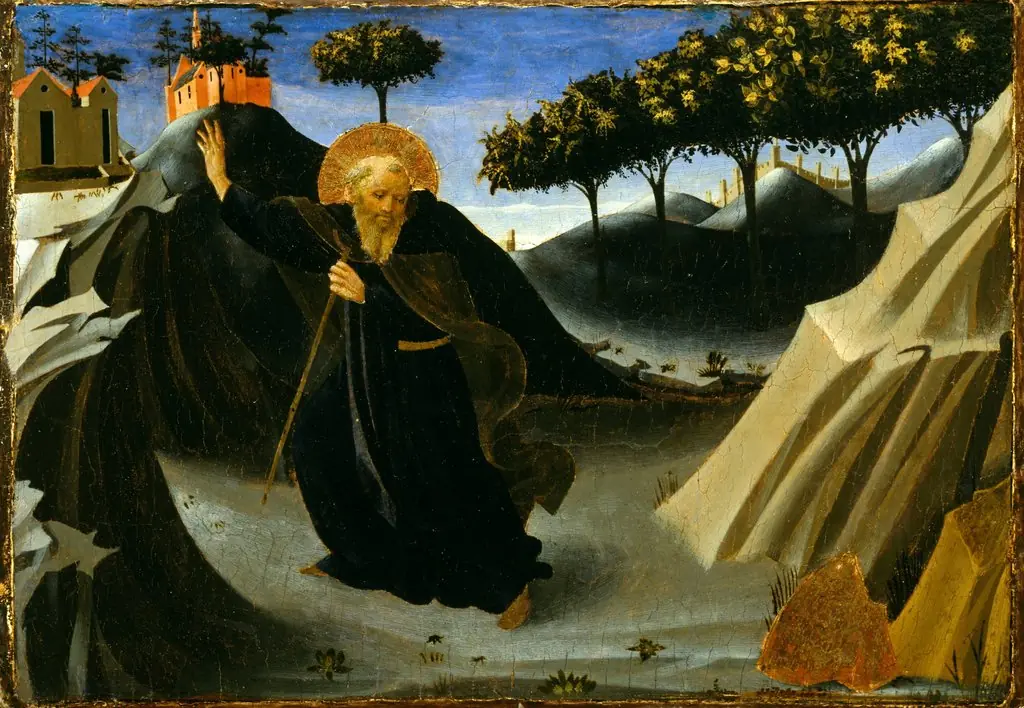
Saint Anthony Abbot Tempted by a Heap of Gold is an unspecified painting by the Early Renaissance artist Master of the Osservanza. It dates from 1435 and is held in the collection of the Metropolitan Museum of Art.
About this work
Subject & Meaning
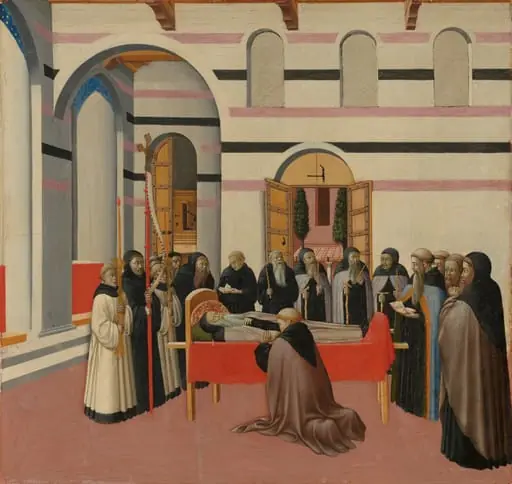
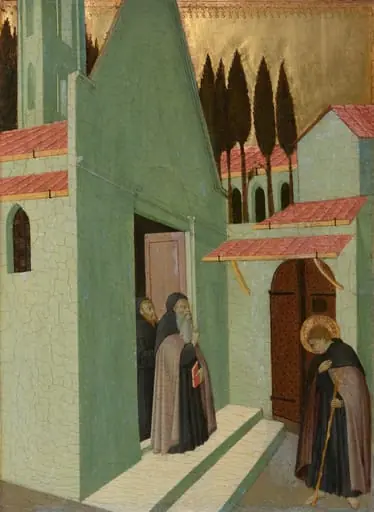
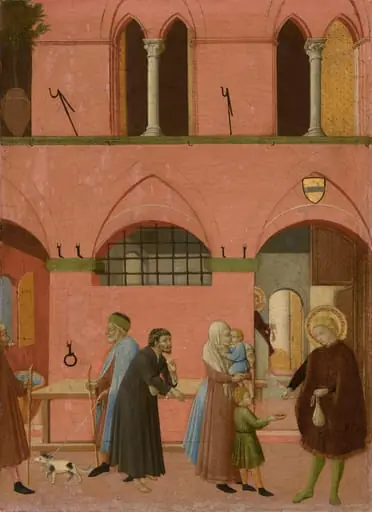
The work belongs to a cycle of eight panels illustrating episodes from Anthony’s life, a format typical of 15th‑century Sienese narrative altarpieces.
The painting depicts Saint Anthony Abbot during his iconic temptation by material wealth, symbolized by a heap of gold presented to him by a gathering of animals. In this composition the saint stands amid a barren, desert‑like landscape dotted with a deer, rabbit, and other creatures, while a pot of gold, now removed from the scene, signifies the lure of riches. The work belongs to a cycle of eight panels illustrating episodes from Anthony’s life, a format typical of 15th‑century Sienese narrative altarpieces.
Its detailed background, featuring a twilight sky, distant church, and winding path, conveys a moral allegory of spiritual resistance against worldly temptation.
Technique & Style
Created circa 1435, this work is executed in tempera and gold leaf on a wooden panel support, measuring approximately 47.8 by 34.5 cm. The artist, the Master of the Osservanza, employed a technique where gold leaf was applied over dried paint in the area depicting the heap of gold, a procedural error that necessitated scraping the gold away and leaving only a reddish preparatory ground visible near a rabbit. Stylistically, the composition reflects 15th-century Sienese traditions with small figures set against a vast, desolate landscape that conveys an elegiac sense of immobility. The scene features a winding path and distant architectural elements under a sunset sky with reddish clouds, rendered with delicate gradations.
While the figures appear relatively flat to modern viewers, depth is suggested through the receding path and detailed natural elements, including stunted trees, rocks, and various animals, all contributing to a courtly Gothic aesthetic.
History & Provenance
The work titled Saint Anthony Abbot Tempted by a Heap of Gold was executed circa 1435 in tempera and gold leaf on panel by the 15th‑century Sienese painter identified as the Master of the Osservanza. It forms part of an eight‑panel cycle depicting episodes from the life of Saint Anthony, a program likely intended for private devotional use. After its creation the painting entered the collection of Prince Léon Ouroussoff in Vienna, was purchased by American banker Philip Lehman in 1924, and subsequently became part of the Robert Lehman Collection at the Metropolitan Museum of Art, where it remains on display.
The work measures approximately 47 × 33.7 cm and is catalogued as having been begun on 1 January 1435.
The painting is held in the collection of the Metropolitan Museum of Art, New York, with accession number 1975.1.67, formerly in the Robert Lehman Collection. It was acquired by Philip Lehman in 1924 before entering the museum through the Lehman bequest in 1975. The work has been exhibited as part of the Robert Lehman Collection displays at the Metropolitan Museum, where it remains accessible to the public.
Context
Saint Anthony Abbot Tempted by a Heap of Gold is recognized as a pivotal work within the eight-panel cycle depicting the life of Saint Anthony, attributed to the 15th-century Sienese Master of the Osservanza. Created circa 1435, the painting is frequently cited by scholars for its exceptional landscape description, particularly the elegant, desolate terrain and the atmospheric sunset sky. Art historical analysis highlights the work's synthesis of late Gothic courtly tastes, seen in the detailed fauna, with a distinct Sienese sensibility for mood and immobility.
The piece is often evaluated alongside related panels now dispersed across the Gemäldegalerie in Berlin, the National Gallery in Washington, and the Yale University Art Gallery, illustrating the artist's broader narrative project. Its enduring significance lies in how it captures a moment of spiritual tension through a delicate, almost petrified composition that balances narrative clarity with poetic stillness.
Legacy
The cycle of eight panels depicting Saint Anthony’s life, of which this work is a part, is dispersed among major museums including the Gemäldegalerie in Berlin, the National Gallery in Washington, Yale University Gallery, and the Metropolitan Museum of Art; this wide distribution has cemented the painting’s reputation as a benchmark of early Sienese narrative painting. Contemporary scholarship highlights its sophisticated landscape and the subtle handling of the temptation motif, using it as a reference point for studies of 15th‑century devotional art. The acquisition of the panel by the Metropolitan Museum in 1924, through the Robert Lehman Collection, has ensured its continual public exhibition and academic discussion, reinforcing its lasting legacy in the historiography of Renaissance art.
Overview
Saint Anthony Abbot Tempted by a Heap of Gold is a panel painting created around 1435, attributed to the anonymous Sienese artist known as the Master of the Osservanza. Executed in tempera and gold, this small work depicts a specific episode from the life of Saint Anthony Abbot. It is currently part of the collection at the Metropolitan Museum of Art in New York, representing a notable example of early Renaissance devotional art.
Own this work as a print
Artist & collection
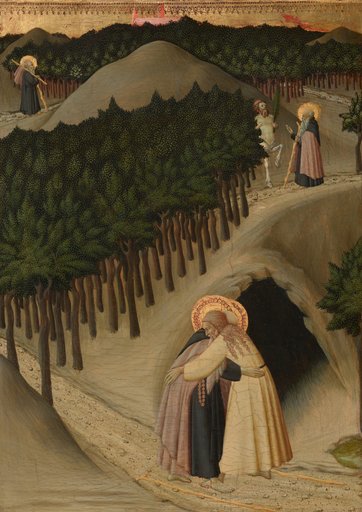

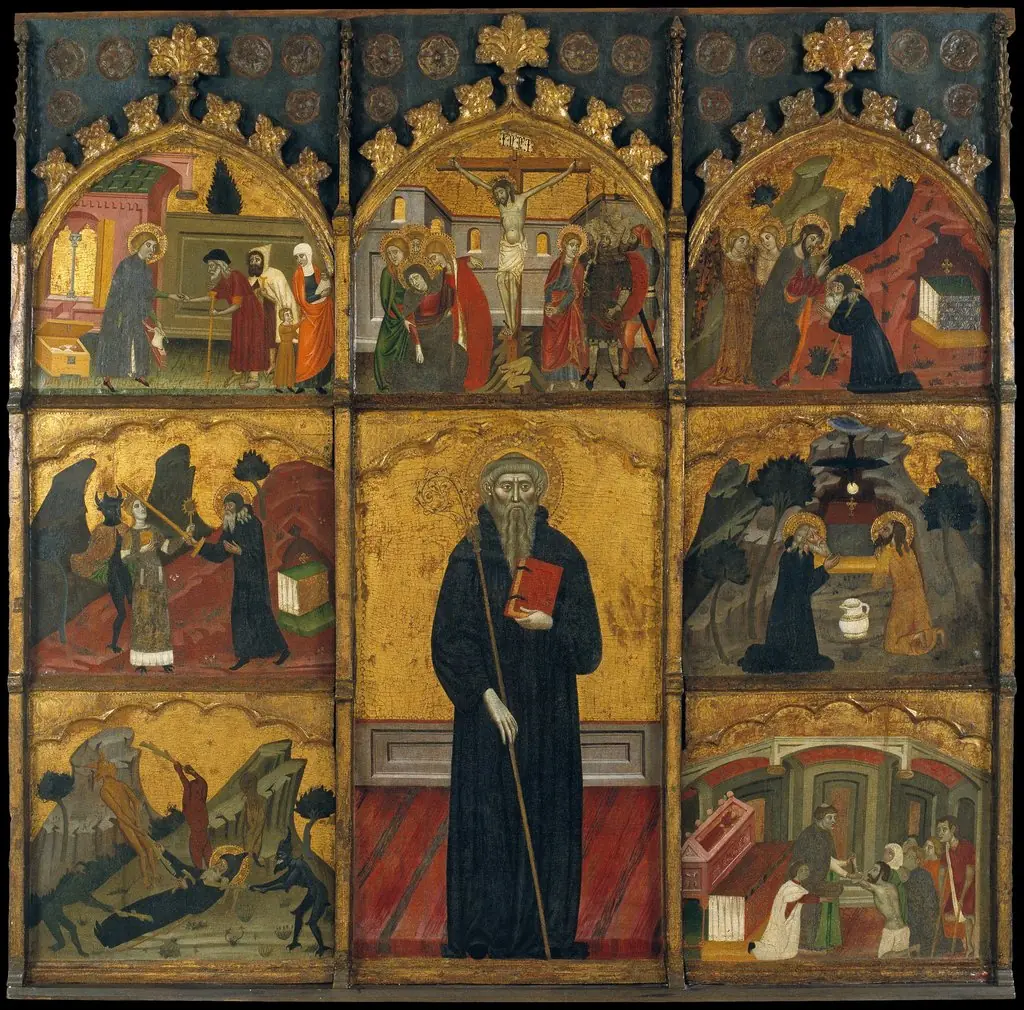 Altarpiece of Saint Anthony the Abbot
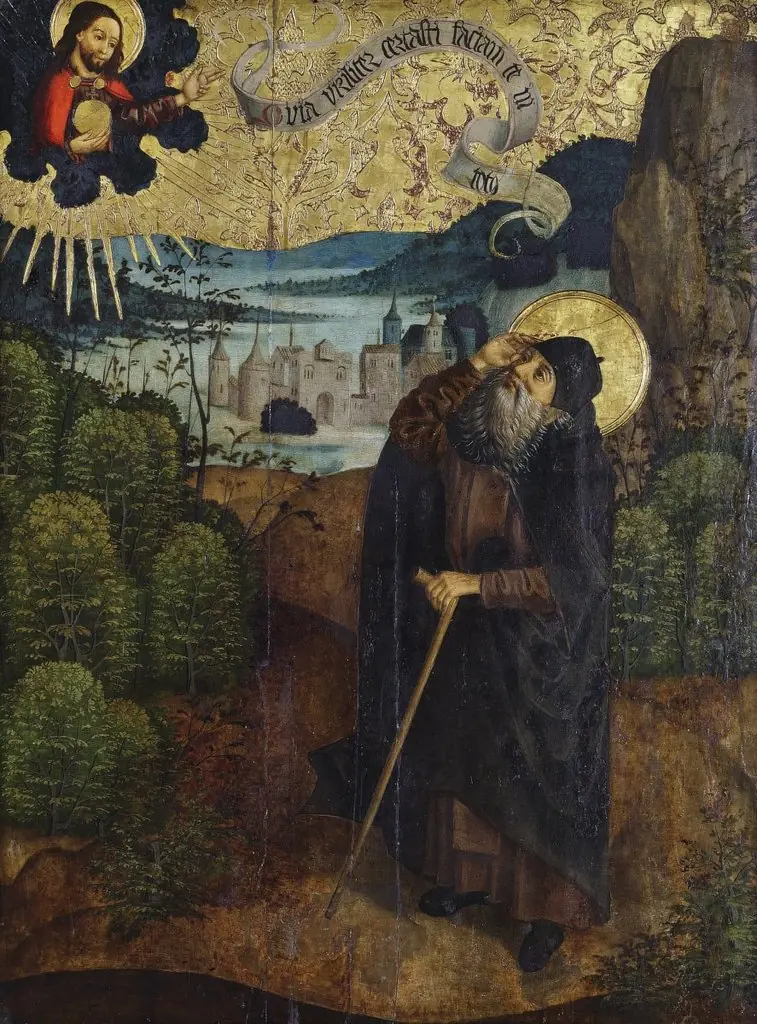 Vision of St. Anthony the Hermit, detail of an altar wing from the Church of Saint Anthony in Szepesbéla (today Spišská Belá, Slovakia)
![The Papacy Offered to Saint Gregory the Great [?], by Fra Angelico](https://artifactworldgallery.com/img/fra-angelico--the-papacy-offered-to-saint-gregory-the-great--6c28505dc47c9093-w320.webp) The Papacy Offered to Saint Gregory the Great [?]
The Papacy Offered to Saint Gregory the Great [?] Saint Jerome Reading
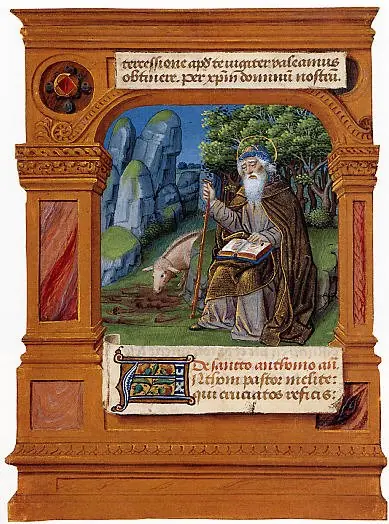 Saint Anthony
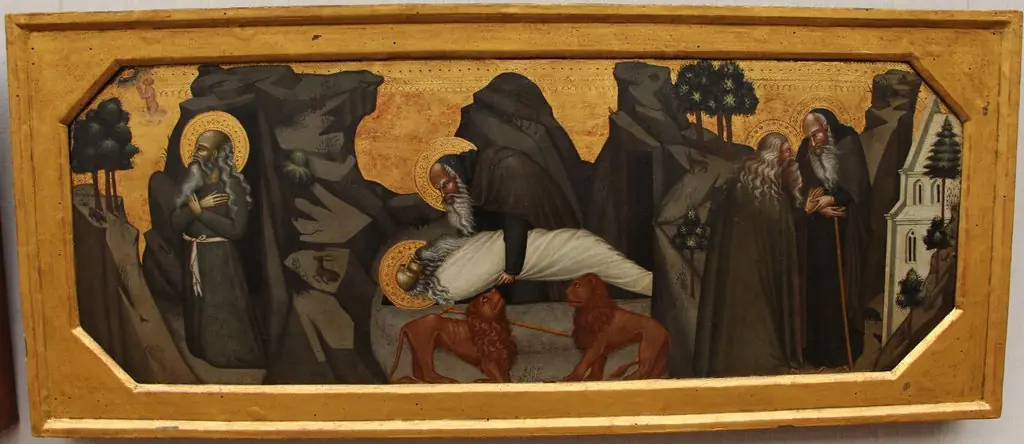 Scenes from the Life of Sacred Hermits
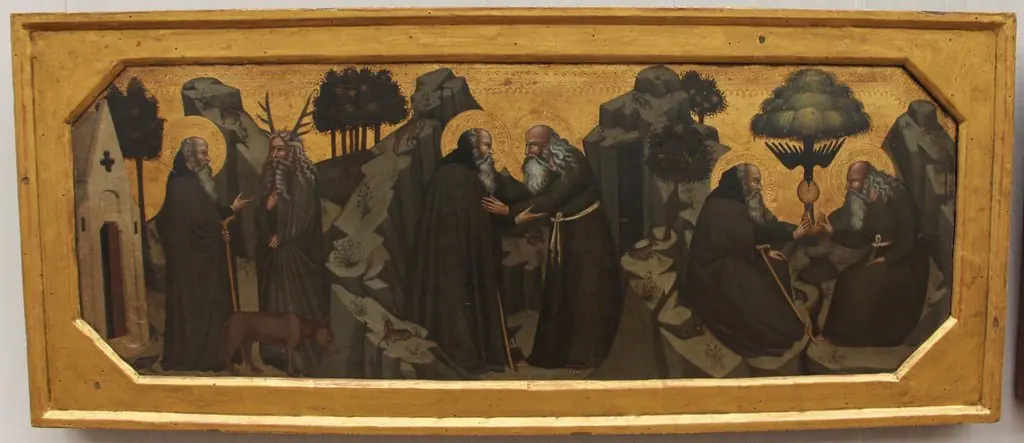 Scenes from the Life of Sacred Hermits