Artwork
Saint Anthony Distributing His Wealth to the Poor
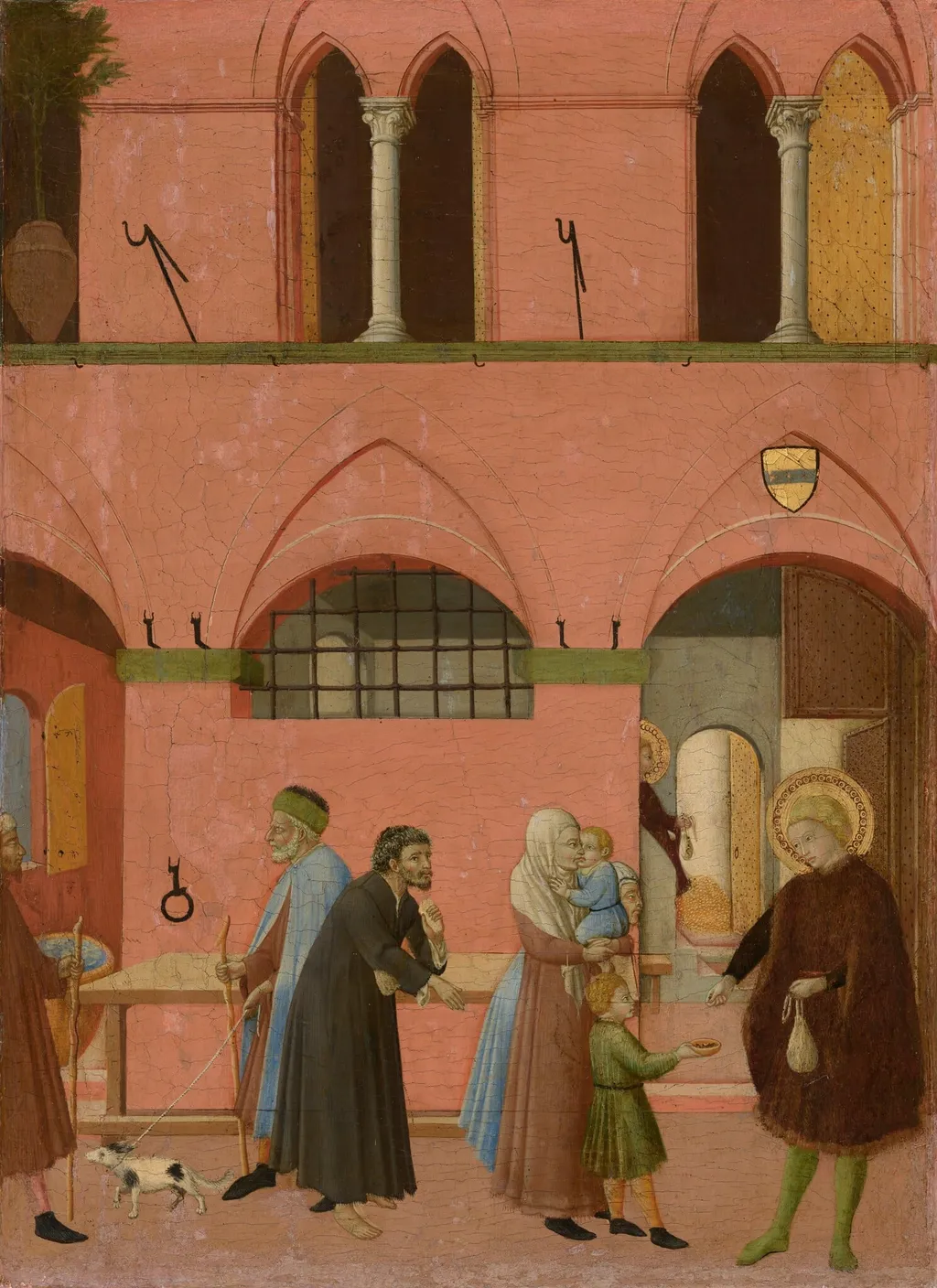
Saint Anthony Distributing His Wealth to the Poor is a tempera painting by the Early Renaissance artist Master of the Osservanza. It dates from 1432 and is held in the collection of the National Gallery of Art.
About this work
The Master of the Osservanza shows Saint Anthony handing out his wealth to the poor, standing outdoors among a crowd. Painted around 1432, the scene fills in the clothing and buildings with care, telling an episode from the saint's life.
Subject & Meaning
The iconography of almsgiving underscores themes of humility, voluntary poverty, and the renunciation of earthly riches in favor of heavenly reward.
The painting depicts Saint Anthony the Great, the early Christian desert hermit, in the act of distributing his wealth to the poor. This subject refers to the moment before Anthony withdrew from worldly life to pursue monastic asceticism in the Egyptian desert, when he gave away his inherited possessions to those in need. The scene belongs to the long tradition of hagiographic imagery portraying the saint's renunciation of material goods as a model of Christian charity and detachment.
The iconography of almsgiving underscores themes of humility, voluntary poverty, and the renunciation of earthly riches in favor of heavenly reward.
Technique & Style
Executed around 1432, this religious work is a tempera painting applied to a poplar panel support, measuring 47 by 35 centimeters. Attributed to the Master of the Osservanza, also identified by some scholars as Sano di Pietro, the artwork depicts Anthony the Great. The use of tempera on wood represents the standard medium and technique for Italian religious art of this period.
History & Provenance
The work titled Saint Anthony Distributing His Wealth to the Poor was created around 1432 by the Master of the Osservanza, employing tempera on a poplar panel. Its early ownership likely rested with the Aloisi-Vicoli-Caccialupi family of San Severino Marche, passing by inheritance to Count Augusto Caccialupi Olivieri before 1870. The painting entered the collection of Robert Jenkins Nevin in Rome by 1906.
Upon Nevin's death, the piece passed to Dan Fellows Platt of Englewood, New Jersey. Following Platt's death, the trustees of his estate sold the panel to the Samuel H. Kress Foundation in New York in November 1943. The foundation subsequently gifted the artwork to the National Gallery of Art, Washington, D.C., in 1952, where it remains within the Samuel H. Kress Collection.
Overview
Created between 1430 and 1435, Saint Anthony Distributing His Wealth to the Poor is a tempera on poplar panel by the Master of the Osservanza, an anonymous Sienese painter active in the early Quattrocento. The work depicts the hagiographic episode in which Saint Anthony of Padua renounces his inheritance, distributing his family's fortune to the needy. The composition places the saint centrally within an outdoor setting, distinguished by the artist's characteristic attention to architectural detail and varied costume.
Surrounding figures receive alms, illustrating the narrative of charity and humility. Painted during the artist's formative period, this panel reflects the transition from the International Gothic style to the emerging Renaissance sensibility in Siena, emphasizing narrative clarity and decorative richness over strict spatial perspective. The work exemplifies the Master of the Osservanza's signature style, which combines delicate linearity with a keen observation of contemporary dress and urban environments.
It serves as a significant example of early 15th-century Sienese religious painting, demonstrating the region's continued devotion to detailed storytelling and ornamental precision even as Florentine innovations began to influence the broader Italian art scene.
Own this work as a print
Artist & collection
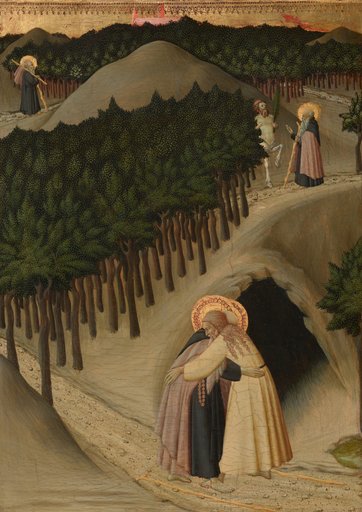

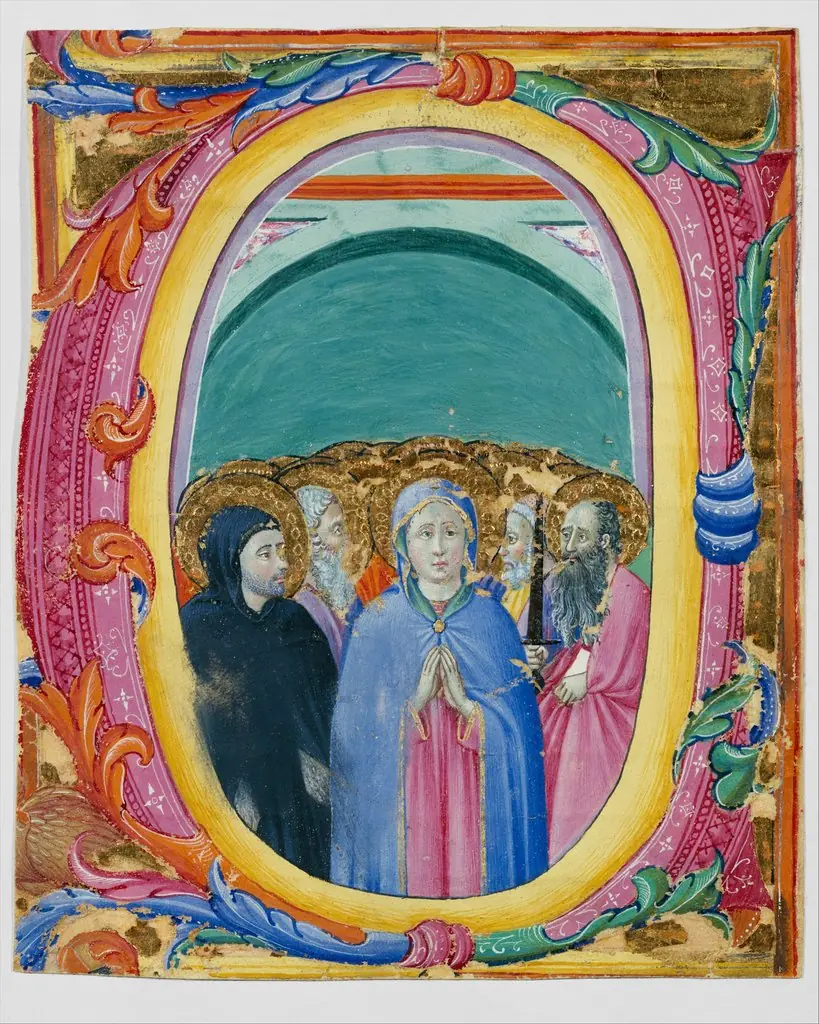
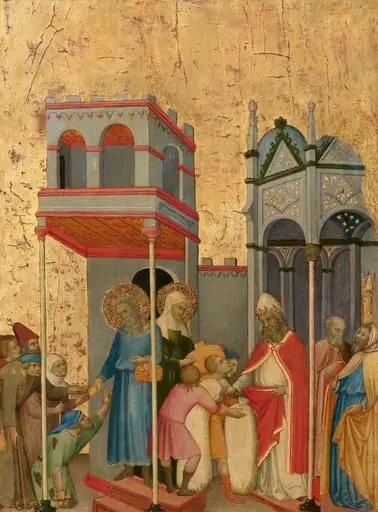
- Joachim and Anna Giving Food to the Poor and Offerings to the Temple
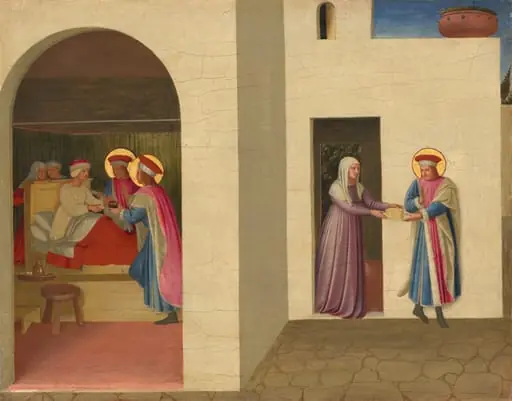 The Healing of Palladia by Saint Cosmas and Saint Damian
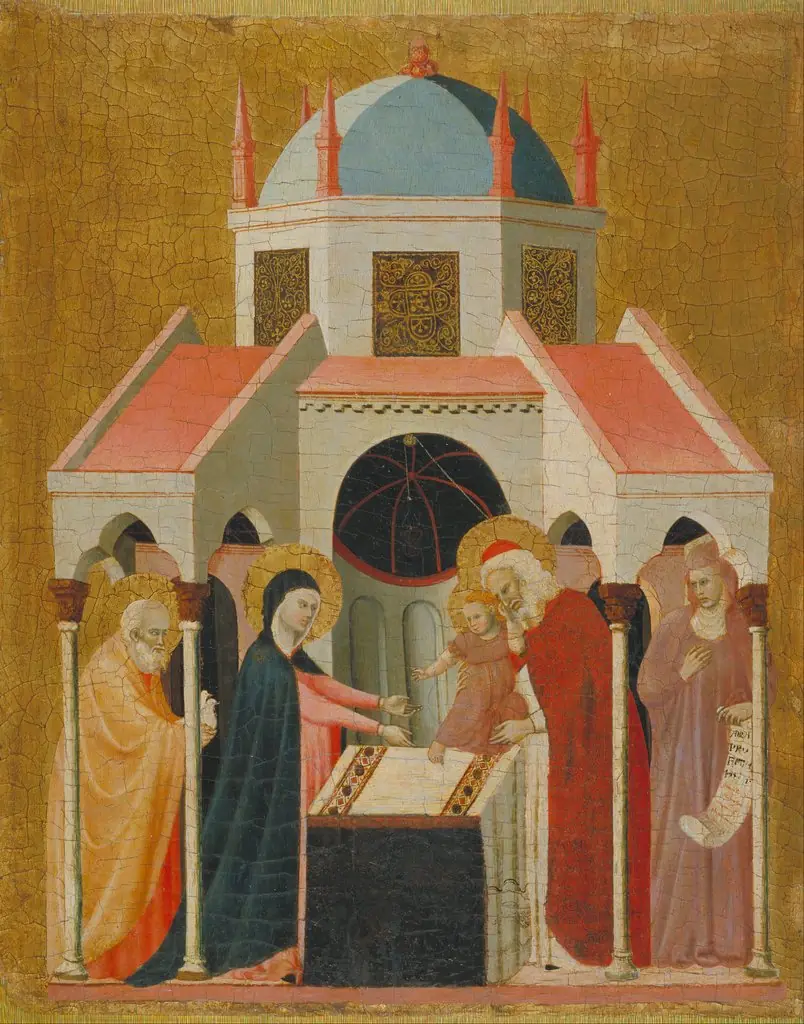 Presentation of Jesus at the Temple
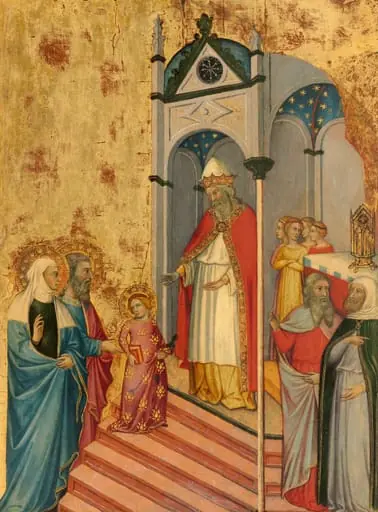 The Presentation of the Virgin in the Temple
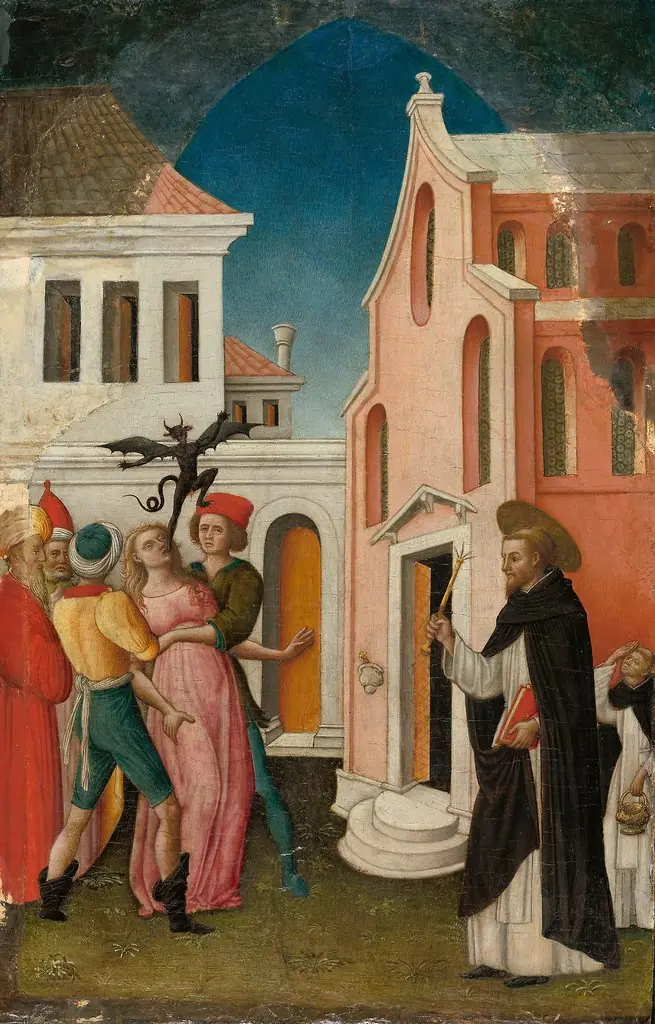 Saint Peter Martyr Exorcizing a Woman Possessed by a Devil
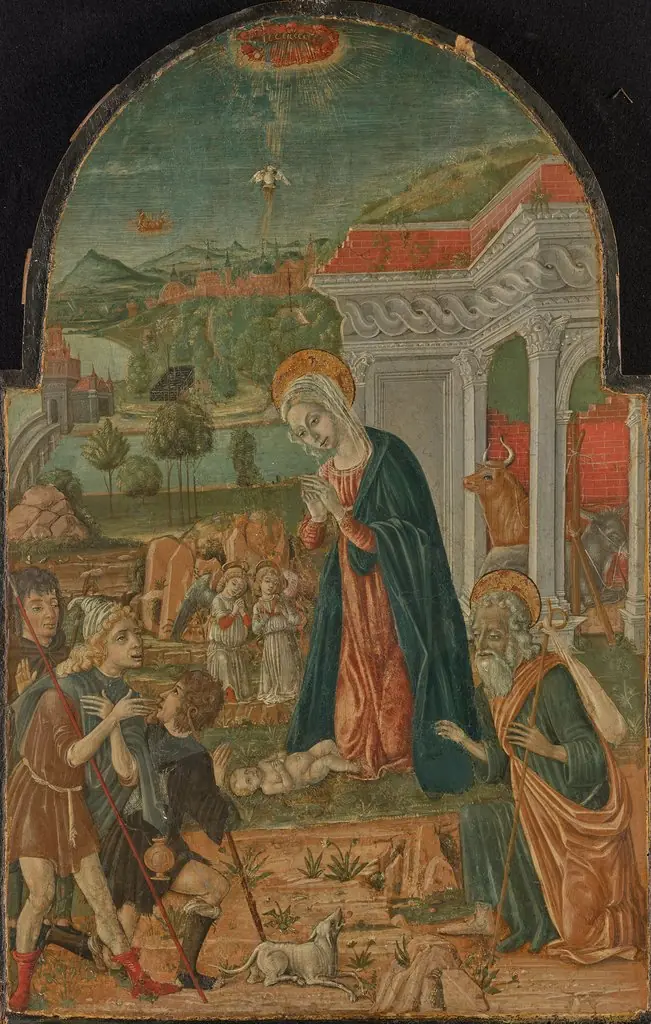 The adoration of the Shepherds
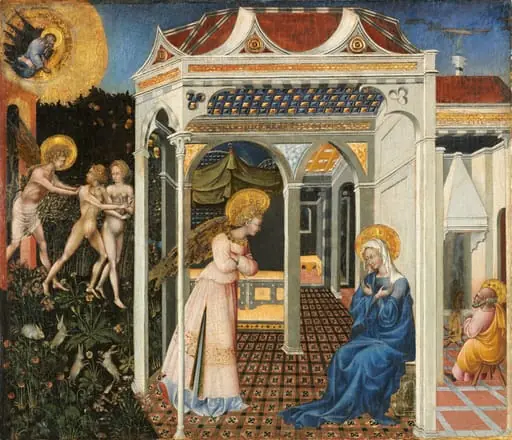 The Annunciation and Expulsion from Paradise
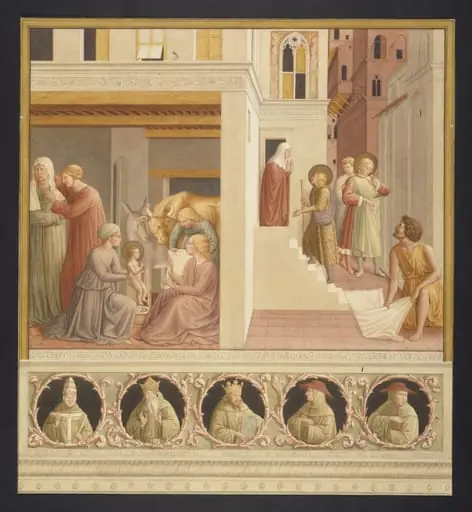 Copy after the cycle of the <i>Life of St Francis</i> (<i>Birth of St Francis</i>), Benozzo Gozzoli in San Francesco, Montefalco
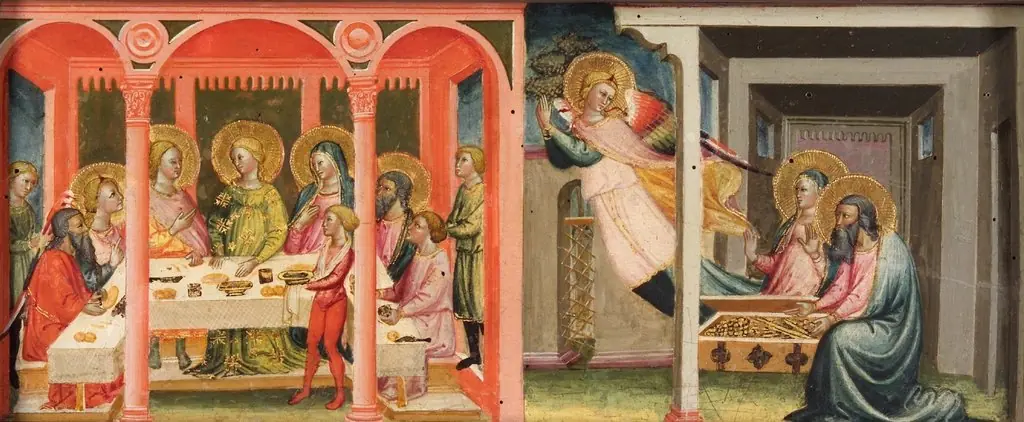 Scenes from the story of Tobias (marriage of Tobias and Sara; the archangel leaves Tobit and Anna)
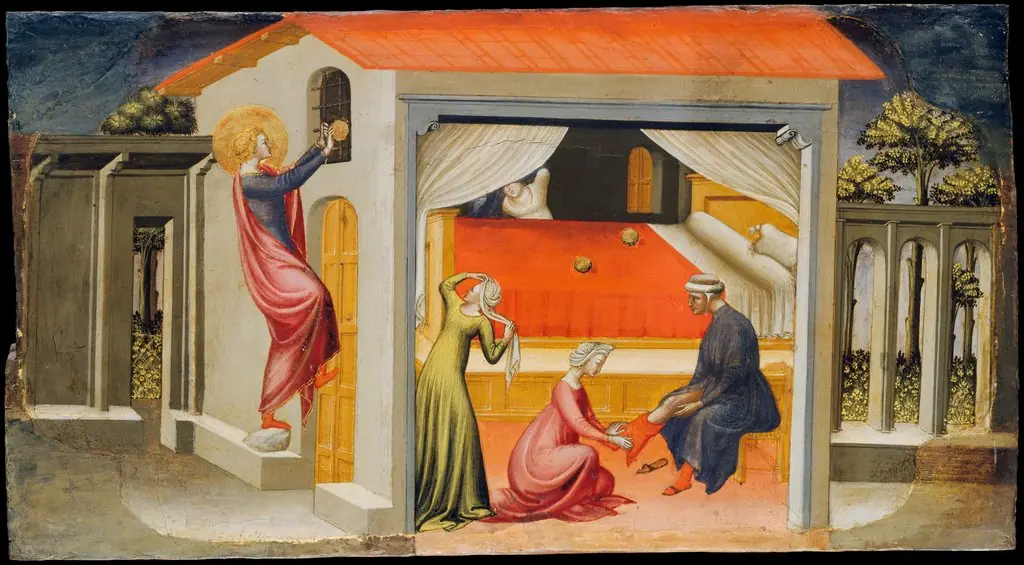 Saint Nicholas Providing Dowries
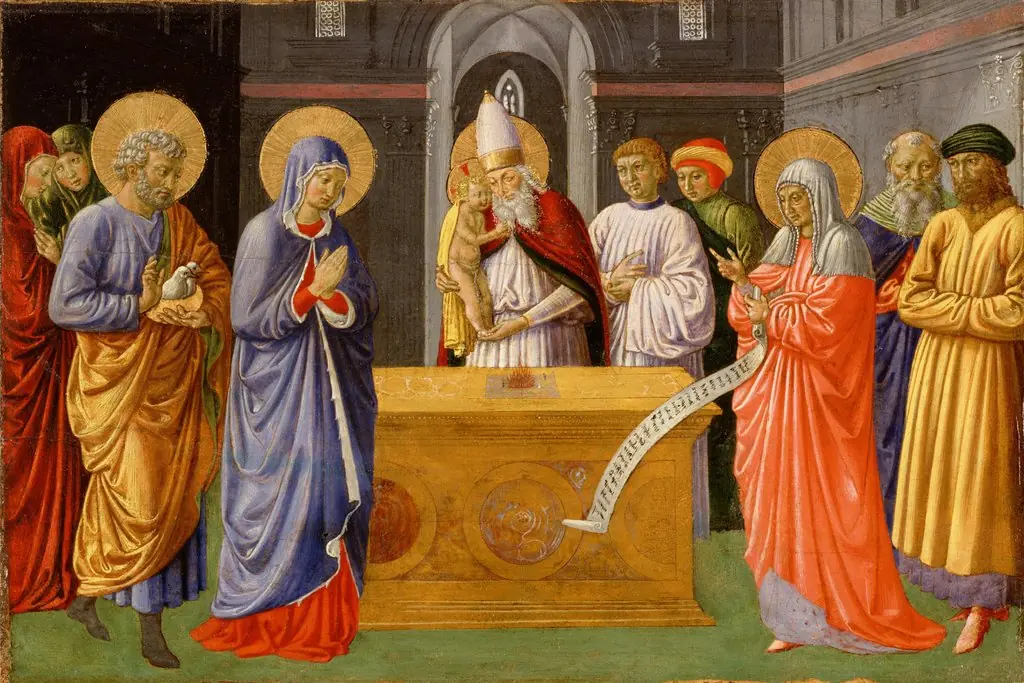 Purification of the Virgin