Artwork
Beach No. 3
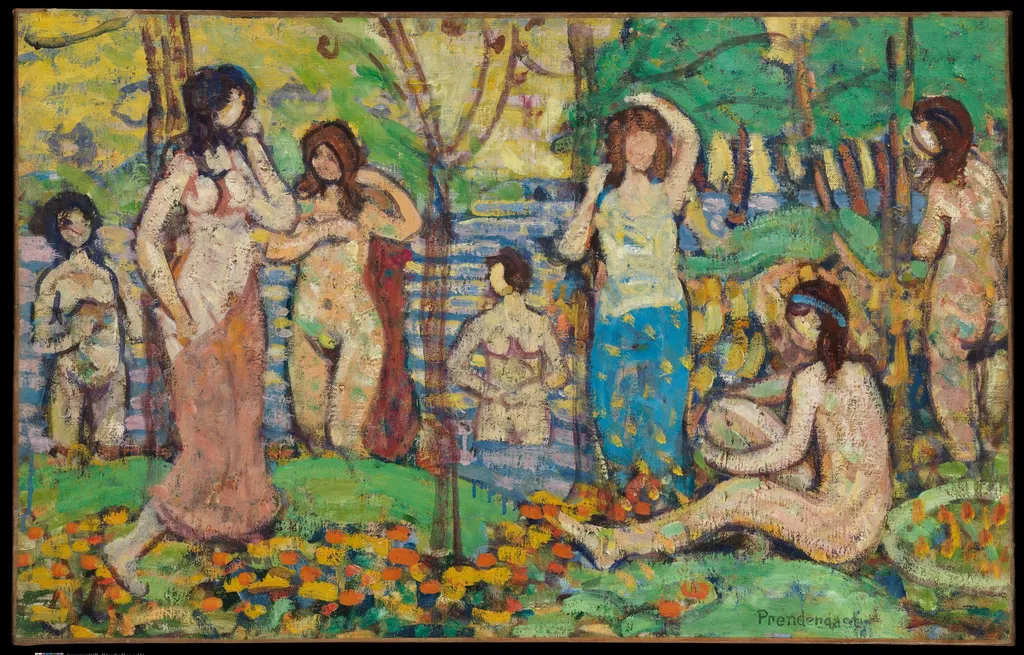
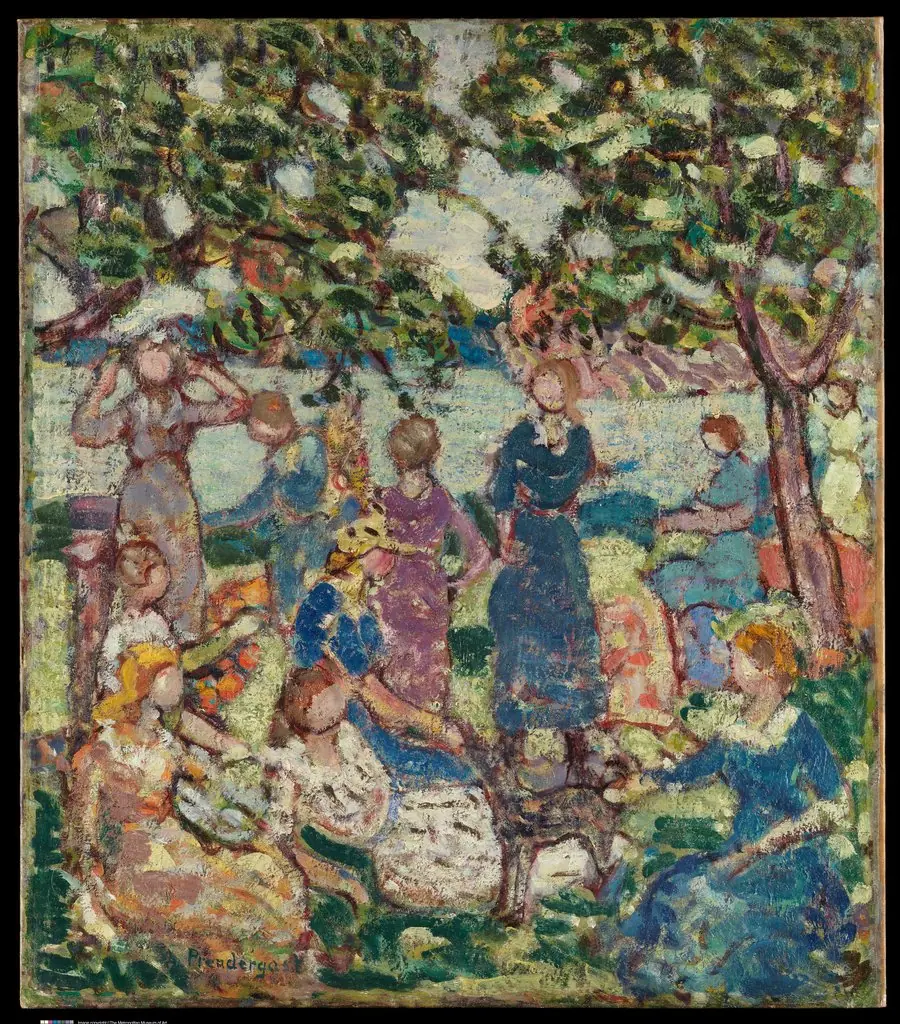
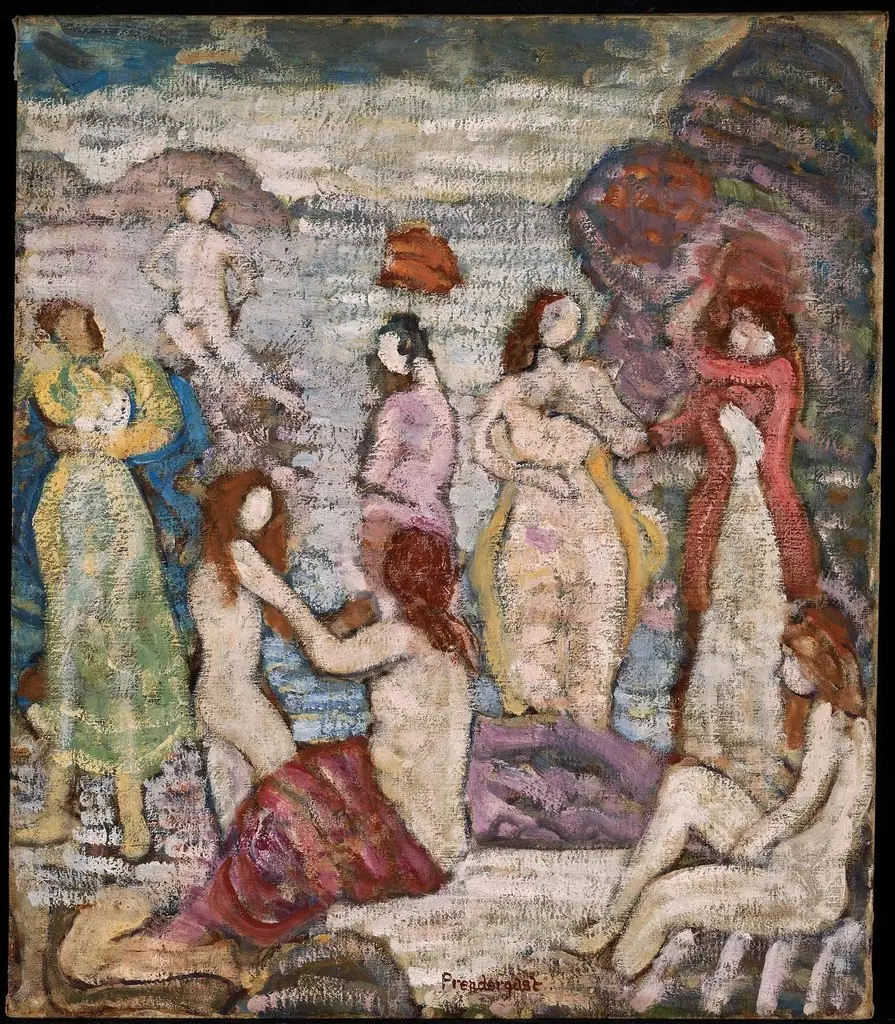
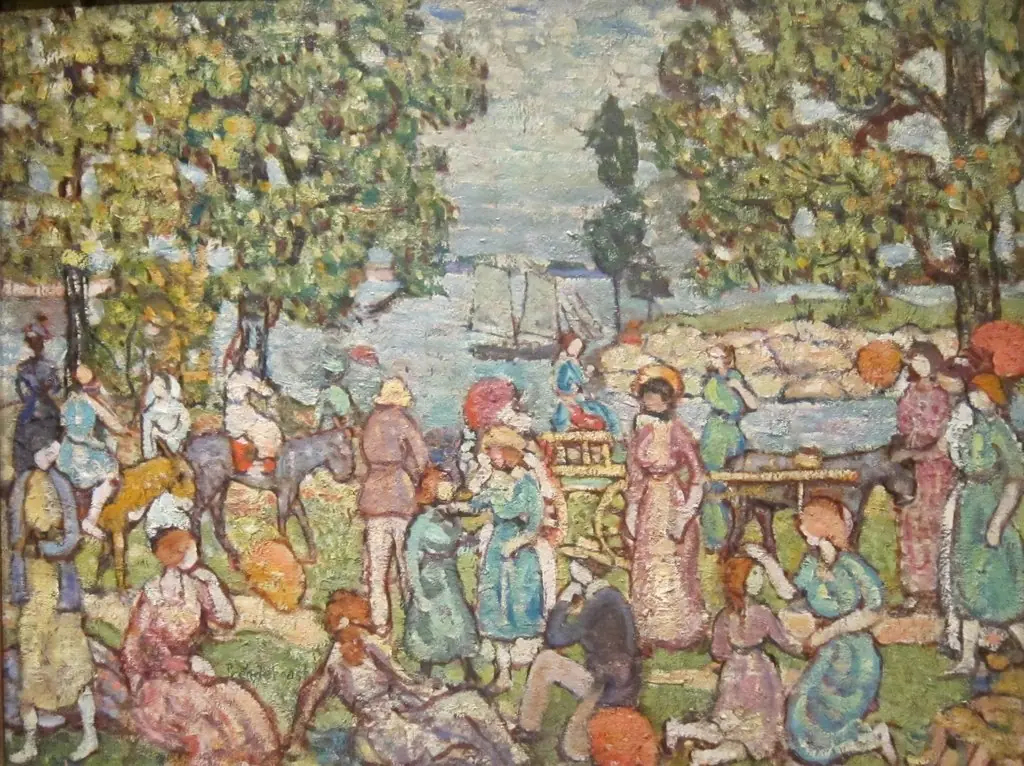
Beach No. 3 is an oil painting by the Post-Impressionist artist Maurice Prendergast. It dates from 1913 and is held in the collection of the Metropolitan Museum of Art. Prendergast's Beach No.
About this work
Subject & Meaning
The composition captures a moment of leisure and sensual enjoyment, emphasizing the interplay of light, color, and the human form against a coastal backdrop.
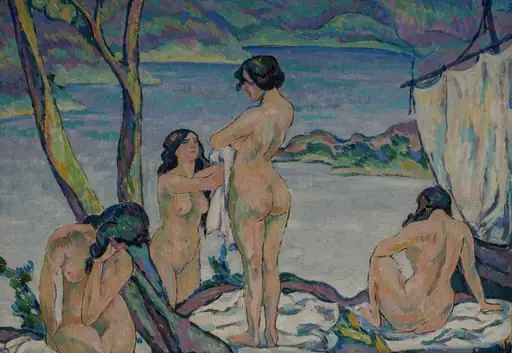
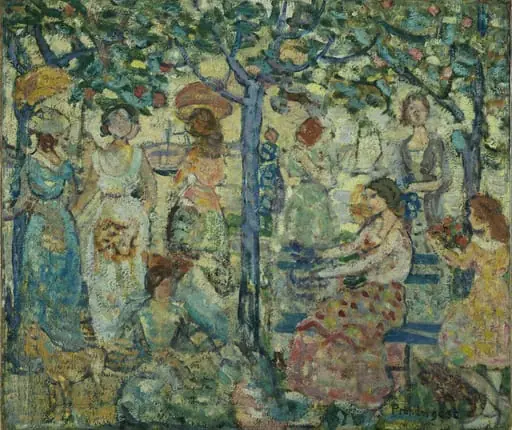
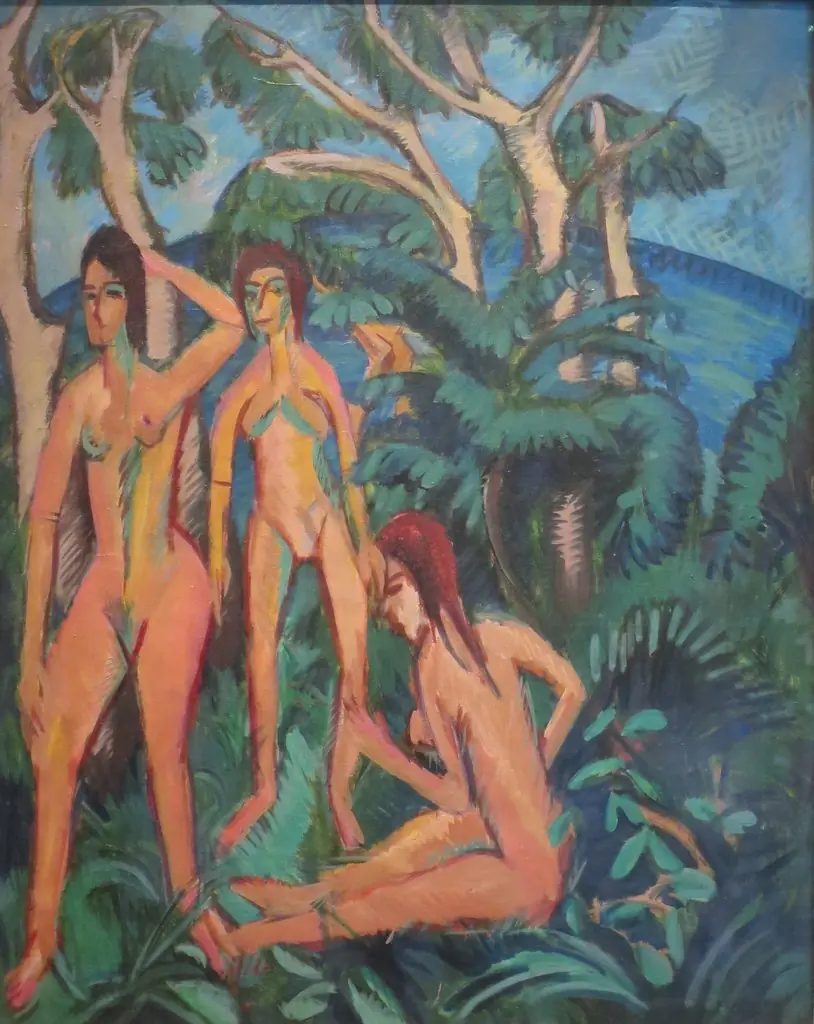
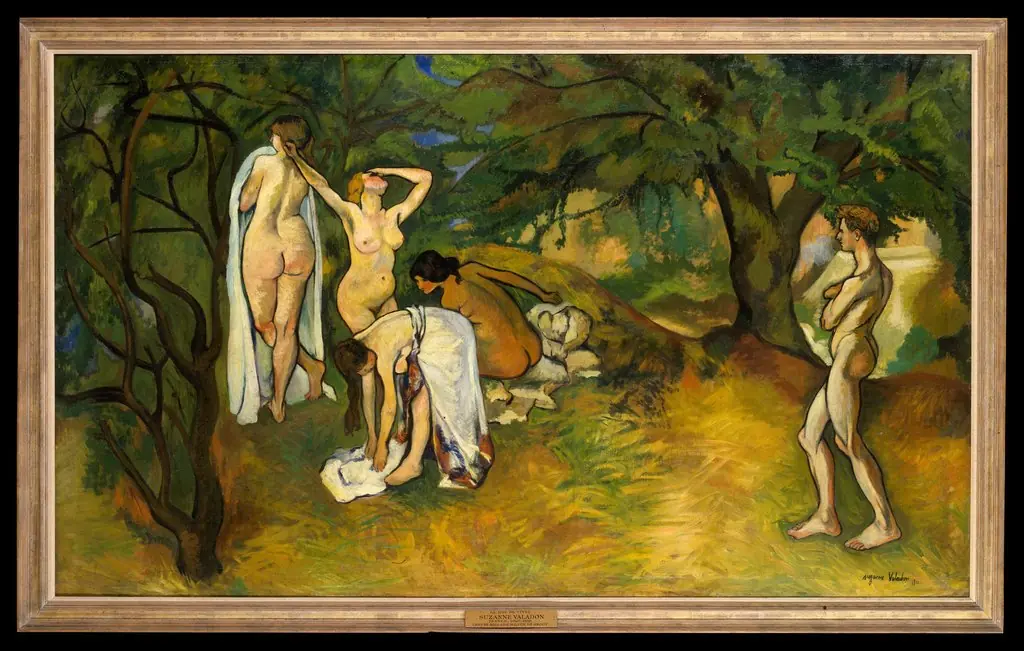
Beach No. 3 (1913) by Maurice Prendergast portrays a lively seaside scene of bathers, including nude figures, amid scattered flowers. The composition captures a moment of leisure and sensual enjoyment, emphasizing the interplay of light, color, and the human form against a coastal backdrop. By foregrounding the nude bathers and floral motifs, the work celebrates modern leisure, the vitality of summer, and a harmonious communion between body and nature, reflecting Prendergast’s interest in contemporary recreational life.
History & Provenance
Beach No. 3 is an oil on canvas painting executed by American artist Maurice Prendergast in 1913. The work was created as an independent studio piece, with no evidence of a specific commission; documentation indicates it remained in the artist’s studio until its acquisition by the Metropolitan Museum of Art, where it has been part of the permanent collection since its acquisition. The painting measures 47.9 × 75.9 cm and depicts a beach scene with figures. Its provenance traces from the artist’s estate to the Met, which now holds it in its collection.
Maurice Prendergast's 1913 oil painting, Beach No. 3, is held in the collection of the Metropolitan Museum of Art. The work, executed on canvas and measuring approximately 47.9 by 75.9 centimeters, depicts scenes of bathing and nudes alongside floral elements. While the museum houses the piece, the provided sources do not specify a unique accession or inventory number for the artwork.
Furthermore, the available documentation does not record a specific exhibition history for this painting, leaving its display record outside the scope of the current data. The work remains part of the institution's permanent holdings as a representative example of Prendergast's early twentieth-century style.
Overview
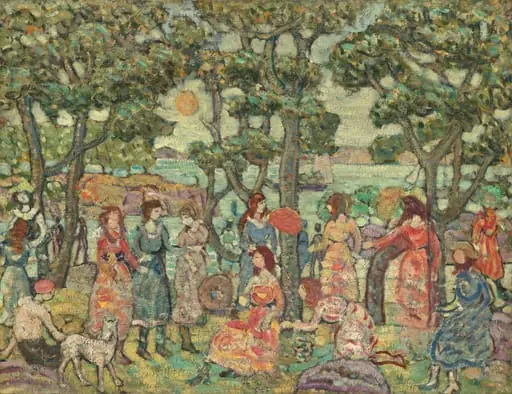
Prendergast's Beach No. 3, painted in oil in 1913, captures a vibrant outdoor gathering of women. This work by the Newfoundland-born American artist is part of The Metropolitan Museum of Art's collection. It exemplifies his distinctive approach to depicting modern leisure, characterized by a lively palette and a focus on everyday scenes.
Technique & Style
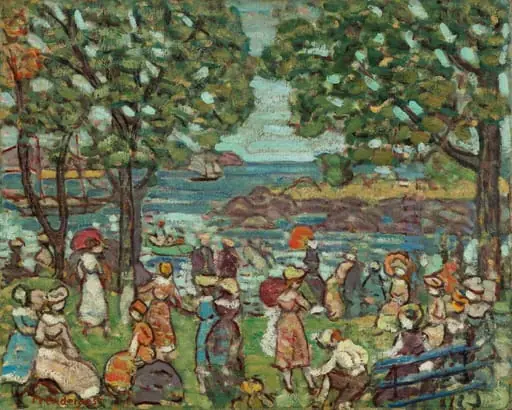
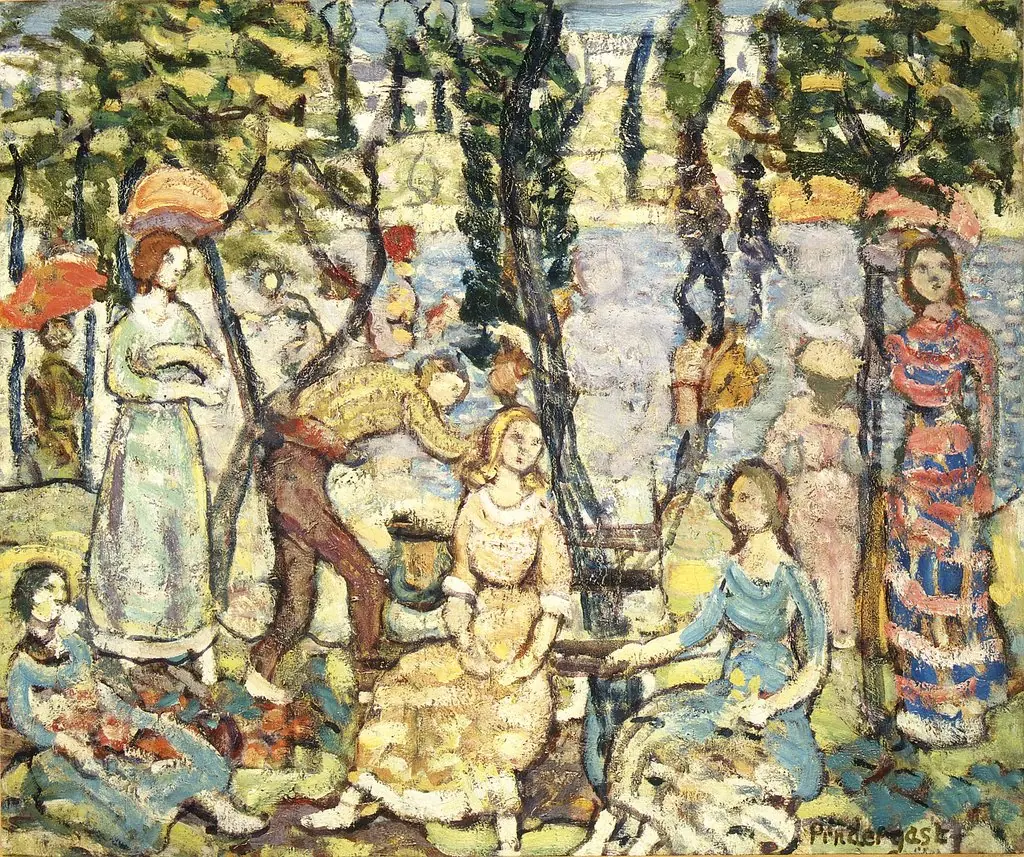
Prendergast employed thick, visible brushstrokes and a bold color palette, featuring yellows, blues, and oranges, to create Beach No. 3. This application of paint, often described as mosaic-like, lends a textured surface to the canvas. The loose, quick brushwork contributes to a lively and informal quality, giving the figures a sense of movement and spontaneity, resulting in a playful, almost sketchy aesthetic.
Context
Maurice Prendergast is often associated with Post-Impressionism due to his distinctive use of color and form. He was also a member of The Eight, an early twentieth-century American art group that challenged academic traditions by depicting scenes of modern urban and leisure life. Beach No. 3 reflects these connections, showcasing his interest in contemporary subjects rendered with a progressive stylistic approach.
Own this work as a print
Artist & collection
Artist
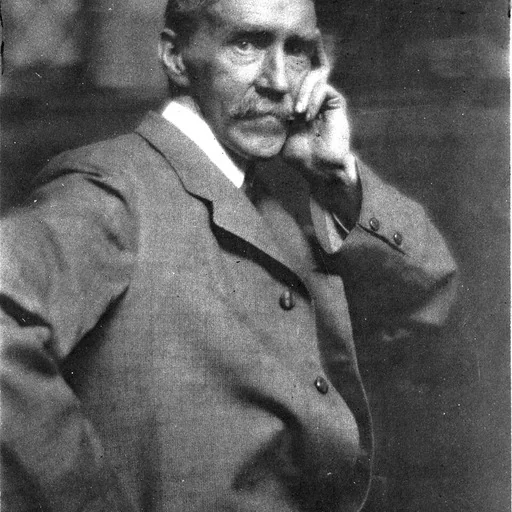
Maurice Brazil Prendergast (October 10, 1858 – February 1, 1924) was a Newfoundlander-American artist who painted in oil and watercolor, and created monotypes.