Artwork
Joy of Life
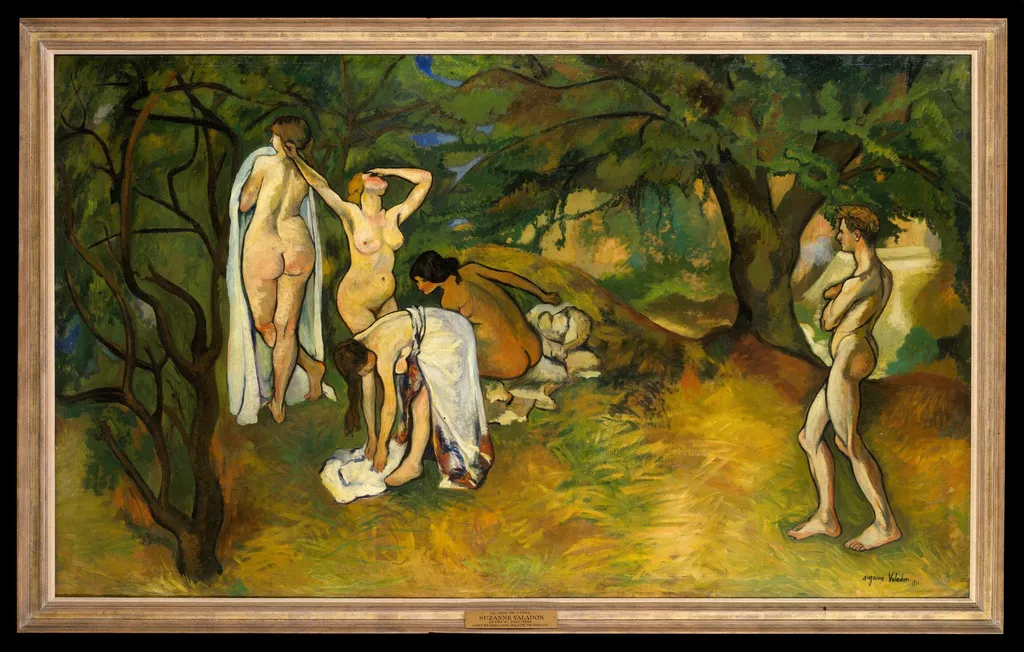
Joy of Life is an oil painting by the Post-Impressionist artist Suzanne Valadon. It dates from 1911 and is held in the collection of the Metropolitan Museum of Art.
About this work
Valadon painted it in 1911 with loose, bright brushwork and bold color, the figures easy in the sun.
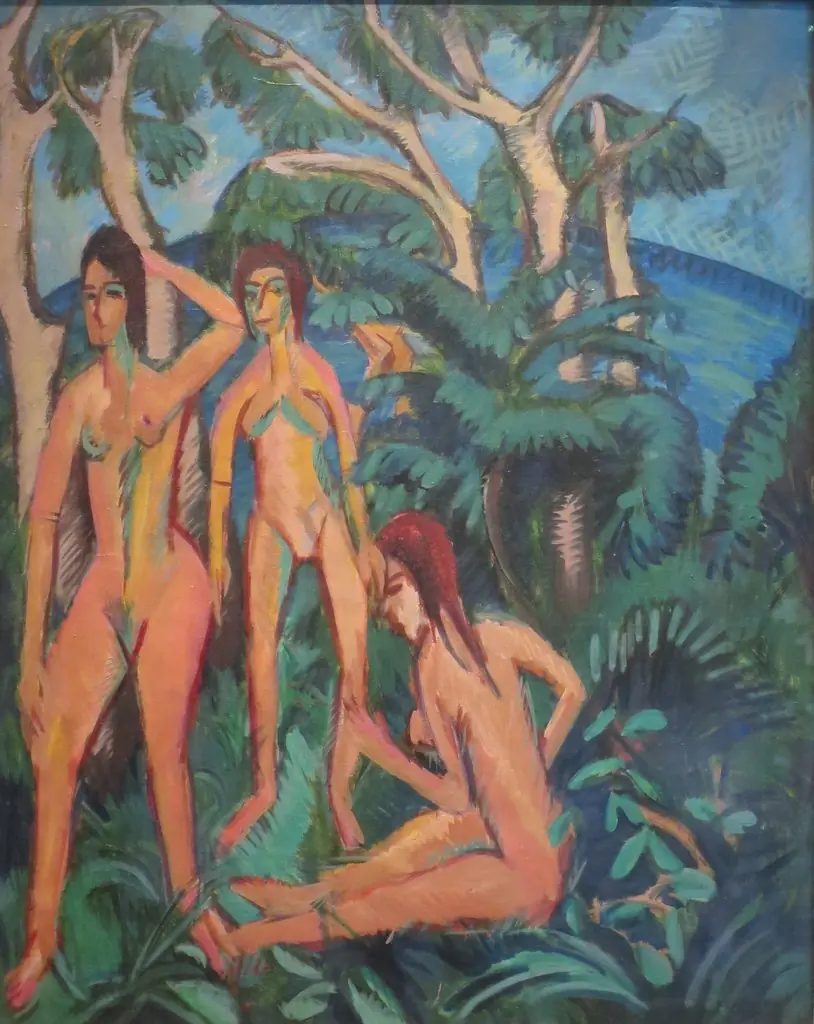
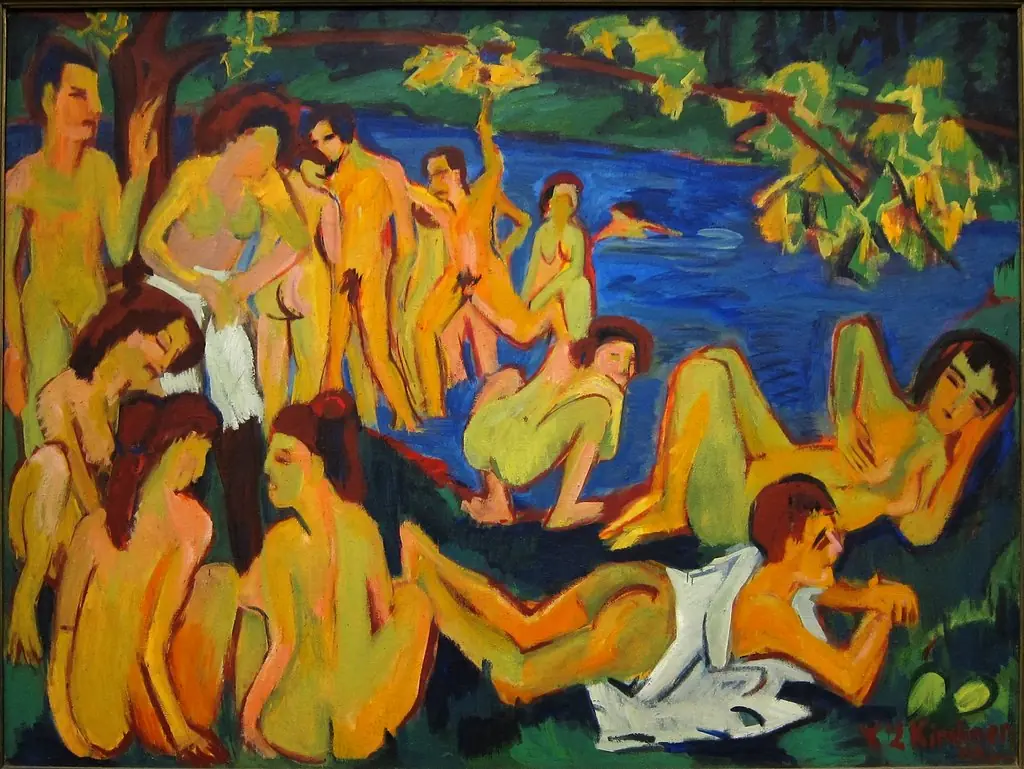
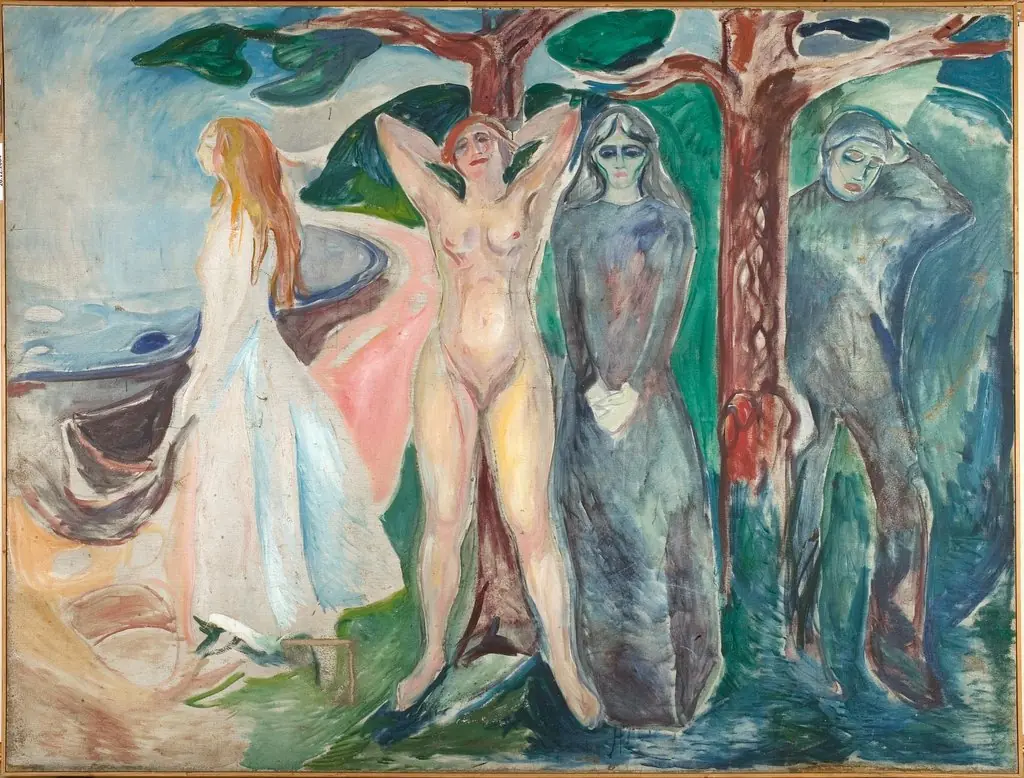
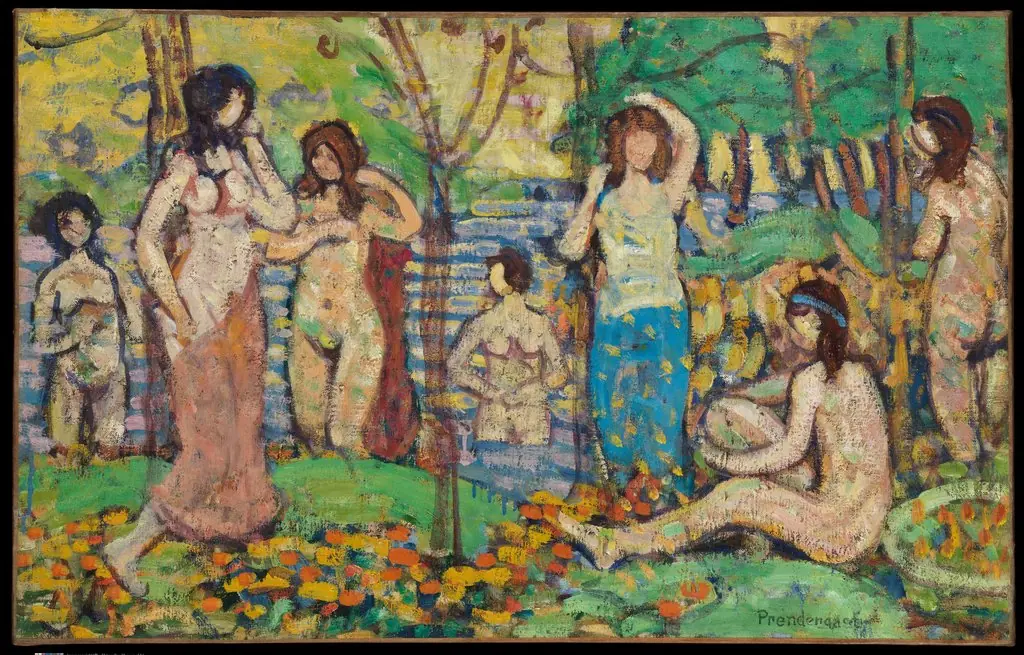
Five figures rest outdoors in a wooded clearing. Two women stand near the trees, one wrapped in a light cloth, the other bare; a third bends to adjust something on the ground while a man crouches beside her and another stands apart at the right. Thick green strokes and yellow grass fill the background.
Valadon painted it in 1911 with loose, bright brushwork and bold color, the figures easy in the sun.
Subject & Meaning
Joy of Life depicts a landscape populated by four nude and seminude women observed by a nude male figure, modeled by Valadon's lover André Utter. The composition engages the theme of "women as nature," a prevalent subject of the era, while reworking the conventional motif of bathers in nature. Scholar Gill Perry observes that the women appear strangely disconnected from one another, from the male viewer, and from the surrounding landscape, suggesting an ambiguous, dislocated relationship with both nature and the male spectator.
Patricia Mathews reinforces this reading, arguing that the figures inhabit nature without being equated with it, and that the male onlooker functions as a near-caricature of the dominating male gaze, since the women seem unaware of being watched. Rosemary Betterton contends that the figures disrupt the male gaze, captured in an unsexualized moment. Mathews further notes that the painting lacks the coherent narrative typical of masculinist imagery, instead allowing intersecting narratives to destabilize conventional gendered interpretations.
Technique & Style
Joy of Life is an oil painting on canvas executed by Suzanne Valadon in 1911. The canvas measures 122.9 cm in height by 205.7 cm in width, giving it a broad horizontal format suited to its panoramic landscape composition. Valadon used oil paint to render a pastoral scene populated by nude and seminude female figures alongside a nude male, working in a style that reworks the traditional bather-in-nature theme while unsettling conventional gendered viewing relationships.
The figures are described by scholars as appearing strangely separate from one another and from the surrounding nature, producing a dislocated, ambiguous relationship with the landscape rather than the harmonious fusion typical of the genre. The handling emphasizes this tension: the women seem unaware of being watched, and the nude male functions less as an integrated participant than as a near-caricature of the dominating gaze, lending the work its formally destabilized quality.
History & Provenance
Joy of Life (La Joie de vivre) is an oil painting by Suzanne Valadon, completed in 1911. The work entered the Metropolitan Museum of Art in New York through a bequest in 1967. The canvas measures 122.9 cm in height by 205.7 cm in width and is held in the museum's collection under accession number 67.187.7.
Beyond the 1911 completion and the 1967 bequest, the documented ownership history and commission details are limited. The work has not been the subject of a dedicated monographic exhibition; it is typically presented in the museum's European Paintings galleries as part of its permanent collection displays.
Context
Joy of Life (1911) has been situated within modernist debates on the female nude and the male gaze. Scholars such as Gill Perry interpret the composition as a reworking of bathers in nature, noting the figures' detachment from one another and from the surrounding landscape, which produces a dislocated relationship with both nature and the viewer. Patricia Mathews argues that the women occupy nature without merging with it, describing the lone male figure, modeled on Valadon's partner André Utter, as a caricature of the dominating male gaze, rendered irrelevant by the women's indifference.
Rosemary Betterton contends that the figures disrupt conventional spectatorship by appearing unsexualized and caught in a moment outside the viewer's control. Mathews further observes that the painting unsettles coherent gendered narratives, a tendency that recurs across Valadon's oeuvre, as seen in Casting the Net (1914), where the nude male is cast as the object of the gaze.
Overview
Suzanne Valadon's Joy of Life, painted in 1911, is a significant oil on canvas work that exemplifies her mature style and departure from academic conventions. The composition depicts five figures situated within a dense, wooded landscape. Two women stand prominently near the trees; one is draped in a light cloth while the other remains bare.
A third woman bends forward, attending to an object on the ground, accompanied by a crouching man, while a second man stands isolated to the right. Valadon renders the scene with bold, unmodulated areas of color and strong, defining outlines, techniques influenced by her association with the Fauves and her own background as a model for artists like Renoir. The figures are integrated into the environment through a flattened perspective and a vibrant, non-naturalistic palette dominated by greens and earth tones.
Created during a period when Valadon was establishing her reputation as a serious painter rather than a muse, the work reflects her interest in the human form and nature, often exploring themes of sensuality and vitality without idealization. Joy of Life stands as a testament to her unique position in early 20th-century French modernism, bridging the gap between Post-Impressionism and the emerging avant-garde.
Own this work as a print
Artist & collection
Artist
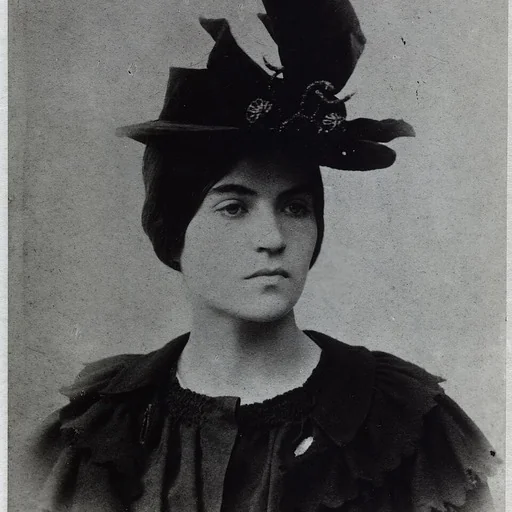
Marie-Clémentine "Suzanne" Valadon (French pronunciation:; 23 September 1865 – 7 April 1938) was a French painter who was born at Bessines-sur-Gartempe, Haute-Vienne, France.