Artwork
Mrs. Francis Howard
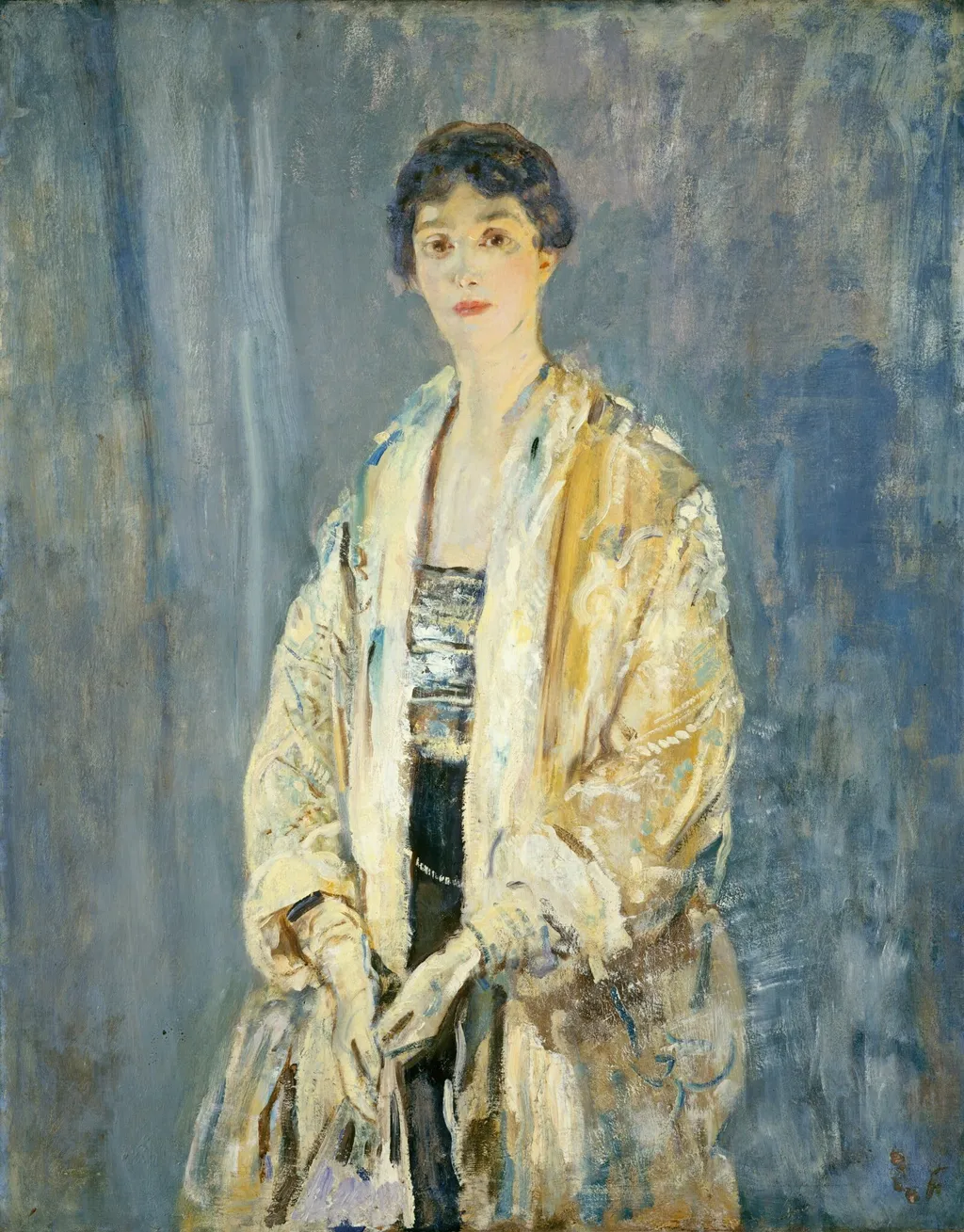
Mrs. Francis Howard is an oil painting by the Aestheticist artist Ambrose McEvoy. It dates from 1917 and is held in the collection of the National Gallery of Art.
- Inscription
- Inscribed:lower right: illegible
About this work
Technique & Style
Executed in 1916, this portrait is an oil painting on canvas. The work measures 127 cm in height and 101.5 cm in width. As a formal portrait, it utilizes traditional materials to depict the sitter, Mrs. Francis Howard, adhering to the conventions of early twentieth-century portraiture through its medium and support.
History & Provenance
While the work dates to 1916, the provided records do not list specific exhibition history or an accession number beyond its provenance transfer.
Ambrose McEvoy created the oil-on-canvas portrait Mrs. Francis Howard in 1916. The work measures 127 cm in height and 101.5 cm in width. Following its execution, the painting entered the collection of the sitter's niece, Mrs. Carley Dawson, who kept it in Washington, D.C. In 1986, Mrs. Dawson gifted the artwork to the National Gallery of Art in Washington, D.C., where it remains part of the permanent collection.
Mrs. Francis Howard is held in the collection of the National Gallery of Art in Washington, D.C. The painting entered the museum's holdings in 1986 as a gift from Mrs. Carley Dawson, who was the niece of the sitter. While the work dates to 1916, the provided records do not list specific exhibition history or an accession number beyond its provenance transfer.
Overview
Ambrose McEvoy’s oil on canvas, titled Mrs. Francis Howard, dates from around 1917. The work presents a solitary female figure against a muted blue‑gray backdrop, rendered in a restrained palette that emphasizes form over ornament.
Subject & Meaning
The sitter is depicted standing, her short dark hair framing a composed expression. She wears a light‑toned robe layered over a darker dress, suggesting a modest yet dignified presence. The straightforward pose and neutral setting focus attention on her personal bearing rather than narrative detail.
Context
Created during the later years of World War I, the portrait reflects the period’s shift toward restrained representation in British art. McEvoy, known for his elegant portraiture, employs a pared‑back approach that aligns with contemporary moves away from the elaborate Victorian style toward a more modern, understated aesthetic.
Own this work as a print
Artist & collection

- Portrait of Maria Morzycka
 The Artist’s Daughter in Fancy Dress
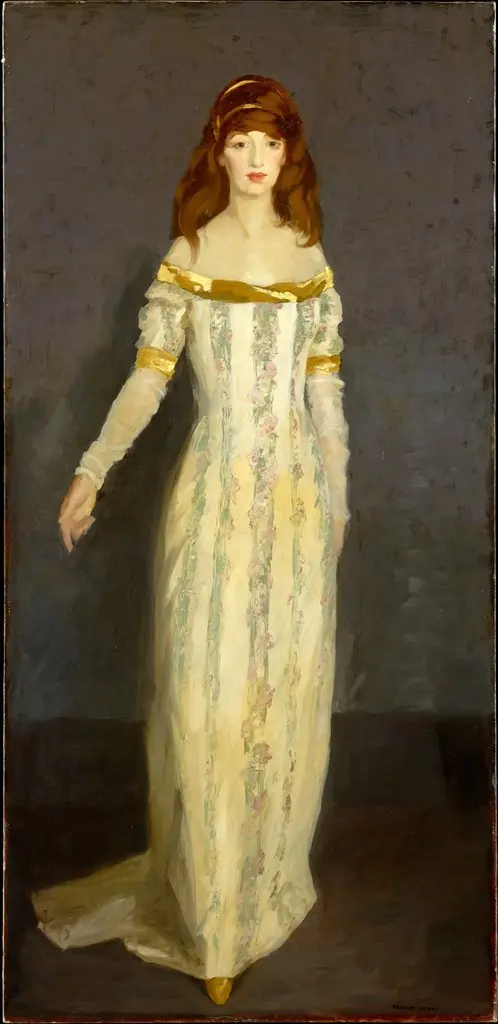 The Masquerade Dress
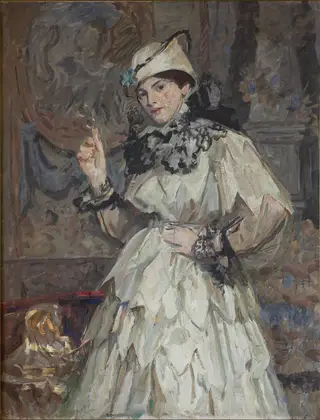 The Artist’s Daughter in Fancy Dress
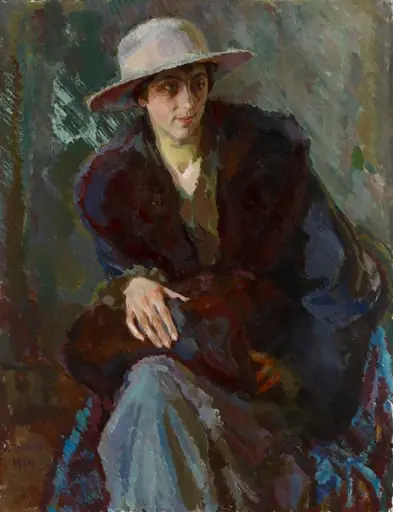 Naisen muotokuva, Martha Neiglick
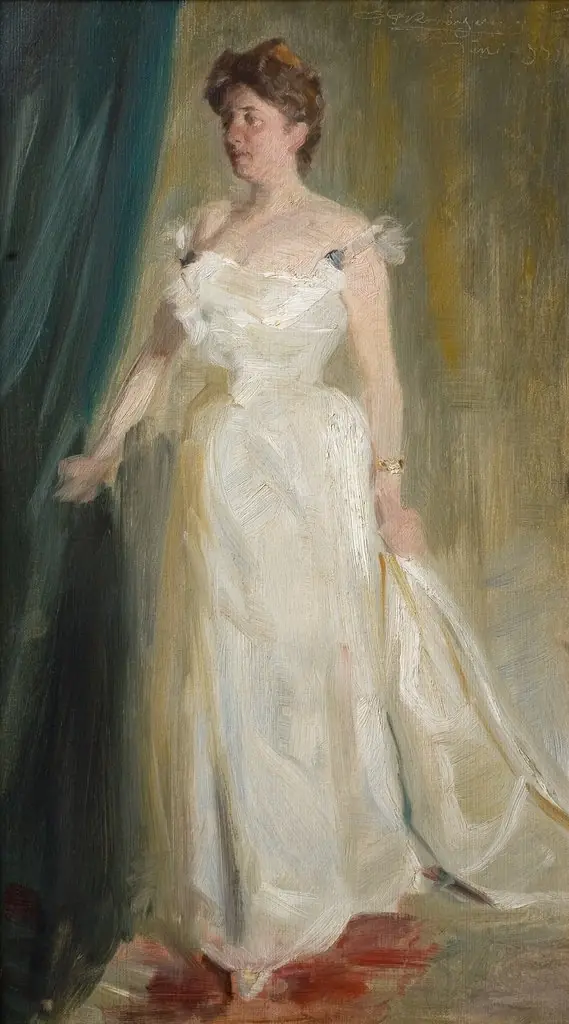 Portræt af lensgrevinde Lillie Suzanne Raben-Levetzau
 Le Corsage Noir
 Girl with Bare Shoulders
 Portret de femeie
 Woman in Evening Gown
 Florence Sittenham Davey (Mrs. Randall Davey)
 Portret de femeie