Artwork
Florence Sittenham Davey (Mrs. Randall Davey)
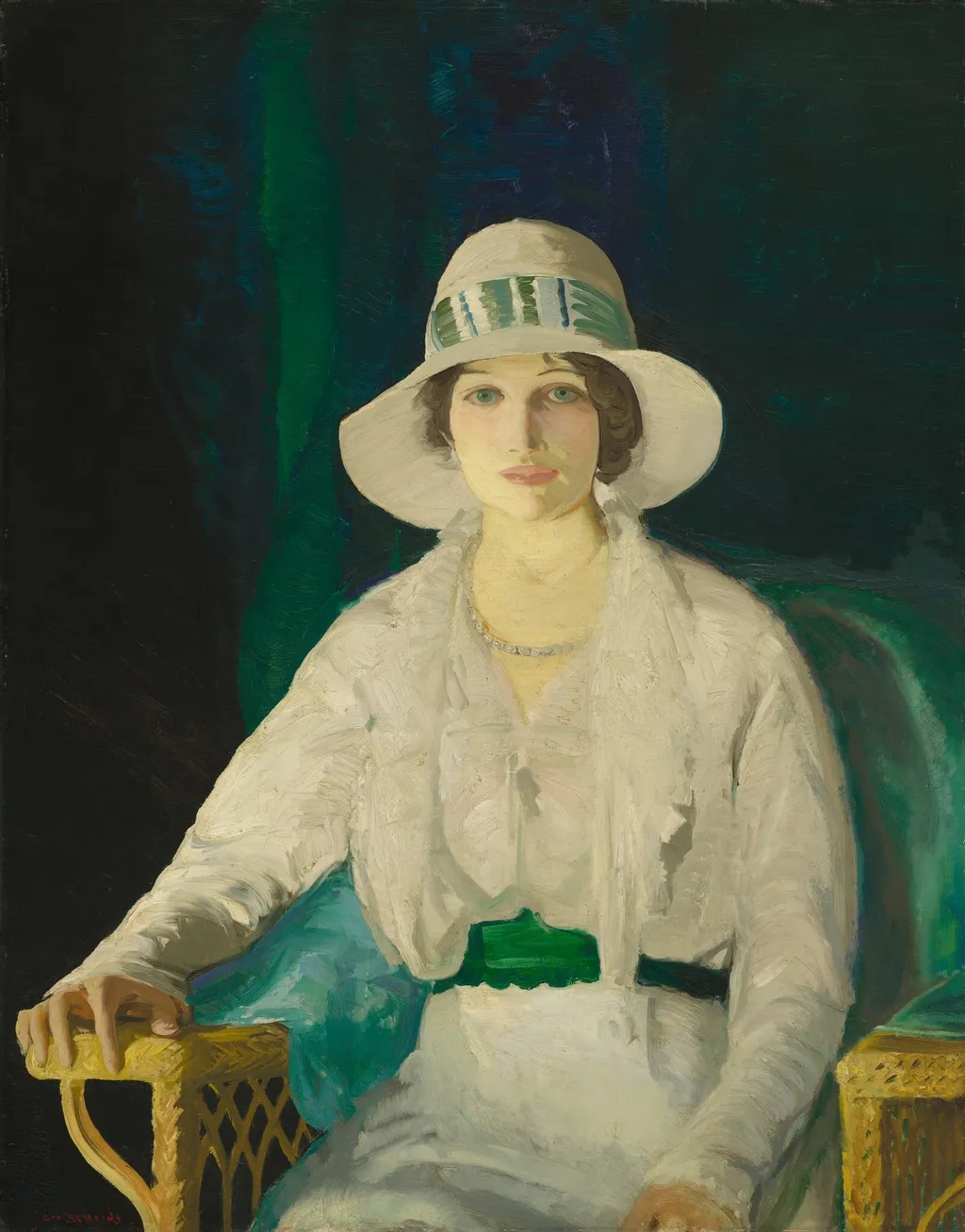
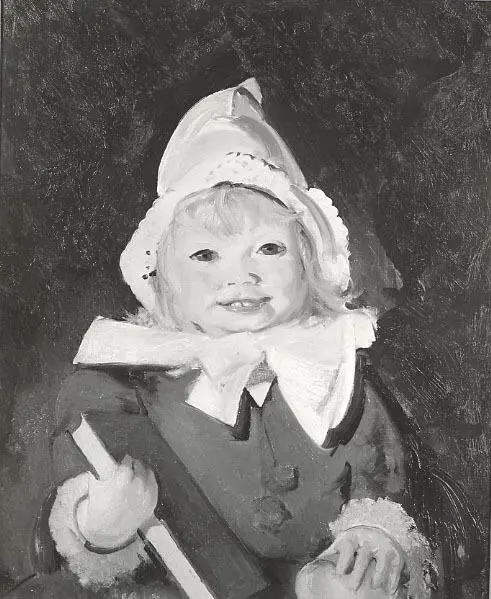
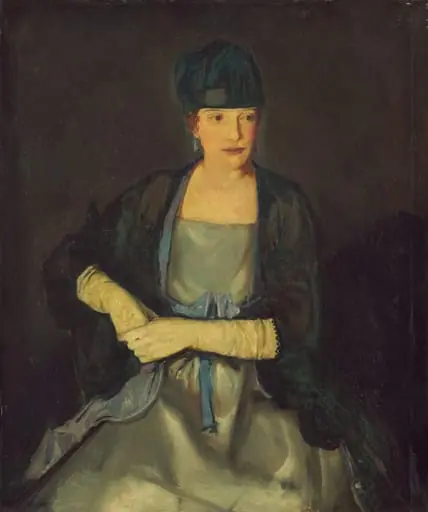
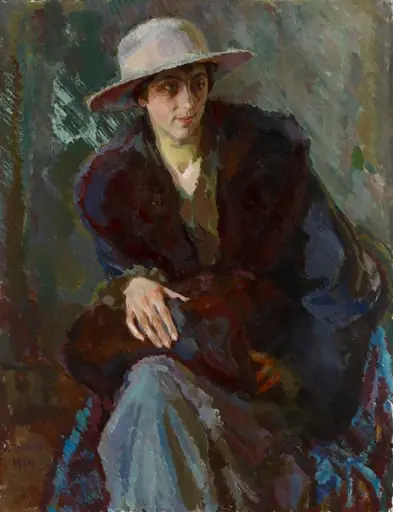
Florence Sittenham Davey (Mrs. Randall Davey) is an oil painting by the Realist artist George Bellows. It dates from 1914 and is held in the collection of the National Gallery of Art.
- Inscription
- Inscribed:lower left: Geo. Bellows; reverse in black crayon, "McCormick" in a hand other than the artist: Portrait Florence Davey McCormick / Geo Bellows / 146 E 19 St / New York.
About this work
Subject & Meaning
The composition aligns with early 20th-century portrait conventions, where attire and accessories signal social identity and modernity.
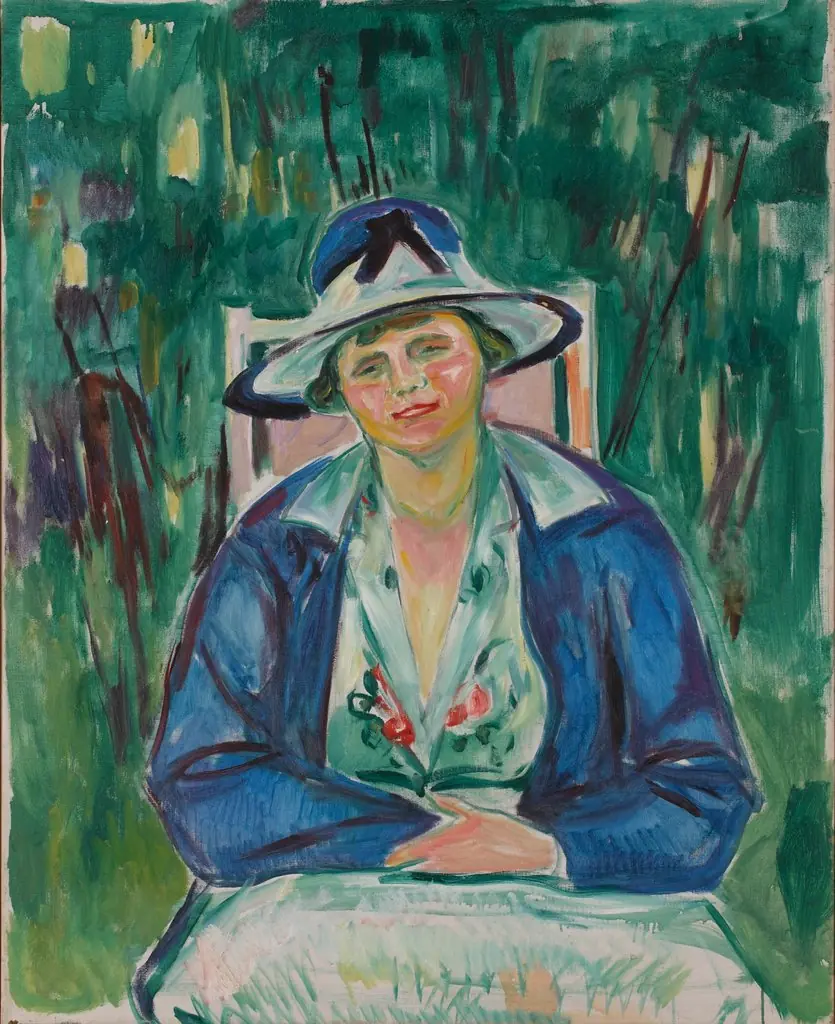
The portrait depicts Florence Sittenham McCormick wearing a sun hat, wicker accessories, and a pearl necklace, elements that emphasize her fashionable status and leisurely environment. The composition aligns with early 20th-century portrait conventions, where attire and accessories signal social identity and modernity. In the context of Bellows’s oeuvre, the painting’s presentation to her first husband, Randall Davey, as repayment for a gambling debt complicates its purely representational function, suggesting the image also functioned as a personal exchange rather than solely an artistic commemoration.
Technique & Style
Created in 1914 on Monhegan Island, this portrait is executed in oil paint on a wood panel support. The work measures 96.5 by 76 centimeters. Bellows depicts the sitter, Florence Sittenham Davey, wearing a pearl necklace and a sun hat, with a wicker chair visible in the composition.
The painting is classified within the genre of portraiture. The medium and support consist of oil applied to a solid wooden panel, a choice that provides a rigid foundation distinct from canvas. The visual handling captures the specific attire and accessories of the subject, including the noted hat and jewelry, within the formal structure of a traditional portrait.
History & Provenance
George Bellows painted Florence Sittenham Davey (Mrs. Randall Davey) in 1914 while working on Monhegan Island; the work is an oil portrait of Florence Sittenham McCormick wearing a pearl necklace and sun hat. Bellows created the piece as settlement of a gambling debt owed to Randall Davey, who received the painting directly from the artist in 1922 and held it until their divorce in 1930. Following the divorce, ownership passed to Florence Sittenham Davey, who later bequeathed the work to the National Gallery of Art in 1979.
The painting’s date of inception is recorded as August 1914, and it measures 96.5 cm by 76 cm.
Overview
George Bellows painted Florence Sittenham Davey in 1914, capturing the sitter in a moment of leisurely repose. The work depicts Mrs. Randall Davey seated in a chair, dressed in a sun hat and a pearl necklace while holding a fan. Executed in oil on wood, the portrait reflects Bellows' mature style, characterized by vigorous brushwork and a dynamic handling of light that animates the figure against a simplified background.
The composition emphasizes the subject's relaxed demeanor and the texture of her attire, moving beyond strict realism to convey a sense of immediate presence. Bellows, a central figure in the Ashcan School and American Realism, frequently portrayed members of his social circle with intimacy and psychological depth. This specific work highlights his friendship with the Davey family, for whom he created several portraits.
Painted during a period when Bellows was expanding his subject matter beyond urban scenes and sporting events to include domestic and social portraits, the painting stands as a significant example of his ability to blend observational accuracy with expressive energy. It documents a specific individual within the artist's personal network while demonstrating his technical mastery in rendering light and form on a smaller scale.
Context
George Bellows's artistic practice often involved depicting subjects from his immediate social sphere, including family members and close friends. This tendency contributed to the distinctive character of his portraiture, which frequently conveys a relaxed and unposed quality. By portraying individuals he knew well, Bellows could explore personality and presence in a manner that felt less constrained by conventional portraiture expectations, fostering a more personal connection between artist and subject.
Own this work as a print
Artist & collection

Artist
George Wesley Bellows (August 12 or August 19, 1882 – January 8, 1925) was an American realist painter, known for his bold depictions of urban life in New York City.