Artwork
Anna Maria Vaiani
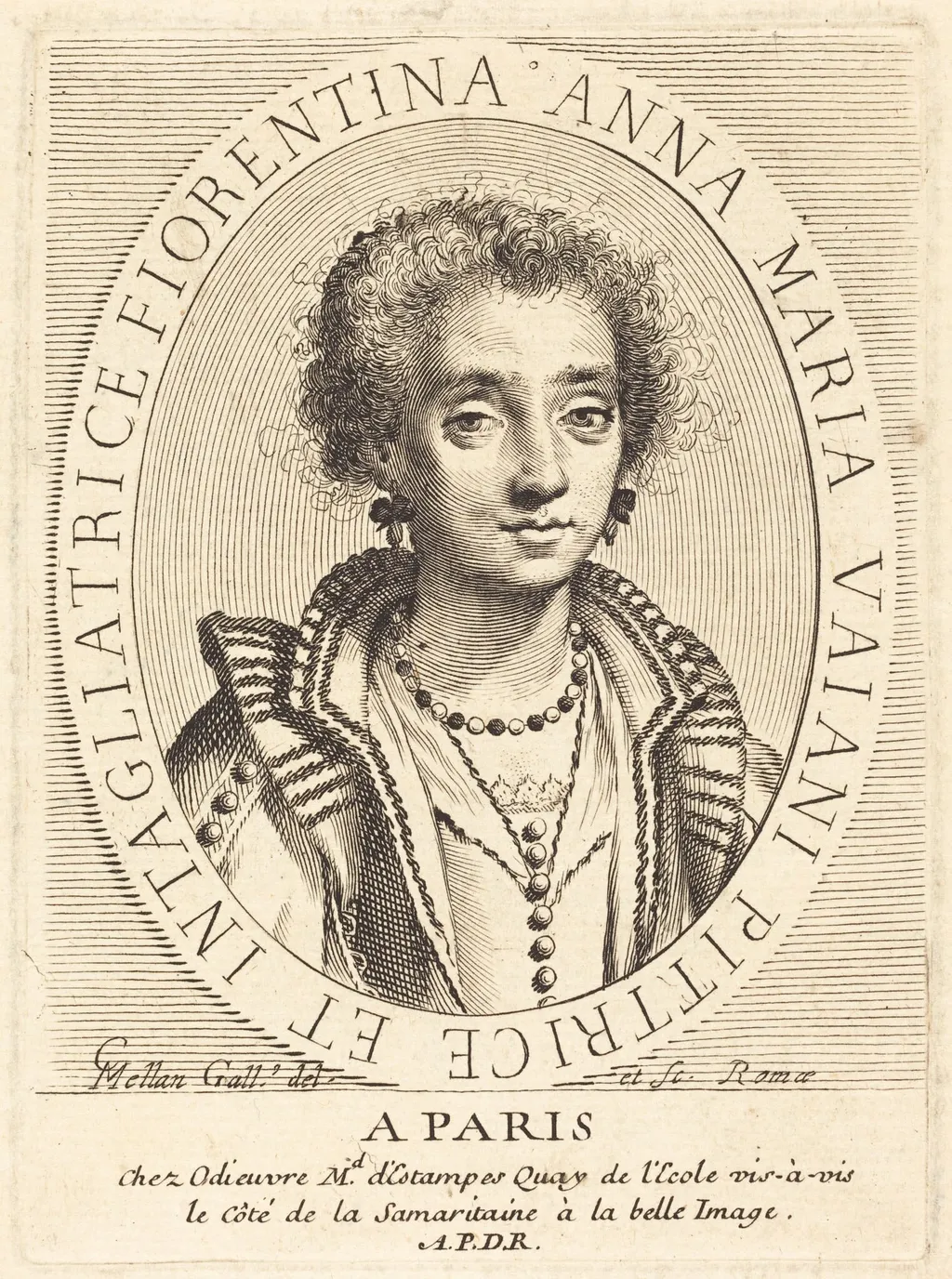
Anna Maria Vaiani is an ink print by the Baroque artist Claude Mellan. It dates from 1630 and is held in the collection of the Metropolitan Museum of Art.
- Inscription
- Inscribed:around circumference in plate: ANNA MARIA VAIANI PITTRICE ET INTAGLIATRICE FIORENTINA; across bottom in plate: CMellan Gall.' del. et Sc. Romae / A PARIS / chez Odieuvre Md. d'Estampes Quay de l'Ecole vis-a-vis / le Cote de la Samaritaine a la belle Image. / A.P.D.R.; by later hand, lCv//i n graphite: M.256
About this work
Overview
Created around 1630, this engraving by Claude Mellan portrays Anna Maria Vaiani, an Italian artist and engraver.
Created around 1630, this engraving by Claude Mellan portrays Anna Maria Vaiani, an Italian artist and engraver. Executed on laid paper, the work is a portrait rendered in fine linear detail using the burin technique. Mellan’s precision in incising the copper plate captures not only Vaiani’s likeness but also the texture of her attire, reflecting the refined aesthetic of early 17th-century printmaking.
Subject & Meaning
Anna Maria Vaiani is depicted with quiet dignity, her expression composed and introspective. Her clothing, elaborate lace collar and structured bodice, signals social standing and cultural refinement. As a woman active in the male-dominated field of engraving, her portrait may serve as both a personal likeness and a quiet assertion of professional identity within artistic circles of the time.
Technique & Style
Mellan employed the burin method, incising fine lines directly into a copper plate to produce the image. The engraving’s subtle gradations of tone and intricate rendering of fabric folds demonstrate his mastery of line control. Unlike stippling or hatching, this technique relies on the depth and direction of each cut, resulting in a crisp, sculptural quality that emphasizes form over atmospheric effect.
History & Provenance
The print emerged during Mellan’s mature period in Paris, where he was active as a court engraver. While specific early ownership records are sparse, the work appears in later 17th-century collections of prints and portraits. Its survival in multiple impressions suggests it was circulated among collectors and artists, valued for its technical excellence and the subject’s cultural significance.
Context
In early 17th-century Europe, female artists were rare, particularly in printmaking. Vaiani, trained in Rome and active in Rome and Florence, was among the few women to gain recognition as an engraver. Mellan’s portrait of her reflects a broader, though limited, acknowledgment of women’s contributions to the arts, situating her within a network of intellectual and artistic exchange in Catholic Europe.
Legacy
This engraving endures as one of the few surviving portraits of Anna Maria Vaiani and a rare visual record of a female printmaker from the period. It stands as a testament to Mellan’s technical skill and to Vaiani’s presence in a field where women’s roles were often unrecorded. The work continues to be studied for its insight into gender, artistic practice, and the material culture of print in Baroque Europe.
Own this work as a print
Artist & collection

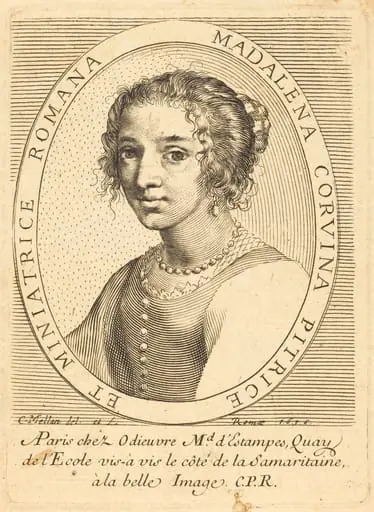 Maddalena Corvina
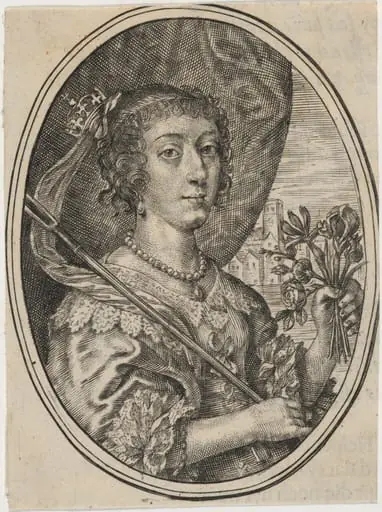 Henrietta Maria (?)
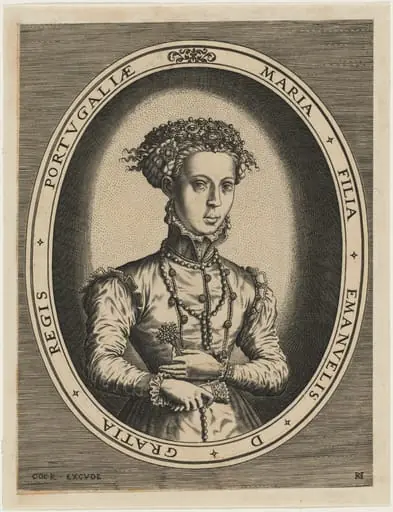 Princess Maria, Daughter of Emanuel, King of Portugal
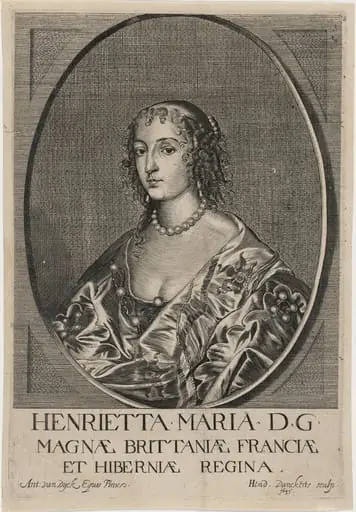 Henrietta Maria, Queen of Charles I
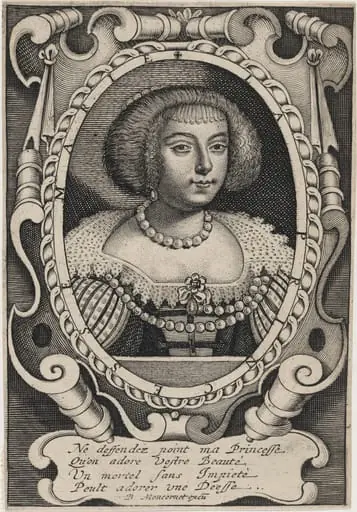 Henrietta Maria, Queen of Charles I
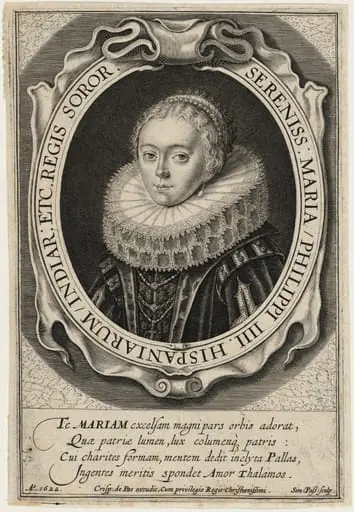 Maria of Austria, Infanta of Spain
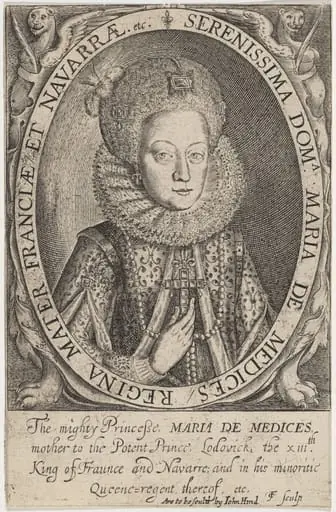 Marie de Medici, Wife of Henry IV of France
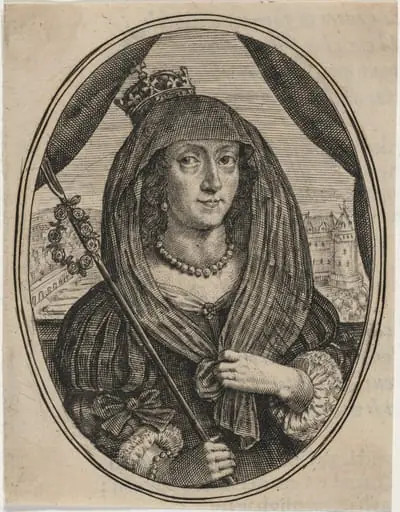 Henrietta Maria
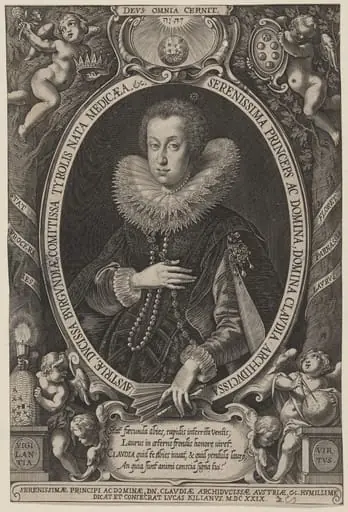 Claudia de Medici, Wife of Leopold of Austrian Tyrol