Artwork
Self-Portrait
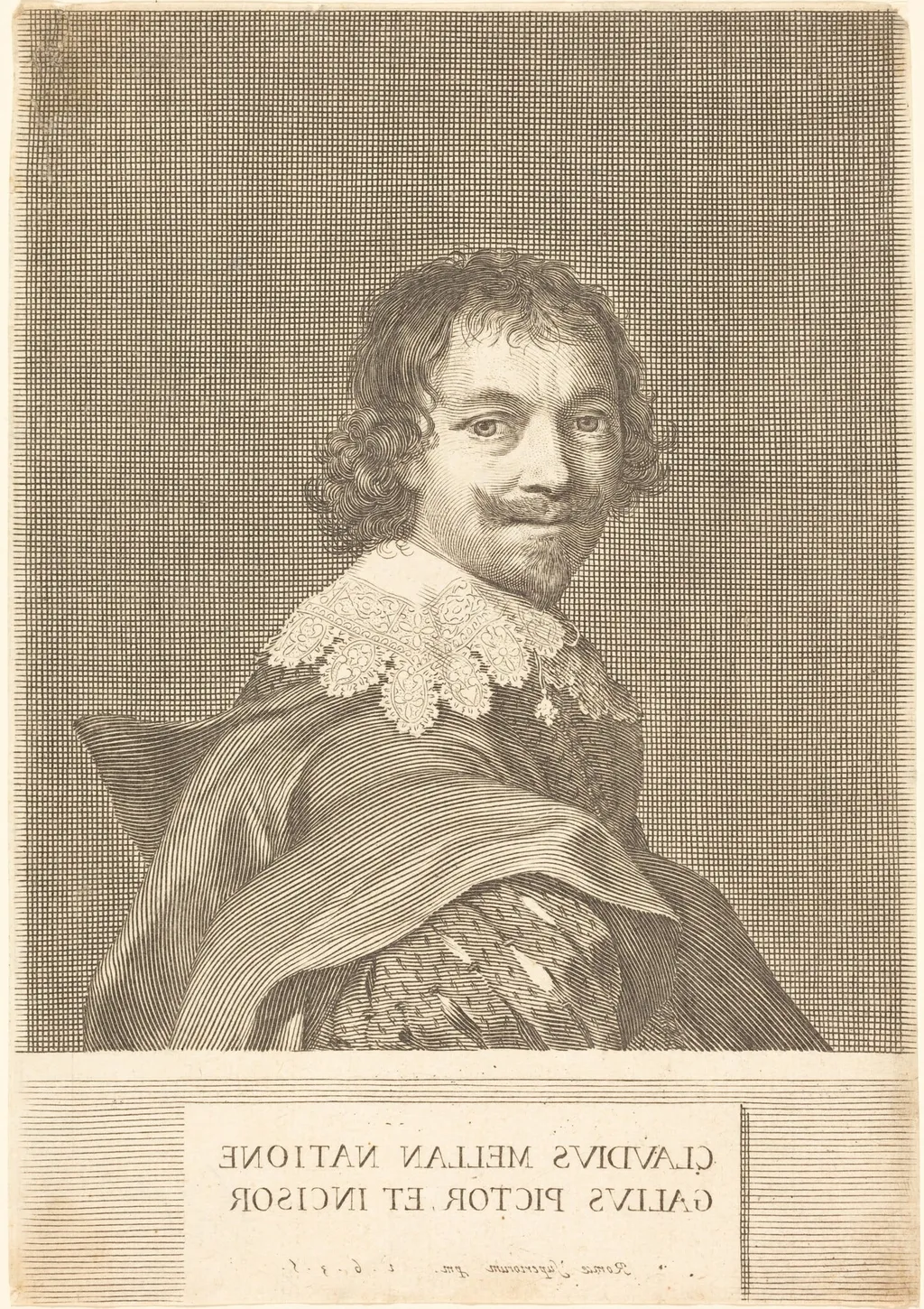
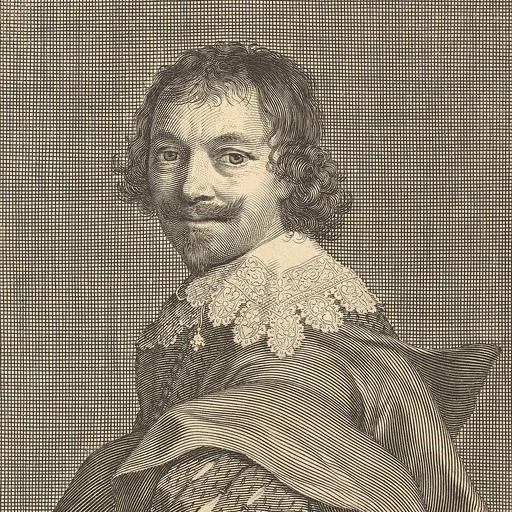
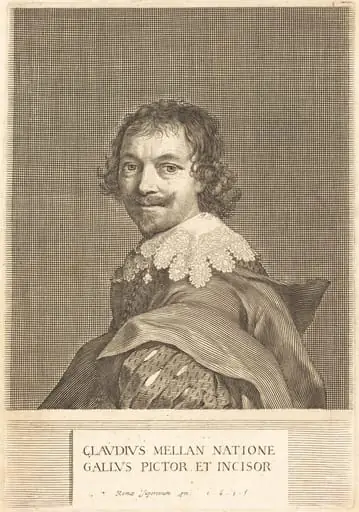
Self-Portrait is an ink print by the Baroque artist Claude Mellan. It dates from 1635 and is held in the collection of the National Gallery of Art.
- Inscription
- Inscribed:reversed across bottom in plate: CLAVDIVS MELLAN NATIONE / GALLVS PICTOR ET INCISOR / Romae superiorum pm. 1.6.3.5.; by later hand, lower right verso in graphite: 6200
About this work
Overview
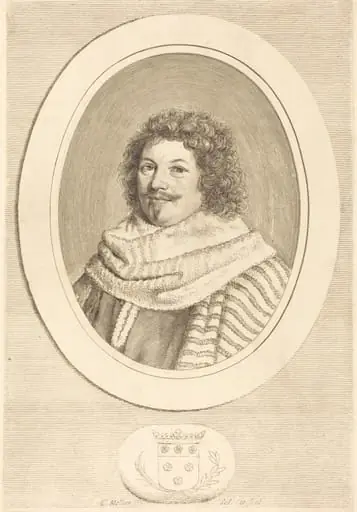
The work depicts the artist facing forward with a direct, serious gaze, his curly hair and beard framing a strong visage.
Created in 1635, this engraving is a celebrated self-portrait by the French Baroque artist Claude Mellan. The work depicts the artist facing forward with a direct, serious gaze, his curly hair and beard framing a strong visage. He is dressed in a dark garment featuring a prominent, finely detailed ruffled collar.
The composition is defined by Mellan's extraordinary technical mastery, utilizing a continuous, single spiral line that begins at the tip of his nose and expands outward to render the entire face, hair, and clothing. This unique linear progression creates a seamless gradient of tone and form without the interruption of separate hatching strokes, demonstrating an unprecedented control of the burin. The print serves as both a personal declaration of identity and a virtuoso display of engraving technique, distinguishing Mellan as a leading figure in 17th-century French printmaking.
The inscription at the bottom, partially visible as 'Claudius Mell', identifies the creator. This work remains a key example of Baroque self-representation and the artist's innovative approach to linear shading.
Subject & Meaning
The portrait presents the artist in a straightforward, unembellished manner, emphasizing personal identity over allegorical content. The serious expression and modest attire suggest a focus on professional dignity, while the direct gaze invites viewers to consider the individual behind the craft of engraving.
Technique & Style
Mellan employs a fine, tightly controlled line work characteristic of early 17th‑century engraving. Cross‑hatching creates subtle tonal variations, rendering the facial features and fabric textures with precision. The use of a counterproof, a reversed impression taken from the original plate, highlights the artist’s mastery of the medium’s capacity for detail and tonal depth.
History & Provenance
Created in 1635, the print reflects Mellan’s mature period when he was recognized both as a painter and an engraver in France. The Latin inscription serves as a signature, confirming authorship. While specific ownership records are scarce, the work has been documented in catalogues of French printmaking and remains a reference point for studies of Mellan’s oeuvre.
Context
Mellan’s self‑portrait emerges within the broader Baroque era, when artists increasingly asserted their status through self‑representation. Engraving, a reproducible medium, allowed for wider dissemination of an artist’s likeness, aligning with contemporary practices that linked personal branding with artistic reputation.
Own this work as a print
Artist & collection