Artwork
Mary (after The Ghent Altarpiece)
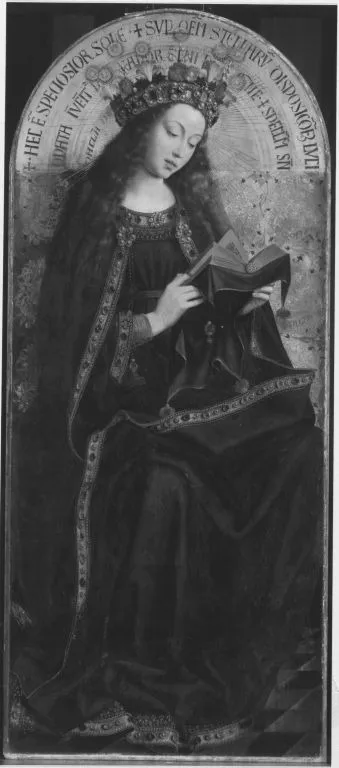
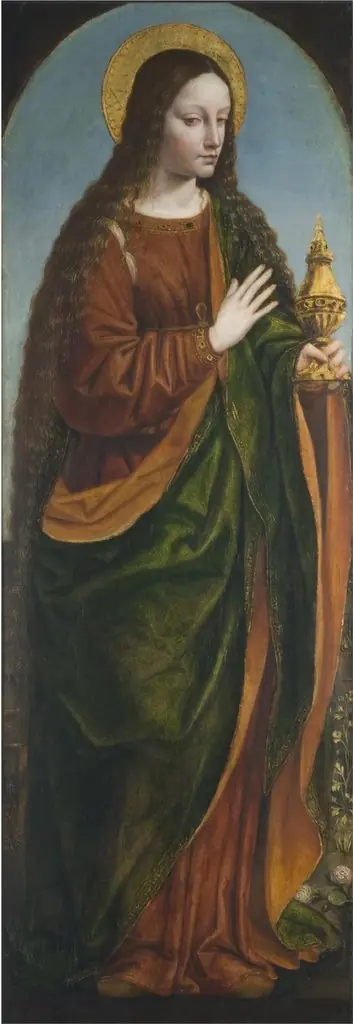
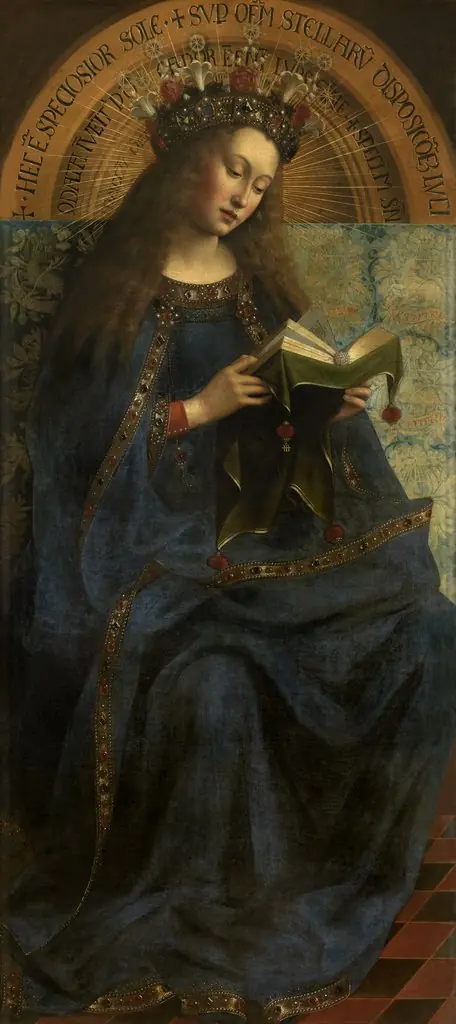
Mary (after The Ghent Altarpiece) is an oil painting by the Northern Renaissance artist Michiel Coxie. It dates from 1557 and is held in the collection of the Bavarian State Painting Collections.
About this work
Subject & Meaning
The painting depicts the Virgin Mary as a central religious figure, adapted from the Ghent Altarpiece by Jan and Hubert van Eyck (c.
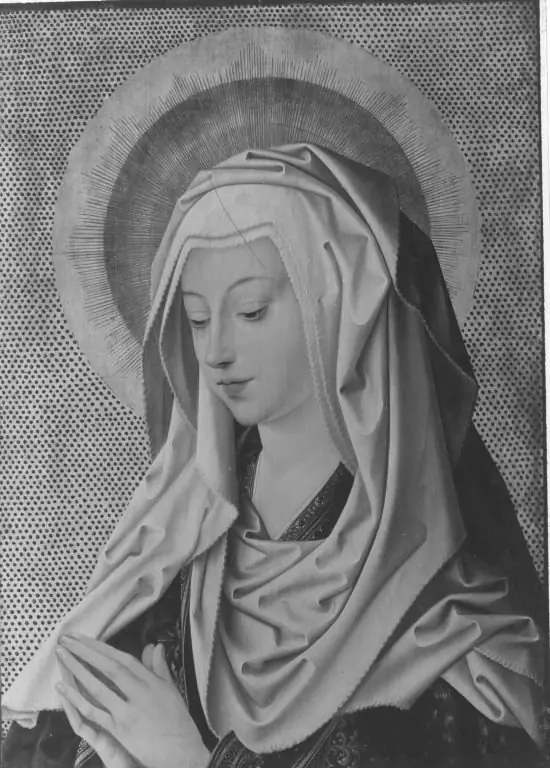
The painting depicts the Virgin Mary as a central religious figure, adapted from the Ghent Altarpiece by Jan and Hubert van Eyck (c. 1432). Coxie’s composition retains the iconography of the original, portraying Mary in a three-quarter view with hands folded in prayer and a serene expression, emphasizing her role as the mother of Christ within Christian tradition.
The work belongs to the religious genre, aligning with Counter-Reformation visual culture, which sought to reinforce veneration of sacred figures through clear, devotional imagery. Its vertical format and devotional character suggest it was intended for private or chapel worship, underscoring the enduring significance of Marian iconography in sixteenth-century European art.
Technique & Style
Executed in oil paint on a wooden panel in 1557, the work follows the Virgin’s pose and drapery from Jan van Eyck’s Adoration of the Lamb panel in the Ghent Altarpiece, faithfully replicating the original’s delicate modeling and luminous glazing.
The composition centers on a frontal Mary with softly modeled features, her hands joined in prayer and head slightly inclined, set against a shallow, neutral ground that isolates the figure. The handling is precise, with fine brushwork in the translucent drapery layers and restrained highlights that preserve the original’s volumetric illusionism.
History & Provenance
The painting titled Mary (after The Ghent Altarpiece) was created by the artist Michiel Coxie in 1557. Executed in oil paint on a panel, the work measures 165.4 cm in height and 71 cm in width. It is currently held within the collection of the Bavarian State Painting Collections, where it is displayed at the Alte Pinakothek.
As a religious artwork, the piece serves as a copy or interpretation of the figures found in the Ghent Altarpiece.
Overview
Michiel Coxie the Elder painted this oil-on-panel work in 1557, adapting imagery from the Ghent Altarpiece. A Flemish artist trained in Italy, Coxie synthesized northern European detail with Italian compositional harmony. The piece belongs to a series of devotional reworkings he produced during his tenure as court painter to the Habsburg monarchs, reflecting both personal piety and imperial patronage.
Context
Created amid the religious upheavals of the Reformation, this work responds to Catholic efforts to reaffirm Marian veneration. Coxie’s adaptation of the Ghent Altarpiece’s imagery, originally by the Van Eycks, bridges early Netherlandish tradition with the emerging Mannerist sensibility. His Italian training informed the balanced composition, while the meticulous detail remained rooted in Flemish practice.
Legacy
Coxie’s painting stands as an example of how northern artists reinterpreted iconic religious imagery for new political and spiritual contexts. Though less known than his contemporaries, his synthesis of Italian and Flemish styles influenced later court painters in Spain and the Low Countries. The work remains a quiet but significant artifact of 16th-century devotional culture.
Artist & collection
Artist
Michiel Coxie the Elder, Michiel Coxcie the Elder or Michiel van Coxcie, Latinised name Coxius (1499 – 3 March 1592), was a Flemish painter of altarpieces and portraits, a draughtsman and a designer of stained-glass windows, tapestries and…