Artwork
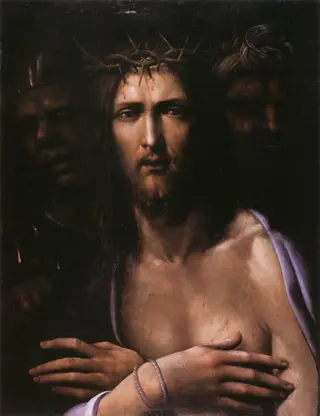
Ecce homo
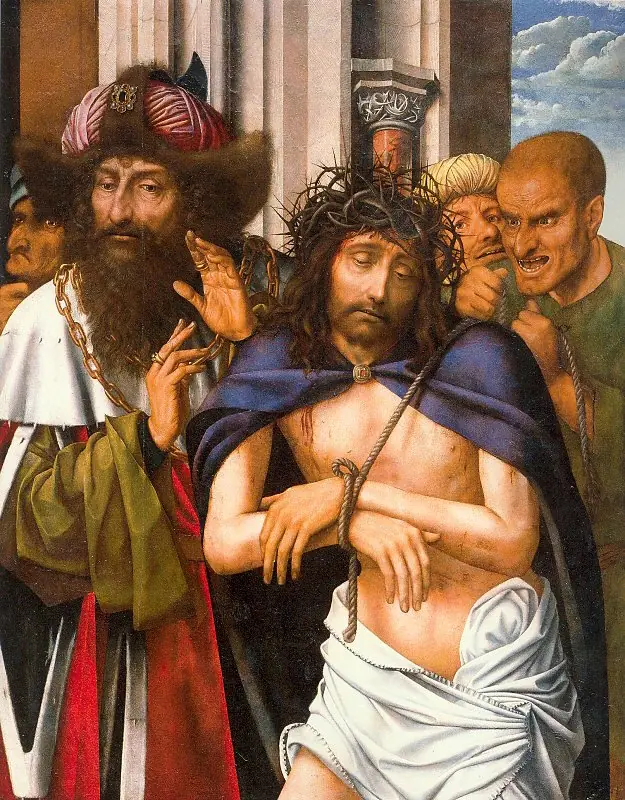
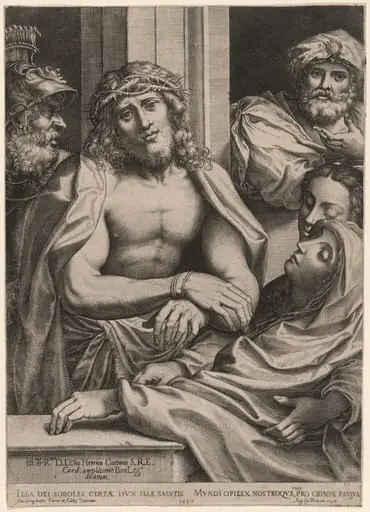
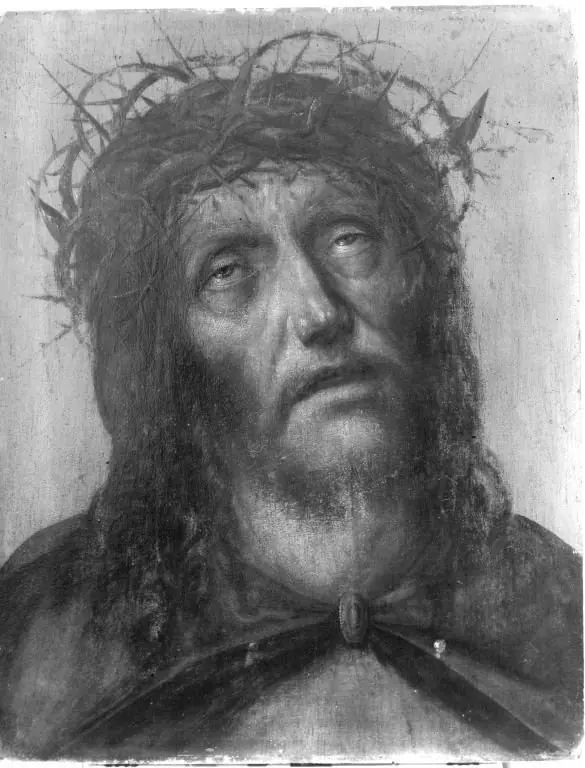
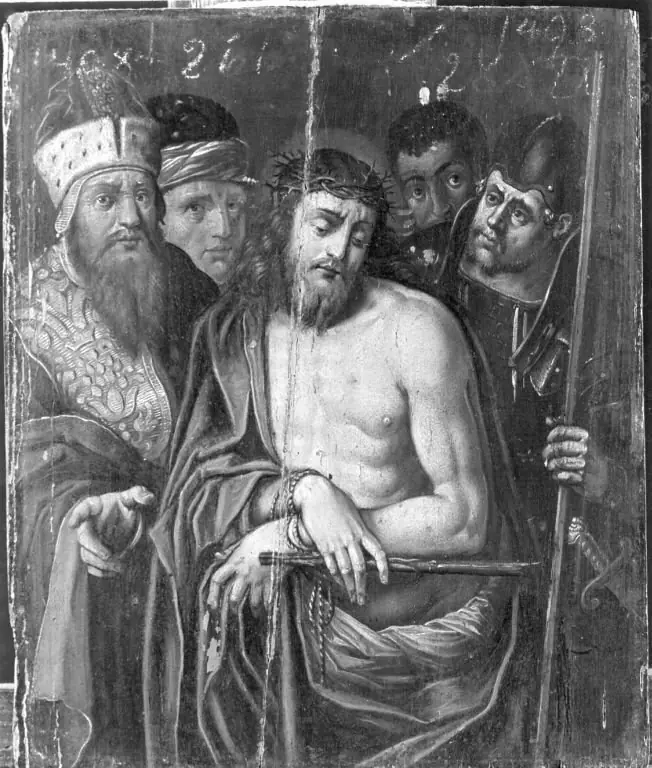
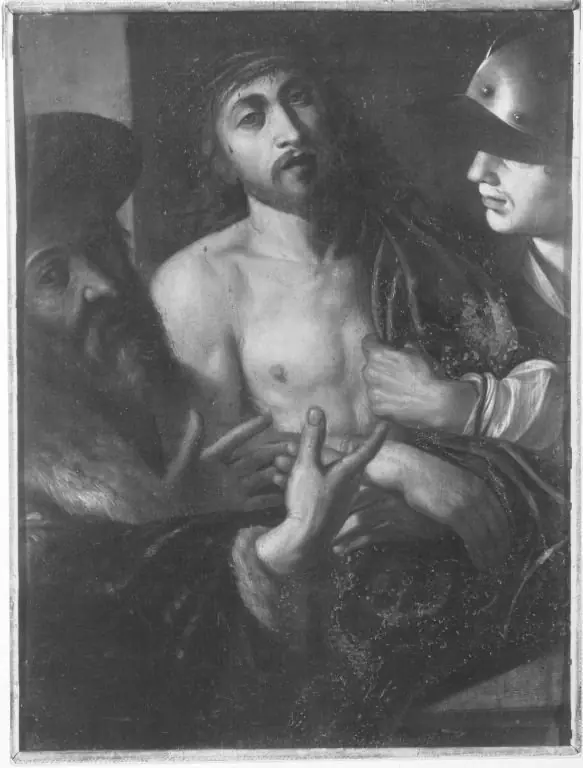
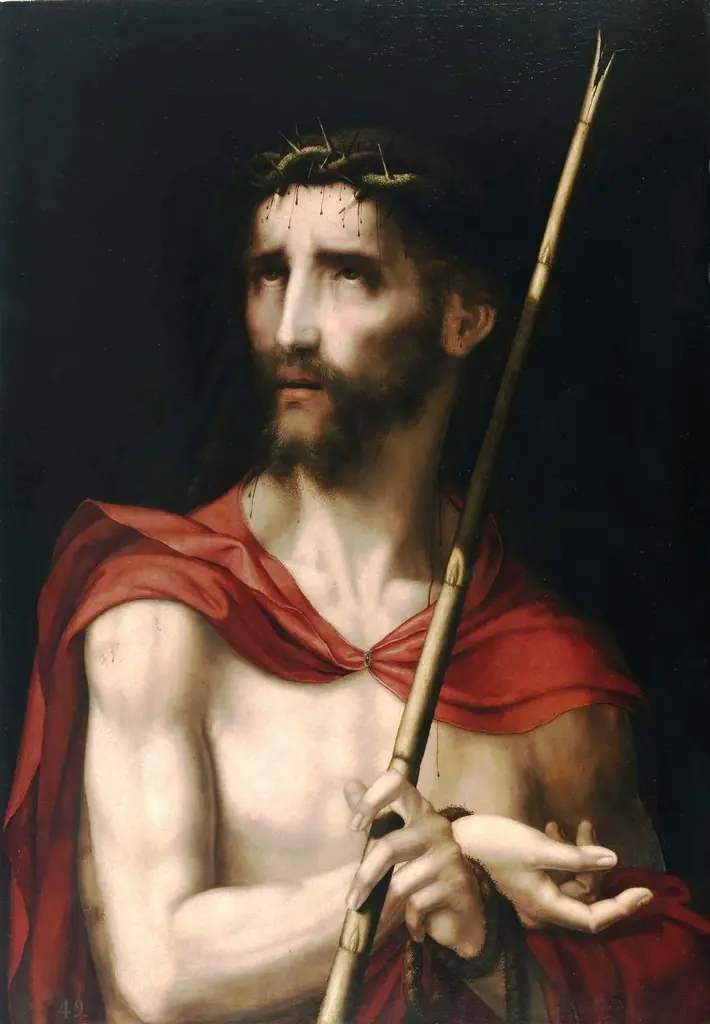
Ecce homo is an oil painting by the Mannerist artist Michiel Coxie. It is held in the collection of the Alte Pinakothek.
About this work
Subject & Meaning
The iconography centers on Christ as the Man of Sorrows, inviting contemplation of his passion and sacrifice.
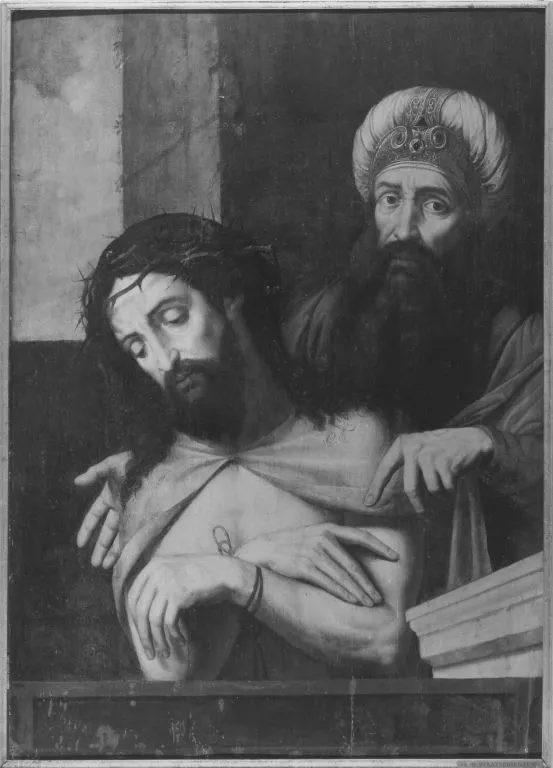
The painting depicts the Ecce Homo scene, in which Jesus Christ is presented to the crowd by Pontius Pilate. As a religious work in the Ecce Homo tradition, it portrays the moment of Christ's humiliation and suffering before his crucifixion, a subject that held deep devotional significance in Counter-Reformation art. The iconography centers on Christ as the Man of Sorrows, inviting contemplation of his passion and sacrifice.
Technique & Style
Michiel Coxie's Ecce Homo, executed in 1587, is an oil painting on an oak panel support. The work measures 104.6 cm in height and 75.5 cm in width. As a religious painting, the medium of oil paint allows for the detailed depiction of Jesus Christ as the main subject. The piece is currently held by the Alte Pinakothek in the Bavarian State Painting Collections.
History & Provenance
Ecce homo is an oil painting on oak panel created in 1587 by Michiel Coxie. It measures 104.6 cm in height and 75.5 cm in width and depicts Jesus Christ in a religious composition. The work was painted in Antwerp and later entered the collection of the Alte Pinakothek in Munich, which is part of the Bavarian State Painting Collections.
Its creation history is tied to the tradition of Counter-Reformation devotional imagery, reflecting the stylistic influence of Coxie’s workshop.
The painting’s provenance is documented through its acquisition by the Alte Pinakothek, establishing a continuous ownership chain from its inception to the present.
Dating is confirmed by the inception date of 1587-01-01 recorded in the artwork’s catalogue data.
The painting Ecce homo by Michiel Coxie is housed in the Alte Pinakothek, part of the Bavarian State Painting Collections, with inventory recorded under the museum’s holdings. It was created in 1587 using oil paint on an oak panel, measuring 104.6 cm in height and 75.5 cm in width. The work depicts Jesus Christ in the Ecce Homo scene and falls under the genre of religious art.
Its presence in the Alte Pinakothek has been consistent, forming part of the permanent display within the Bavarian State Painting Collections.
Exhibition history includes its ongoing display as part of the museum’s religious art collection, though specific exhibition records are not detailed in the source. The painting’s provenance is anchored in its acquisition and preservation by the Alte Pinakothek, where it remains accessible to the public as part of their curated collection of European masterworks.
Legacy
Ecce Homo by Michiel Coxie, painted in 1587, has been displayed at the Alte Pinakothek in Munich since its acquisition, where it remains part of the Bavarian State Painting Collections' religious art holdings. The work, executed in oil on oak panel, continues to be studied within the context of Counter-Reformation religious imagery and has influenced later interpretations of the Ecce Homo motif in European art. Its presence in a major public collection underscores its historical significance as a 16th-century religious painting.
The painting's attribution to Coxie and its stylistic connection to his workshop have reinforced scholarly discussions of artistic transmission in the Low Countries, though its precise reception during the artist's lifetime is less documented. The Alte Pinakothek's long-term stewardship of the piece has contributed to its reputation as a representative example of Catholic Counter-Reformation art in Northern Europe.
Overview
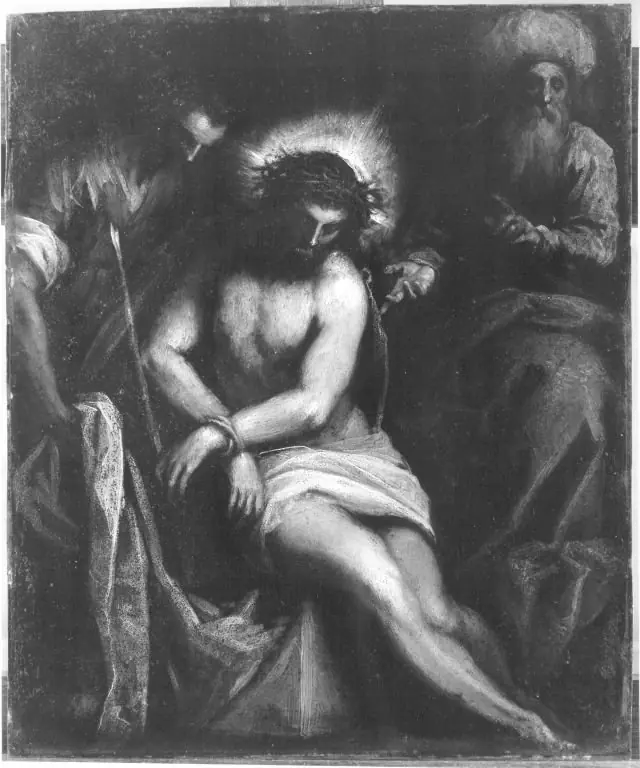
Created in 1594, this oil painting presents a dramatic biblical scene known as Ecce homo. The composition centers on a bearded figure in a turban who holds a partially unclothed man bearing a crown of thorns, a bandaged shoulder, and a chained wrist. The dark backdrop is pierced by a single light source from the left, giving the work a solemn, intense atmosphere.
Context
Coxie’s career bridged the Renaissance and the emerging Baroque, and his work was often compared to that of Raphael, earning him the nickname “the Flemish Raphael.” This painting reflects the religious climate of the Counter‑Reformation, when vivid, emotionally charged depictions of Christ’s suffering were commissioned to inspire devotion.
Artist & collection
Artist
Michiel Coxie the Elder, Michiel Coxcie the Elder or Michiel van Coxcie, Latinised name Coxius (1499 – 3 March 1592), was a Flemish painter of altarpieces and portraits, a draughtsman and a designer of stained-glass windows, tapestries and…