Artwork
Portrait of a Young Man
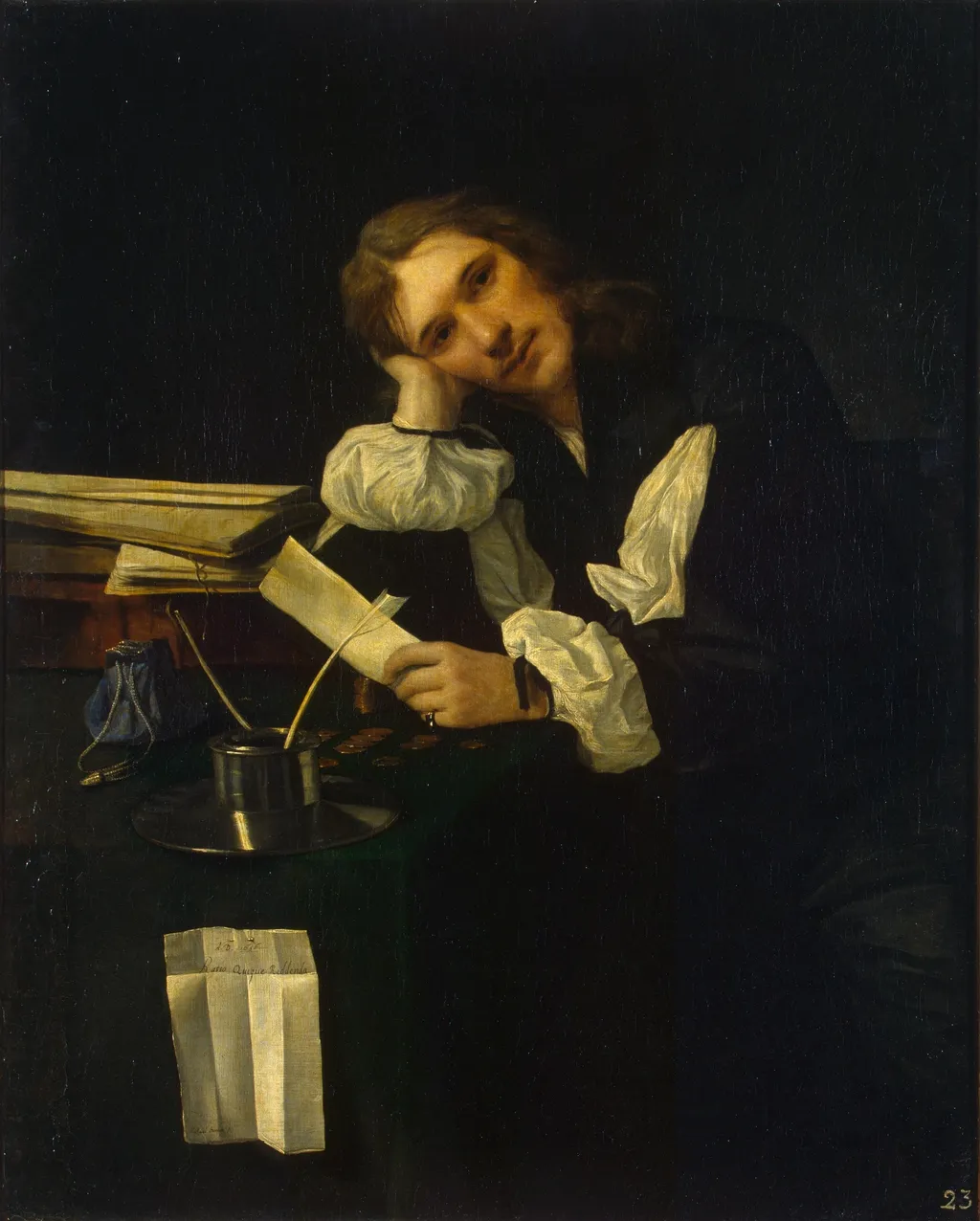
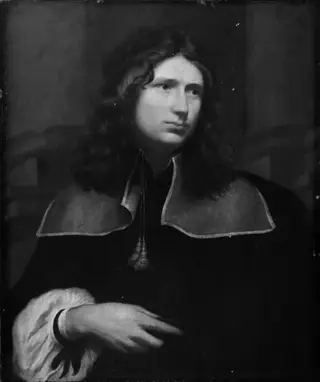
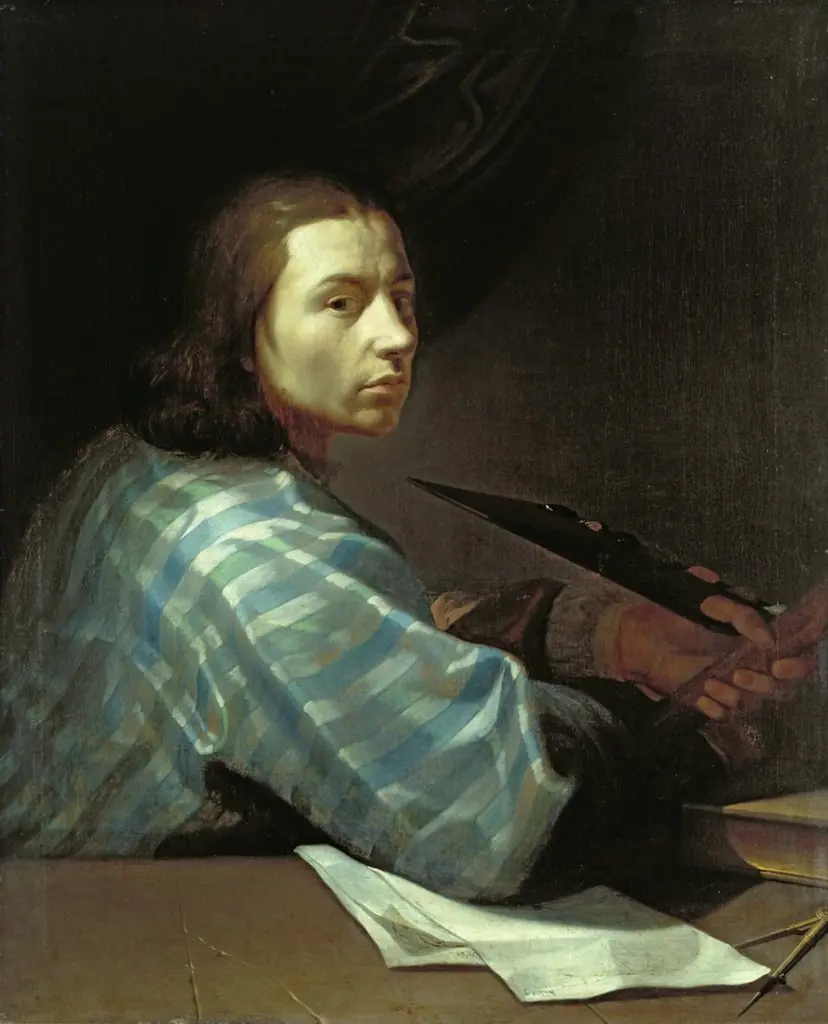
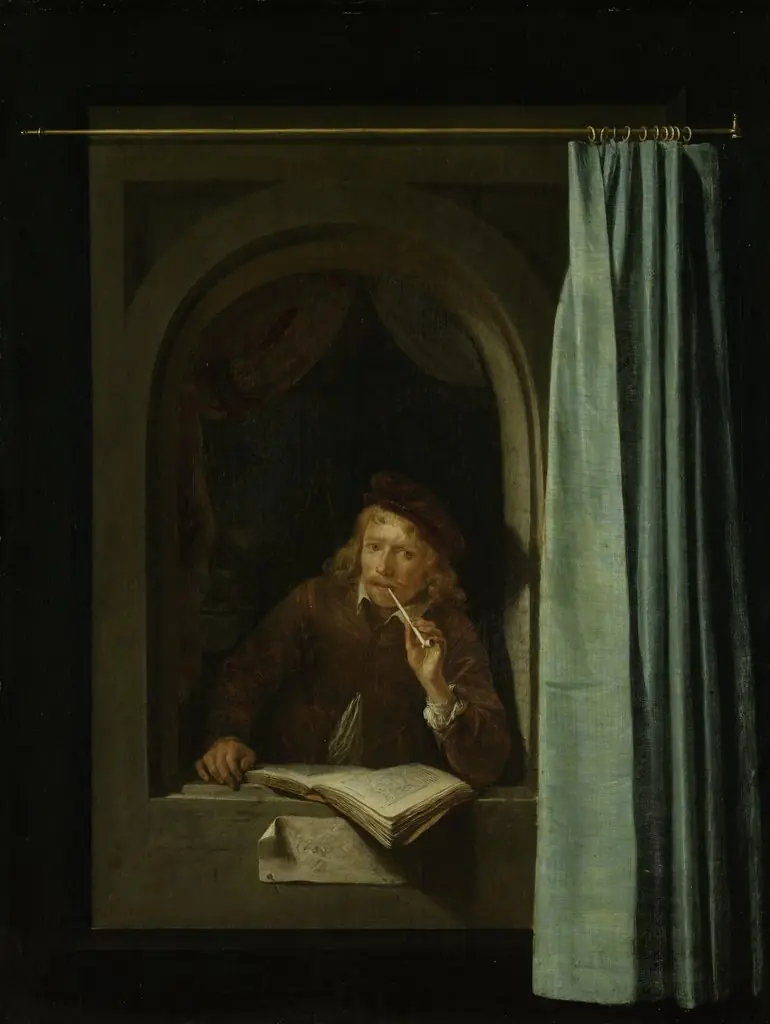
Portrait of a Young Man is an oil painting by the Flemish Baroque painting artist Michiel Sweerts. It dates from 1656 and is held in the collection of the Hermitage Museum.
About this work
Subject & Meaning
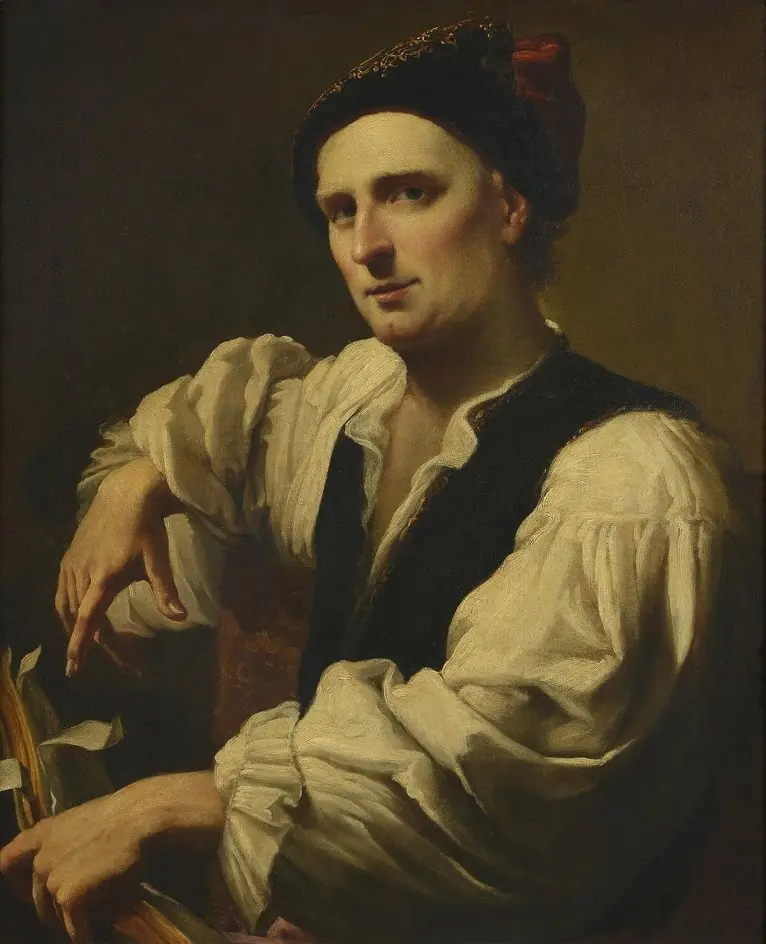
The painting depicts a seated young man of about twenty, dressed in a simple but well-made black garment with a fine white linen shirt.
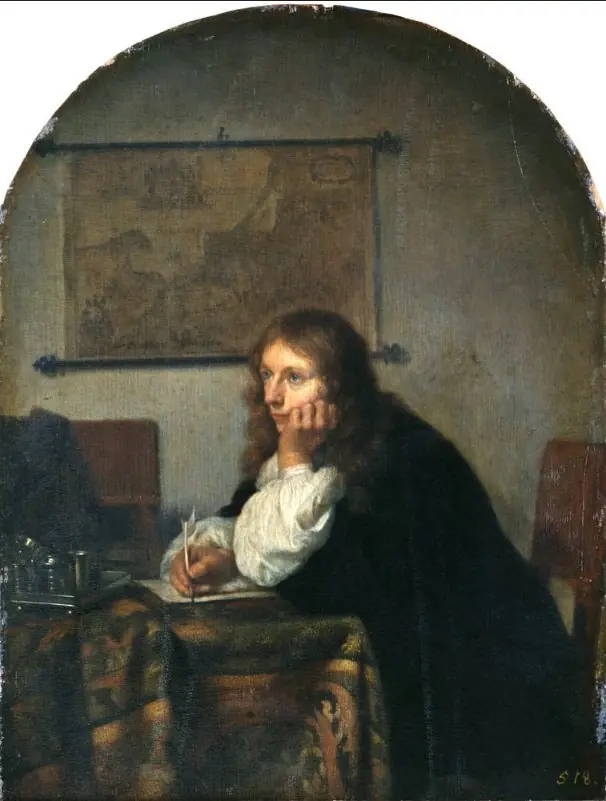
The painting depicts a seated young man of about twenty, dressed in a simple but well-made black garment with a fine white linen shirt. He rests his cheek on his right hand while gazing at the viewer with attentive, slightly weary eyes. His left hand, adorned with a ring on the little finger, holds a folded paper.
On the green tablecloth before him lie the tools of his trade: coins arranged in stacks and rows, a small blue purse tied with ribbon, a clean inkwell with two pens, and closed account books. The Latin inscription on an open sheet reads "Ratio Quique Reddenda" (Everyone must give account).
The subject's identity remains puzzling. The figure resembles known self-portraits of Sweerts, yet appears much younger than the thirty-eight-year-old artist. Some scholars interpret his inclined head as a sign of melancholy.
The inscription provides the key to the painting's meaning: it connects the financial world with the spiritual, suggesting the young man has interrupted his bookkeeping to contemplate how earthly debit and credit mirror the heavenly reckoning that awaits all. The metaphor of accounting underlies several of Jesus's parables.
Technique & Style
The work is an oil painting on canvas created in 1656 by Michiel Sweerts. The surface is smooth, with fine brushwork that renders the sitter’s skin and fabric in subtle tonal shifts, while the chiaroscuro modeling recalls Caravaggio’s influence. The composition places the young man in a modest interior, seated at a table covered with a green cloth; a folded ledger, a blue purse, and scattered coins mark his occupation as a clerk, and a Latin inscription “Ratio Quique Reddenda” appears on the open page.
His pose, head resting on his right hand, left hand holding a document, conveys a contemplative stillness, and the limited palette of dark clothing against the muted green backdrop emphasizes quiet dignity. The painting measures 114 cm in height and 92 cm in width, and it remains in the Hermitage Museum collection.
History & Provenance
The Portrait of a Young Man is held in the Hermitage Museum in Saint Petersburg. It entered the collection in 1758 when Ivan Ivanovitsj Sjoevalov donated it to the Kunstacademie of Saint Petersburg, and it was transferred to the Hermitage in 1922 after the Russian Revolution. The work is signed and dated Michael Sweerts F. and A.D. 1656, confirming its creation in that year.
Exhibition records indicate its presence in the Hermitage's displays following the acquisition and subsequent relocation. The painting remains part of the Hermitage's permanent collection and has been featured in scholarly exhibitions focusing on Sweerts and 17th‑century portraiture.
Context
The painting was created in 1656 during Sweerts' early period in Brussels after his return from Rome, reflecting his transition from the vibrant Bamboccianti circle to a more contemplative phase preceding his religious conversion. Contemporary scholarship emphasizes its enigmatic symbolism, particularly the Latin inscription 'Ratio Quique Reddenda' ('Everyone must render account'), which links the depicted young man's accounting activities to theological concepts of final judgment. Interpretations vary regarding its genre and subject: some scholars view it as a vanitas allegory while others reject that classification, instead focusing on the financial context suggested by the meticulous accounting objects and the inscription's reference to reckoning.
The work's provenance traces to its acquisition by Ivan Ivanovitsh Shovgurov for the Kunstacademie of St. Petersburg in 1758, later moving to the Hermitage Museum after the Russian Revolution. Its attribution as potentially autobiographical remains debated due to the subject's youthful appearance compared to Sweerts' known self-portraits and the ambiguity surrounding the sitter's identity.
Overview
Created in 1656, this oil painting by the Flemish Baroque artist Michiel Sweerts presents a young man seated at a table. The work is part of the State Hermitage Museum’s collection and is generally understood to be a self‑portrait of the painter. Its composition centers on the figure against a dark backdrop, emphasizing the subject’s face and hands.
Own this work as a print
Artist & collection
Artist
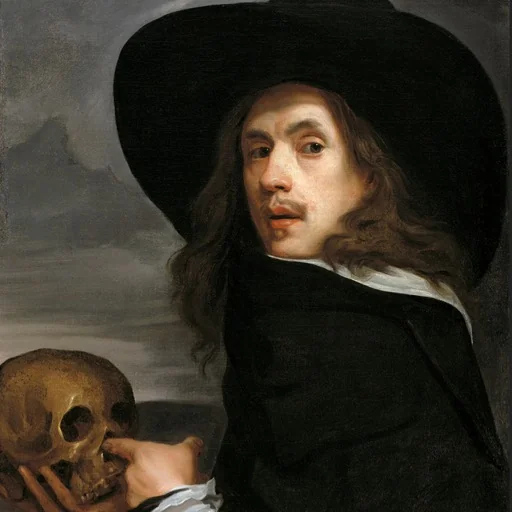
Michiel Sweerts or Michael Sweerts (29 September 1618 – 1 June 1664) was a Flemish painter and printmaker of the Baroque period, who is known for his allegorical and genre paintings, portraits and tronies.