Artwork
Anthonij de Bordes and His Valet
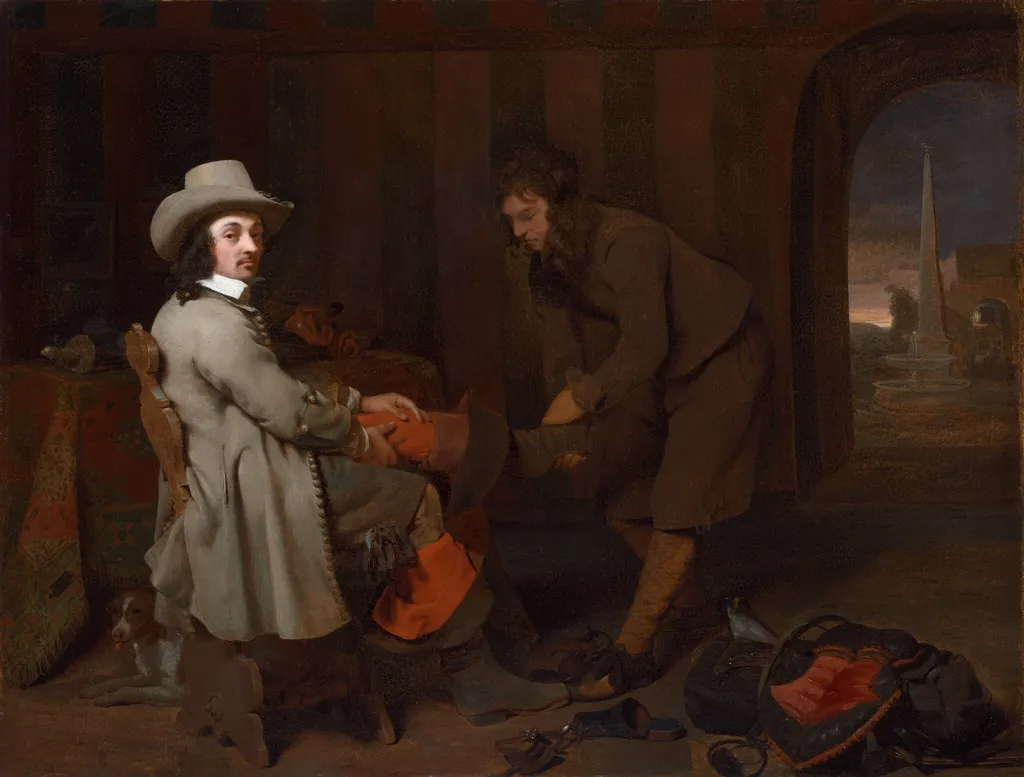
Anthonij de Bordes and His Valet is an oil painting by the Baroque artist Michiel Sweerts. It dates from 1648 and is held in the collection of the National Gallery of Art.
- Inscription
- Inscribed:on saddle in right foreground, in monogram: MS
About this work
Subject & Meaning
The painting depicts Anthony de Bordes (1615–1678), a specific individual identified as the main subject of this 1648 portrait by Michael Sweerts.
The painting depicts Anthony de Bordes (1615–1678), a specific individual identified as the main subject of this 1648 portrait by Michael Sweerts. The work's iconography is defined by the intimate action of a valet removing the sitter's boots, a scene historically described in a 1708 estate inventory as showing "Anthonij de Bordes the Elder having his boots removed." This depiction of a domestic servant attending to a wealthy patron captures a moment of private routine rather than a formal public pose.
The composition represents the social standing of de Bordes while simultaneously highlighting the hierarchical relationship between the master and his attendant. As a genre portrait, it freezes a transient moment of daily life, emphasizing the sitter's status through the service he receives.
Technique & Style
Anthonij de Bordes and His Valet is executed in oil on canvas, a standard support for mid-seventeenth-century Dutch portraiture. The painted surface measures 50.7 by 66.6 centimeters, a modest horizontal format suited to an intimate domestic scene of a sitter being attended by a servant. The composition is classified as a portrait genre work, depicting Anthony de Bordes (1615–1678) in a genre-inflected interior moment.
The medium and dimensions are consistent with Sweerts's small-scale cabinet pictures, which typically combine portrait specificity with the loose handling and everyday subject matter associated with his Amsterdam-period production. No condition notes are recorded in the available documentation.
History & Provenance
The painting titled Anthonij de Bordes and His Valet was executed by Michael Sweerts in 1648 as an oil on canvas portrait depicting the Dutch merchant Anthony de Bordes (1615–1678). Its early ownership appears to have begun with the sitter himself, then passed to his daughter Maria de Bordes and her husband Daniël Deutz, remaining within the De Bordes family before descending to C.J. de Bordes in Velp and Bussum by 1907. The work was subsequently held by C.A. Van Walré de Bordes in The Hague, sold in November 1984 through S. Nystad to Dr. Arthur and Arlene Elkind, and entered the National Gallery of Art collection after its purchase on 9 February 2012. The painting is catalogued in the National Gallery of Art’s collection and recorded as created in 1648.
The painting is held by the National Gallery of Art in Washington, D.C., having been purchased on 9 February 2012. Its provenance traces from the sitter, Anthonij de Bordes, through inheritance to his daughter Maria de Bordes and her husband Daniël Deutz, remaining in the De Bordes family by descent before passing to C.J. de Bordes of Velp and Bussum by 1907. It later went to C.A. Van Walré de Bordes in The Hague, and was sold in November 1984 through S. Nystad of The Hague to Dr. Arthur and Arlene Elkind of New Rochelle.
The work was documented in the 1708 estate inventory of Daniël Deutz and published by W. Martin in 1907.
Overview
Painted in 1648, Anthonij de Bordes and His Valet is an oil on canvas portrait by the Flemish artist Michael Sweerts. The work depicts a standing man, identified as Anthonij de Bordes, dressed in a dark coat, positioned beside a young valet wearing a blue tunic. The composition is set against a stark interior with plain walls and a closed door, focusing attention on the figures and the objects they interact with.
Between them rests a polished brass basin, while the valet holds a white towel, suggesting a scene of preparation or grooming. Sweerts renders the faces with a restrained, almost stoic expression, avoiding overt sentimentality in favor of a quiet, observational realism. This painting exemplifies Sweerts' early Roman period style, where he blended Dutch genre traditions with the dramatic lighting and psychological depth characteristic of Caravaggism.
The work highlights the artist's interest in the dignity of everyday interactions and the social dynamics between master and servant. Executed shortly after Sweerts moved to Rome, it demonstrates his mature command of oil paint and his ability to infuse a simple domestic moment with a sense of timeless gravity. The painting is currently held in the collection of the National Gallery of Art in Washington, D.C.
Own this work as a print
Artist & collection
Artist
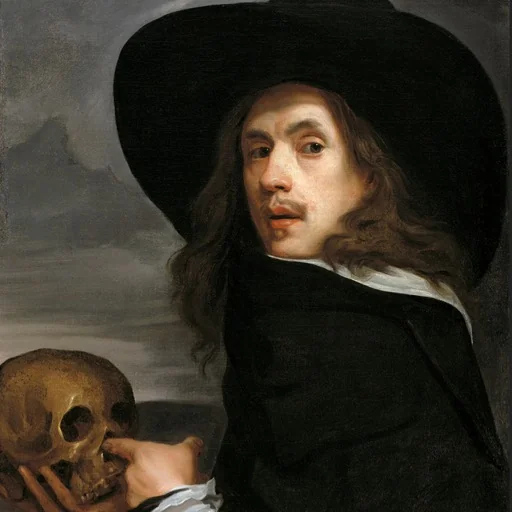
Michiel Sweerts or Michael Sweerts (29 September 1618 – 1 June 1664) was a Flemish painter and printmaker of the Baroque period, who is known for his allegorical and genre paintings, portraits and tronies.

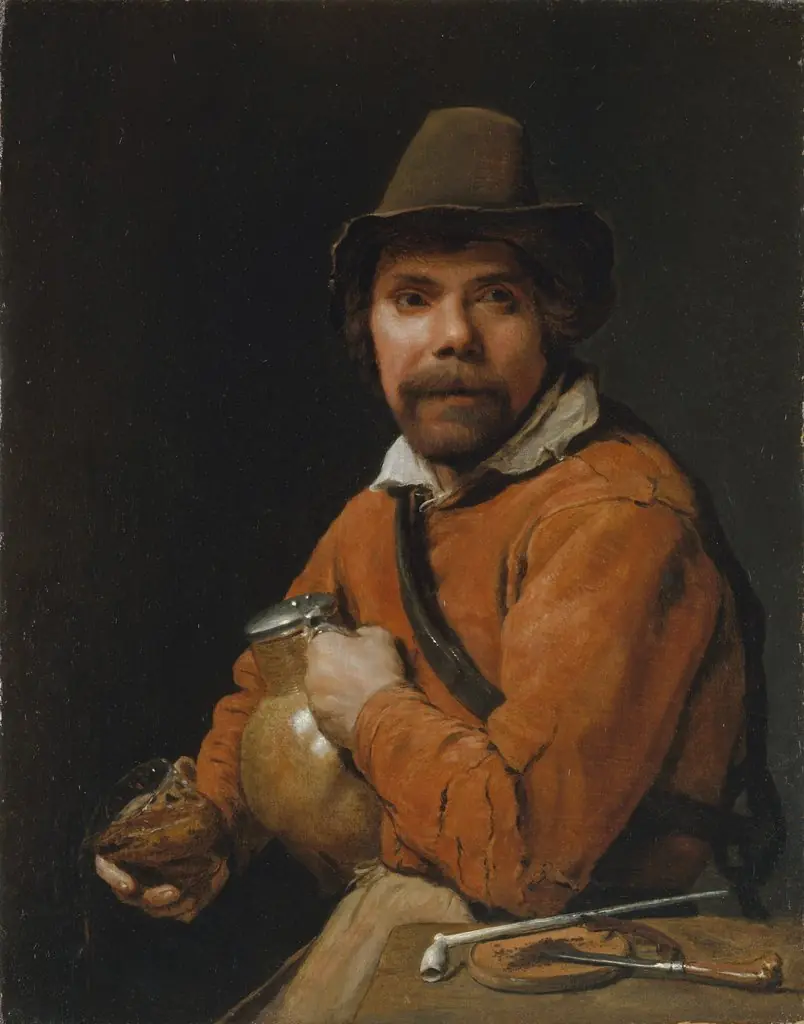
- Soldiers Breaking into a Peasant's Cottage
 Untitled
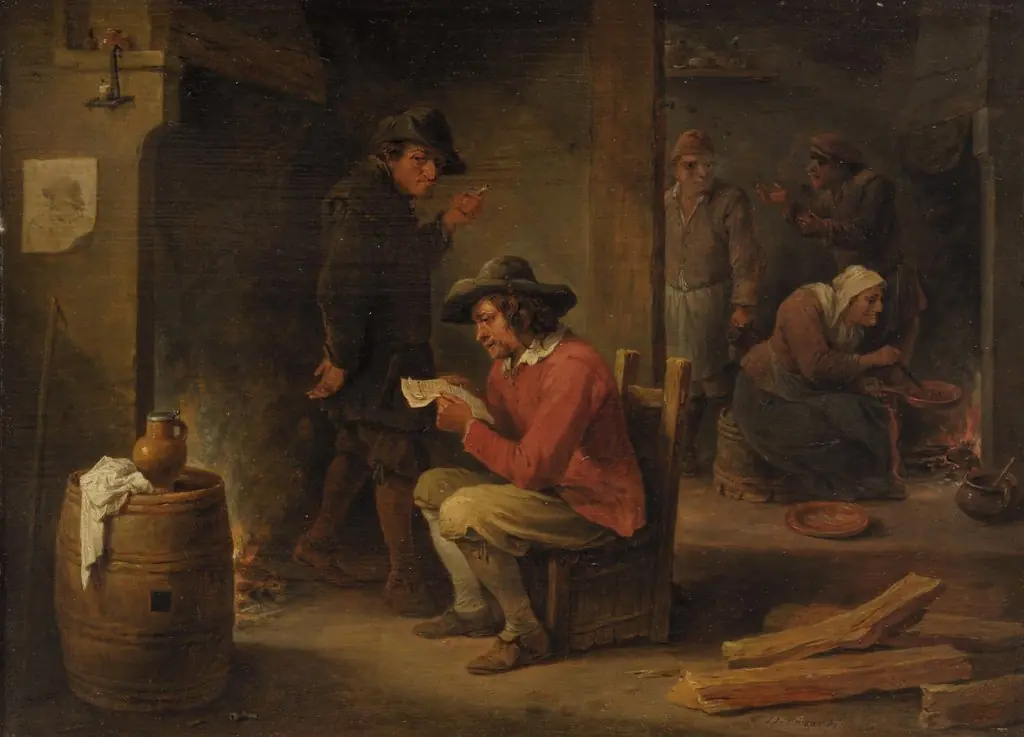 Farm interior with newspaper reader
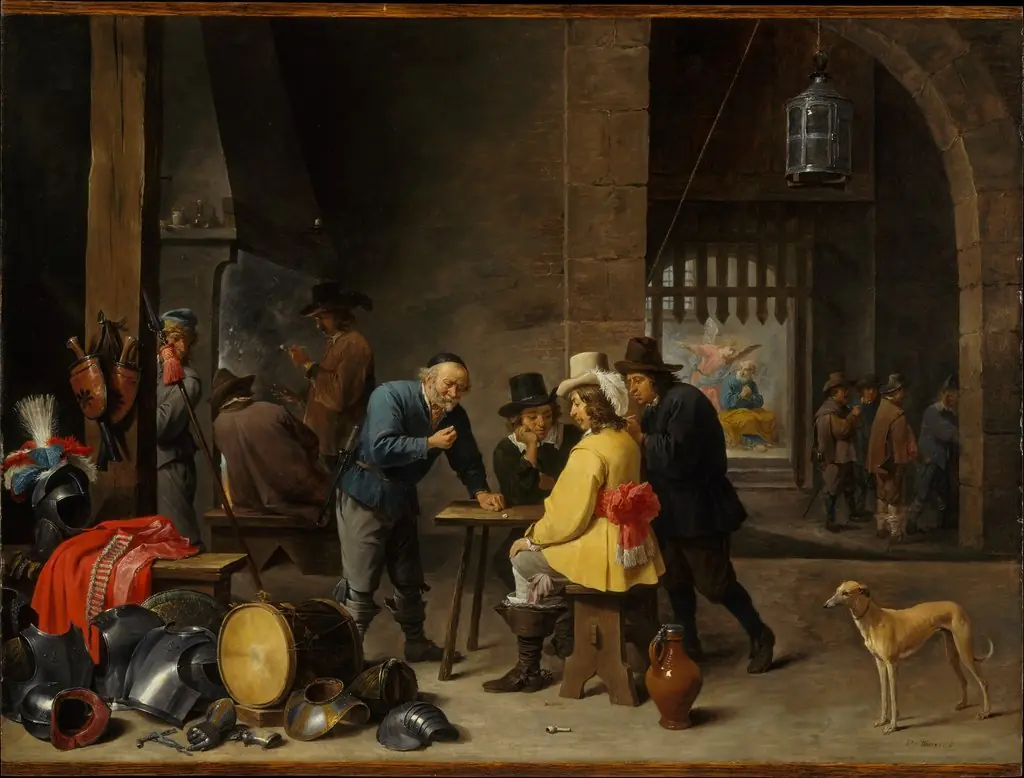 Guardroom with the Deliverance of Saint Peter
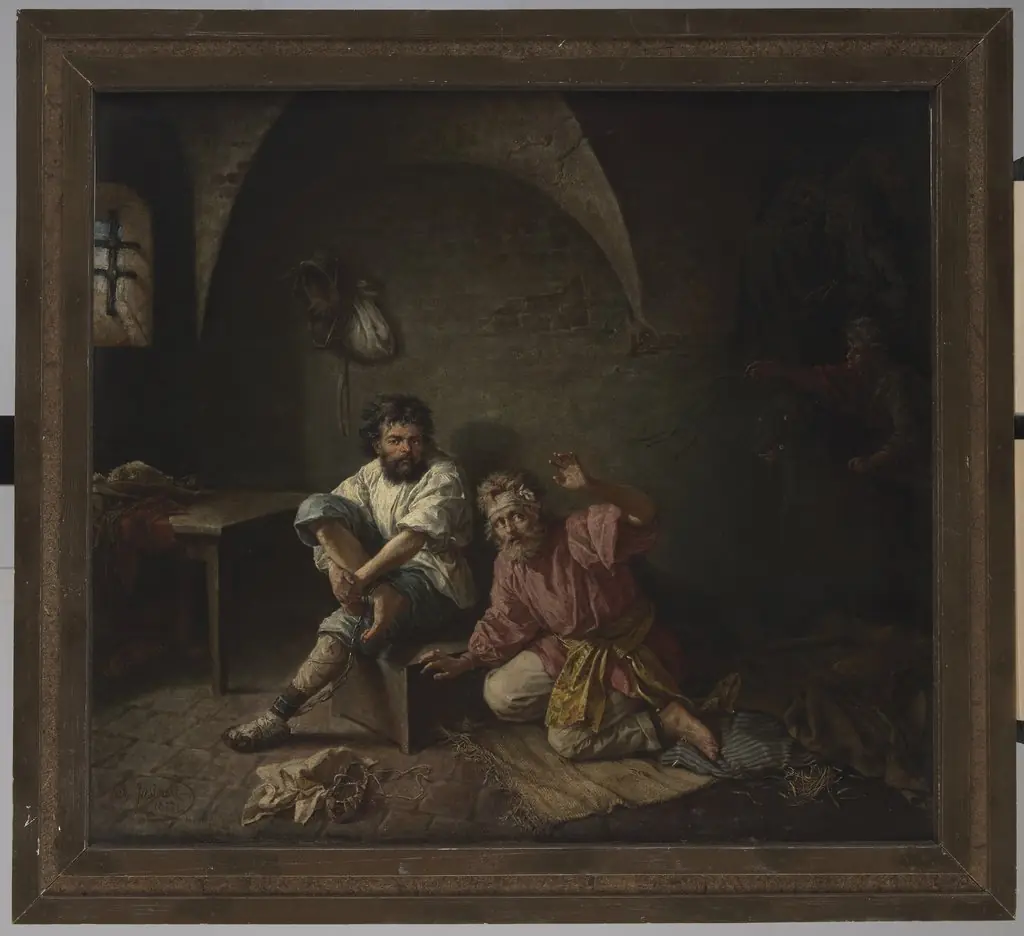 Bandits in Prison
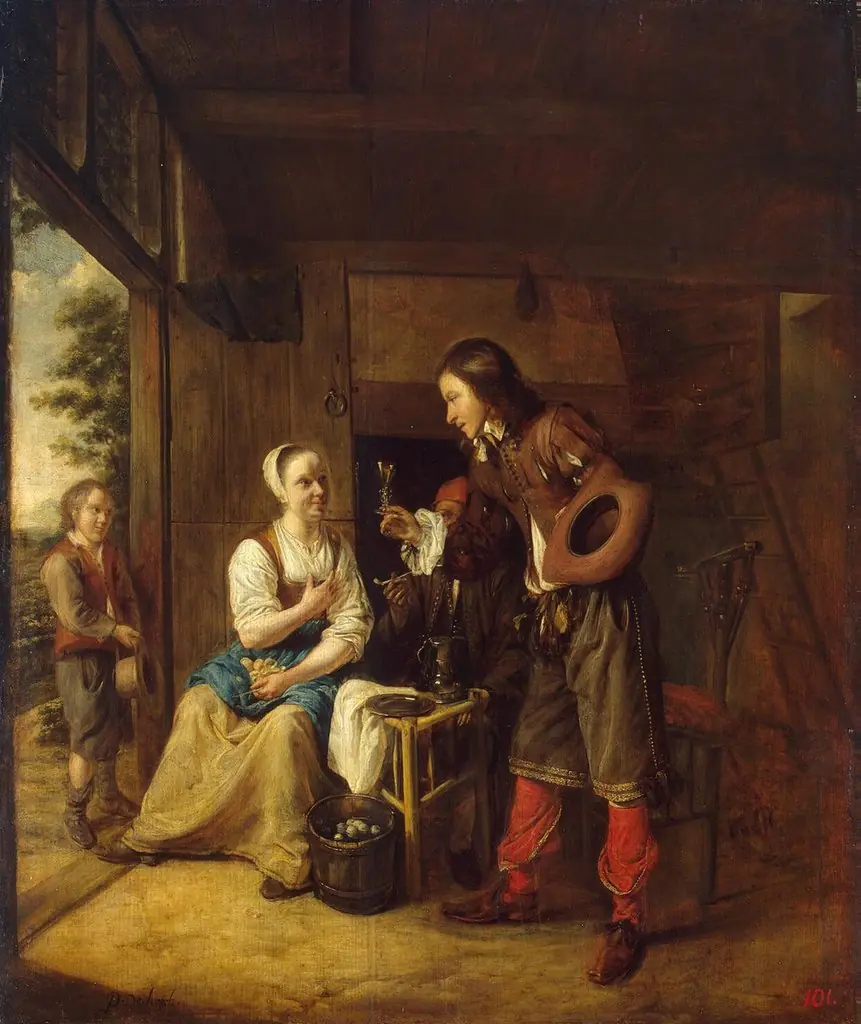 Soldier Offering a Woman a Glass of Wine
 The Gamblers
 De dorstigen laven
 Soldiers with a Serving Maid in a Barn
 Travellers at Rest
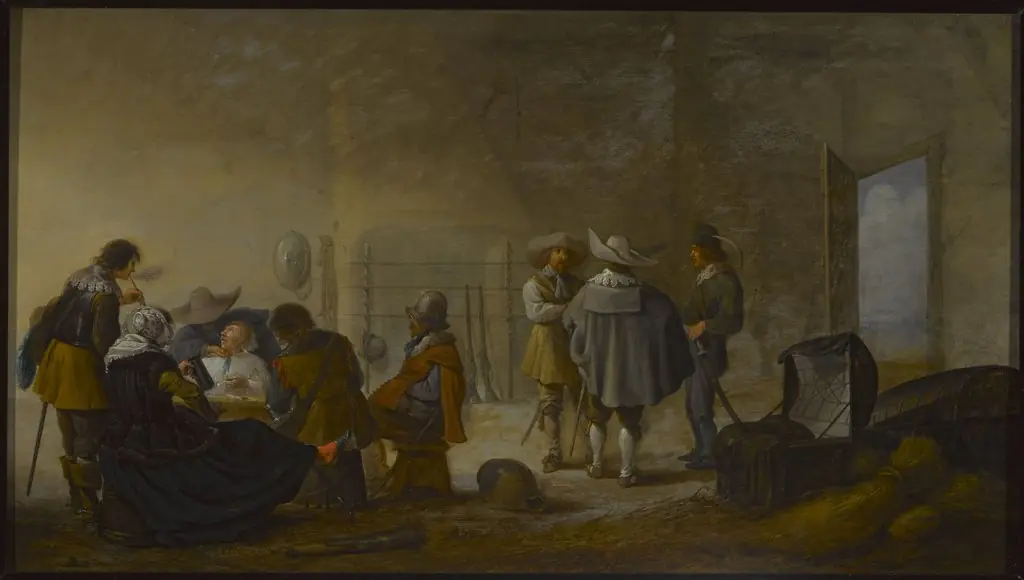 Guardhouse
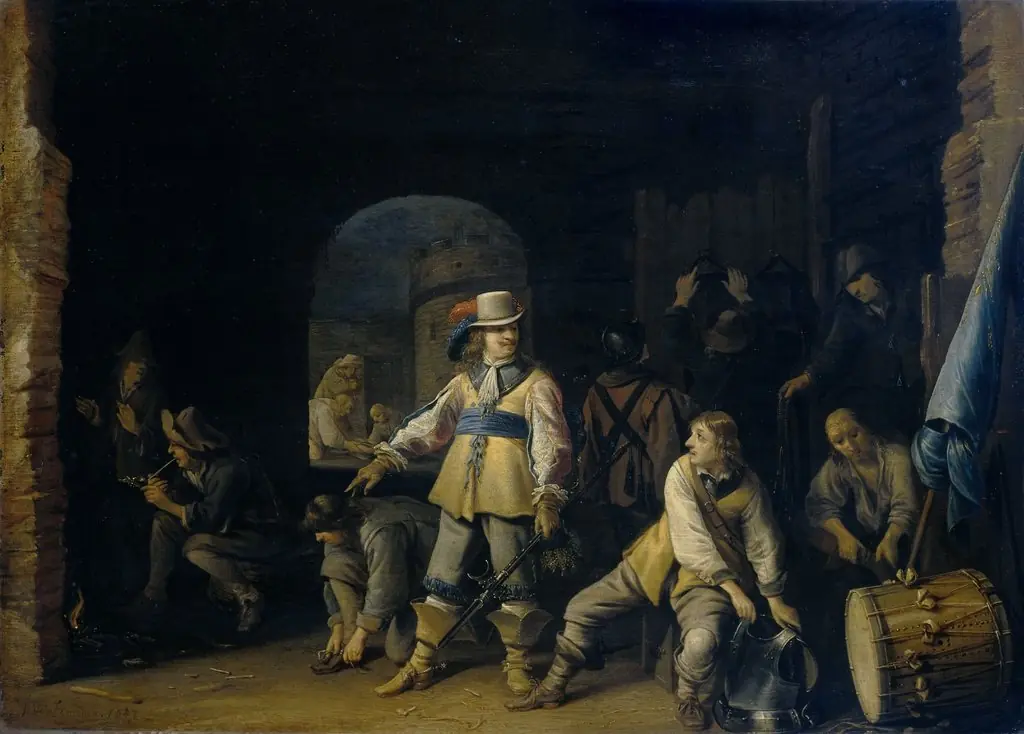 Soldiers in a guardroom