Artwork
M. David Hume
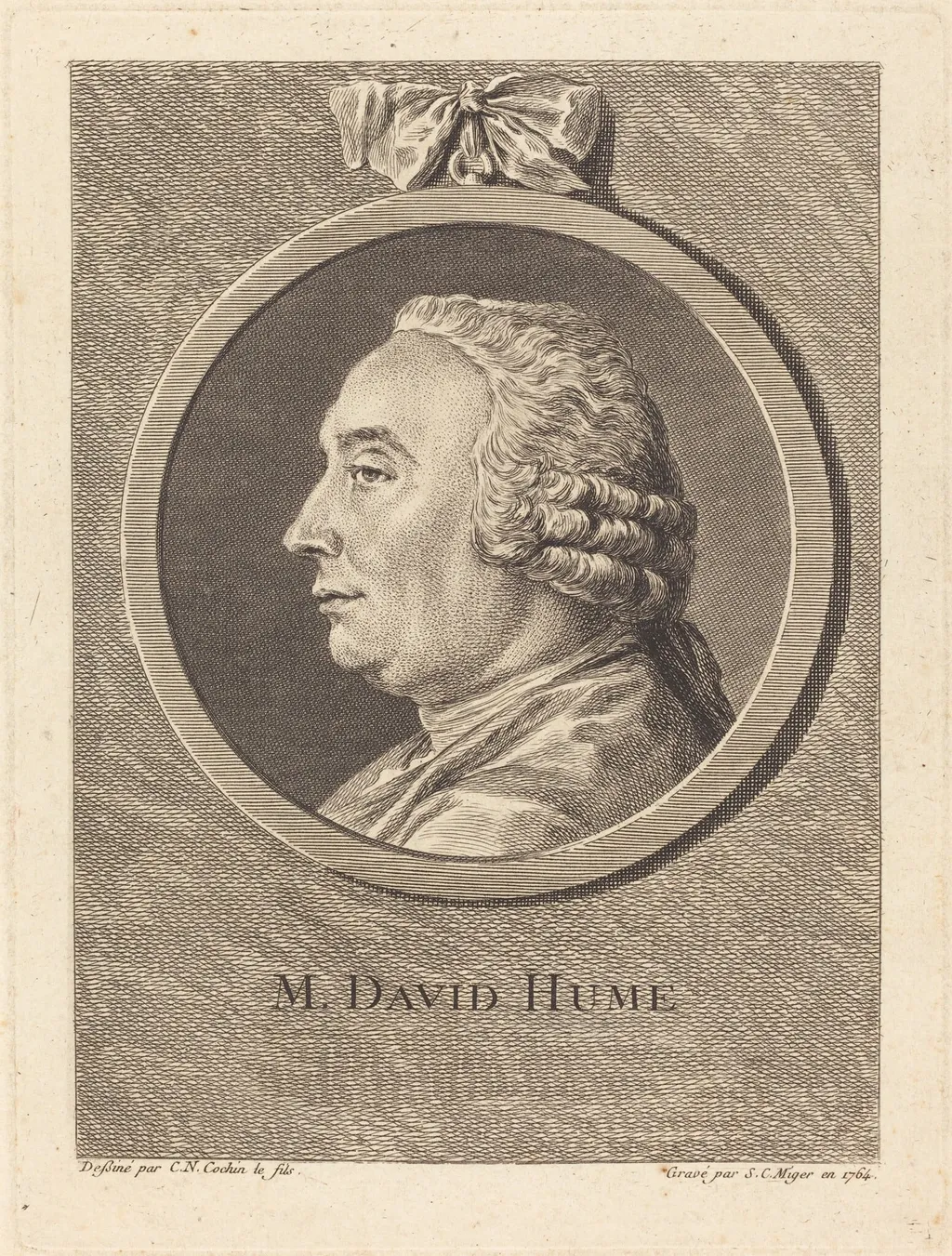
M. David Hume is an ink print by the Romanticist artist Simon Charles Miger. It dates from 1764 and is held in the collection of the National Gallery of Art.
- Inscription
- Inscribed:below image, lower left in plate: Dessine par C.N. Cochin le fils.; below image, lower right in plate: Grave par S.C. Miger en 1764.; across bottom in plate: M. DAVID HUME; by later hand, lower left in graphite: 1er Etat, avant Historien Celebre; by later hand, lCv//in graphite: a
About this work
Overview
The background remains unadorned to emphasize the figure, while the surrounding margin features a decorative bow at the apex and a textured border pattern.
Created in 1764 by Simon Charles Miger, this engraving on laid paper presents a formal portrait of the Scottish philosopher David Hume. The work depicts Hume in a three-quarter view, characterized by his distinct curly hair and a composed, serious expression. The composition centers the sitter within a circular medallion, a format typical for 18th-century book frontispieces and commemorative prints.
Below the medallion, the inscription "M. David Hume" identifies the subject. The background remains unadorned to emphasize the figure, while the surrounding margin features a decorative bow at the apex and a textured border pattern. As a first-state impression, this print captures the initial execution of Miger's line work before subsequent reworkings or additions.
Miger, a French engraver active during the mid-to-late 18th century, produced this piece during a period of intense intellectual exchange between France and Britain, where Hume's philosophical writings were widely read and debated. The engraving serves as a significant visual record of Hume's appearance during his lifetime, reflecting the neoclassical aesthetic of portraiture that prioritized clarity, dignity, and intellectual gravitas.
Subject & Meaning
The image captures Hume with tightly curled hair and a composed, serious expression, suggesting intellectual gravitas. Below the portrait, his name is inscribed, reinforcing the work’s function as a recognizable likeness for contemporary audiences.
Technique & Style
Miger’s line work relies on delicate, intersecting strokes and cross‑hatching to model facial features and convey volume. The engraving’s crisp edges and subtle tonal gradations exemplify the precise, labor‑intensive methods typical of eighteenth‑century intaglio portrait prints.
Context
Produced during the Enlightenment, the portrait aligns with a broader trend of disseminating images of leading thinkers through affordable prints, allowing Hume’s likeness to circulate among scholars and the educated public.
Own this work as a print
Artist & collection