Artwork
Saint Catherine
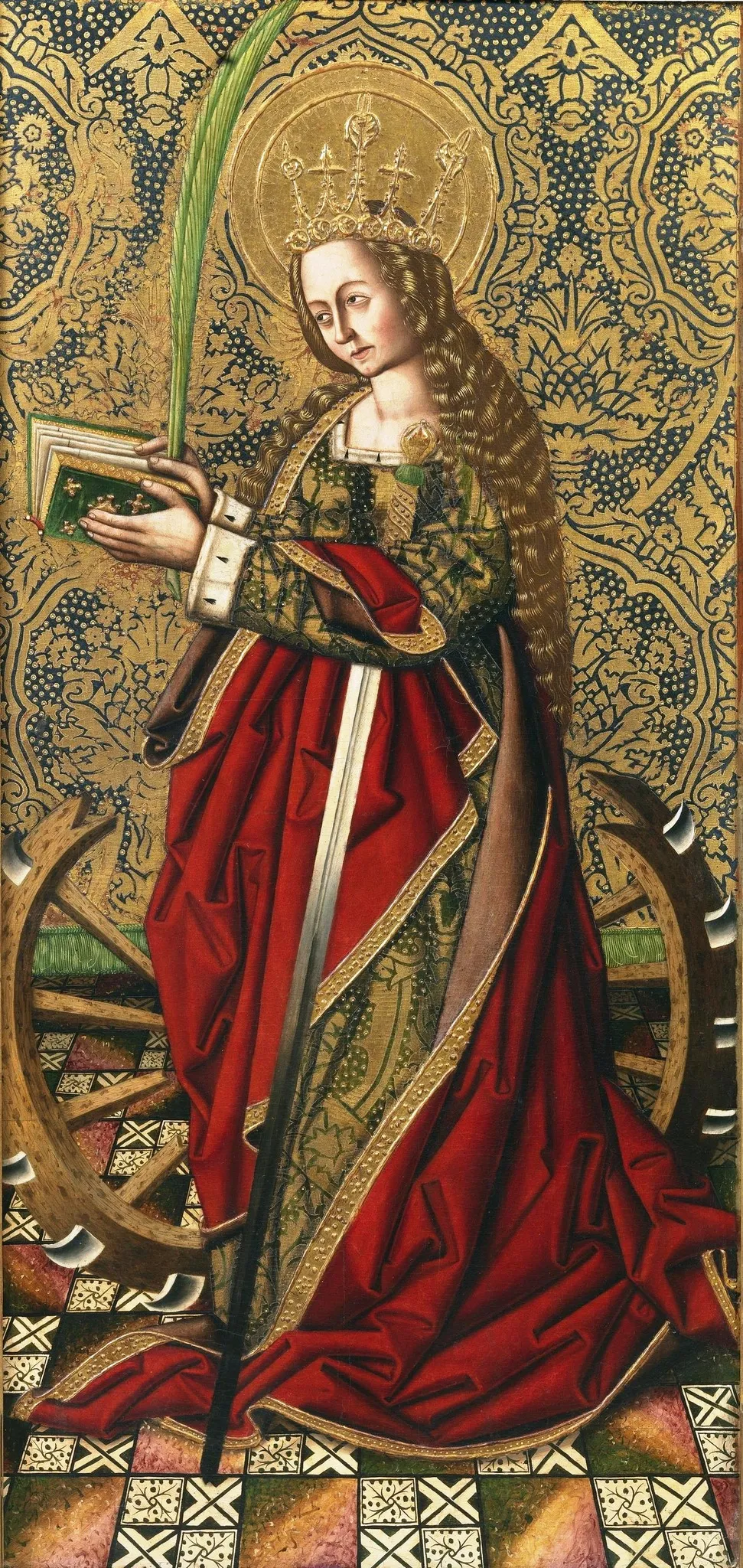
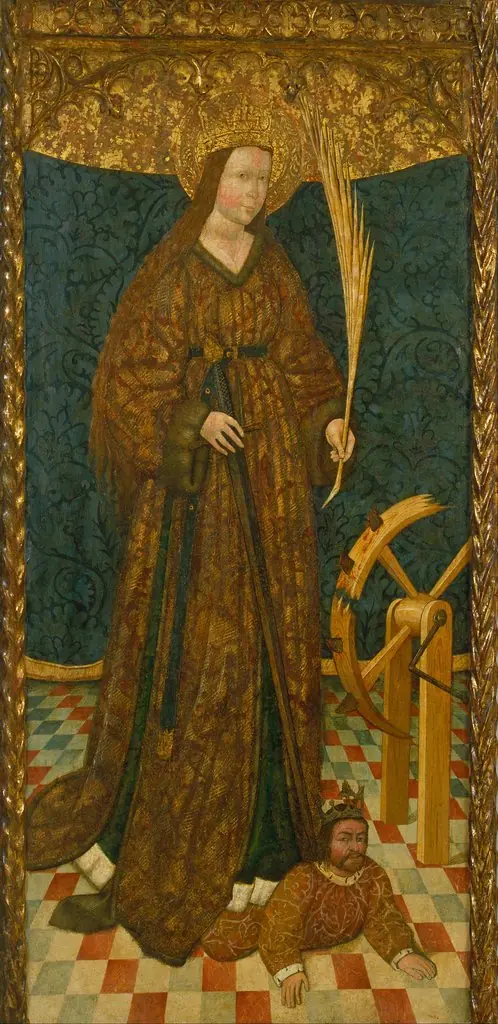
Saint Catherine is an unspecified painting by the Early Renaissance artist Miguel Ximénez. It dates from 1475 and is held in the collection of the Museo del Prado.
About this work
Subject & Meaning
These elements collectively establish the narrative of her faith and suffering within the context of religious art.
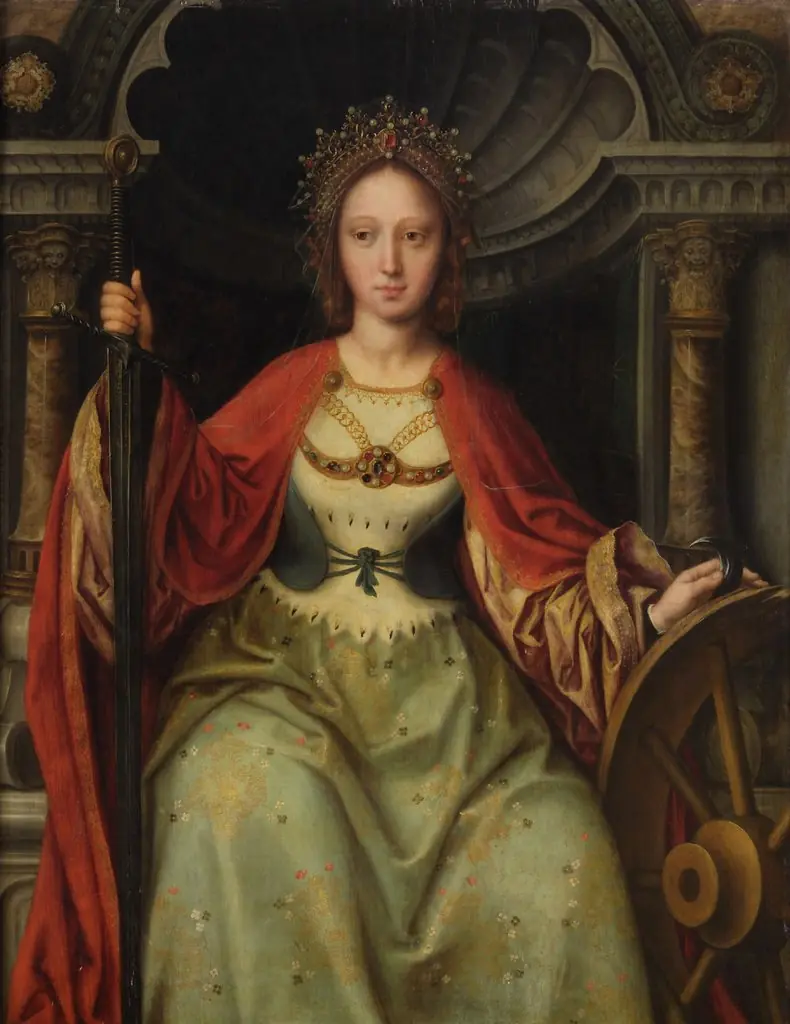
The painting depicts Saint Catherine of Alexandria, a religious subject central to the work's identity. The figure is distinguished by specific iconographic attributes that symbolize her life and martyrdom: a sword representing the instrument of her attempted execution, a book signifying her wisdom and theological knowledge, a crown denoting her royal status, and a cogwheel referencing the torture device prepared for her. These elements collectively establish the narrative of her faith and suffering within the context of religious art.
Technique & Style
Saint Catherine is a religious painting by Miguel Ximénez, classified as a panel painting held by the Museo del Prado. The work measures 140 cm in height by 75 cm in width, indicating a tall, narrow vertical format well suited to a single standing devotional figure.
Stylistically, the composition centers on Catherine of Alexandria, identified through her traditional attributes: a sword, a book, a crown, and a cogwheel. The presence of these attributes, combined with the work's late fifteenth-century dating (recorded as both 1475 and 1480 in the source data), situates the painting within the Hispano-Flemish devotional tradition of the period, in which saints were rendered with emblematic objects against restrained backgrounds.
The sources do not specify the support, medium, pigment, or current condition of the panel.
History & Provenance
The painting Saint Catherine was created by the artist Miguel Ximénez. While one internal record assigns the work to the year 1475, broader cataloging data suggests an inception window beginning in 1475 and extending to 1480. The religious panel depicts Catherine of Alexandria accompanied by her traditional attributes, including a sword, book, crown, and cogwheel.
The work is currently held in the collection of the Museo del Prado, where it remains on display. No specific details regarding the original commission or intermediate ownership history prior to its arrival at the museum are provided in the available records.
Saint Catherine by Miguel Ximénez is held in the collection of the Museo del Prado. The work is catalogued within the museum's holdings as a religious painting, with its location confirmed at the Museo del Prado.
No specific accession number is recorded in the available sources, and no exhibition history is documented.
Context
Saint Catherine, painted by Miguel Ximénez in 1475, exemplifies early Spanish Renaissance religious art. The work, housed in the Museo del Prado, depicts the martyrdom of Catherine of Alexandria with traditional attributes of a sword, book, crown and cogwheel, as recorded in contemporary cataloguing. Its attribution to Ximénez is recognized in scholarly studies of the period, situating the piece within the artist’s broader oeuvre of devotional images.
As part of the Prado’s collection, the painting contributes to the historical narrative of 15th‑century Iberian ecclesiastical commissions.
Overview
Miguel Ximénez, a Spanish painter active in Saragossa during the late 15th century, created this depiction of Saint Catherine around 1475. The work exemplifies the prevailing artistic trends of the early Renaissance in Spain, blending traditional Gothic elements with emerging stylistic conventions. Ximénez's career flourished, leading to his appointment as court painter to Ferdinand II of Aragon, underscoring his prominence within the period's artistic landscape.

Artist & collection
Artist
Miguel Ximénez (Pareja -Guadalajara-, 15th century) was a Spanish Gothic painter.




![Saint Catherine [right wing exterior], by Master of the Starck Triptych](https://artifactworldgallery.com/img/master-of-the-starck-triptych--saint-catherine-right-wing-exterior--33943bd5985ff592-w320.webp)