Artwork
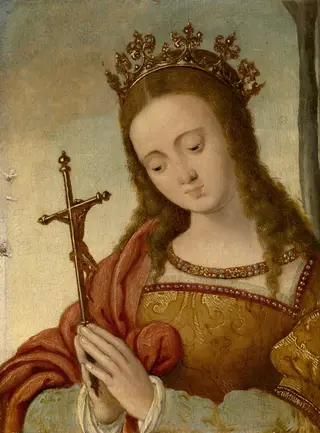
Catalina de Austria reina de Portugal como Santa Catalina
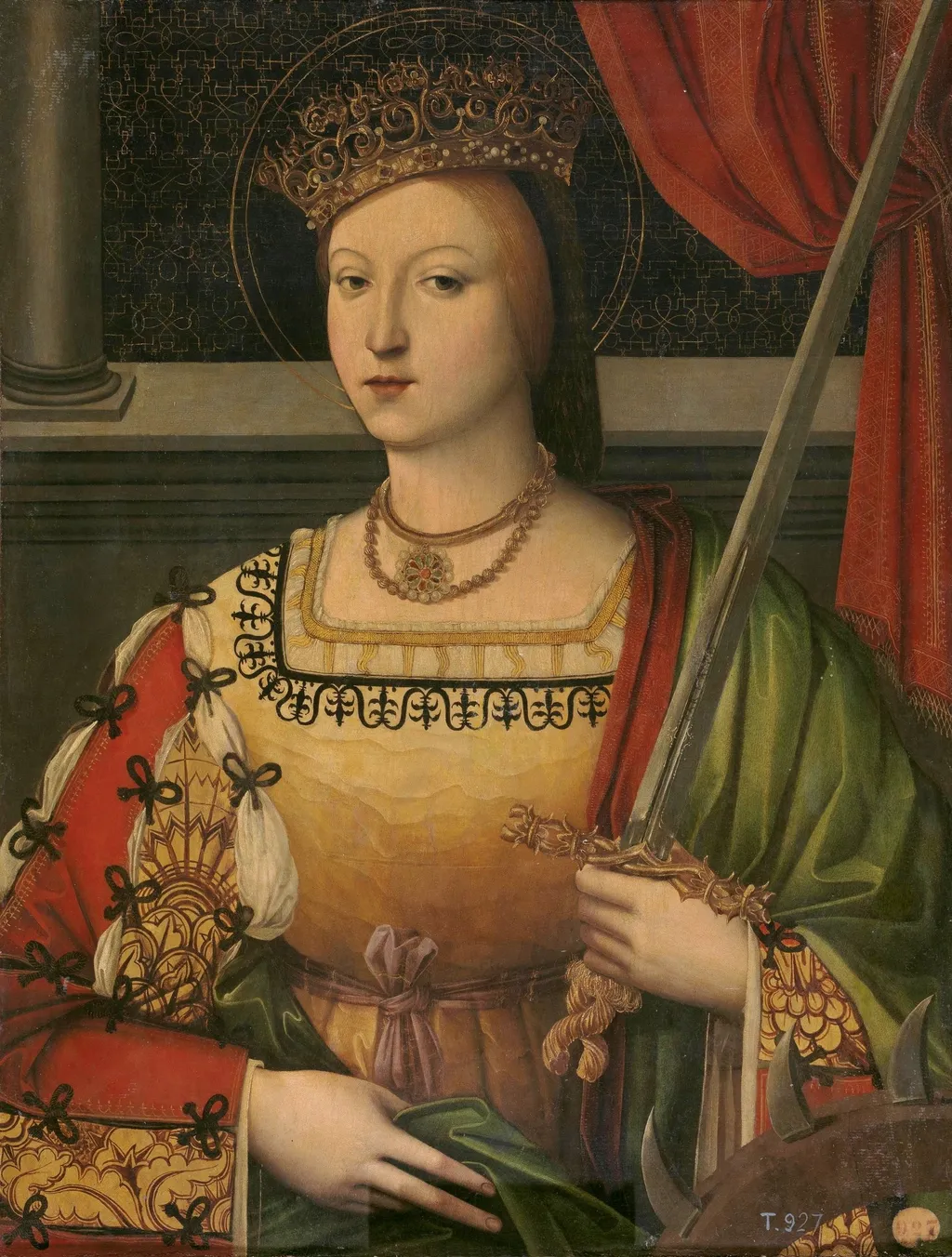
Catalina de Austria reina de Portugal como Santa Catalina is an oil painting by the Early Baroque Italian artist Domingo Carvalho. It dates from 1530 and is held in the collection of the Museo del Prado.
About this work
Subject & Meaning
Created by Domingo Carvalho in 1530 as an oil on panel portrait, the work belongs to the portrait genre and is housed in the Museo del Prado.
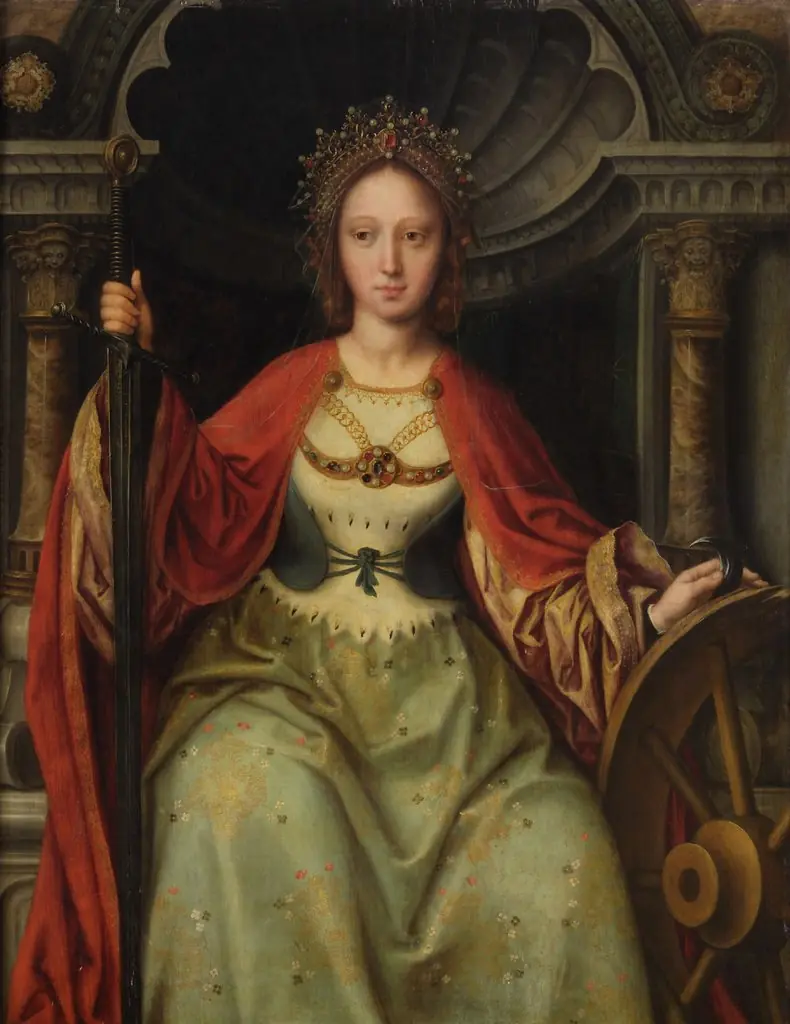
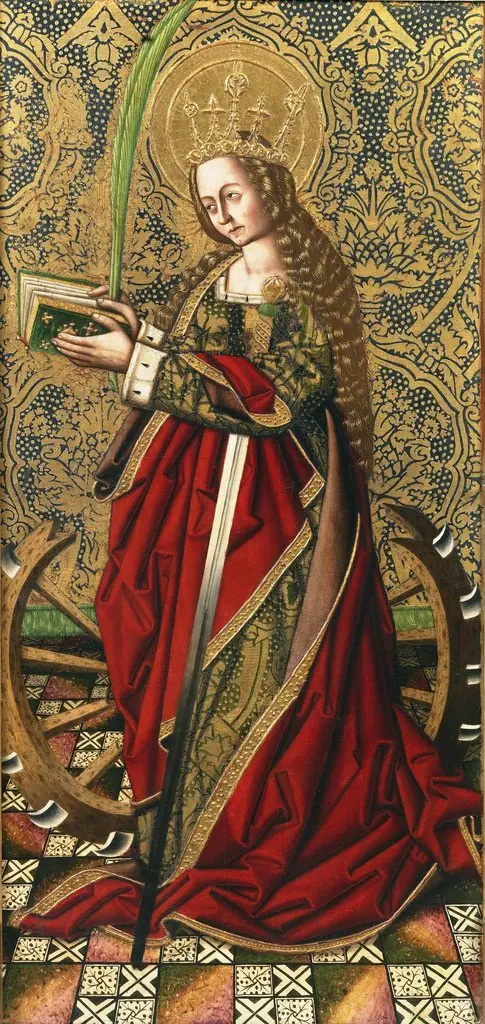
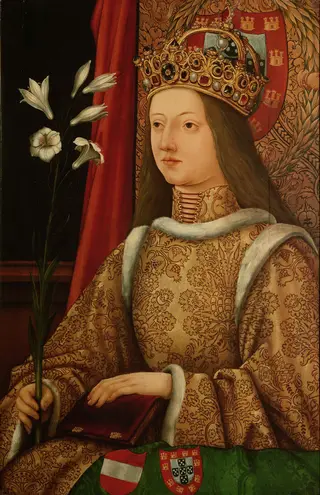
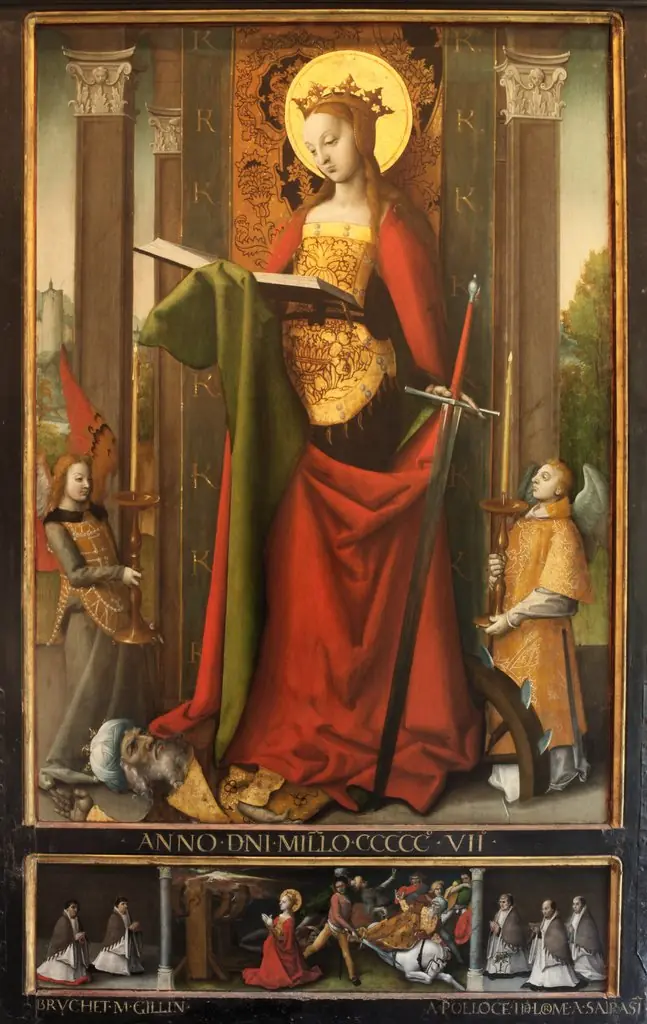
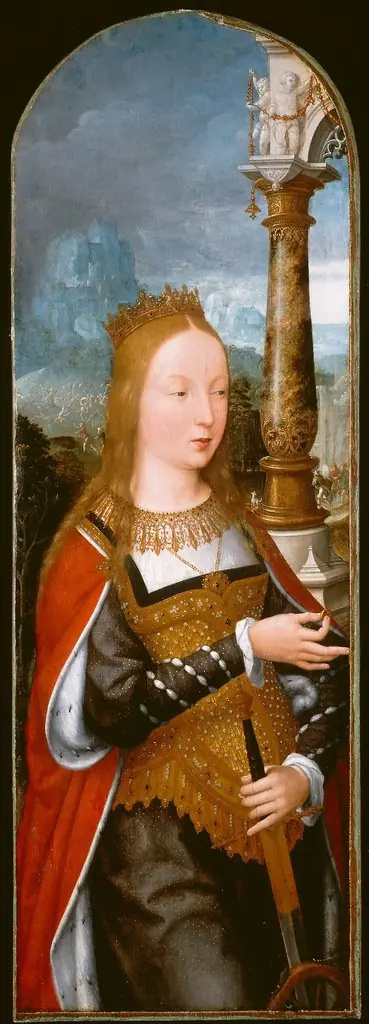
The painting shows Catalina de Austria, queen of Portugal, identified as Saint Catherine, holding a sword and a crown adorned with a gemstone and a cogwheel, symbols of her royal status and martyrdom. Created by Domingo Carvalho in 1530 as an oil on panel portrait, the work belongs to the portrait genre and is housed in the Museo del Prado. The iconography combines regal attributes with saintly attributes, reflecting her dual identity as both monarch and holy figure.
Technique & Style
Executed in oil paint on a panel support, this portrait measures 78 cm in height and 60 cm in width. The work features a formal composition depicting the subject adorned with specific regal and hagiographic attributes, including a crown, a sword, a gemstone, and a cogwheel. These elements combine to present the figure simultaneously as a monarch and as Saint Catherine, utilizing the detailed rendering characteristic of sixteenth-century portraiture to distinguish the textures of the jewelry and instruments of martyrdom.
History & Provenance
The work was painted by Domingo Carvalho in 1530, as indicated by the artist’s date on the canvas.
Its early provenance is undocumented, but by the 17th century it entered the collection of the Museo de la Trinidad in Madrid. By the time of the museum’s dissolution in 1872, it was transferred to the Museo del Prado, where it remains today.
The painting Catalina de Austria reina de Portugal como Santa Catalina by Domingo Carvalho is held in the collection of the Museo del Prado in Madrid. It is also associated with the Museo de la Trinidad, which historically preceded the Prado's current holdings. The work depicts the subject with specific attributes including a sword, crown, gemstone, and cogwheel.
No specific inventory or accession numbers are provided in the available records for this section. Furthermore, the sources do not document any exhibition history for this specific portrait.
Context
The portrait of Catalina de Austria as Saint Catherine, painted by Domingo Carvalho in 1530, reflects the integration of devotional imagery within elite portraiture in early Portuguese Renaissance art. Its depiction of symbolic attributes such as the sword, crown, gemstone, and cogwheel aligns with hagiographic traditions while emphasizing the sitter’s royal and saintly authority. The work’s presence in major institutions like the Museo del Prado underscores its recognized significance within the Iberian artistic canon, where devotional portraiture was often conflated with Counter-Reformation iconography.
Scholarship on Carvalho’s oeuvre situates this piece within his broader practice of blending devotional symbolism with aristocratic representation, marking a pivotal moment in the evolution of religious portraiture in Iberian contexts.
Overview
Domingo Carvalho’s oil painting, dated to 1530, presents a regal female figure identified as Catalina de Austria, queen of Portugal, rendered in the guise of Saint Catherine. The work is part of the collection of the Museo del Prado and measures the conventions of early sixteenth‑century portraiture, combining courtly attire with symbolic attributes.

Own this work as a print
Artist & collection
Artist
Domingo Carvalho painted a 1530 oil portrait of Catalina of Austria, crowned queen of Portugal and dressed as Saint Catherine.