Artwork
Edgar
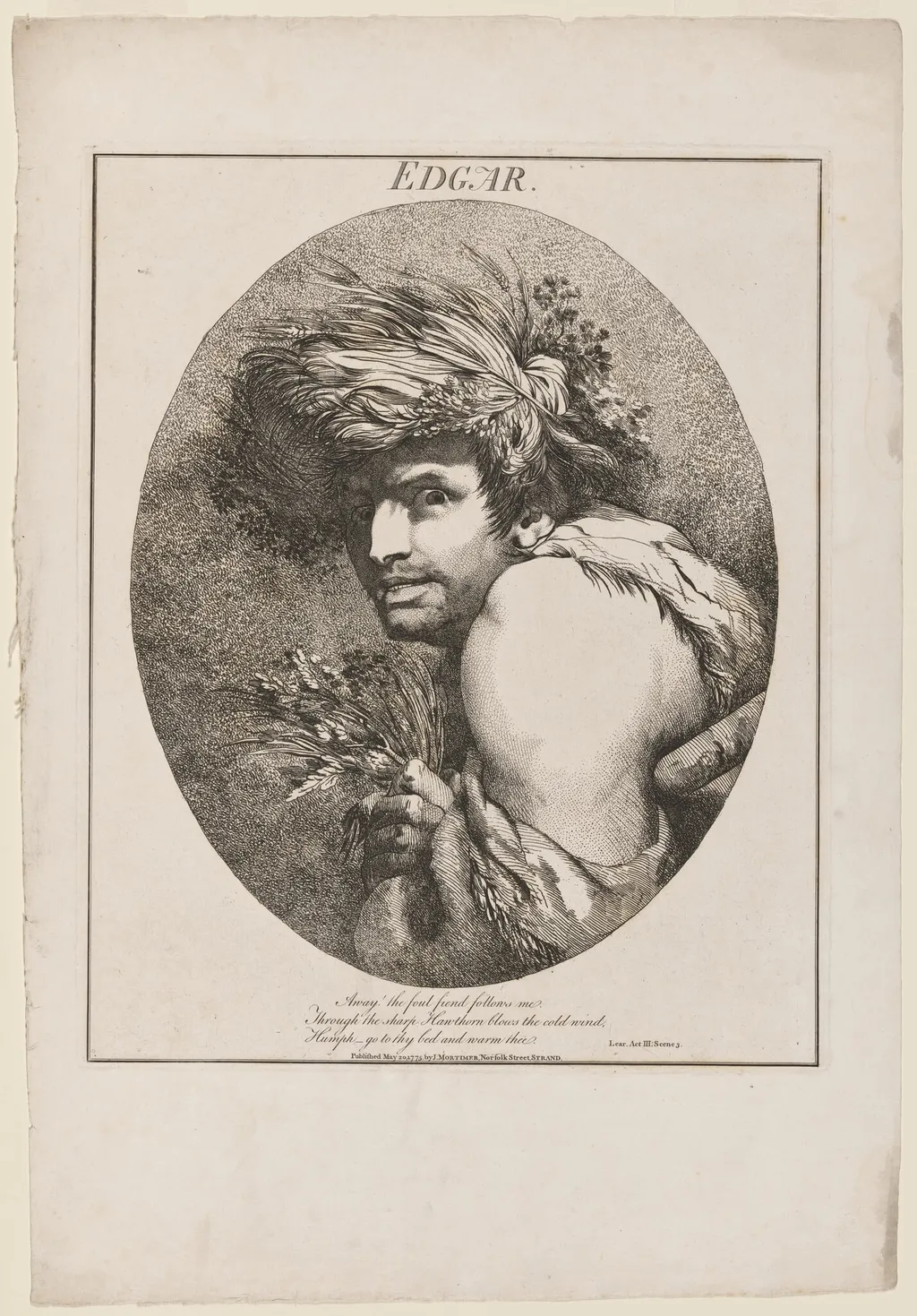
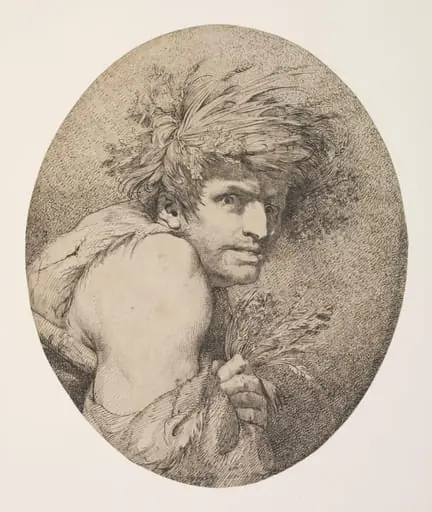
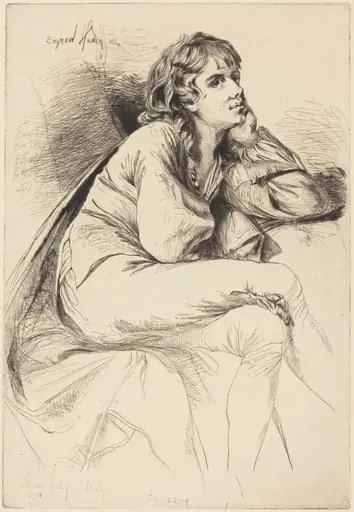
Edgar is an ink print by the Romanticist artist John Hamilton Mortimer. It dates from 1775 and is held in the collection of the National Gallery of Art.
- Inscription
- Inscribed:upper center in plate: EDGAR.; lower center in plate: Away! the foul fiend follows me / Through the sharp Hawthorn blows the cold wind. / Humph--go to thy bed and warm thee / Published May 20 1775 by J. MORTIMER, Norfolk Street, STRAND; lower right in plate: Lear, Act III: Scene 3
About this work
He’s holding a bundle of sticks or branches in one hand and a feathered fan in the other.
This black-and-white print shows a man with wild, curly hair tied back with a ribbon. He’s holding a bundle of sticks or branches in one hand and a feathered fan in the other. His face looks tired, almost angry, with a serious expression.
The name "Edgar" is written at the top, and below it are lines from a play. The artist signed it and noted it was published in 1775.
If you like this style, look up etching.
Overview
John Hamilton Mortimer’s 1775 etching titled Edgar is a black‑and‑white print executed on wove paper. The composition depicts a solitary male figure with tangled hair bound by a ribbon, clutching a bundle of sticks in one hand and a feathered fan in the other, his expression weary and stern. The artist’s name and the date of publication appear on the sheet, accompanied by a line of verse from a contemporary play.
Subject & Meaning
The central figure is identified as Edgar, a character drawn from English drama, likely referencing the tragic hero of Shakespeare’s King Lear or a similar literary source. The inclusion of the play’s lines suggests Mortimer intended a visual interpretation of the character’s emotional turmoil, emphasizing themes of exile, suffering, and resilience.
Technique & Style
Mortimer employed traditional etching methods, incising the image onto a copper plate before transferring it onto wove paper. The fine line work and strong contrasts of light and shadow create a dramatic chiaroscuro effect, characteristic of the 18th‑century British print tradition that favored narrative intensity and expressive detail.
History & Provenance
Created during Mortimer’s most productive period, the print was issued in 1775, the year before he assumed the presidency of the Society of Artists. Mortimer died in 1779 at the age of thirty‑nine, leaving a modest body of printed works that document his interest in theatrical and heroic subjects.
Context
Edgar reflects the broader 1770s fascination among British artists with literary subjects and the emotive potential of print media. Mortimer’s choice of a dramatic, almost Romantic figure aligns him with contemporaries who looked to Shakespeare and other dramatists for visual inspiration, echoing the dramatic landscapes of Salvator Rosa while remaining firmly rooted in British sensibility.
Own this work as a print
Artist & collection
Artist
John Hamilton Mortimer (17 September 1740 – 4 February 1779) was a British figure and landscape painter and printmaker, known for romantic paintings set in Italy, works depicting conversations, and works drawn in the…

![Mucius Scaevola [recto], by John Hamilton Mortimer](https://artifactworldgallery.com/img/john-hamilton-mortimer--mucius-scaevola-recto--0de678fa443f7962-w320.webp)