Artwork
Lear
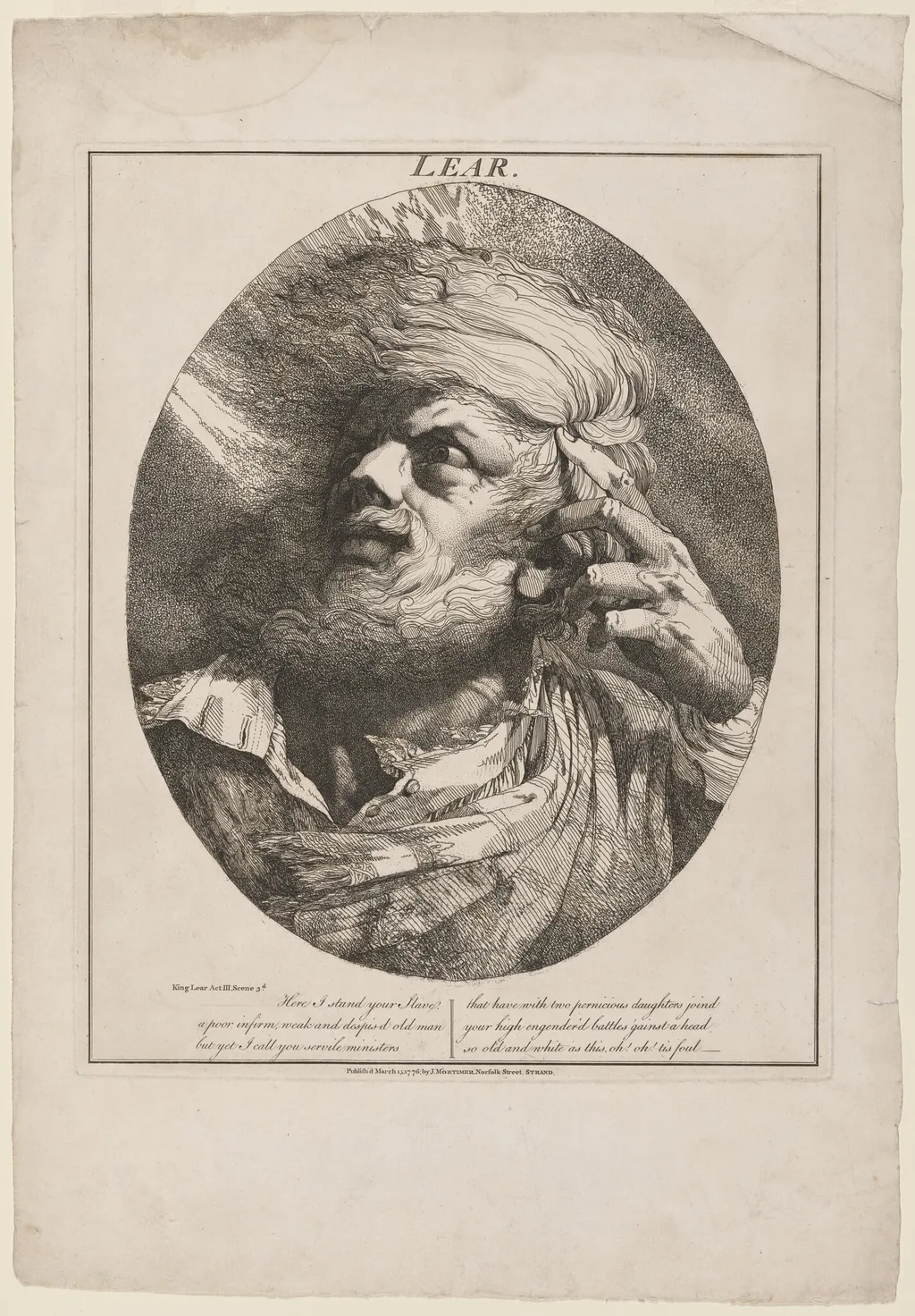
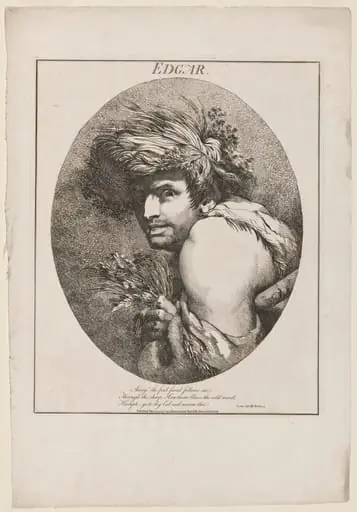
Lear is an ink print by the Romanticist artist John Hamilton Mortimer. It dates from 1776 and is held in the collection of the National Gallery of Art.
- Inscription
- Inscribed:upper center in plate: LEAR.; lower left in plate: King Lear Act III Scene 3.d / Here I stand your Slave / a poor infirm, week, and despised old man / but yet I call you servile ministers; lower right in plate: that have with two pernicious daughtres joind / your high engender'd battles 'gainst a head / so old and whaite as this, oh! oh! tis foul; lower center in plate: Publish'd March 15, 1776, by J. MORTIMER, Norfolk Street, STRAND
About this work
Overview
John Hamilton Mortimer’s 1776 print Lear is an etching executed on wove paper. The image presents a disheveled elderly figure, his hair and beard tangled, his face creased with distress as he clutches his head. Dark, swirling clouds dominate the background, enhancing the mood of turmoil. The composition is rendered entirely in black ink, emphasizing contrast and texture.
Subject & Meaning
The central figure represents King Lear, the tragic monarch from Shakespeare’s eponymous play. Mortimer underscores the king’s psychological collapse by portraying him in a state of agitation and despair, his loose, rumpled garments suggesting loss of authority. The surrounding storm‑like forms echo the emotional tempest that engulfs the character as he confronts betrayal and madness.
Technique & Style
The lines are deliberately rough and scratched, giving the surface a tactile quality that heightens the sense of agitation.
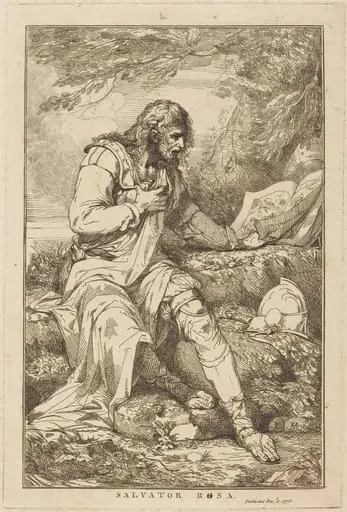
Mortimer employed traditional etching methods, incising the design into a copper plate before transferring it onto paper. The lines are deliberately rough and scratched, giving the surface a tactile quality that heightens the sense of agitation. The stark monochrome palette and dramatic chiaroscuro align the work with the baroque sensibilities of Salvator Rosa, whom Mortimer admired for his rugged, dramatic scenes.
History & Provenance
Created during Mortimer’s brief but prolific career, Lear emerged two years after he served as President of the Society of Artists in 1774. The print was produced shortly before Mortimer’s untimely death at thirty‑nine, marking one of his later forays into literary subject matter. It has since circulated among collections of 18th‑century British prints, reflecting his reputation as both painter and printmaker.
Own this work as a print
Artist & collection
Artist
John Hamilton Mortimer (17 September 1740 – 4 February 1779) was a British figure and landscape painter and printmaker, known for romantic paintings set in Italy, works depicting conversations, and works drawn in the…

![Mucius Scaevola [recto], by John Hamilton Mortimer](https://artifactworldgallery.com/img/john-hamilton-mortimer--mucius-scaevola-recto--0de678fa443f7962-w320.webp)